English

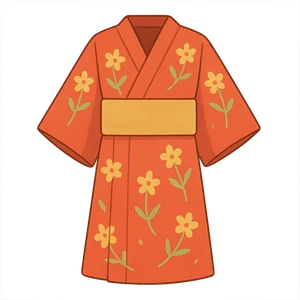
Kimono
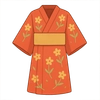
The kimono is a traditional Japanese garment and the national dress of Japan.
Reads at Grades 6–8 Listens at Grades 4–8
Print & create
Answer keys·No prep·Free with an account
28 worksheets · answer keys · full story · quiz · Ages 10-12 · CEFR B2
Plus adds 244,000+ more stories in 27 languages, audio for every one, and printables for all of them.
Just want Kimono?
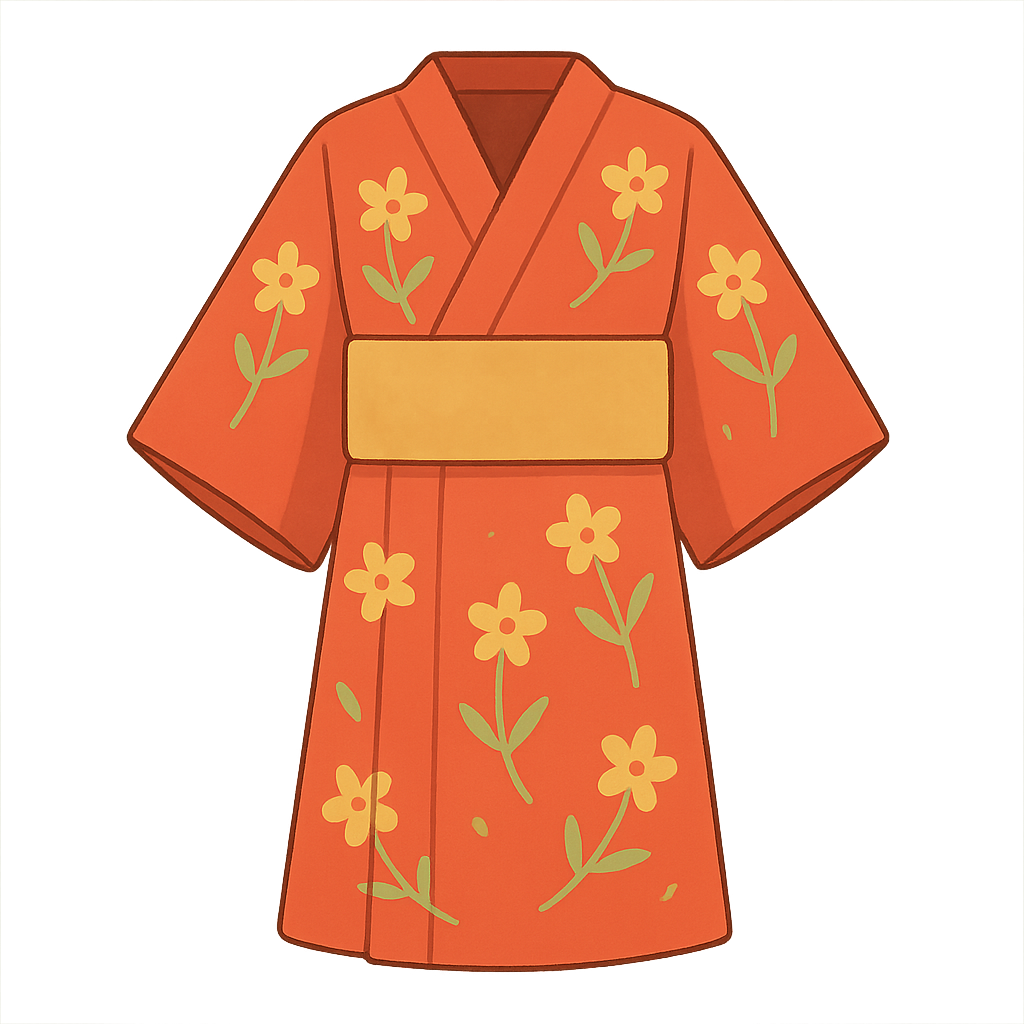
I am a whisper of silk, a rustle of fine thread, a cascade of color. I can feel as soft as a cloud or as crisp as a winter morning. Before I had a name, I was a promise of beauty, folded carefully in a chest of dark wood. I am made of long, straight lines, a T-shape that wraps around a person like a gentle hug. My story began over a thousand years ago, in a land of islands called Japan, during a time of emperors and poets known as the Heian period, which started in the year 794. At first, I was a simple underlayer, worn beneath more complex garments. But my simple shape was comfortable and adaptable, and soon, I would unfold into something much more. I am the Kimono, a single piece of cloth that tells a thousand stories.
I am not made by one person, but by the hands of many artisans whose skills have been passed down through generations. My life starts as a single, delicate thread, often unspooled from the tiny cocoon of a silkworm. This thread is woven into smooth, shining fabric, a blank canvas awaiting a story. Then, artists begin to dream on my surface. They use special techniques like yūzen, a detailed painting method, or shibori, a resist-dyeing technique, to bring me to life with pictures from nature. You might find graceful cranes, which promise a long and happy life, painted on my sleeves. Or perhaps you’ll see cherry blossoms, reminding everyone of the fleeting beauty of spring. During the Muromachi period, from 1336 to 1573, I transformed from an undergarment into the main robe people wore. My sleeves grew longer, and my patterns became more elaborate, telling stories without a single word. Each color and symbol was chosen with care, reflecting the season, the occasion, or the hopes of the person who would wear me.
The Story of the Kimono
I am a whisper of silk, a rustle of fine thread, a cascade of color. I can feel as soft as a cloud or as crisp as a winter morning. Before I had a name, I was a promise of beauty, folded carefully in a chest of dark wood. I am made of long, straight lines, a T-shape that wraps around a person like a gentle hug. My story began over a thousand years ago, in a land of islands called Japan, during a time of emperors and poets known as the Heian period, which started in the year 794. At first, I was a simple underlayer, worn beneath more complex garments. But my simple shape was comfortable and adaptable, and soon, I would unfold into something much more. I am the Kimono, a single piece of cloth that tells a thousand stories.
I am not made by one person, but by the hands of many artisans whose skills have been passed down through generations. My life starts as a single, delicate thread, often unspooled from the tiny cocoon of a silkworm. This thread is woven into smooth, shining fabric, a blank canvas awaiting a story. Then, artists begin to dream on my surface. They use special techniques like yūzen, a detailed painting method, or shibori, a resist-dyeing technique, to bring me to life with pictures from nature. You might find graceful cranes, which promise a long and happy life, painted on my sleeves. Or perhaps you’ll see cherry blossoms, reminding everyone of the fleeting beauty of spring. During the Muromachi period, from 1336 to 1573, I transformed from an undergarment into the main robe people wore. My sleeves grew longer, and my patterns became more elaborate, telling stories without a single word. Each color and symbol was chosen with care, reflecting the season, the occasion, or the hopes of the person who would wear me.
By the time of the Edo period, from 1603 to 1868, I was at the very center of Japanese life and culture. Everyone wore me—from powerful samurai warriors whose kimonos were designed for movement, to wealthy merchants who showed off their success with luxurious silks, from elegant ladies in the imperial court to famous actors on a kabuki stage. I was a way to show the world who you were. The fabric I was made from—luxurious silk or simple cotton—and the complexity of my design spoke of a person's place in society. The wide sash tied around my waist, called an 'obi,' was a work of art in itself, often intricately woven and tied in a beautiful, complex knot. I was there for every important occasion. A baby would be presented at a shrine in a special version of me. Young women would celebrate coming of age in me, with long, flowing sleeves called 'furisode.' Brides would wear me in brilliant white or vibrant red on their wedding day, a symbol of purity and happiness.
When Japan opened its doors to the world during the Meiji period, beginning in 1868, things began to change. People started wearing Western-style suits and dresses for work and school, as they were often seen as more practical for a rapidly modernizing society. For a while, it seemed I might be folded away and forgotten, a relic of a past age. But I was not. I simply took on a new role, one of even greater cultural significance. I became the garment for special moments—for tea ceremonies, festivals, and important family celebrations. My journey also took me across the seas. Artists and designers in Europe and America saw my elegant shape and stunning patterns and were captivated. This fascination, known as Japonisme, led them to be inspired by my beauty. I influenced new kinds of fashion, and my images appeared in famous paintings, a symbol of distant beauty and graceful artistry.
Today, I am still here, a cherished piece of history that you can still see and touch. I connect the present to a long line of traditions, a thread stretching back over a millennium. People still learn the careful, respectful art of putting me on, a ritual that honors the craftsmanship and history woven into my fabric. Designers continue to be inspired by my simple, perfect shape and the endless possibilities of my patterns, reinterpreting me for a new generation. I am more than just clothing; I am a story, a piece of art, and a symbol of Japanese culture. I carry the dreams of the artisans who made me and the memories of the people who wore me. When you see me, remember that beauty can be woven from a single thread, and that the most timeless things connect us all, unfolding across generations.
Wow facts
About
The kimono is a traditional Japanese garment and the national dress of Japan. It is a T-shaped, straight-lined robe worn so that the hem falls to the ankle, with a separate collar and some types have long, wide sleeves.
Take a Quiz
Question 1 of 5
Which statement best summarizes the main idea of the story?
Explore next


Want to do even more?
Go beyond exploring. Unlock tools that turn every story into real learning.

Storypie Plus for families
Full stories, quizzes, and printables. Nights and car rides, sorted.
- Unlimited audio stories
- Create Mode: your child stars in the story
- Offline downloads
- Printable worksheets & coloring pages

Why Storypie for Schools
Students engaged. Prep in seconds. Evenings back to you.
- Worksheets & Quizzes
- Classroom Management
- Formative Assessment
- Custom Curriculum & Lesson Plans
- 27 Languages

Why Storypie for Homeschool
Curriculum done. They'll ask for more. Hours back in your day.
- Worksheet Generator
- First-Person Audio Stories
- Built-in Comprehension Quizzes
- Custom Curriculum & Lesson Plans
- Print & Go Activities