English

Nursery Rhymes and Chants
A collection of traditional poems, songs…
Reads at Grades 6–8 Listens at Grades 4–8
Print & create
Answer keys·No prep·Free with an account
28 worksheets · answer keys · full story · quiz · Ages 10-12 · CEFR B2
Plus adds 279,000+ more stories in 27 languages, audio for every one, and printables for all of them.
Just want Nursery Rhymes and Chants?
Before I had a name, I was a feeling—a rhythm tapped on a tabletop, a soft tune hummed over a cradle, a chant shouted in a sunlit playground. I traveled on the breath of mothers and fathers, in the games of children, and in the songs sung by the fire on long winter nights. I have been a secret, a joke, a lesson, and a lullaby, passed down through so many hands and voices that I belong to everyone and no one. I am the riddle you already know the answer to, the silly words that make perfect sense, and the first poem many people ever learn by heart. For centuries, I existed only in the air, a whisper carried on the wind from one generation to the next. You know me by many names, from Humpty Dumpty to Little Bo-Peep, but together, I am the collection of voices you call Nursery Rhymes.
More Than Just for the Nursery
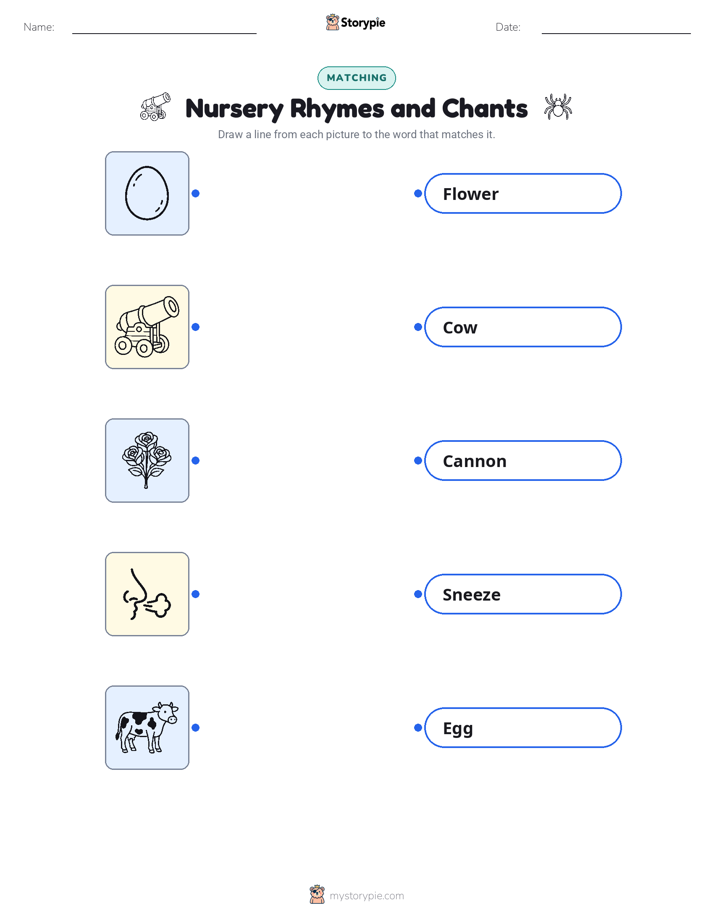
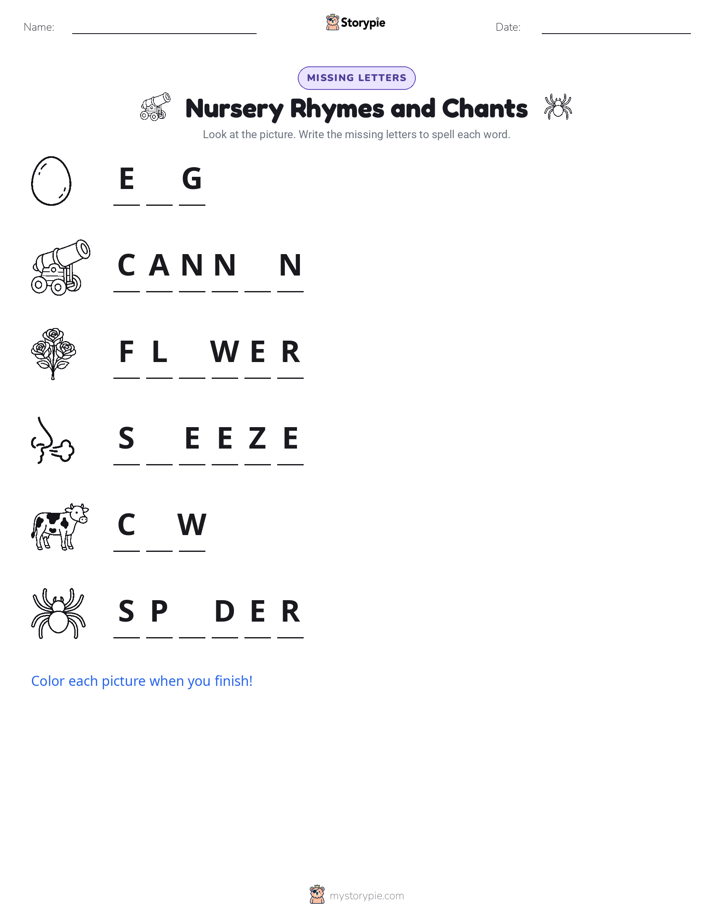
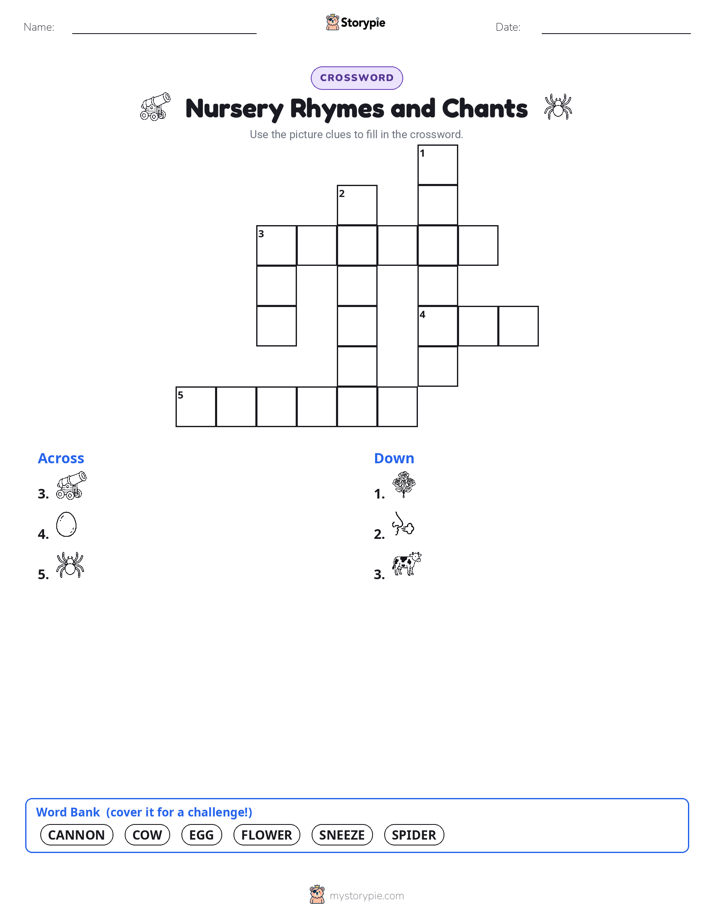
You might think I was always for children, but my past is full of grown-up secrets. Many of my verses began as folk songs, jokes, or even political commentary whispered in code when it was too dangerous to speak plainly. Take my friend 'Humpty Dumpty.' Some historians believe he wasn't an egg at all, but a giant cannon used by the Royalists during the English Civil War. During the Siege of Colchester in the summer of 1648, this powerful cannon sat on a church wall until enemy fire shot the wall down, and the cannon tumbled to the ground and broke apart. Just as the rhyme says, 'All the king's horses and all the king's men couldn't put Humpty together again.' Another one of my rhymes, 'Ring a Ring o' Roses,' is thought by some to carry a much sadder story, though historians still debate its true origin. Many believe it's a memory of the Great Plague of London in 1665. The 'pocket full of posies' were flowers and herbs people carried to ward off the terrible smells of the sickness, the 'atishoo, atishoo' mimicked the violent sneezes of the infected, and 'we all fall down' represented the tragic end that met so many. These stories show how I helped people make sense of a confusing and sometimes frightening world, turning fear and news into a song that could be remembered and shared.
A Nursery Rhyme's Tale
Before I had a name, I was a feeling—a rhythm tapped on a tabletop, a soft tune hummed over a cradle, a chant shouted in a sunlit playground. I traveled on the breath of mothers and fathers, in the games of children, and in the songs sung by the fire on long winter nights. I have been a secret, a joke, a lesson, and a lullaby, passed down through so many hands and voices that I belong to everyone and no one. I am the riddle you already know the answer to, the silly words that make perfect sense, and the first poem many people ever learn by heart. For centuries, I existed only in the air, a whisper carried on the wind from one generation to the next. You know me by many names, from Humpty Dumpty to Little Bo-Peep, but together, I am the collection of voices you call Nursery Rhymes.
More Than Just for the Nursery
You might think I was always for children, but my past is full of grown-up secrets. Many of my verses began as folk songs, jokes, or even political commentary whispered in code when it was too dangerous to speak plainly. Take my friend 'Humpty Dumpty.' Some historians believe he wasn't an egg at all, but a giant cannon used by the Royalists during the English Civil War. During the Siege of Colchester in the summer of 1648, this powerful cannon sat on a church wall until enemy fire shot the wall down, and the cannon tumbled to the ground and broke apart. Just as the rhyme says, 'All the king's horses and all the king's men couldn't put Humpty together again.' Another one of my rhymes, 'Ring a Ring o' Roses,' is thought by some to carry a much sadder story, though historians still debate its true origin. Many believe it's a memory of the Great Plague of London in 1665. The 'pocket full of posies' were flowers and herbs people carried to ward off the terrible smells of the sickness, the 'atishoo, atishoo' mimicked the violent sneezes of the infected, and 'we all fall down' represented the tragic end that met so many. These stories show how I helped people make sense of a confusing and sometimes frightening world, turning fear and news into a song that could be remembered and shared.
From Spoken Word to Printed Page
For centuries, I lived only in memory, changing a little with each person who sang or spoke my lines. But in the 18th century, a new idea took hold: that children deserved their own books, filled with stories and pictures made just for them. Around the year 1744, a little book called 'Tommy Thumb's Pretty Song Book' was published in London. It was one of the very first times some of my verses were gathered together on paper for children to see. This was a huge moment for me. Suddenly, I wasn't just a sound; I was something you could hold in your hands. Then, a publisher named John Newbery, who is often called 'The Father of Children's Literature,' gave me an even bigger stage. Around the year 1780, he published a famous and very popular collection called 'Mother Goose's Melody.' The name 'Mother Goose' became my magical guardian, a character who represented the cozy, storytelling spirit I carried. Thanks to these printed books, my rhymes were standardized and could travel across oceans and into countless new homes, ensuring that my stories would not be forgotten or changed beyond recognition. I was no longer just a local whisper; I was becoming a global song.
A Never-Ending Song
Today, I am still here, as strong as ever. You might not think about it, but I am often the first step into the world of poetry, teaching you the music of words through rhythm, pattern, and rhyme long before you learn about sonnets or epics in school. More importantly, I am a bridge connecting you to your parents, your grandparents, and even your great-great-grandparents, who probably chanted the very same lines about a cow jumping over the moon or a spider sitting down beside Miss Muffet. In the 20th century, dedicated scholars like Iona and Peter Opie spent their lives tracing my history, publishing 'The Oxford Dictionary of Nursery Rhymes' in 1951 to show the world my deep and fascinating roots. They proved that I wasn't just silly nonsense. So when you sing about Jack and Jill tumbling down a hill, you are doing more than just reciting a simple verse. You are keeping a tiny piece of history alive. I am a thread of shared memory, a spark of imagination, and a promise that the simplest stories, passed down with love, can live forever and continue to shape the world one rhyme at a time.
Wow facts
About
A collection of traditional poems, songs, and chants for children that originated from older folk traditions and have been passed down through generations, aiding in language and cultural development.
Take a Quiz
Question 1 of 5
What is the central message the story conveys about nursery rhymes?
Explore next




Want to do even more?
Go beyond exploring. Unlock tools that turn every story into real learning.

Storypie Plus for families
Full stories, quizzes, and printables. Nights and car rides, sorted.
- Unlimited audio stories
- Create Mode: your child stars in the story
- Offline downloads
- Printable worksheets & coloring pages

Why Storypie for Schools
Students engaged. Prep in seconds. Evenings back to you.
- Worksheets & Quizzes
- Classroom Management
- Formative Assessment
- Custom Curriculum & Lesson Plans
- 27 Languages

Why Storypie for Homeschool
Curriculum done. They'll ask for more. Hours back in your day.
- Worksheet Generator
- First-Person Audio Stories
- Built-in Comprehension Quizzes
- Custom Curriculum & Lesson Plans
- Print & Go Activities