English

Nursery Rhymes and Chants
A collection of traditional poems, songs…
Reads at Grades 3–5 Listens at Grades 1–5
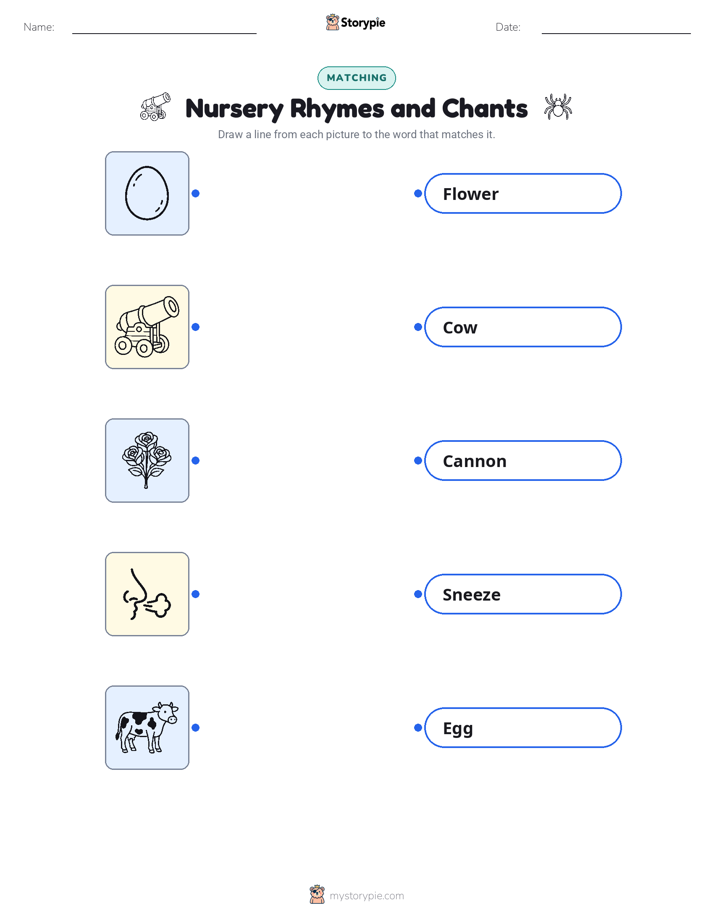
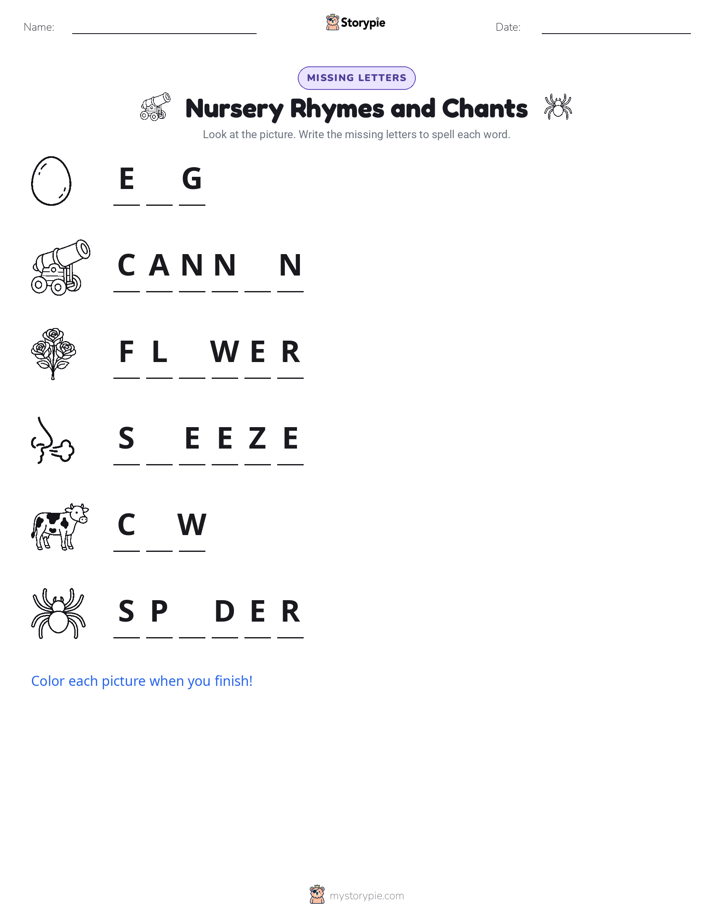
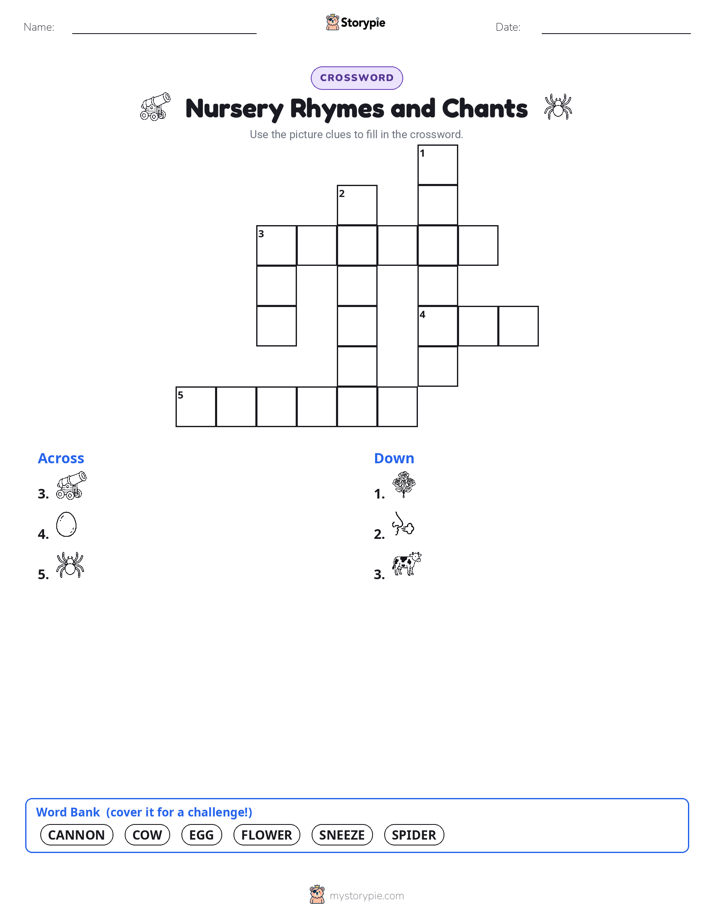
Print & create
Answer keys·No prep·Free with an account
28 worksheets · answer keys · full story · quiz · Ages 8-10 · CEFR B1
Plus adds 279,000+ more stories in 27 languages, audio for every one, and printables for all of them.
Just want Nursery Rhymes and Chants?
Have you ever felt a little tune wiggle into your ear and decide to stay for the day. It might be a whisper, a giggle, or a rhythm that bounces from the playground to the car ride home. Maybe it’s about a sheep with black wool, or a spider climbing a waterspout, or an egg having a terrible fall. The words are simple, the melody is catchy, and before you know it, you are humming along without even thinking. Those little songs, those silly chants, those comforting bedtime verses. that’s me. I am the world of Nursery Rhymes and Chants, and I have been singing for centuries.
But I have a little secret. Before I belonged to children, I belonged to grown-ups. Long ago, during a time you might call the Middle Ages, many of my rhymes were jokes, songs, and even complaints whispered and sung by adults. It’s like being a historical detective. For instance, have you heard “Ring a-round the Rosie”. Some historians think that I might be about a very sad time called the Great Plague of London in 1665. The “rosie” could be the red rash people got, the “pocket full of posies” might be the herbs people carried to block the bad smells, and the “atishoo, atishoo, we all fall down” could represent the sneezing and sickness that was so common. Then there’s “Baa, Baa, Black Sheep.” One theory suggests this rhyme is a quiet complaint about a heavy wool tax in England way back in the 13th century. The bag for the “master” and the “dame” was the tax collector, leaving only one bag for the farmer who did all the work. These are just theories, not proven facts, but they show that my simple words might hide some very big stories.
A Rhyme Through Time
Have you ever felt a little tune wiggle into your ear and decide to stay for the day. It might be a whisper, a giggle, or a rhythm that bounces from the playground to the car ride home. Maybe it’s about a sheep with black wool, or a spider climbing a waterspout, or an egg having a terrible fall. The words are simple, the melody is catchy, and before you know it, you are humming along without even thinking. Those little songs, those silly chants, those comforting bedtime verses. that’s me. I am the world of Nursery Rhymes and Chants, and I have been singing for centuries.
But I have a little secret. Before I belonged to children, I belonged to grown-ups. Long ago, during a time you might call the Middle Ages, many of my rhymes were jokes, songs, and even complaints whispered and sung by adults. It’s like being a historical detective. For instance, have you heard “Ring a-round the Rosie”. Some historians think that I might be about a very sad time called the Great Plague of London in 1665. The “rosie” could be the red rash people got, the “pocket full of posies” might be the herbs people carried to block the bad smells, and the “atishoo, atishoo, we all fall down” could represent the sneezing and sickness that was so common. Then there’s “Baa, Baa, Black Sheep.” One theory suggests this rhyme is a quiet complaint about a heavy wool tax in England way back in the 13th century. The bag for the “master” and the “dame” was the tax collector, leaving only one bag for the farmer who did all the work. These are just theories, not proven facts, but they show that my simple words might hide some very big stories.
So how did I go from being a grown-up’s secret message to a child’s favorite song. My big journey started in the 18th century. People began to realize that my bouncy rhythms and easy-to-remember words were perfect for little listeners. A very important man named John Newbery, a publisher in London, had a wonderful idea. he thought children should have their very own books, filled with fun and pictures. Around the year 1744, one of the first collections of my songs was published, called “Tommy Thumb’s Pretty Song Book.” It was a tiny book for tiny hands. Then, around 1780, another famous collection appeared called “Mother Goose’s Melody.” Suddenly, I wasn’t just a song on the wind anymore. I had a home. I lived on the pages of books, ready to be read and sung in cozy nurseries everywhere. Can you imagine a world without books made just for kids. John Newbery helped change that.
From that time on, I became a special thread connecting generations. The same song your great-grandmother sang while bouncing your grandpa on her knee might be the very one your parents sing to you. I help you learn your alphabet and your numbers. I teach you the rhythm of language, the way words can dance and play together. When you chant about Jack and Jill tumbling down the hill, you are joining a chorus of children who have been singing my songs for hundreds of years. I am more than just silly words. I am a shared memory, a first step into reading, and a spark of joy. And I hope to keep singing with children just like you for hundreds of years more, a timeless rhyme for all time.
Wow facts
About
A collection of traditional poems, songs, and chants for children that originated from older folk traditions and have been passed down through generations, aiding in language and cultural development.
Take a Quiz
Question 1 of 5
The story says the idea that 'Ring a-round the Rosie' is about the Great Plague is a theory, 'not proven fact.' What does this mean?
Explore next




Want to do even more?
Go beyond exploring. Unlock tools that turn every story into real learning.

Storypie Plus for families
Full stories, quizzes, and printables. Nights and car rides, sorted.
- Unlimited audio stories
- Create Mode: your child stars in the story
- Offline downloads
- Printable worksheets & coloring pages

Why Storypie for Schools
Students engaged. Prep in seconds. Evenings back to you.
- Worksheets & Quizzes
- Classroom Management
- Formative Assessment
- Custom Curriculum & Lesson Plans
- 27 Languages

Why Storypie for Homeschool
Curriculum done. They'll ask for more. Hours back in your day.
- Worksheet Generator
- First-Person Audio Stories
- Built-in Comprehension Quizzes
- Custom Curriculum & Lesson Plans
- Print & Go Activities