English

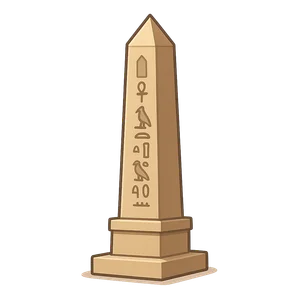
Obelisk
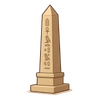
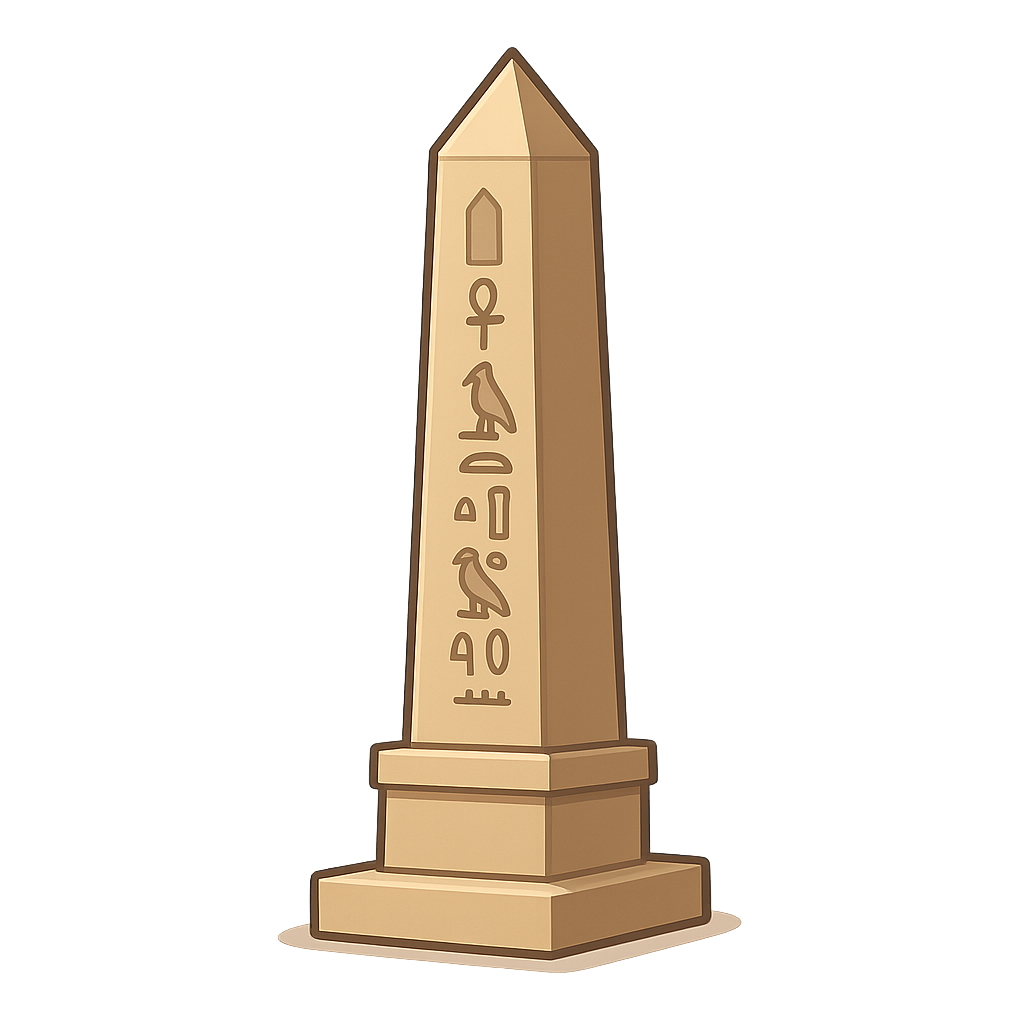
A tall, four-sided, narrow tapering monument which ends in a pyramid-like shape at the top.
Reads at Grades 6–8 Listens at Grades 4–8
Print & create
Answer keys·No prep·Free with an account
28 worksheets · answer keys · full story · quiz · Ages 10-12 · CEFR B2
Plus adds 244,000+ more stories in 27 languages, audio for every one, and printables for all of them.
Just want Obelisk?
A cool, damp fog often settles on my stone skin here, a feeling so different from the warm, dry air I knew for thousands of years. I stand on the Victoria Embankment in a city called London, and the world around me hums with a strange and hurried energy. I feel the deep rumble of red double-decker buses in my very foundations and hear the chime of distant bells, sounds that have replaced the whispered prayers once offered in ancient, sun-drenched temples. I am a single, tall spear of reddish granite, pointing toward a sky that is often grey and cloudy. My four faces are covered in beautiful picture-writing—hieroglyphs that tell tales of gods and kings, though few of the people rushing past can read my silent language. I can feel their curiosity as they gaze up at me, a relic from another world. They call me Cleopatra's Needle, a famous and romantic name, but my story began long before that legendary queen was ever born. I am an obelisk, a silent storyteller carved from the very heart of the land of the pharaohs.
My life began in the brilliant Egyptian sun, around the year 1450 BCE. Imagine the scene at the granite quarries of Aswan, where the air was thick with dust and the rhythmic sound of tools striking stone. I was not built from many pieces; I was born from one single, massive piece of rock, carefully and painstakingly separated from the earth by countless skilled hands. The great pharaoh, Thutmose III, commanded my creation. He was a powerful ruler, and he wanted me and my twin sister to stand as monuments to his triumphant thirty-year reign and to honor the mighty sun god, Ra. Once I was freed, I was gently guided onto a massive barge and floated down the lifeblood of Egypt, the mighty Nile River. My destination was the ancient city of Heliopolis, the City of the Sun. There, I was raised to pierce the sky, and artists spent months meticulously carving my sides with the hieroglyphs you can still see today, recording the great deeds and titles of Thutmose III for all eternity. My story did not end there, for about two hundred years later, another legendary pharaoh, Ramesses II, added his own carvings to my surface, weaving his chapter into my unfolding history.
A Stone Storyteller
A cool, damp fog often settles on my stone skin here, a feeling so different from the warm, dry air I knew for thousands of years. I stand on the Victoria Embankment in a city called London, and the world around me hums with a strange and hurried energy. I feel the deep rumble of red double-decker buses in my very foundations and hear the chime of distant bells, sounds that have replaced the whispered prayers once offered in ancient, sun-drenched temples. I am a single, tall spear of reddish granite, pointing toward a sky that is often grey and cloudy. My four faces are covered in beautiful picture-writing—hieroglyphs that tell tales of gods and kings, though few of the people rushing past can read my silent language. I can feel their curiosity as they gaze up at me, a relic from another world. They call me Cleopatra's Needle, a famous and romantic name, but my story began long before that legendary queen was ever born. I am an obelisk, a silent storyteller carved from the very heart of the land of the pharaohs.
My life began in the brilliant Egyptian sun, around the year 1450 BCE. Imagine the scene at the granite quarries of Aswan, where the air was thick with dust and the rhythmic sound of tools striking stone. I was not built from many pieces; I was born from one single, massive piece of rock, carefully and painstakingly separated from the earth by countless skilled hands. The great pharaoh, Thutmose III, commanded my creation. He was a powerful ruler, and he wanted me and my twin sister to stand as monuments to his triumphant thirty-year reign and to honor the mighty sun god, Ra. Once I was freed, I was gently guided onto a massive barge and floated down the lifeblood of Egypt, the mighty Nile River. My destination was the ancient city of Heliopolis, the City of the Sun. There, I was raised to pierce the sky, and artists spent months meticulously carving my sides with the hieroglyphs you can still see today, recording the great deeds and titles of Thutmose III for all eternity. My story did not end there, for about two hundred years later, another legendary pharaoh, Ramesses II, added his own carvings to my surface, weaving his chapter into my unfolding history.
Centuries melted into millennia. I watched empires rise and crumble, their glories turning to dust while I remained. Then, in the year 12 BCE, a new power arrived on the shores of Egypt: the Romans. Their emperor, Augustus, decided I should be moved. It was a monumental task, but I was carefully taken down and transported to the bustling, multicultural port city of Alexandria. There, I was raised once more, this time in front of a magnificent temple called the Caesareum. This grand building had been started years earlier by Queen Cleopatra herself to honor the Roman leader Julius Caesar. It was because of this new location that I earned my famous nickname, even though Cleopatra never saw me standing there; she had died years before my arrival. For a long time I stood guard, but eventually, the earth shifted, and I toppled over. For centuries, I lay half-buried in the soft sand of Alexandria. This accident turned out to be a blessing, as the sand wonderfully protected three of my carved faces from the harsh, salty sea wind, preserving the ancient stories written upon me.
My long slumber in the sand ended in the 19th century. In 1819, the ruler of Egypt, Muhammad Ali, presented me as a gift to the people of Great Britain to commemorate important military victories. However, the gift was one thing; transporting a 224-ton granite obelisk across the Mediterranean Sea was another challenge entirely. For decades I waited, until a brilliant engineer named John Dixon devised a plan. A remarkable vessel was built just for me: a giant iron cylinder, sealed at both ends, which was named 'The Cleopatra'. I was encased within it, a stone message in a floating iron bottle. In 1877, my great and perilous voyage began, towed by a ship called the Olga. But on October 14th, 1877, as we crossed the Bay of Biscay, a terrible storm descended. The sea became a monster of giant waves that crashed over my vessel, and 'The Cleopatra' was cast adrift. In the chaos, six brave sailors from the Olga lost their lives trying to rescue the crew of my vessel, a somber and tragic chapter in my long history. Against all odds, I was found and finally towed to London, a strange, noisy, and exciting new world.
My journey across the world found its final end on September 12th, 1878. With incredible engineering and great ceremony, I was raised onto the Victoria Embankment, where I have stood ever since. Before I was set in place, a time capsule was buried beneath my base, filled with objects from that Victorian era—a message from my new home to a future I could not imagine. I was not left alone. Two magnificent bronze sphinxes, cast here in London, were placed to guard me, though they were mistakenly installed facing inward, toward me, rather than outward. My life in London has been eventful. I even bear scars from the city's more recent history; on September 4th, 1917, a German bomb exploded nearby during a World War I air raid, leaving shrapnel marks on my base and one of my sphinxes. I am now a bridge across time, connecting the world of the pharaohs to the bustling life of modern London. I watch the city's life swirl around me, a silent keeper of stories. If you ever visit, I invite you to trace my carvings and imagine the sun, the sand, and the thousands of years of history I have seen, a testament to how the great creations of the past can connect us all.
Wow facts
About
A tall, four-sided, narrow tapering monument which ends in a pyramid-like shape at the top. Originating in ancient Egypt, they were typically carved from a single piece of stone to honor the sun god Ra and commemorate pharaohs.
Take a Quiz
Question 1 of 5
In your own words, describe the main stages of the obelisk's journey from its creation to its final home in London.
Explore next


Want to do even more?
Go beyond exploring. Unlock tools that turn every story into real learning.

Storypie Plus for families
Full stories, quizzes, and printables. Nights and car rides, sorted.
- Unlimited audio stories
- Create Mode: your child stars in the story
- Offline downloads
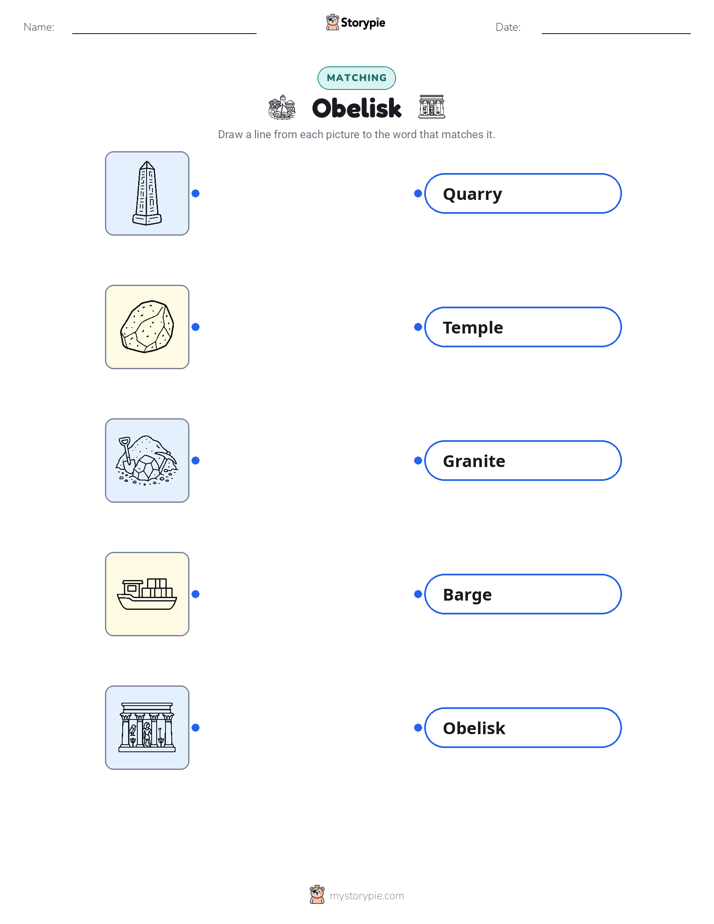
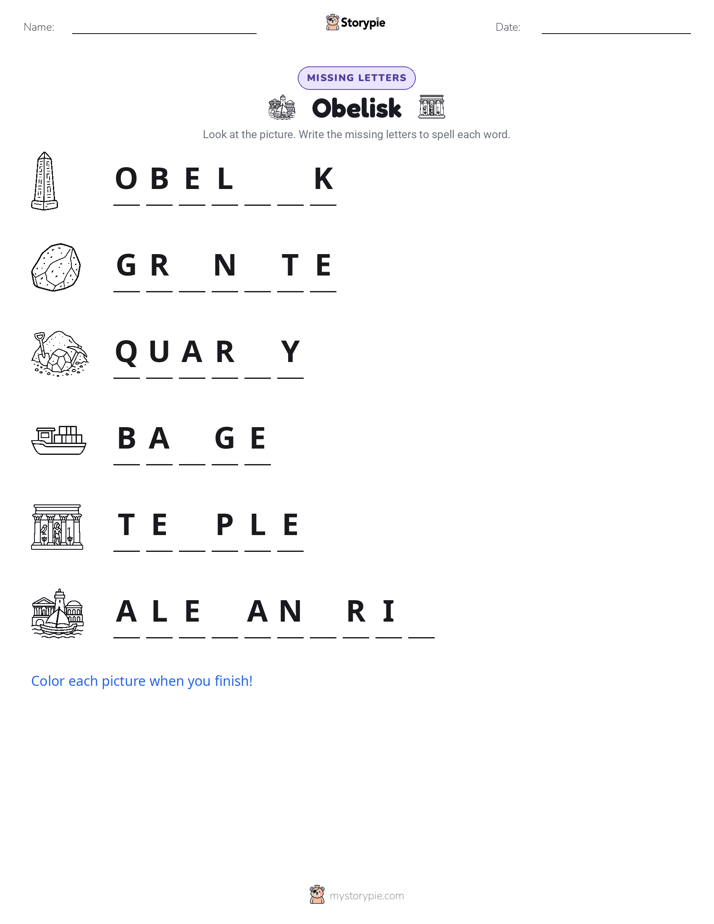
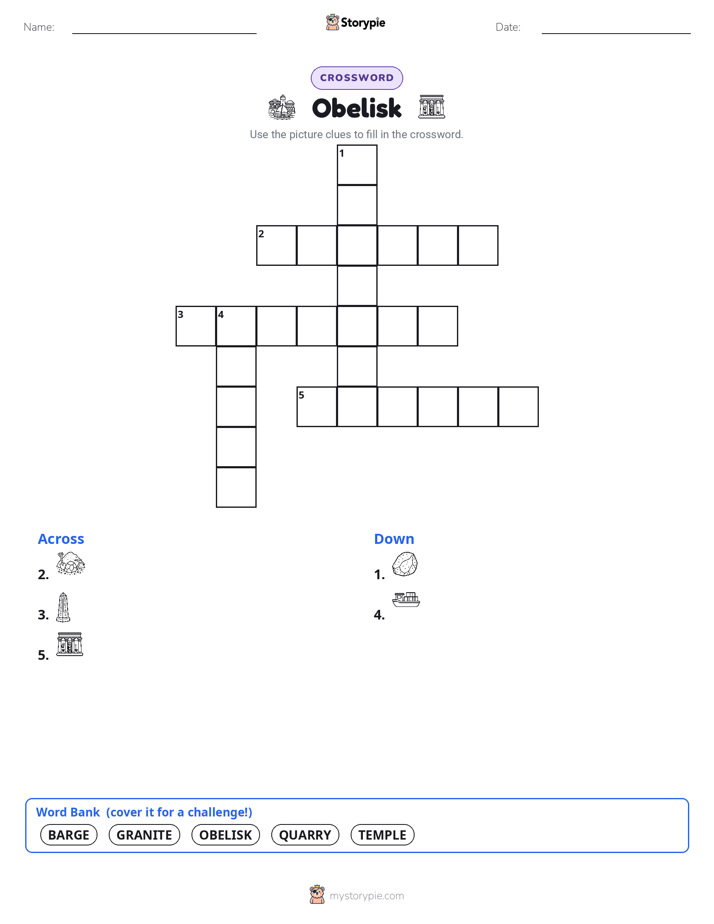
- Printable worksheets & coloring pages

Why Storypie for Schools
Students engaged. Prep in seconds. Evenings back to you.
- Worksheets & Quizzes
- Classroom Management
- Formative Assessment
- Custom Curriculum & Lesson Plans
- 27 Languages

Why Storypie for Homeschool
Curriculum done. They'll ask for more. Hours back in your day.
- Worksheet Generator
- First-Person Audio Stories
- Built-in Comprehension Quizzes
- Custom Curriculum & Lesson Plans
- Print & Go Activities