English

Sundial
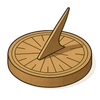
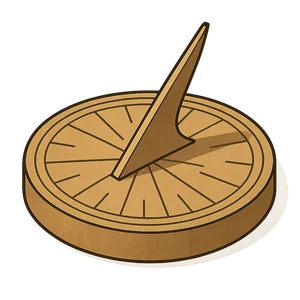
A sundial is an ancient device that tells the time of day by the apparent position of the Sun in the sky.
Reads at Grades 3–5 Listens at Grades 1–5
Print & create
Answer keys·No prep·Free with an account
28 worksheets · answer keys · full story · quiz · Ages 8-10 · CEFR B1
Plus adds 244,000+ more stories in 27 languages, audio for every one, and printables for all of them.
Just want Sundial?
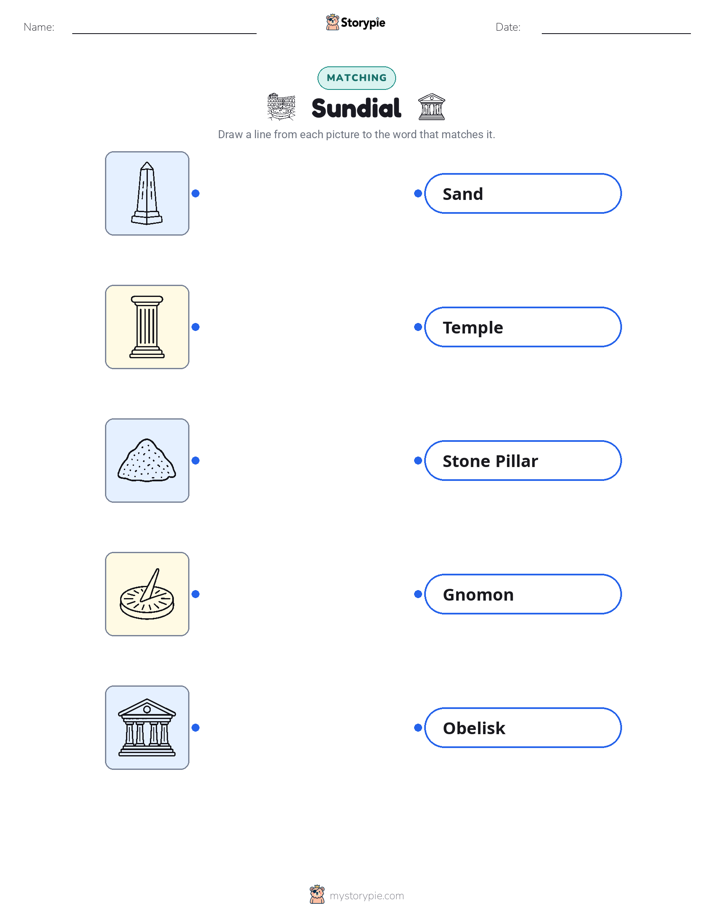
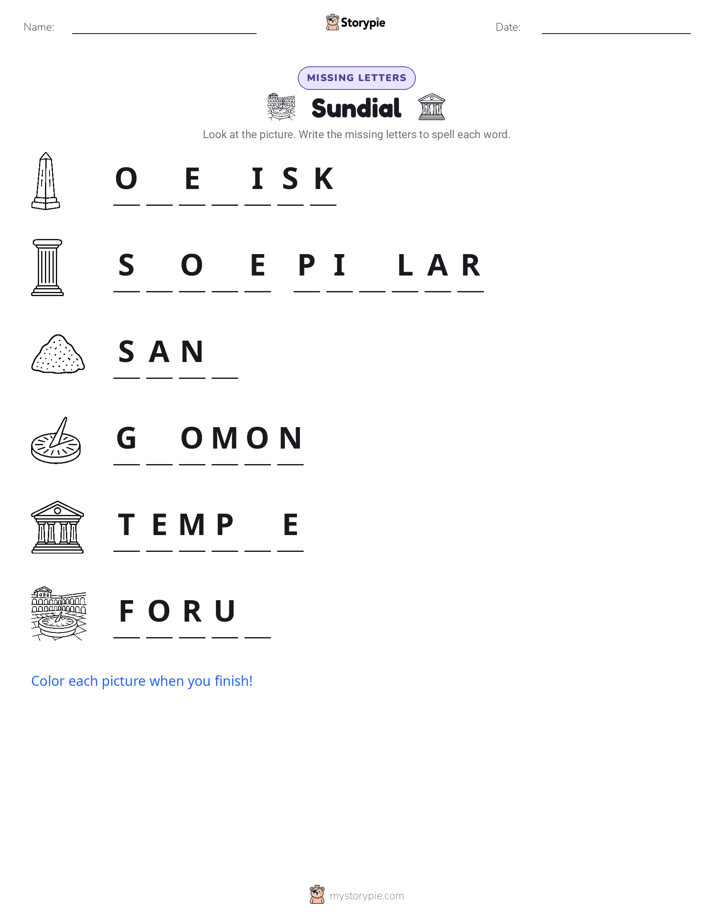
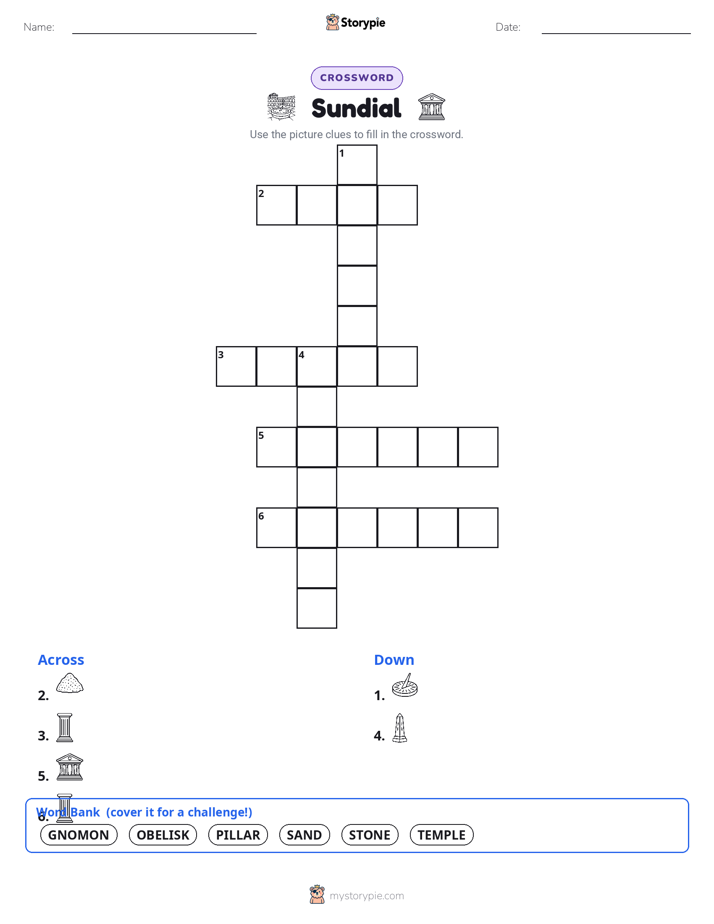
Hello there. My name is Sundial, and I am one of the oldest storytellers of time. While the clocks you see today have hands that sweep around a numbered face, my face is the ground beneath me, and my hand is a shadow, painted by the Sun itself. Imagine a world without a single tick or tock, a world without glowing digital numbers. Long, long ago, that was the world people lived in. They needed to know when to plant their precious crops to catch the best sunlight, when to gather for their midday meal, and when the day was fading into night so they could return home safely. That’s why I was born. My story began in a warm, sunny land called Egypt, over five thousand years ago, around 3500 BCE. The clever ancient Egyptians built magnificent stone monuments called obelisks that reached for the sky. They watched as the Sun journeyed overhead each day, and they noticed how the long, dark shadows of the obelisks crept slowly across the sand. It was a silent, steady march. They realized they could use these moving shadows to divide their day into parts. I was not a small garden ornament then; I was a towering pillar of stone. I was a clock made from the Earth and the sky, a simple but powerful idea that would help humans measure their days for thousands of years to come.
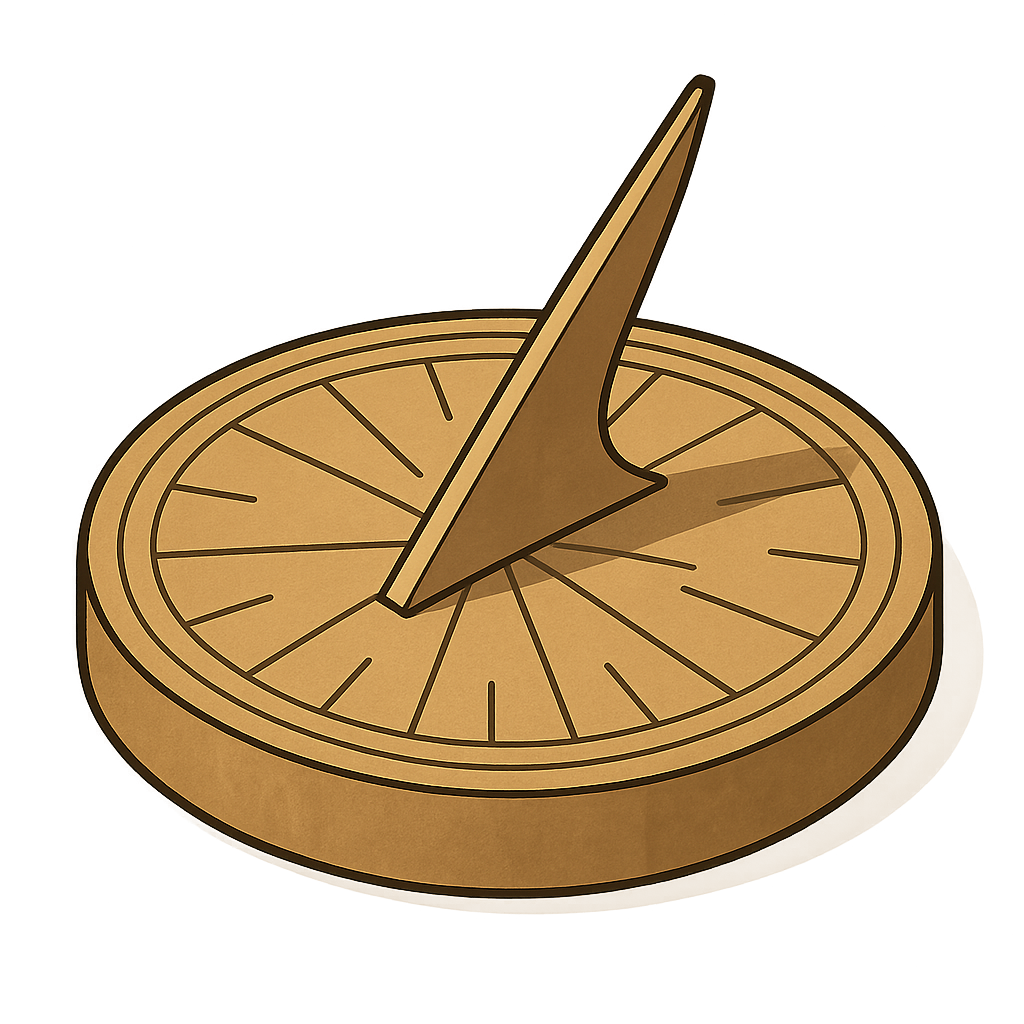
For many centuries, my form was simple. I was often just a stick or a post, which scientists now call a 'gnomon,' placed firmly in the ground. As my brilliant partner, the Sun, moved across the sky, my gnomon would cast a long, moving shadow. People would scratch lines in the dirt or place marked stones in a circle around me to show where the shadow fell at different times. These marks helped them see the morning hours pass, pinpoint the moment of midday when the shadow was shortest, and watch the afternoon stretch on. Around 1500 BCE, my Egyptian friends created a more refined version of me, with markings that divided the daylight into twelve equal parts. But my journey of improvement was far from over. Brilliant minds in other lands saw my potential and helped me become even better. The ancient Greeks, who loved science and mathematics, gave me a very clever upgrade around the 3rd century BCE. They figured out that the Earth is tilted, and if they tilted my gnomon to the exact same angle, my shadow would tell the time accurately all year long, not just in certain seasons. This was a huge leap forward. Then came the Romans, great builders and organizers. They loved me so much that they brought me to every corner of their vast empire. You could find me in bustling public forums where senators debated, in the quiet, peaceful gardens of wealthy citizens, and even mounted on the walls of buildings. I came in all shapes and sizes—some of me were flat discs, others were hollowed-out bowls, and the fanciest ones were decorated with amazing art. For thousands of years, I was the undisputed king of time, helping everyone from farmers to emperors schedule their lives by the light of the Sun.
The Sundial's Story: A Shadow in Time
Hello there. My name is Sundial, and I am one of the oldest storytellers of time. While the clocks you see today have hands that sweep around a numbered face, my face is the ground beneath me, and my hand is a shadow, painted by the Sun itself. Imagine a world without a single tick or tock, a world without glowing digital numbers. Long, long ago, that was the world people lived in. They needed to know when to plant their precious crops to catch the best sunlight, when to gather for their midday meal, and when the day was fading into night so they could return home safely. That’s why I was born. My story began in a warm, sunny land called Egypt, over five thousand years ago, around 3500 BCE. The clever ancient Egyptians built magnificent stone monuments called obelisks that reached for the sky. They watched as the Sun journeyed overhead each day, and they noticed how the long, dark shadows of the obelisks crept slowly across the sand. It was a silent, steady march. They realized they could use these moving shadows to divide their day into parts. I was not a small garden ornament then; I was a towering pillar of stone. I was a clock made from the Earth and the sky, a simple but powerful idea that would help humans measure their days for thousands of years to come.
For many centuries, my form was simple. I was often just a stick or a post, which scientists now call a 'gnomon,' placed firmly in the ground. As my brilliant partner, the Sun, moved across the sky, my gnomon would cast a long, moving shadow. People would scratch lines in the dirt or place marked stones in a circle around me to show where the shadow fell at different times. These marks helped them see the morning hours pass, pinpoint the moment of midday when the shadow was shortest, and watch the afternoon stretch on. Around 1500 BCE, my Egyptian friends created a more refined version of me, with markings that divided the daylight into twelve equal parts. But my journey of improvement was far from over. Brilliant minds in other lands saw my potential and helped me become even better. The ancient Greeks, who loved science and mathematics, gave me a very clever upgrade around the 3rd century BCE. They figured out that the Earth is tilted, and if they tilted my gnomon to the exact same angle, my shadow would tell the time accurately all year long, not just in certain seasons. This was a huge leap forward. Then came the Romans, great builders and organizers. They loved me so much that they brought me to every corner of their vast empire. You could find me in bustling public forums where senators debated, in the quiet, peaceful gardens of wealthy citizens, and even mounted on the walls of buildings. I came in all shapes and sizes—some of me were flat discs, others were hollowed-out bowls, and the fanciest ones were decorated with amazing art. For thousands of years, I was the undisputed king of time, helping everyone from farmers to emperors schedule their lives by the light of the Sun.
My long reign as the world’s main timekeeper began to change around the 14th century. In workshops across Europe, clever inventors created something new and astonishing: the mechanical clock. Tick-tock, tick-tock went their gears and springs. These machines were impressive because they didn't need my friend the Sun to work. They could keep time on cloudy days and all through the darkest nights. I must admit, I felt a little worried. Was my time in the sun over? Would I be forgotten, left to fade away like an old shadow? But I soon realized I had a new and very important job. For hundreds of years, those newfangled ticking clocks weren't perfect. They would run too fast or too slow. How did people know what the real time was? They looked to me. I was still the gold standard, the true timekeeper connected directly to the Earth and Sun. Clockmakers would bring their clocks out on a sunny day to set them correctly using my shadow. Today, you have watches and phones that are perfectly accurate, so you might not use me to catch the bus. But I am not gone. You can still find me standing proudly in parks, on the walls of ancient churches, and in beautiful gardens. I am a living piece of history, and I still work perfectly whenever the sun shines. I am a quiet reminder of a time when life moved a little more slowly, in rhythm with the sky, and I love teaching anyone who stops to watch my shadow about the Earth's amazing and timeless dance with the Sun.
Wow facts
About
A sundial is an ancient device that tells the time of day by the apparent position of the Sun in the sky. It works by casting a shadow from its gnomon onto a dial marked with hours.
Take a Quiz
Question 1 of 5
In the story, the sundial says its first form was a 'gnomon.' What is a gnomon?
Explore next




Want to do even more?
Go beyond exploring. Unlock tools that turn every story into real learning.

Storypie Plus for families
Full stories, quizzes, and printables. Nights and car rides, sorted.
- Unlimited audio stories
- Create Mode: your child stars in the story
- Offline downloads
- Printable worksheets & coloring pages

Why Storypie for Schools
Students engaged. Prep in seconds. Evenings back to you.
- Worksheets & Quizzes
- Classroom Management
- Formative Assessment
- Custom Curriculum & Lesson Plans
- 27 Languages

Why Storypie for Homeschool
Curriculum done. They'll ask for more. Hours back in your day.
- Worksheet Generator
- First-Person Audio Stories
- Built-in Comprehension Quizzes
- Custom Curriculum & Lesson Plans
- Print & Go Activities