English

Sundial
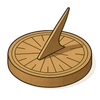
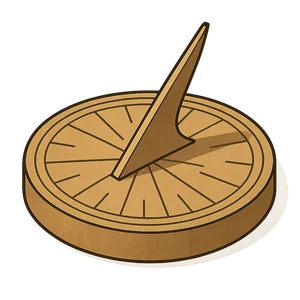
A sundial is an ancient device that tells the time of day by the apparent position of the Sun in the sky.
Reads at Grades 6–8 Listens at Grades 4–8
Print & create
Answer keys·No prep·Free with an account
28 worksheets · answer keys · full story · quiz · Ages 10-12 · CEFR B2
Plus adds 244,000+ more stories in 27 languages, audio for every one, and printables for all of them.
Just want Sundial?
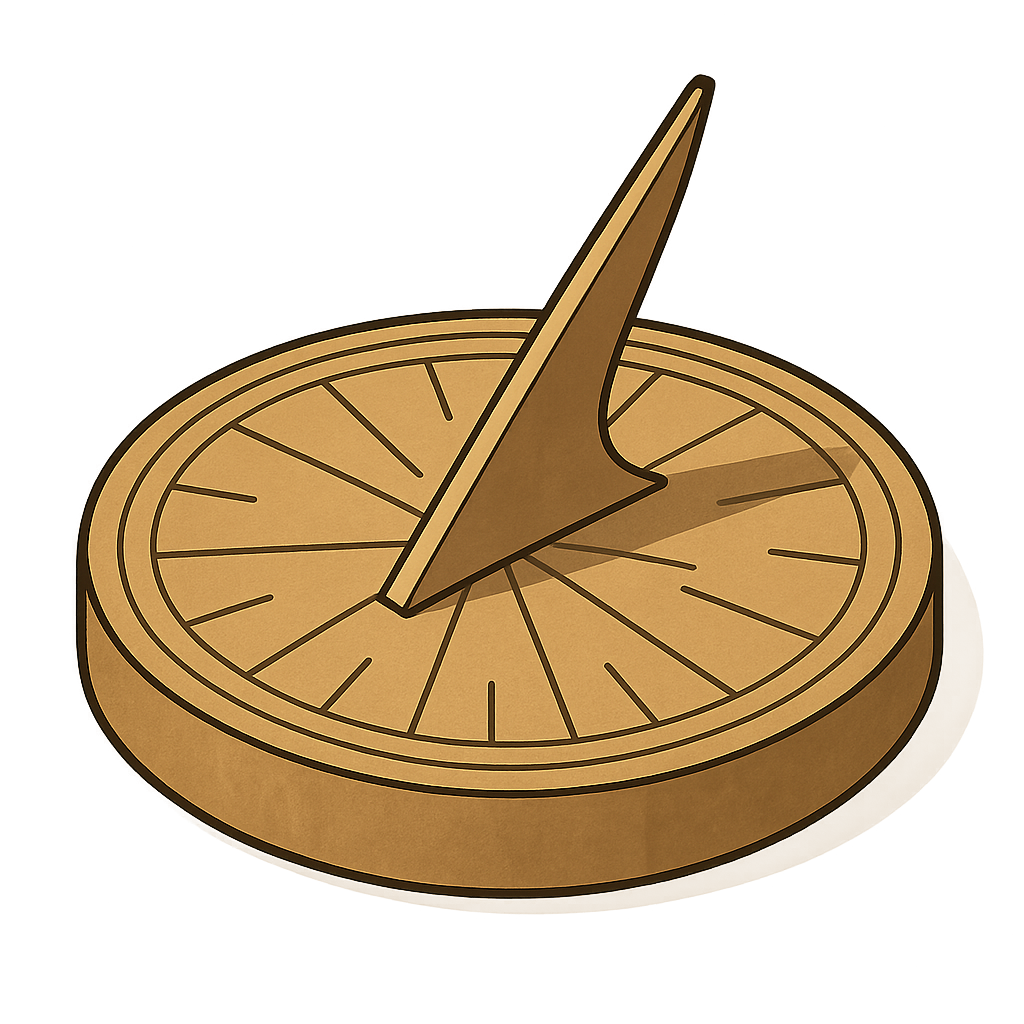
My story begins not with gears or batteries, but with light itself. I am a Sundial, and for millennia, I have measured the day’s journey by tracing a line of shadow. Before I existed, humanity lived by a rhythm dictated by the sun’s broad strokes across the sky—there was morning, midday, and evening, but the hours in between were a mystery. Farmers and priests looked to the heavens, making their best guesses to plant their crops or begin their sacred rituals. They needed a more reliable guide, a way to capture the sun’s silent passage and give it a voice. My earliest ancestors were born from this need in ancient Egypt, around 3500 BCE. They were not small and delicate like some of my later forms, but immense and powerful. They were the obelisks, towering stone pillars that pierced the sky. As the sun god Ra journeyed overhead, these giants cast long, dark fingers across the sand. When the shadow was at its very shortest, people knew it was noon, the precise middle of the day. This simple division of morning and afternoon was a revolution. It allowed them to organize their lives with a newfound certainty, bringing order to their world with nothing more than stone and sunlight.
From those monumental beginnings, I began to change, becoming more personal and precise. The desire to understand time more deeply was a powerful force. Around 1500 BCE, clever Egyptian artisans created the first portable versions of me. They crafted L-shaped blocks of stone, marked with divisions representing the hours. These could be moved and oriented toward the sun, allowing a person to carry a piece of time with them. But my greatest intellectual leap occurred when I traveled to ancient Greece, a land of philosophers and mathematicians. They were not content with just knowing the hour; they wanted to understand the geometry of the cosmos. Around 280 BCE, a Chaldean astronomer named Berossus looked at my flat face and imagined something better. He designed a new form for me, a bowl-shaped instrument he called a 'scaphe.' This was a stroke of genius. The sun does not travel in a straight line across the sky, but in a great arc that changes with the seasons. By carving me into a hemisphere, a hollowed-out bowl, Berossus made my surface mirror the sun’s own path. The shadow cast by the central pointer, or gnomon, now moved at a much more constant speed across the curved, marked lines. My time-telling became remarkably accurate, no matter the time of day or the season of the year.
I Am the Sundial
My story begins not with gears or batteries, but with light itself. I am a Sundial, and for millennia, I have measured the day’s journey by tracing a line of shadow. Before I existed, humanity lived by a rhythm dictated by the sun’s broad strokes across the sky—there was morning, midday, and evening, but the hours in between were a mystery. Farmers and priests looked to the heavens, making their best guesses to plant their crops or begin their sacred rituals. They needed a more reliable guide, a way to capture the sun’s silent passage and give it a voice. My earliest ancestors were born from this need in ancient Egypt, around 3500 BCE. They were not small and delicate like some of my later forms, but immense and powerful. They were the obelisks, towering stone pillars that pierced the sky. As the sun god Ra journeyed overhead, these giants cast long, dark fingers across the sand. When the shadow was at its very shortest, people knew it was noon, the precise middle of the day. This simple division of morning and afternoon was a revolution. It allowed them to organize their lives with a newfound certainty, bringing order to their world with nothing more than stone and sunlight.
From those monumental beginnings, I began to change, becoming more personal and precise. The desire to understand time more deeply was a powerful force. Around 1500 BCE, clever Egyptian artisans created the first portable versions of me. They crafted L-shaped blocks of stone, marked with divisions representing the hours. These could be moved and oriented toward the sun, allowing a person to carry a piece of time with them. But my greatest intellectual leap occurred when I traveled to ancient Greece, a land of philosophers and mathematicians. They were not content with just knowing the hour; they wanted to understand the geometry of the cosmos. Around 280 BCE, a Chaldean astronomer named Berossus looked at my flat face and imagined something better. He designed a new form for me, a bowl-shaped instrument he called a 'scaphe.' This was a stroke of genius. The sun does not travel in a straight line across the sky, but in a great arc that changes with the seasons. By carving me into a hemisphere, a hollowed-out bowl, Berossus made my surface mirror the sun’s own path. The shadow cast by the central pointer, or gnomon, now moved at a much more constant speed across the curved, marked lines. My time-telling became remarkably accurate, no matter the time of day or the season of the year.
My new, more accurate form was embraced with enthusiasm. The Romans, masters of engineering and organization, saw my value immediately. They placed me everywhere, making me a central feature of public life. I stood proudly in the bustling forums, in the quiet gardens of villas, and on the walls of important buildings across their vast empire. To see me was to see the influence of Roman order and punctuality. I was no longer just a tool; I was a symbol of civilization itself. As centuries passed, my journey continued into the lands of the Islamic world during the Middle Ages. Here, I was revered by scholars who possessed an incredible understanding of mathematics and trigonometry. They refined my design, creating intricate and breathtakingly beautiful instruments. They calculated the precise angles for my gnomon based on a city’s latitude and etched complex lines on my face to show not just the hour, but also the times for prayer. Meanwhile, in Europe, I found a new home on the walls of churches and monasteries, where my shadow called monks to their duties. Then, in the 14th century CE, a new voice began to mark the hours. The mechanical clock was born. I did not see it as a rival, but as a new kind of timekeeper, one who could work on cloudy days and speak through the long, dark nights when I had to fall silent.
Today, I know that my time as the world’s primary timekeeper has passed. You carry time in your pocket, on a device that glows with a light of its own, and you hear it in the digital chime of an alarm. I am no longer essential for catching a bus or scheduling a meeting. Yet, I am far from forgotten. I still stand in quiet gardens, on sunny university campuses, and in city parks, and I have found a new and profound purpose. I have become a teacher. I am a living demonstration of the beautiful, predictable dance of our planet. My simple shadow tells a grand story of the Earth’s daily rotation on its axis and its yearly orbit around the sun. When you watch my shadow creep across my face, you are witnessing the movement of our world through space. I am a bridge to the past, a connection to the first humans who looked up and wondered. In my silent, steady movement, I am a timeless reminder that our quest to understand the world is written in the language of science, nature, and the persistent chase of light.
Wow facts
About
A sundial is an ancient device that tells the time of day by the apparent position of the Sun in the sky. It works by casting a shadow from its gnomon onto a dial marked with hours.
Take a Quiz
Question 1 of 5
Summarize the main stages of the sundial's development as described in the story.
Explore next




Want to do even more?
Go beyond exploring. Unlock tools that turn every story into real learning.

Storypie Plus for families
Full stories, quizzes, and printables. Nights and car rides, sorted.
- Unlimited audio stories
- Create Mode: your child stars in the story
- Offline downloads
- Printable worksheets & coloring pages

Why Storypie for Schools
Students engaged. Prep in seconds. Evenings back to you.
- Worksheets & Quizzes
- Classroom Management
- Formative Assessment
- Custom Curriculum & Lesson Plans
- 27 Languages

Why Storypie for Homeschool
Curriculum done. They'll ask for more. Hours back in your day.
- Worksheet Generator
- First-Person Audio Stories
- Built-in Comprehension Quizzes
- Custom Curriculum & Lesson Plans
- Print & Go Activities