English

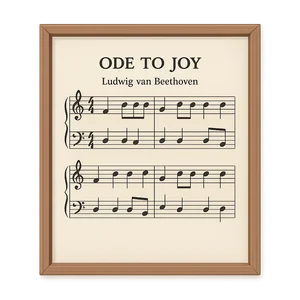
Ode to Joy
A celebrated poem by Friedrich Schiller written in 1785…
Reads at Grades 6–8 Listens at Grades 4–8
Print & create
Answer keys·No prep·Free with an account
28 worksheets · answer keys · full story · quiz · Ages 10-12 · CEFR B2
Plus adds 244,000+ more stories in 27 languages, audio for every one, and printables for all of them.
Just want Ode to Joy?
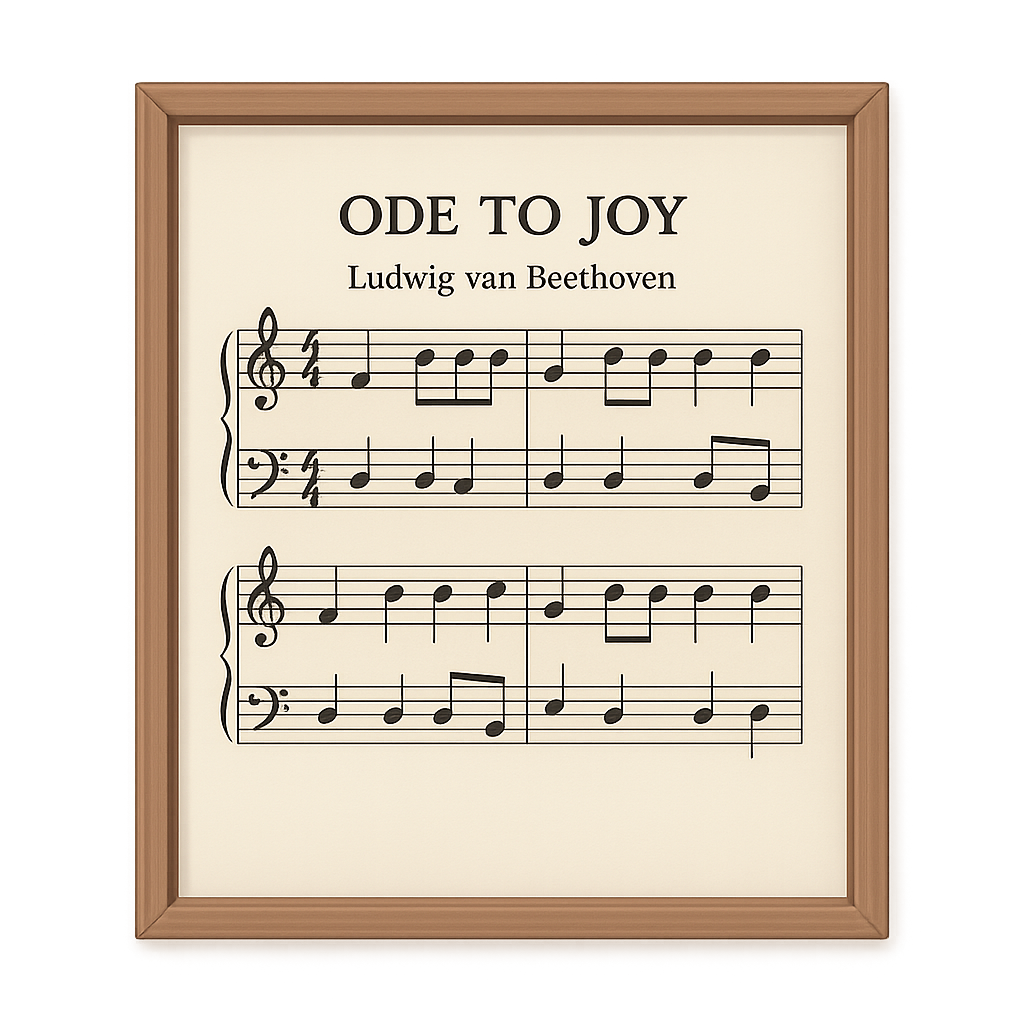
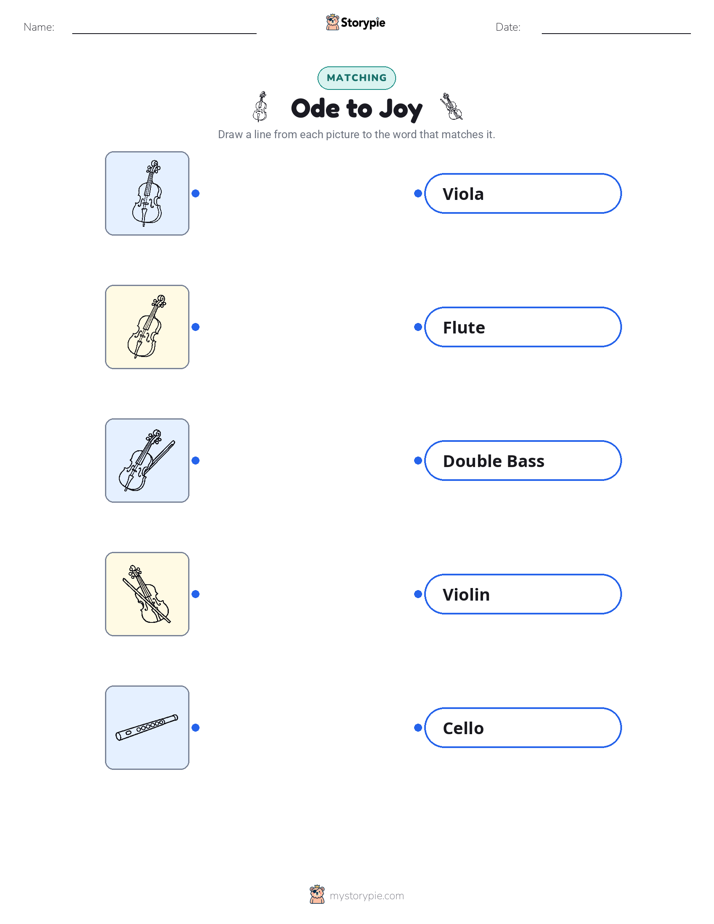
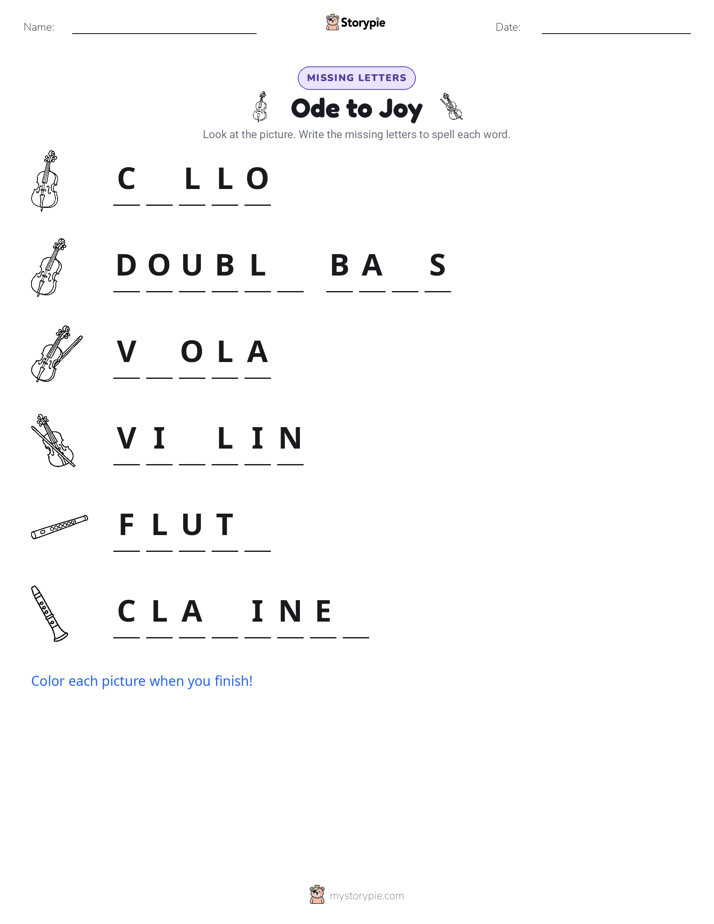
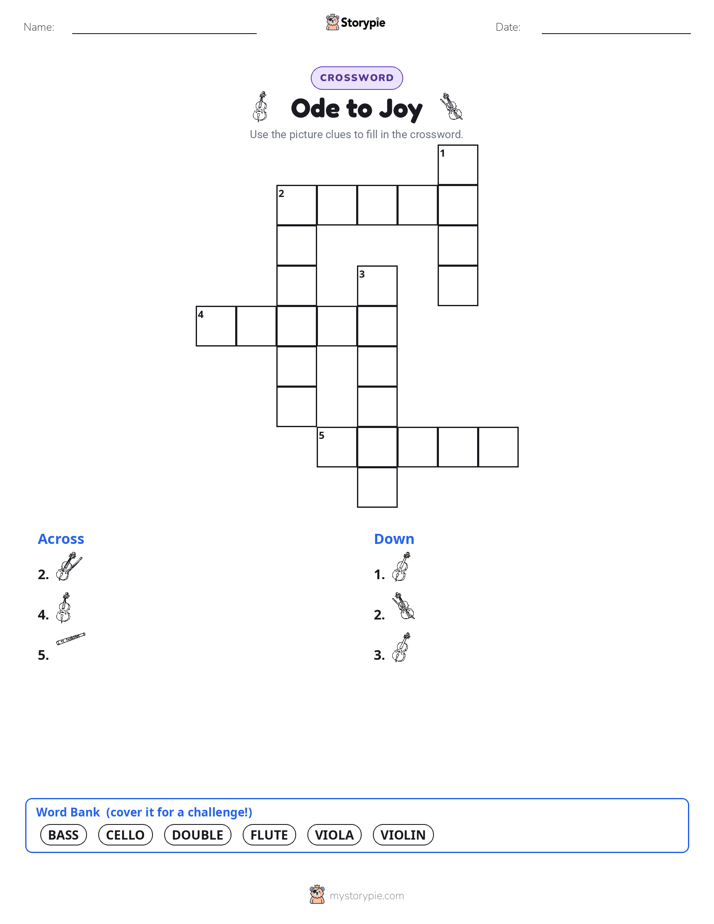
I begin not as a crash of cymbals or a blast of trumpets, but as a feeling, a quiet, hopeful idea waiting to be heard. I am not made of stone or paint, but of sound and emotion. My first breath is a simple, gentle melody, a theme whispered by the cellos and double basses in the quiet of a concert hall. I am like a secret shared among the lowest, warmest voices of the orchestra. Then, I begin to grow. I am passed from the violas to the violins, my voice rising in pitch and confidence. The woodwinds—the flutes, clarinets, and oboes—take hold of me, each adding a new layer of color and texture to my form. My simple theme is repeated, expanded, and woven into a rich tapestry of sound, gaining strength with every note. I build from a humble beginning into a soaring, triumphant anthem that fills every corner of the room with an undeniable feeling of pure, overwhelming happiness. I am the Ode to Joy.
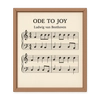
My existence is a collaboration between two brilliant minds, separated by decades but united in a powerful idea. My first creator was a poet, Friedrich Schiller, who dreamed me up as words on a page in the year 1785. His poem, 'An die Freude,' which means 'Ode to Joy,' was a passionate call for all people to cast aside their differences and unite as one family. It spoke of a world where friendship, love, and understanding would conquer all division. For decades, these words waited for their perfect musical partner. That partner was Ludwig van Beethoven, one of the most celebrated composers in history. He was captivated by Schiller's message of universal brotherhood and carried the poem with him for over thirty years, searching for the right music to express its profound meaning. Between the years of 1822 and 1824, while living in Vienna, Austria, he finally gave me my voice. By this time, Beethoven was almost completely deaf. He could not hear the sounds of the city or the notes played on a piano, but he heard me perfectly in the vast, silent concert hall of his mind. He wove Schiller's words and my melody into the grand finale of his masterpiece, his Symphony No. 9.
Ode to Joy
I begin not as a crash of cymbals or a blast of trumpets, but as a feeling, a quiet, hopeful idea waiting to be heard. I am not made of stone or paint, but of sound and emotion. My first breath is a simple, gentle melody, a theme whispered by the cellos and double basses in the quiet of a concert hall. I am like a secret shared among the lowest, warmest voices of the orchestra. Then, I begin to grow. I am passed from the violas to the violins, my voice rising in pitch and confidence. The woodwinds—the flutes, clarinets, and oboes—take hold of me, each adding a new layer of color and texture to my form. My simple theme is repeated, expanded, and woven into a rich tapestry of sound, gaining strength with every note. I build from a humble beginning into a soaring, triumphant anthem that fills every corner of the room with an undeniable feeling of pure, overwhelming happiness. I am the Ode to Joy.
My existence is a collaboration between two brilliant minds, separated by decades but united in a powerful idea. My first creator was a poet, Friedrich Schiller, who dreamed me up as words on a page in the year 1785. His poem, 'An die Freude,' which means 'Ode to Joy,' was a passionate call for all people to cast aside their differences and unite as one family. It spoke of a world where friendship, love, and understanding would conquer all division. For decades, these words waited for their perfect musical partner. That partner was Ludwig van Beethoven, one of the most celebrated composers in history. He was captivated by Schiller's message of universal brotherhood and carried the poem with him for over thirty years, searching for the right music to express its profound meaning. Between the years of 1822 and 1824, while living in Vienna, Austria, he finally gave me my voice. By this time, Beethoven was almost completely deaf. He could not hear the sounds of the city or the notes played on a piano, but he heard me perfectly in the vast, silent concert hall of his mind. He wove Schiller's words and my melody into the grand finale of his masterpiece, his Symphony No. 9.
My grand debut was an event that shook the musical world. It took place on May 7th, 1824, at the Kärntnertor Theatre in Vienna. The audience that gathered that night was expecting a traditional symphony—a magnificent, long piece of music performed solely by an orchestra. For three movements, that is what they received. But Beethoven had a revolutionary surprise waiting for them in the final act. After a dramatic and stormy introduction, a baritone singer suddenly stood up from his seat among the musicians. He sang out, inviting everyone to cast aside the somber tones and join in a more joyful song. Then, a full choir and three other soloists rose and joined the orchestra. My melody, which had been hinted at earlier, finally erupted with the full power of the human voice. It was the first time a major composer had ever dared to include singers in a symphony. The sound was immense, a wave of hope and celebration that washed over the audience. When the final note faded, there was a moment of stunned silence, followed by thunderous applause. Beethoven, who had been on stage conducting, could not hear the ovation. One of the young singers gently took his arm and turned him around so he could see the thousands of people on their feet, waving hats and handkerchiefs in the air. He saw the joy he had created, a joy I was born to inspire.
My journey did not end in that Vienna concert hall. I traveled across the world, becoming a symbol of freedom, peace, and unity. My melody speaks a language that everyone can understand, even without Schiller's words. In 1972, a special arrangement of my theme was adopted as the official Anthem of Europe, representing the ideals of cooperation and harmony that the European Union was built upon. My most powerful moment may have come in 1989. When the Berlin Wall, a concrete barrier that had divided a city and a nation for decades, finally came down, I was there to celebrate. The conductor Leonard Bernstein led a special performance in Berlin, changing my central word from 'Freude' (Joy) to 'Freiheit' (Freedom). I was played by musicians from both East and West Germany, a powerful symbol of their reunification. Today, you can still hear me everywhere—in movies, at the Olympic Games, and even in spontaneous flash mobs where strangers come together in public squares to sing my tune. I have become a universal song of happiness.
I am more than just notes on a page or sound waves in the air; I am a feeling. I am the hope for friendship in a divided world, the celebration of life's simple pleasures, and the profound belief that every person, everywhere, is connected. Ludwig van Beethoven gave me to the world as a gift, a powerful reminder that even when facing personal struggles like his deafness, it is possible to create something of immense beauty and unity. When you hear my melody, you are connecting across nearly two centuries to him, to Friedrich Schiller, and to every human being who has ever been moved by that powerful spark of joy. I do not live behind glass in a museum. I live in the air, in your ears, and in your heart, forever singing a song of hope for all humankind.
Wow facts
About
A celebrated poem by Friedrich Schiller written in 1785, famously set to music by Ludwig van Beethoven in the final movement of his Ninth Symphony in 1824, becoming a global anthem of unity and hope.
Take a Quiz
Question 1 of 5
In your own words, describe the key events of my premiere at the Kärntnertor Theatre on May 7th, 1824.
Explore next



Want to do even more?
Go beyond exploring. Unlock tools that turn every story into real learning.

Storypie Plus for families
Full stories, quizzes, and printables. Nights and car rides, sorted.
- Unlimited audio stories
- Create Mode: your child stars in the story
- Offline downloads
- Printable worksheets & coloring pages

Why Storypie for Schools
Students engaged. Prep in seconds. Evenings back to you.
- Worksheets & Quizzes
- Classroom Management
- Formative Assessment
- Custom Curriculum & Lesson Plans
- 27 Languages

Why Storypie for Homeschool
Curriculum done. They'll ask for more. Hours back in your day.
- Worksheet Generator
- First-Person Audio Stories
- Built-in Comprehension Quizzes
- Custom Curriculum & Lesson Plans
- Print & Go Activities