English

Origami
Origami is the Japanese art of paper folding…
Reads at Grades 6–8 Listens at Grades 4–8
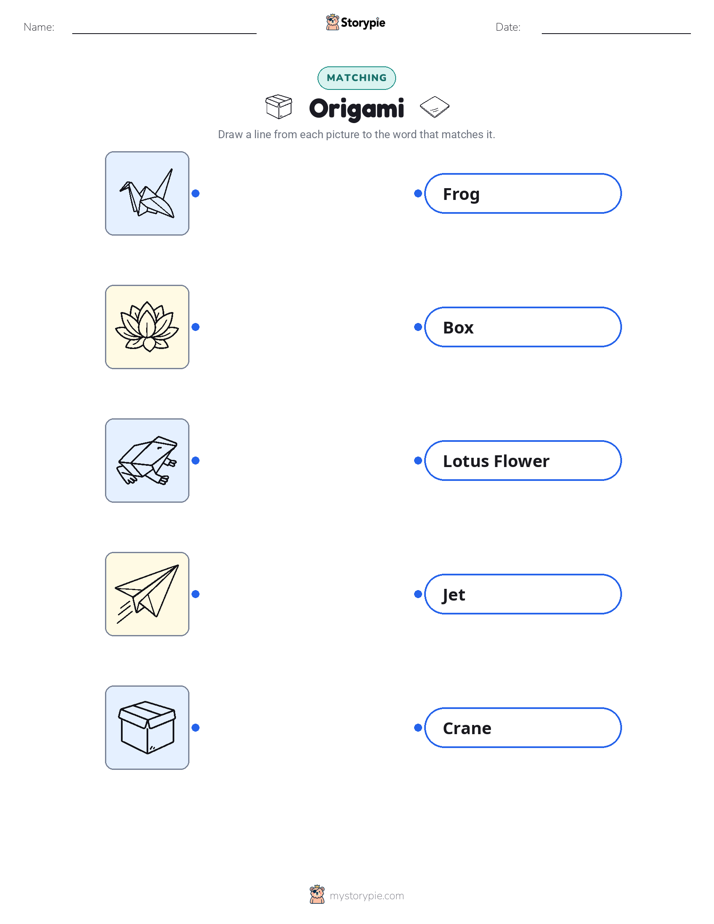
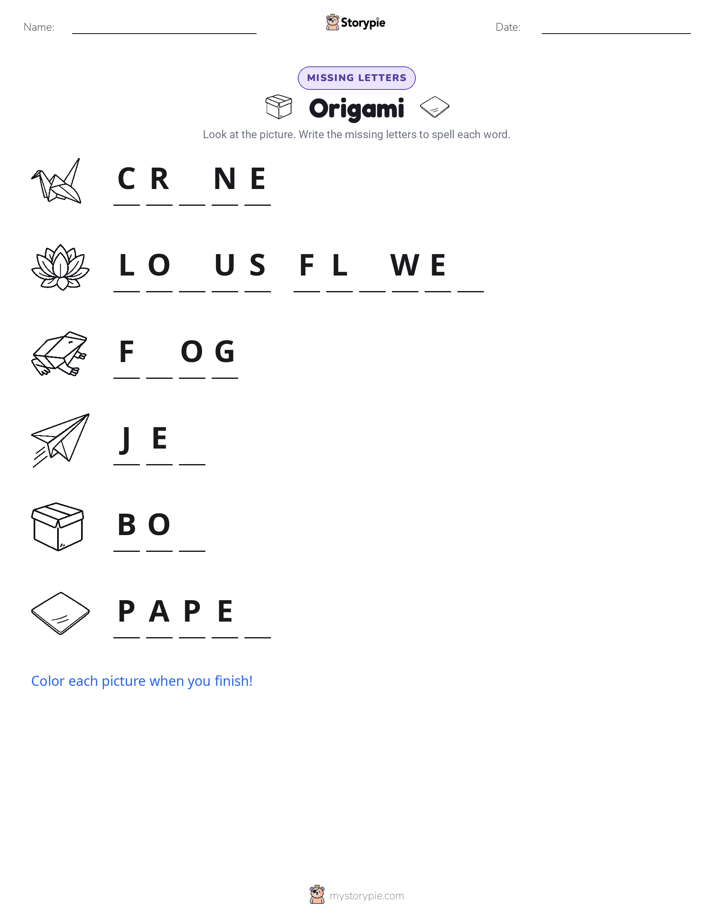
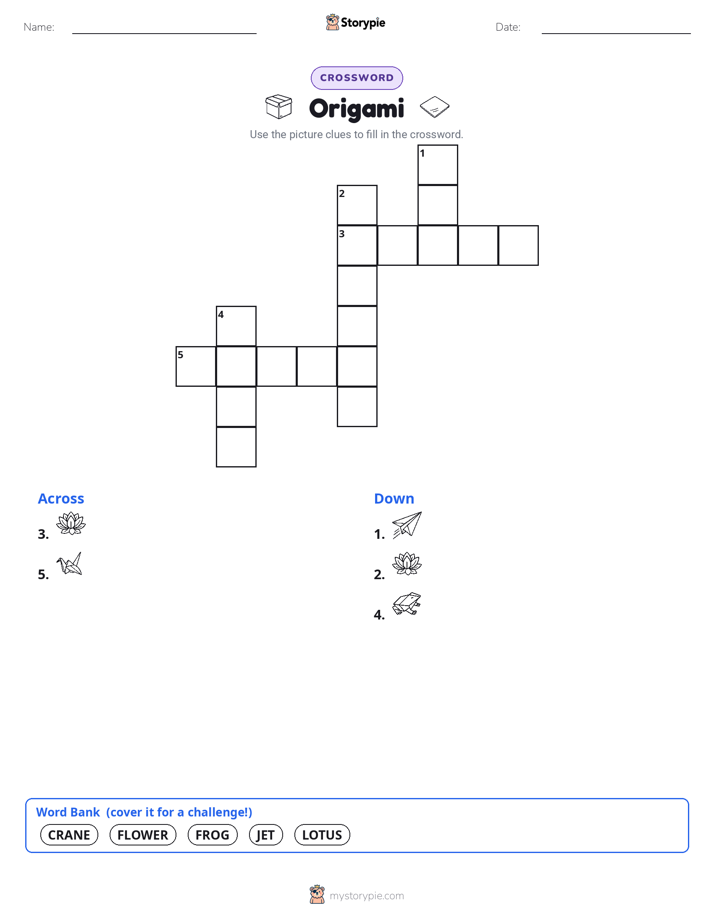
Print & create
Answer keys·No prep·Free with an account
28 worksheets · answer keys · full story · quiz · Ages 10-12 · CEFR B2
Plus adds 208,000+ more stories in 27 languages, audio for every one, and printables for all of them.
Just want Origami?
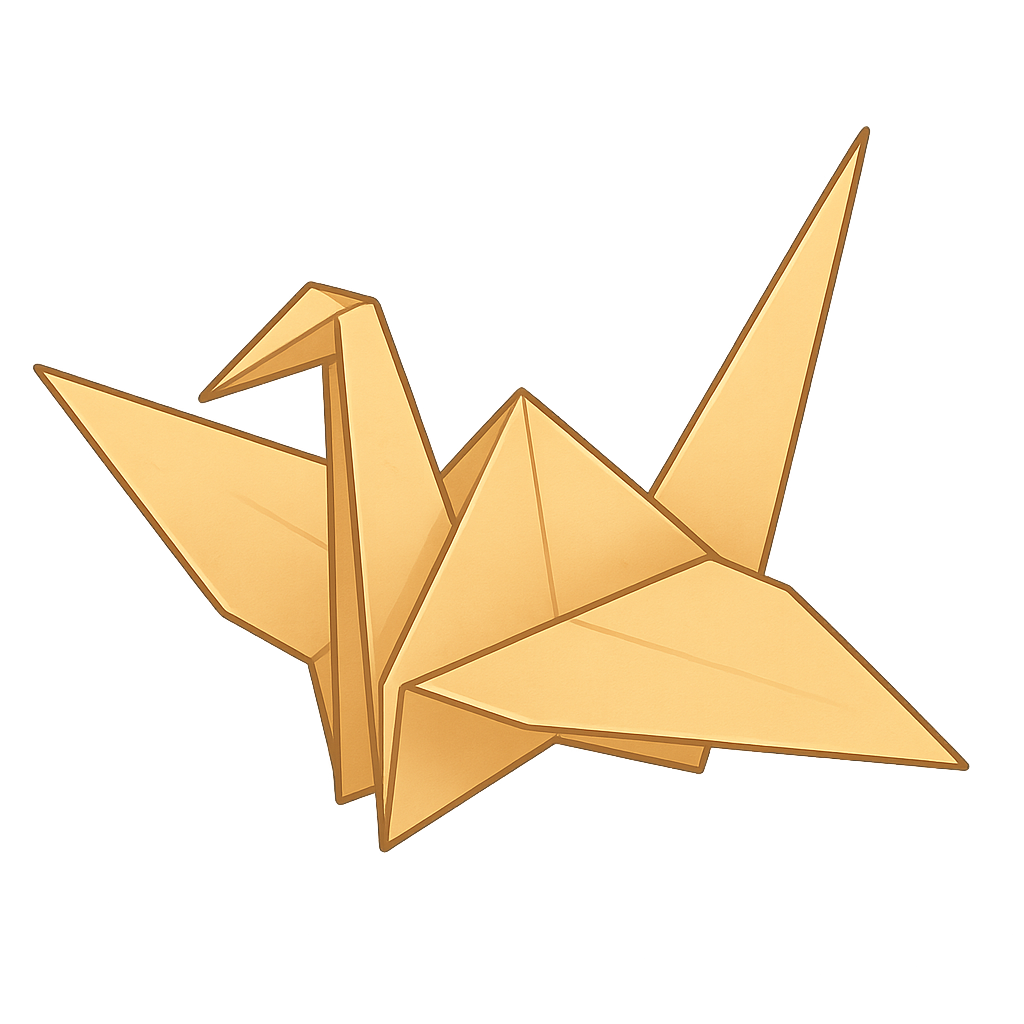
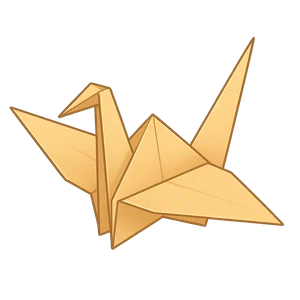
Before I have a name, I am just a possibility, a quiet square of potential waiting in your hands. I can be any color you can imagine—a deep ocean blue, a bright sunburst yellow, a soft cherry-blossom pink. I am flat and still, but I hold infinite shapes within me. With a few careful pinches, precise tucks, and crisp, clean creases, I begin to transform. A corner tucks inward, a side folds over, and suddenly, I am no longer just a sheet. I gain wings and become a crane, a symbol of hope ready to take flight. I grow delicate petals and become a lotus, a flower of purity that seems to float on a pond. I can become a jumping frog, a soaring jet, or a box to hold a tiny secret. I am the magic hidden in a simple piece of paper, an entire world waiting to unfold. I am Origami, the ancient art of paper folding, and my story has been creased into the pages of history.
My story begins not as a toy, but as a treasure during Japan's elegant Heian period, which spanned from the year 794 to 1185. My parent, paper, first arrived from China around the 6th century, and for a long time, it was a luxury. It was so precious that only the wealthiest nobles, powerful samurai, and dedicated monks could afford to use me for more than just writing. They didn't fold me into animals for fun; my first purpose was much more serious and symbolic. I was folded into special, beautiful shapes called 'noshi' and attached to gifts as a token of good fortune and sincerity. I was a quiet message of respect, a part of sacred Shinto ceremonies. For hundreds of years, I remained in this formal world. But everything changed during Japan’s Edo period, from 1603 to 1868. Paper became plentiful and affordable, and I found myself in the hands of everyone—merchants, farmers, and especially children. I became a form of play, a creative challenge, and a way to make everyday beauty. In 1797, a book was published called 'Hiden Senbazuru Orikata', which means 'Secret to Folding One Thousand Cranes'. It showed people how to fold many connected cranes from a single sheet of paper, and from this, the powerful legend grew that anyone who folded one thousand of my crane forms would be granted a special wish.
A Whisper in the Paper
Before I have a name, I am just a possibility, a quiet square of potential waiting in your hands. I can be any color you can imagine—a deep ocean blue, a bright sunburst yellow, a soft cherry-blossom pink. I am flat and still, but I hold infinite shapes within me. With a few careful pinches, precise tucks, and crisp, clean creases, I begin to transform. A corner tucks inward, a side folds over, and suddenly, I am no longer just a sheet. I gain wings and become a crane, a symbol of hope ready to take flight. I grow delicate petals and become a lotus, a flower of purity that seems to float on a pond. I can become a jumping frog, a soaring jet, or a box to hold a tiny secret. I am the magic hidden in a simple piece of paper, an entire world waiting to unfold. I am Origami, the ancient art of paper folding, and my story has been creased into the pages of history.
My story begins not as a toy, but as a treasure during Japan's elegant Heian period, which spanned from the year 794 to 1185. My parent, paper, first arrived from China around the 6th century, and for a long time, it was a luxury. It was so precious that only the wealthiest nobles, powerful samurai, and dedicated monks could afford to use me for more than just writing. They didn't fold me into animals for fun; my first purpose was much more serious and symbolic. I was folded into special, beautiful shapes called 'noshi' and attached to gifts as a token of good fortune and sincerity. I was a quiet message of respect, a part of sacred Shinto ceremonies. For hundreds of years, I remained in this formal world. But everything changed during Japan’s Edo period, from 1603 to 1868. Paper became plentiful and affordable, and I found myself in the hands of everyone—merchants, farmers, and especially children. I became a form of play, a creative challenge, and a way to make everyday beauty. In 1797, a book was published called 'Hiden Senbazuru Orikata', which means 'Secret to Folding One Thousand Cranes'. It showed people how to fold many connected cranes from a single sheet of paper, and from this, the powerful legend grew that anyone who folded one thousand of my crane forms would be granted a special wish.
For centuries, my secrets were shared from parent to child, teacher to student, often without any written instructions at all. But my leap across oceans and cultures was guided by one brilliant man who understood my heart: Akira Yoshizawa. He was born in Japan on March 14th, 1911, and he saw me as more than just a traditional craft. To him, I was a powerful medium for artistic expression, an art form as profound as sculpture or painting. He dedicated his life to exploring my possibilities, creating over 50,000 new and wonderfully complex models. He folded animals that seemed so alive they looked ready to leap off the table, their paper muscles and feathers shaped with breathtaking skill. But perhaps his greatest gift to me, and to the world, was a new language. Before him, folding instructions were often confusing and inconsistent. Working with American author Samuel Randlett, he helped to standardize a system of dotted lines for valley folds, dashed lines for mountain folds, and curving arrows to show movement. This visual guide, now known as the Yoshizawa-Randlett system, became my universal language. It meant a person in Brazil could create the exact same swan as a person in Egypt, without sharing a single spoken word. I no longer belonged to just one country; I belonged to everyone.
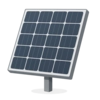
Today, you might think my journey ends in art galleries and on classroom desks, but that is only part of my modern story. I have folded myself into the future in ways my early creators could never have imagined. Scientists and engineers study my folds to solve some of the world's most complex problems. The way I can be folded into a small, flat shape and then expand into a large, intricate structure has inspired incredible inventions. Scientists at NASA looked at my principles to design vast solar panels for satellites that can travel into space compactly and then unfold to capture the sun's energy. Engineers studied my mechanics to create car airbags that can explode from a tiny compartment to a life-saving cushion in a fraction of a second. Even medical pioneers use my concepts to design tiny heart stents that can be guided through the body and then expanded to open a blocked vessel. From a simple piece of paper, I have shown that anything is possible. I am a reminder that within the simplest things lies the potential for incredible beauty, complex solutions, and boundless imagination. So the next time you hold a square of paper, remember my story. What new shape, what new idea, what new world will you fold into existence?
Wow facts
About
Origami is the Japanese art of paper folding, where a flat square sheet of paper is transformed into a finished sculpture through folding techniques without cutting or gluing.
Take a Quiz
Question 1 of 5
What is the central theme of the story?
Explore next


Want to do even more?
Go beyond exploring. Unlock tools that turn every story into real learning.

Storypie Plus for families
Full stories, quizzes, and printables. Nights and car rides, sorted.
- Unlimited audio stories
- Create Mode: your child stars in the story
- Offline downloads
- Printable worksheets & coloring pages

Why Storypie for Schools
Students engaged. Prep in seconds. Evenings back to you.
- Worksheets & Quizzes
- Classroom Management
- Formative Assessment
- Custom Curriculum & Lesson Plans
- 27 Languages

Why Storypie for Homeschool
Curriculum done. They'll ask for more. Hours back in your day.
- Worksheet Generator
- First-Person Audio Stories
- Built-in Comprehension Quizzes
- Custom Curriculum & Lesson Plans
- Print & Go Activities