English

Origami
Origami is the Japanese art of paper folding…
Reads at Grades 3–5 Listens at Grades 1–5
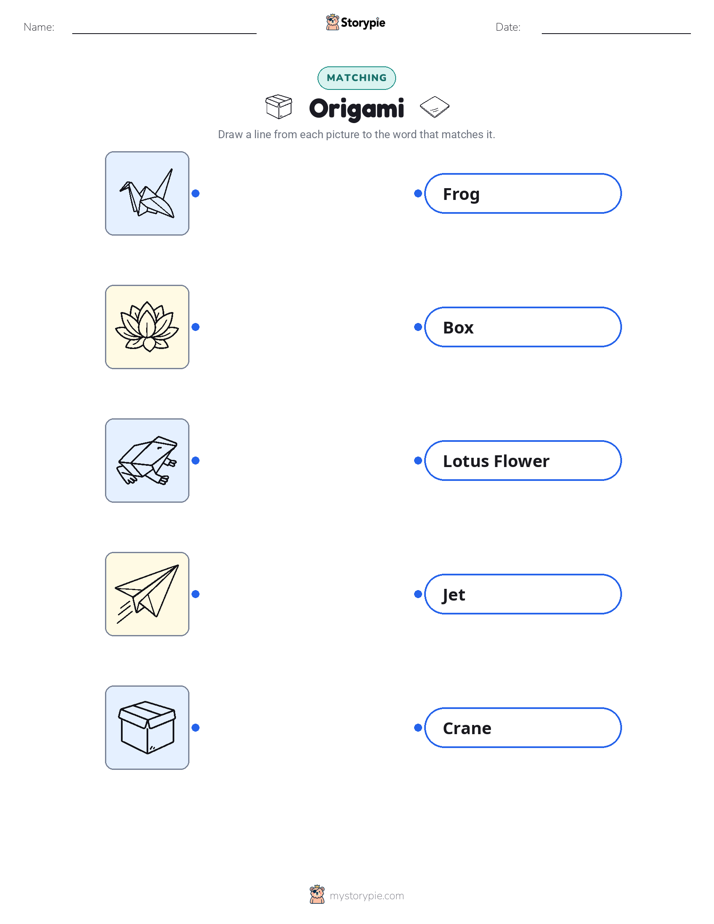
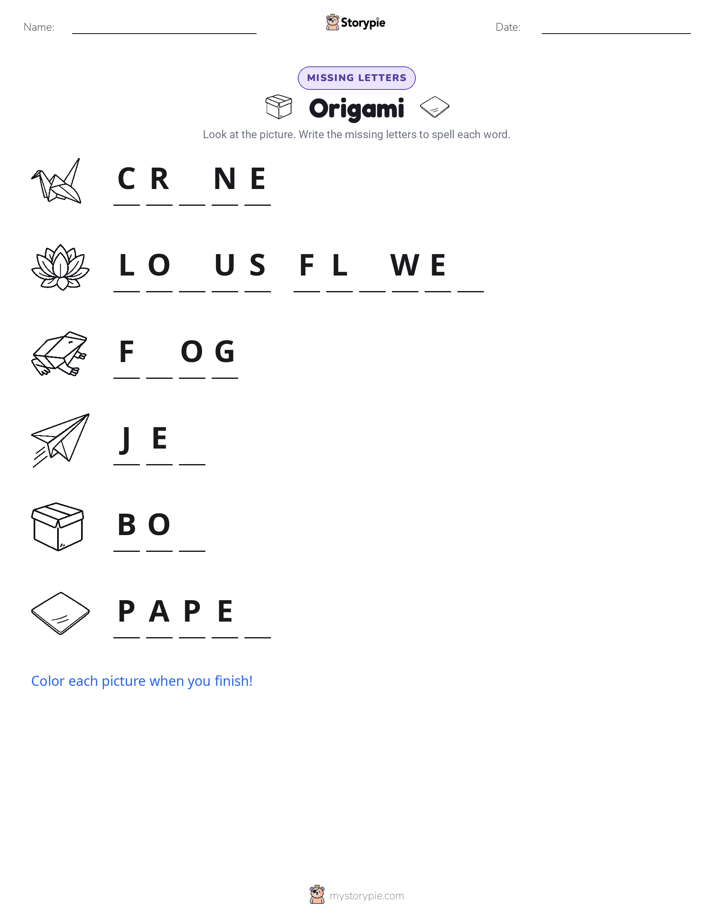
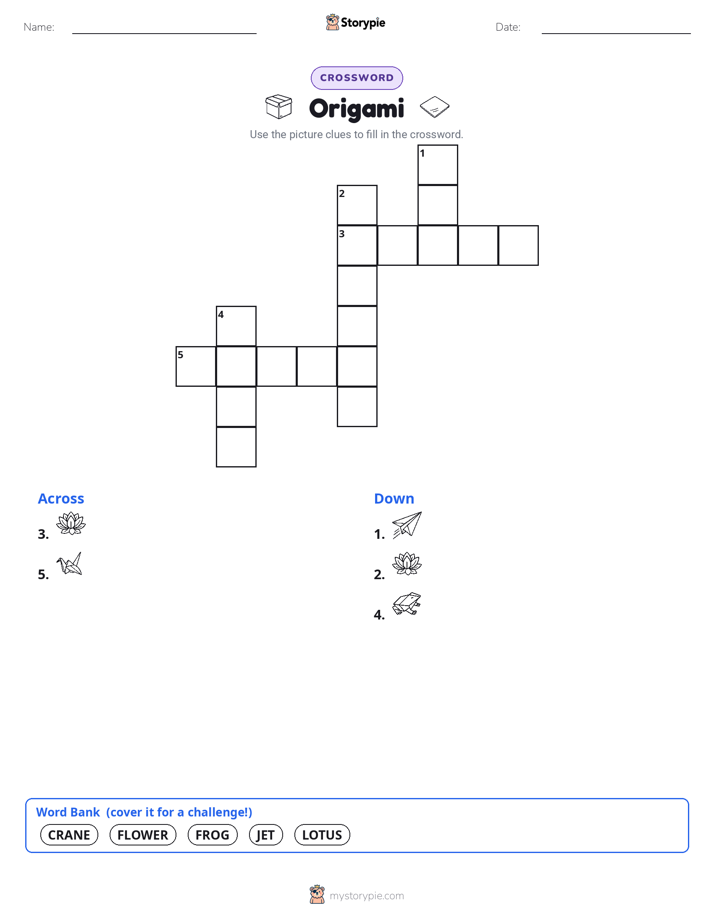
Print & create
Answer keys·No prep·Free with an account
28 worksheets · answer keys · full story · quiz · Ages 8-10 · CEFR B1
Plus adds 208,000+ more stories in 27 languages, audio for every one, and printables for all of them.
Just want Origami?
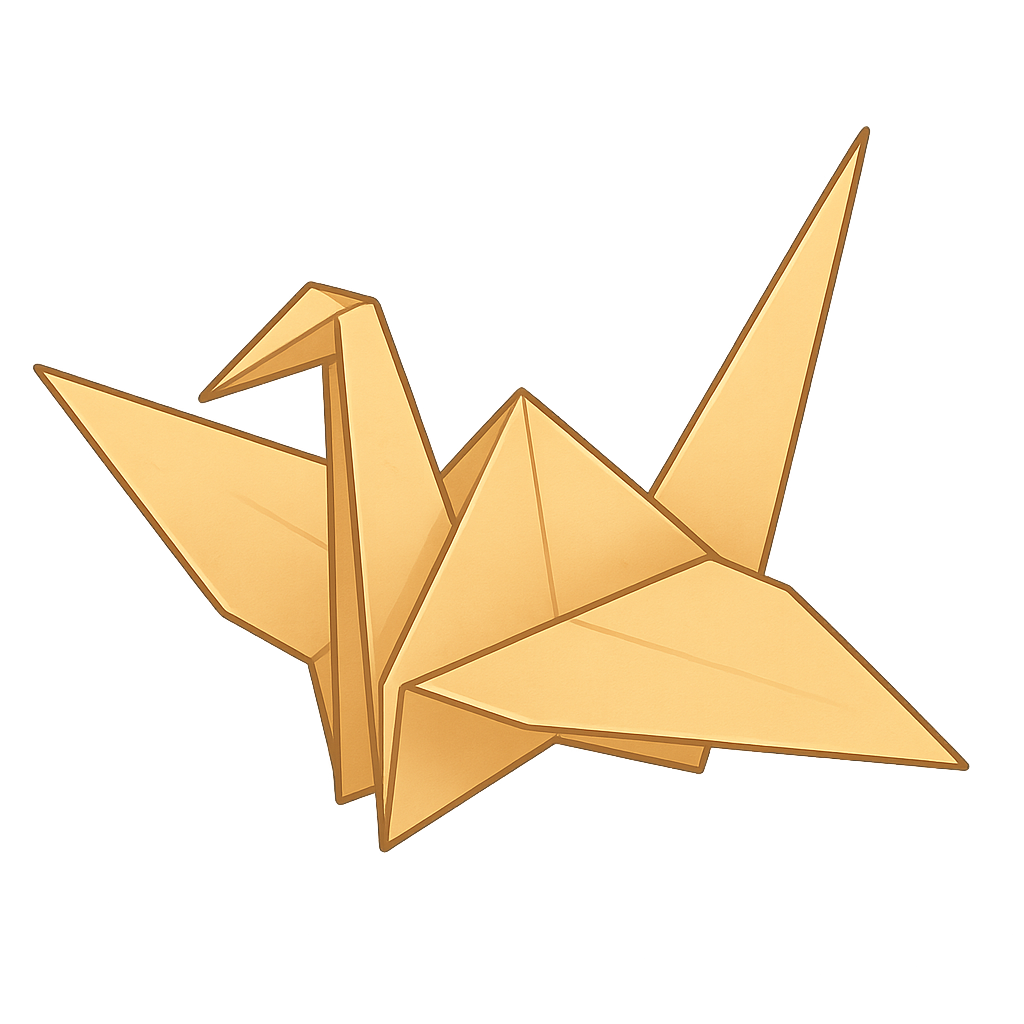
It all begins when I am just a flat, quiet square. I might be any color of the rainbow, waiting patiently. Then, I feel the warmth of a pair of hands. Rustle, rustle. My journey starts with a single, perfect fold. A crisp line appears where there was none before. With another pinch and a tuck, I start to change. A flat corner can become a pointed beak or a tiny foot. Can you imagine a simple square learning to fly. I can become a bird with wings that flap, a frog that can hop across a table, or a boat ready to sail a puddle sea. With every crease, a new possibility is born. I can be as simple as a cup or as complex as a dragon with a hundred scales. My magic is in the fold, a secret whispered from paper to fingers. I am the ancient and beautiful art of Origami.
My story starts in Japan, a very long time ago. After paper traveled from China around the 6th century, I began to take shape. In those early days, paper was rare and precious, as valuable as silk. So, I wasn’t for playing. I was used only for very important things. During the Heian Period, which lasted from 794 to 1185, I was folded into special shapes for religious ceremonies. For Shinto weddings, two paper butterflies were created, one for the bride and one for the groom, to flutter together as a blessing. Even the strong Samurai warriors knew me. They would exchange gifts decorated with folded paper good-luck charms called ‘noshi’ to show respect and wish each other well. I was a serious art form, a quiet and beautiful way to show honor, offer a prayer, or share a special feeling without using words.
The Story of Origami
It all begins when I am just a flat, quiet square. I might be any color of the rainbow, waiting patiently. Then, I feel the warmth of a pair of hands. Rustle, rustle. My journey starts with a single, perfect fold. A crisp line appears where there was none before. With another pinch and a tuck, I start to change. A flat corner can become a pointed beak or a tiny foot. Can you imagine a simple square learning to fly. I can become a bird with wings that flap, a frog that can hop across a table, or a boat ready to sail a puddle sea. With every crease, a new possibility is born. I can be as simple as a cup or as complex as a dragon with a hundred scales. My magic is in the fold, a secret whispered from paper to fingers. I am the ancient and beautiful art of Origami.
My story starts in Japan, a very long time ago. After paper traveled from China around the 6th century, I began to take shape. In those early days, paper was rare and precious, as valuable as silk. So, I wasn’t for playing. I was used only for very important things. During the Heian Period, which lasted from 794 to 1185, I was folded into special shapes for religious ceremonies. For Shinto weddings, two paper butterflies were created, one for the bride and one for the groom, to flutter together as a blessing. Even the strong Samurai warriors knew me. They would exchange gifts decorated with folded paper good-luck charms called ‘noshi’ to show respect and wish each other well. I was a serious art form, a quiet and beautiful way to show honor, offer a prayer, or share a special feeling without using words.
As hundreds of years went by, something wonderful happened. Paper became easier to get, so more people could get their hands on me. During Japan’s peaceful Edo Period, from 1603 to 1868, I changed from a formal art into a fun pastime for everyone. Can you picture families gathered together, parents patiently showing their children how to make their very first fold. I became a source of joy and entertainment. Children learned to fold me into animals, figures, and simple toys. My secrets were no longer just for special ceremonies. The very first book showing people how to fold me was published in 1797. It was called ‘Hiden Senbazuru Orikata,’ which means ‘The Secret to Folding One Thousand Cranes.’ It wasn't until around the year 1880 that I was officially given my name, ‘Origami.’ It’s a perfect fit, coming from the Japanese words ‘ori,’ which means ‘to fold,’ and ‘kami,’ which means ‘paper.’
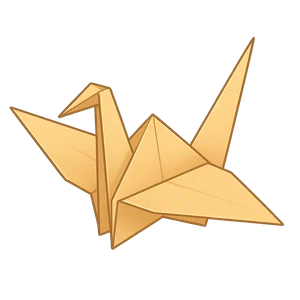
In the 20th century, I left my home in Japan and traveled across the entire world. A brilliant artist named Akira Yoshizawa, who was born on March 14th, 1911, showed everyone my true potential. He was a grandmaster who created over 50,000 unique models, from tiny insects to powerful gorillas, all from single, uncut squares of paper. He also helped create a special language of diagrams with lines and arrows, so a person in any country could understand my folds. It was also during this time that one of my most famous forms, the paper crane, became a global symbol of peace. This was inspired by the touching story of a young girl named Sadako Sasaki. She folded paper cranes while she was sick, with a powerful wish for peace and healing, before she passed away on October 25th, 1955. Her hope gave the paper crane its beautiful new meaning.
Today, my journey continues in ways my earliest creators could never have dreamed of. I am more than just art or a toy. I inspire mathematicians who study my complex geometric patterns and engineers who use my principles to solve modern problems. Have you ever seen a satellite in space. My folding techniques have helped design giant solar panels that can be packed tightly for launch and then unfold perfectly once they reach orbit. My ideas are used to make tiny medical devices that can travel inside the human body and car airbags that must deploy in a perfect pattern in just a split second. From a humble sheet of paper, I can become a symbol of hope, a key to new technology, or a work of art. My story is in your hands now. What amazing new shape will you dream up for me.
Wow facts
About
Origami is the Japanese art of paper folding, where a flat square sheet of paper is transformed into a finished sculpture through folding techniques without cutting or gluing.
Take a Quiz
Question 1 of 5
According to the story, why was origami only used for important ceremonies when it was first created?
Explore next



Want to do even more?
Go beyond exploring. Unlock tools that turn every story into real learning.

Storypie Plus for families
Full stories, quizzes, and printables. Nights and car rides, sorted.
- Unlimited audio stories
- Create Mode: your child stars in the story
- Offline downloads
- Printable worksheets & coloring pages

Why Storypie for Schools
Students engaged. Prep in seconds. Evenings back to you.
- Worksheets & Quizzes
- Classroom Management
- Formative Assessment
- Custom Curriculum & Lesson Plans
- 27 Languages

Why Storypie for Homeschool
Curriculum done. They'll ask for more. Hours back in your day.
- Worksheet Generator
- First-Person Audio Stories
- Built-in Comprehension Quizzes
- Custom Curriculum & Lesson Plans
- Print & Go Activities