English

Philosophiæ Naturalis Principia Mathematica
A three-volume book by Isaac Newton, first published in 1687…
Reads at Grades 6–8 Listens at Grades 4–8
Print & create
Answer keys·No prep·Free with an account
28 worksheets · answer keys · full story · quiz · Ages 10-12 · CEFR B2
Plus adds 208,000+ more stories in 27 languages, audio for every one, and printables for all of them.
Just want Philosophiæ Naturalis Principia Mathematica?
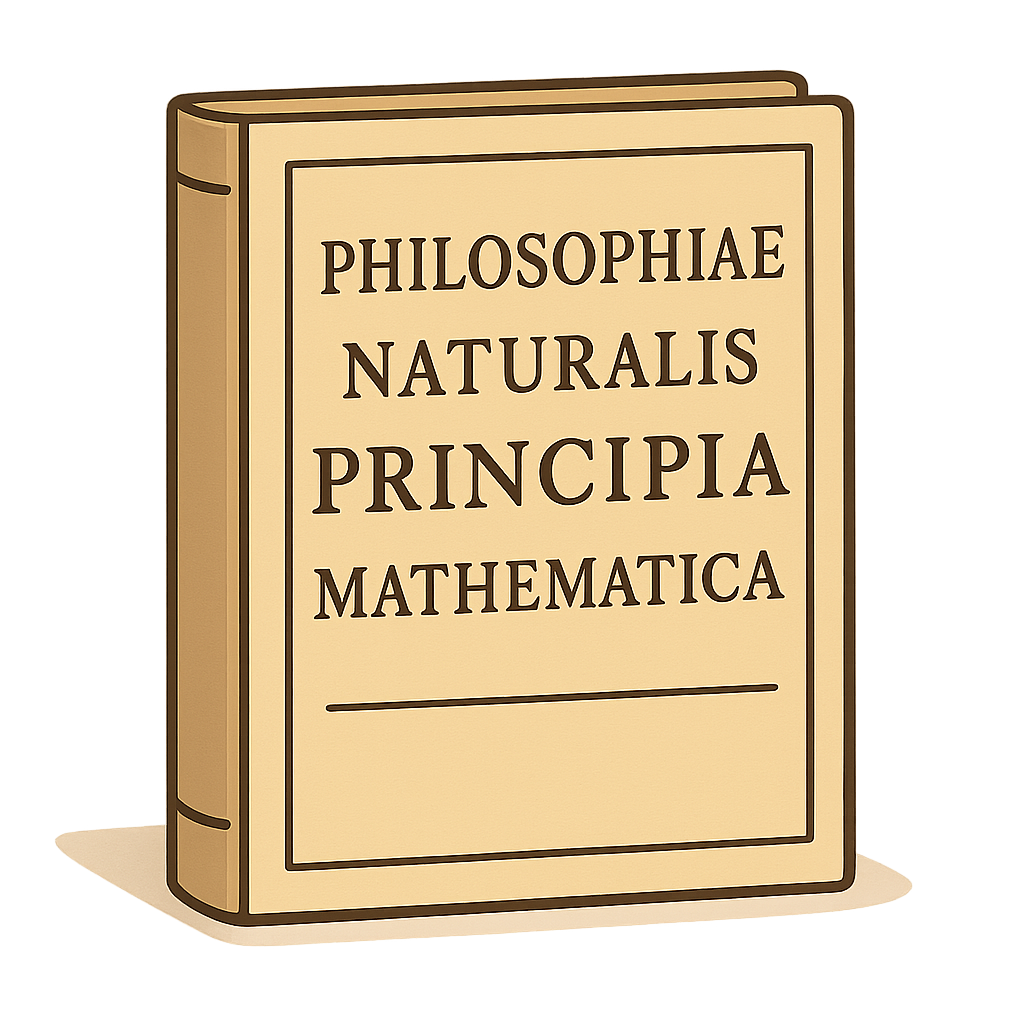
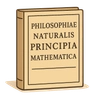
I am not made of stone or paint, but of ink, paper, and ideas. Within my pages, a universe of numbers, diagrams, and strange symbols unfolds in a language called Latin. I hold the secrets of falling apples and orbiting moons, of planets that dance in the darkness and the invisible forces that guide them. Before I was born, people looked at the sky and saw mystery, but I was created to show them a beautiful, hidden order. I am a book, but I am also a key. I am Philosophiæ Naturalis Principia Mathematica, but you can call me the Principia.
My story begins with a quiet and brilliant man named Isaac Newton. In the mid-1680s, he lived in England, spending his days thinking about the biggest questions in the universe. He saw it as a grand puzzle, and he was determined to find the rules that governed everything. For about 18 months, between 1685 and 1686, he filled my pages with his thoughts, using a new kind of math he had invented called calculus to describe his ideas with perfect precision. But he might have kept his revolutionary ideas to himself if not for his friend, the astronomer Edmond Halley. In August of 1684, Halley visited Newton and asked him a critical question about the paths of planets. Newton's answer was so profound that Halley immediately understood its importance and insisted it be shared with the world. Newton, encouraged by his friend, got to work, and Halley became my champion. He edited my words, checked my diagrams to ensure they were clear, and when the scientific academy of the time, the Royal Society of London, couldn't afford to print me, Halley paid for it all himself. I was finally published for the world to see on July 5th, 1687, in London. I was born as three volumes, bound together, ready to change how humanity saw everything.
The Book That Explained the Universe
I am not made of stone or paint, but of ink, paper, and ideas. Within my pages, a universe of numbers, diagrams, and strange symbols unfolds in a language called Latin. I hold the secrets of falling apples and orbiting moons, of planets that dance in the darkness and the invisible forces that guide them. Before I was born, people looked at the sky and saw mystery, but I was created to show them a beautiful, hidden order. I am a book, but I am also a key. I am Philosophiæ Naturalis Principia Mathematica, but you can call me the Principia.
My story begins with a quiet and brilliant man named Isaac Newton. In the mid-1680s, he lived in England, spending his days thinking about the biggest questions in the universe. He saw it as a grand puzzle, and he was determined to find the rules that governed everything. For about 18 months, between 1685 and 1686, he filled my pages with his thoughts, using a new kind of math he had invented called calculus to describe his ideas with perfect precision. But he might have kept his revolutionary ideas to himself if not for his friend, the astronomer Edmond Halley. In August of 1684, Halley visited Newton and asked him a critical question about the paths of planets. Newton's answer was so profound that Halley immediately understood its importance and insisted it be shared with the world. Newton, encouraged by his friend, got to work, and Halley became my champion. He edited my words, checked my diagrams to ensure they were clear, and when the scientific academy of the time, the Royal Society of London, couldn't afford to print me, Halley paid for it all himself. I was finally published for the world to see on July 5th, 1687, in London. I was born as three volumes, bound together, ready to change how humanity saw everything.
Inside me are three famous rules, which Newton called the Laws of Motion. The first law says that an object will stay still or keep moving in a straight line unless an outside force acts on it. This is called inertia. The second law explains that the more massive an object is, the more force you need to make it accelerate. The third law is about action and reaction—for every push, there is an equal and opposite push back. These three laws explained how things moved on Earth, from a rolling ball to a gust of wind, in a way no one had ever done before. But my biggest secret was even grander. In my third volume, Newton revealed the Law of Universal Gravitation. He showed that the same invisible force that pulls an apple from a tree to the ground is the very same force that keeps the Moon circling the Earth and the Earth circling the Sun. This was an astonishing idea. Before me, people thought the heavens operated under a different set of rules than Earth. But Newton showed that gravity wasn't just an earthly thing; it was universal, connecting every object in the cosmos through a precise mathematical dance. The universe was united under one elegant law.
After I appeared in 1687, the universe suddenly made more sense. People realized it wasn't just a mysterious, chaotic place but a system that followed predictable, elegant laws, like a giant, beautiful clock. Using my principles, Edmond Halley was able to predict that a comet he observed in 1682 would return in 1758, which it did. Scientists used my ideas to understand the ocean's tides, calculate the masses of planets, and map the solar system with incredible accuracy. Centuries later, my fundamental principles helped engineers design everything from strong bridges to powerful cars. The rockets that would one day carry humans to the Moon were designed using the very laws of motion and gravitation that I first laid out. I am more than just an old book written in Latin. I am a monument to human curiosity. I stand as proof that by observing the world, asking questions, and thinking deeply, we can uncover the most profound secrets of the universe. My pages whisper a timeless message: keep looking, keep wondering, and you too can discover the magic hidden in the patterns of the world.
Wow facts
About
A three-volume book by Isaac Newton, first published in 1687, that established the laws of motion and the law of universal gravitation, forming the foundation of classical mechanics.
Take a Quiz
Question 1 of 5
What is the main idea of this story?
Explore next




Want to do even more?
Go beyond exploring. Unlock tools that turn every story into real learning.

Storypie Plus for families
Full stories, quizzes, and printables. Nights and car rides, sorted.
- Unlimited audio stories
- Create Mode: your child stars in the story
- Offline downloads
- Printable worksheets & coloring pages

Why Storypie for Schools
Students engaged. Prep in seconds. Evenings back to you.
- Worksheets & Quizzes
- Classroom Management
- Formative Assessment
- Custom Curriculum & Lesson Plans
- 27 Languages

Why Storypie for Homeschool
Curriculum done. They'll ask for more. Hours back in your day.
- Worksheet Generator
- First-Person Audio Stories
- Built-in Comprehension Quizzes
- Custom Curriculum & Lesson Plans
- Print & Go Activities