English

Philosophiæ Naturalis Principia Mathematica
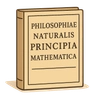
A three-volume book by Isaac Newton, first published in 1687…
Reads at Grades 3–5 Listens at Grades 1–5
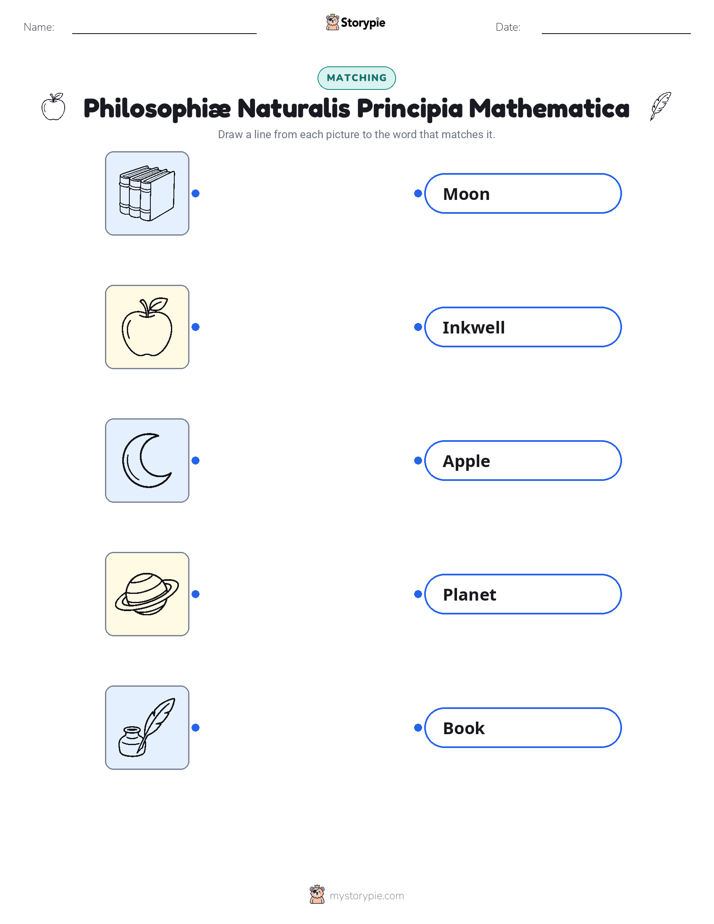
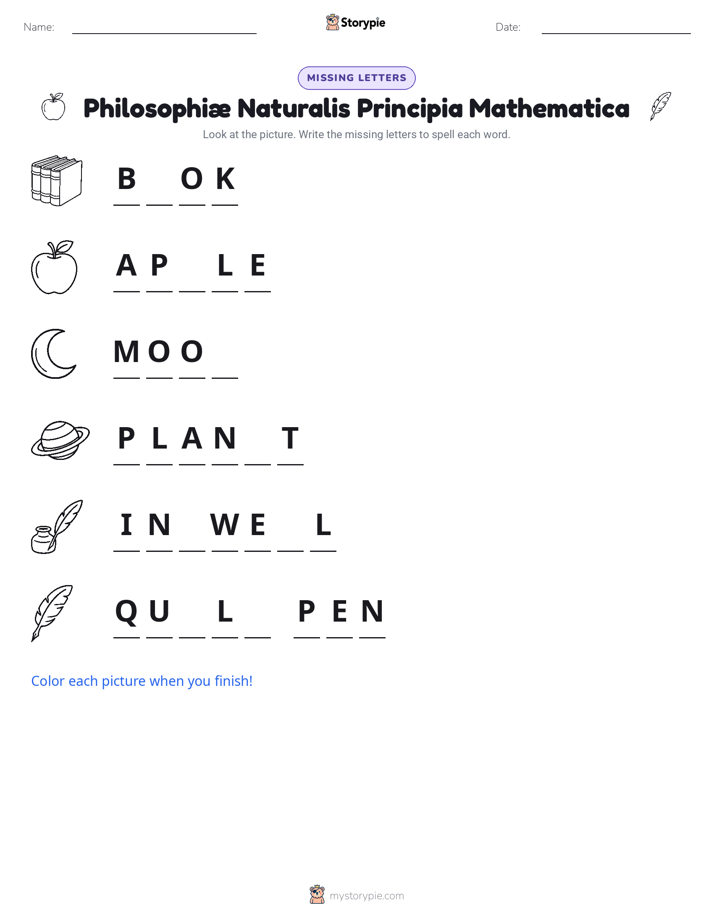
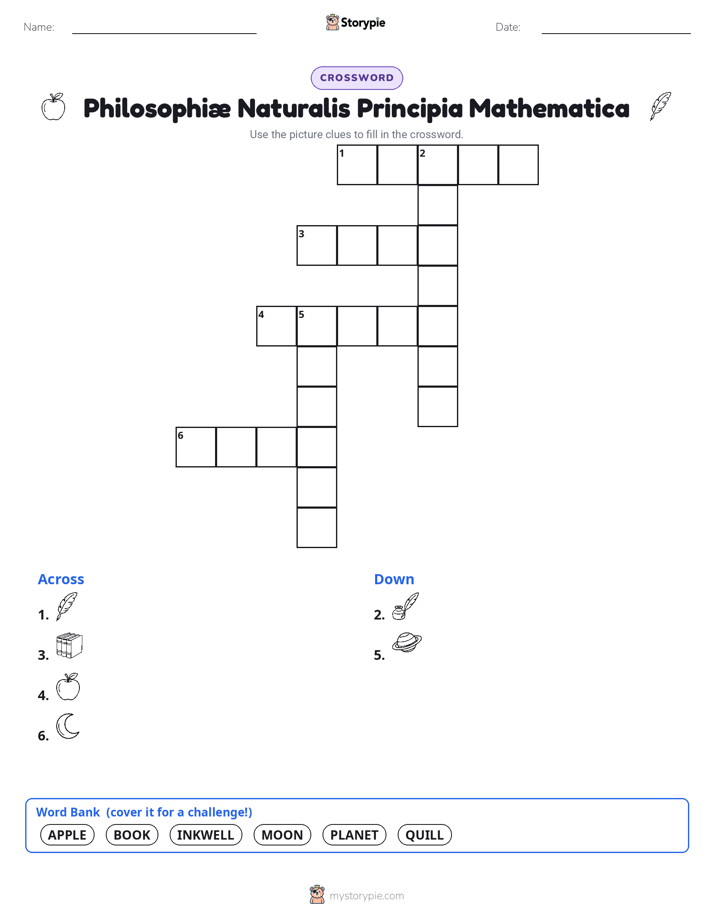
Print & create
Answer keys·No prep·Free with an account
28 worksheets · answer keys · full story · quiz · Ages 8-10 · CEFR B1
Plus adds 208,000+ more stories in 27 languages, audio for every one, and printables for all of them.
Just want Philosophiæ Naturalis Principia Mathematica?
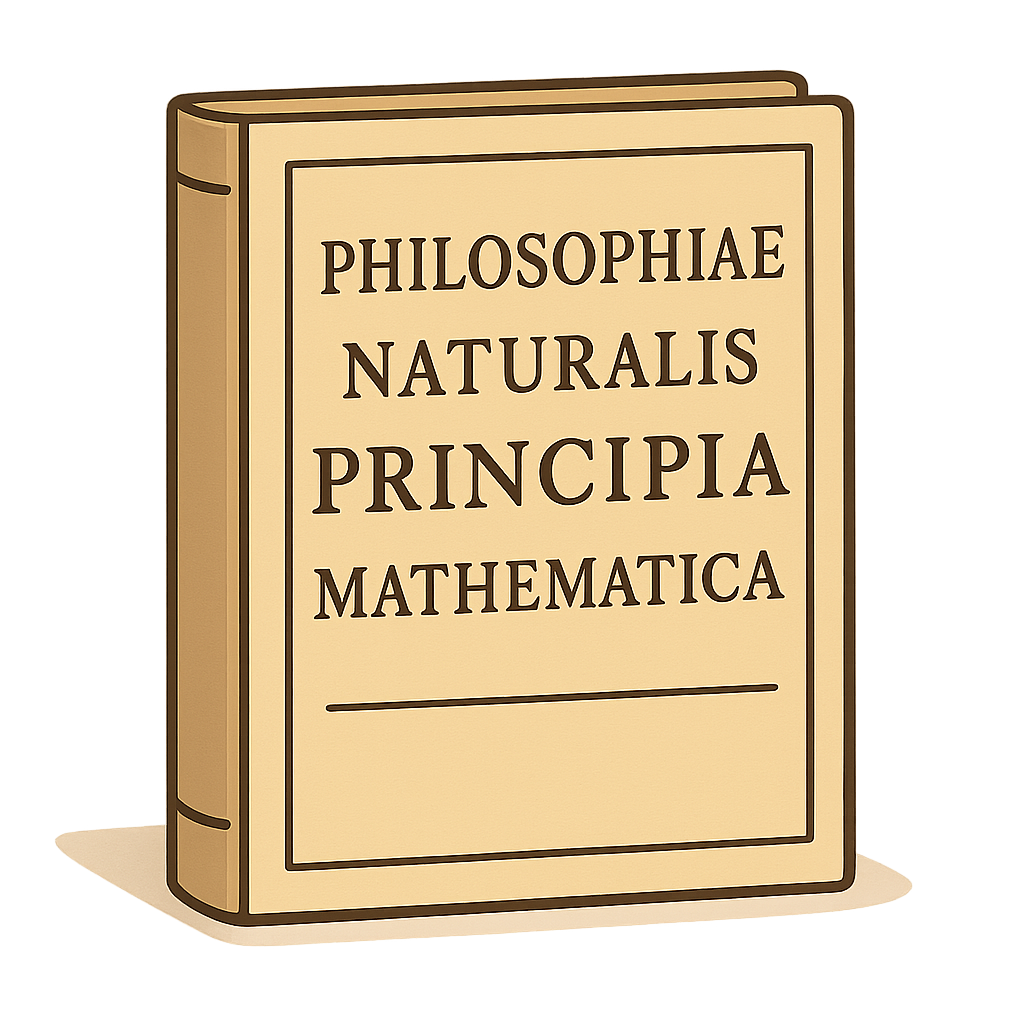
Before I had pages or a cover, I was a collection of questions swirling in the air. Why does an apple fall down from a tree instead of up or sideways? What keeps the Moon circling the Earth in a perfect, silent dance? I am made of ink and paper, but my true self is an answer to these grand puzzles. I hold secrets about the invisible rules that guide everything in the universe, from the smallest pebble to the biggest star. Can you imagine a single book holding the keys to how planets move and why a ball falls when you drop it? That book is me. I am the Philosophiæ Naturalis Principia Mathematica, but you can call me Principia.
I was brought to life by a very curious and brilliant man named Isaac Newton. For years, during the 1680s, he sat in his quiet room in England, watching, thinking, and calculating. He filled my pages with his careful handwriting, elegant drawings of orbits and angles, and numbers that told the story of the universe. But his ideas were so new and so enormous, he almost kept me to himself, hidden away from the world. Thankfully, his good friend, an astronomer named Edmond Halley, knew my secrets were too important to hide. Edmond knew that my ideas could change how everyone saw the world. He encouraged Isaac and even paid for me to be printed, so on July 5th, 1687, I was finally born as a book for all to read.
Inside my pages, I shared three amazing rules, which Isaac called the laws of motion. My first law explains that things like to keep doing what they are already doing. A toy car at rest on the floor will stay at rest, and a rolling ball wants to keep rolling in a straight line forever unless something stops it, like friction or your foot. My second law says that to change an object's motion, you need to give it a push or a pull, also known as a force. The harder you push, the more its motion changes. It’s why you have to kick a soccer ball harder to make it go farther. My third secret is like a cosmic handshake: for every action, there is an equal and opposite reaction. When you push against a wall, the wall actually pushes back on you with the same amount of force. That's why you can feel the pressure on your hand.
The Book That Explained the Universe
Before I had pages or a cover, I was a collection of questions swirling in the air. Why does an apple fall down from a tree instead of up or sideways? What keeps the Moon circling the Earth in a perfect, silent dance? I am made of ink and paper, but my true self is an answer to these grand puzzles. I hold secrets about the invisible rules that guide everything in the universe, from the smallest pebble to the biggest star. Can you imagine a single book holding the keys to how planets move and why a ball falls when you drop it? That book is me. I am the Philosophiæ Naturalis Principia Mathematica, but you can call me Principia.
I was brought to life by a very curious and brilliant man named Isaac Newton. For years, during the 1680s, he sat in his quiet room in England, watching, thinking, and calculating. He filled my pages with his careful handwriting, elegant drawings of orbits and angles, and numbers that told the story of the universe. But his ideas were so new and so enormous, he almost kept me to himself, hidden away from the world. Thankfully, his good friend, an astronomer named Edmond Halley, knew my secrets were too important to hide. Edmond knew that my ideas could change how everyone saw the world. He encouraged Isaac and even paid for me to be printed, so on July 5th, 1687, I was finally born as a book for all to read.
Inside my pages, I shared three amazing rules, which Isaac called the laws of motion. My first law explains that things like to keep doing what they are already doing. A toy car at rest on the floor will stay at rest, and a rolling ball wants to keep rolling in a straight line forever unless something stops it, like friction or your foot. My second law says that to change an object's motion, you need to give it a push or a pull, also known as a force. The harder you push, the more its motion changes. It’s why you have to kick a soccer ball harder to make it go farther. My third secret is like a cosmic handshake: for every action, there is an equal and opposite reaction. When you push against a wall, the wall actually pushes back on you with the same amount of force. That's why you can feel the pressure on your hand.
My biggest secret of all was about an invisible force that connects everything. Isaac called it universal gravitation. I explained that this isn't just why an apple falls to the ground; it's the same force that acts like a long, invisible string, keeping the Moon tied to the Earth and the Earth tied to the Sun. It’s the reason all the planets stay in their beautiful orbits. Can you believe it? Before me, people thought the rules on Earth were different from the rules in the heavens. I showed them that the same simple laws govern everything, everywhere. Suddenly, the universe wasn't just a mystery; it was a magnificent, orderly place that could be understood.
For over 300 years, my ideas have helped people understand the world. Scientists used my laws to predict the return of comets, design safer bridges, and even send spaceships to the Moon and beyond. I may be an old book made of fragile paper, but the curiosity I represent is timeless. I am a reminder that by observing the world carefully and asking big questions, you can discover the beautiful, hidden rules that make everything work. The next time you see a ball fly through the air or look up at the stars, remember the secrets I share, and keep wondering.
Wow facts
About
A three-volume book by Isaac Newton, first published in 1687, that established the laws of motion and the law of universal gravitation, forming the foundation of classical mechanics.
Take a Quiz
Question 1 of 5
In the story, I say my third secret is like a 'cosmic handshake.' What does the word 'cosmic' mean here?
Explore next




Want to do even more?
Go beyond exploring. Unlock tools that turn every story into real learning.

Storypie Plus for families
Full stories, quizzes, and printables. Nights and car rides, sorted.
- Unlimited audio stories
- Create Mode: your child stars in the story
- Offline downloads
- Printable worksheets & coloring pages

Why Storypie for Schools
Students engaged. Prep in seconds. Evenings back to you.
- Worksheets & Quizzes
- Classroom Management
- Formative Assessment
- Custom Curriculum & Lesson Plans
- 27 Languages

Why Storypie for Homeschool
Curriculum done. They'll ask for more. Hours back in your day.
- Worksheet Generator
- First-Person Audio Stories
- Built-in Comprehension Quizzes
- Custom Curriculum & Lesson Plans
- Print & Go Activities