English

Philosophiæ Naturalis Principia Mathematica
A three-volume book by Isaac Newton, first published in 1687…
Reads at Grades K-2 Listens at K–3
Print & create
Answer keys·No prep·Free with an account
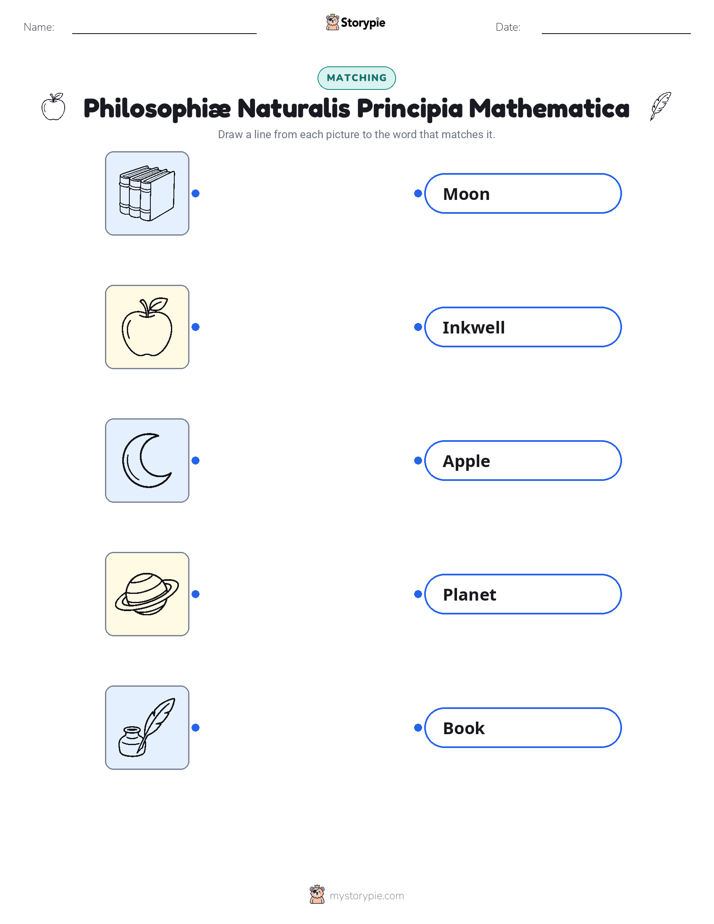
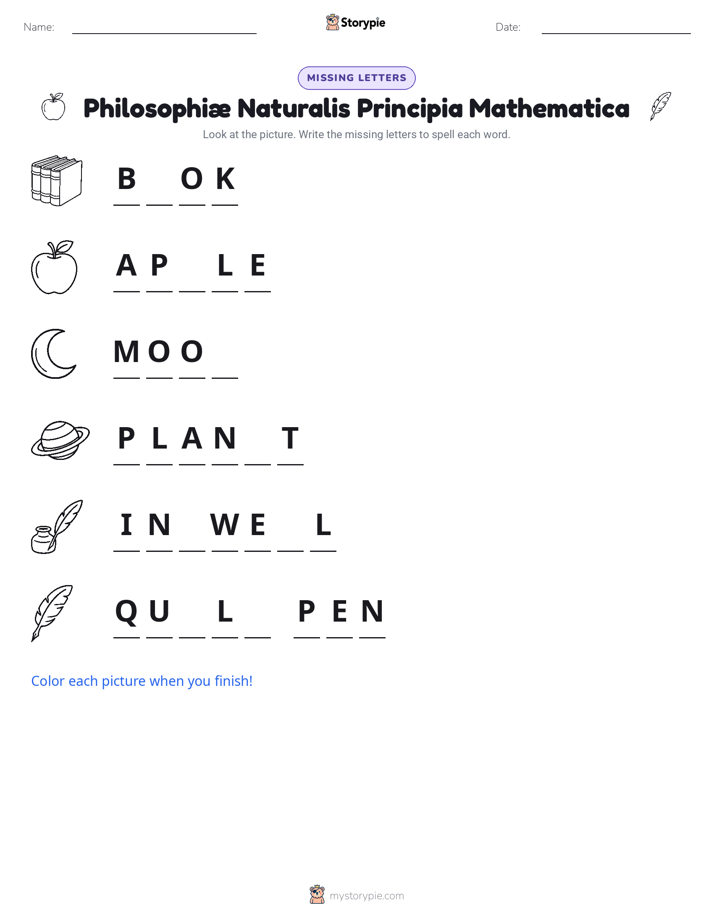
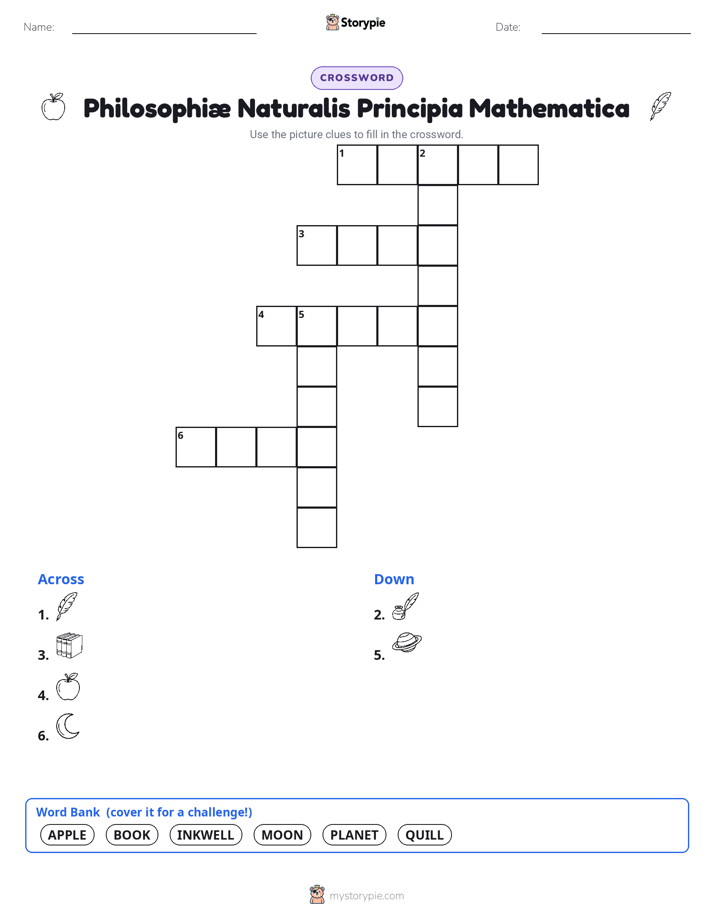
28 worksheets · answer keys · full story · quiz · Ages 6-8 · CEFR A2
Plus adds 208,000+ more stories in 27 languages, audio for every one, and printables for all of them.
Just want Philosophiæ Naturalis Principia Mathematica?
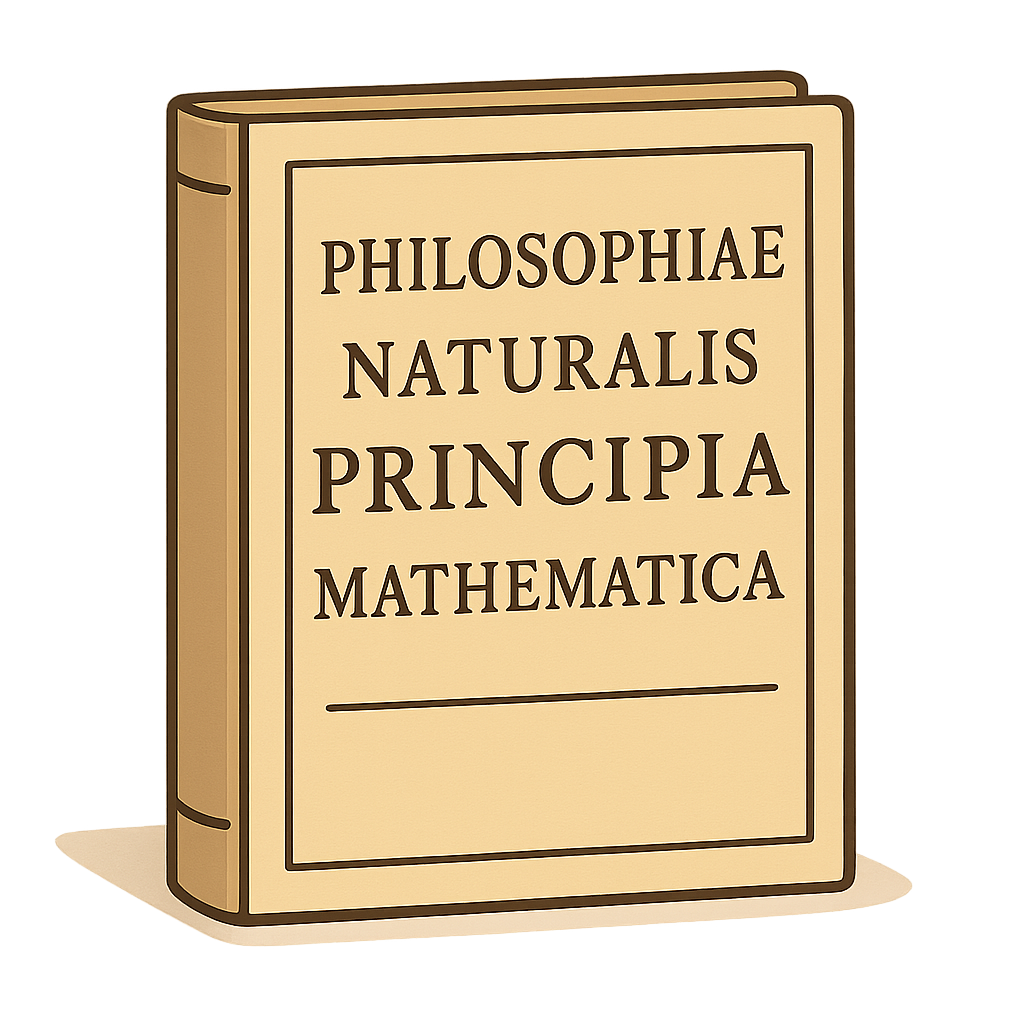
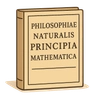
I am not a painting or a statue. I am made of paper and ink, but I hold the secrets of the stars and the planets. My pages are covered in drawings of circles, lines, and numbers that explain why an apple falls to the ground and why the Moon circles the Earth without flying away. I might look like just an old book, but I am full of powerful ideas. My full name is very long and in a language called Latin. It is Philosophiæ Naturalis Principia Mathematica. That is a real mouthful. You can just call me by my nickname, the Principia. I was created to share some of the most important secrets of the universe with everyone.
My creator was a very curious man from England named Isaac Newton. He lived a long, long time ago and he loved asking “Why?” about everything he saw. One day, he was sitting outside and saw an apple fall from a tree. Plop. Instead of just eating it, he started to wonder. He asked himself, “If a force can pull an apple down to the ground, does that same invisible force reach all the way up to the Moon?”. He thought and thought, and did many experiments to find the answers. Between the years 1685 and 1686, he filled my pages with his amazing discoveries, including his three famous Laws of Motion. His good friend, a man named Edmond Halley, knew these ideas were too important to keep secret. He believed in Isaac’s work so much that he helped me get printed, and on July 5th, 1687, I was published for the whole world to read.
Before I came along, people looked up at the sky and the movements of the planets were a great mystery. They seemed to dance in strange patterns. I showed everyone that the same simple rules that make a ball roll down a hill also guide the giant planets in their paths around the Sun. It was like I was a secret map to how the whole universe worked. Scientists and inventors were so excited to read me. They used my ideas about forces and motion to understand the world in a brand new way. My ideas were so strong that, hundreds of years later, they even helped people build rockets that could travel all the way to the Moon and back.
The Book That Explained the Universe
I am not a painting or a statue. I am made of paper and ink, but I hold the secrets of the stars and the planets. My pages are covered in drawings of circles, lines, and numbers that explain why an apple falls to the ground and why the Moon circles the Earth without flying away. I might look like just an old book, but I am full of powerful ideas. My full name is very long and in a language called Latin. It is Philosophiæ Naturalis Principia Mathematica. That is a real mouthful. You can just call me by my nickname, the Principia. I was created to share some of the most important secrets of the universe with everyone.
My creator was a very curious man from England named Isaac Newton. He lived a long, long time ago and he loved asking “Why?” about everything he saw. One day, he was sitting outside and saw an apple fall from a tree. Plop. Instead of just eating it, he started to wonder. He asked himself, “If a force can pull an apple down to the ground, does that same invisible force reach all the way up to the Moon?”. He thought and thought, and did many experiments to find the answers. Between the years 1685 and 1686, he filled my pages with his amazing discoveries, including his three famous Laws of Motion. His good friend, a man named Edmond Halley, knew these ideas were too important to keep secret. He believed in Isaac’s work so much that he helped me get printed, and on July 5th, 1687, I was published for the whole world to read.
Before I came along, people looked up at the sky and the movements of the planets were a great mystery. They seemed to dance in strange patterns. I showed everyone that the same simple rules that make a ball roll down a hill also guide the giant planets in their paths around the Sun. It was like I was a secret map to how the whole universe worked. Scientists and inventors were so excited to read me. They used my ideas about forces and motion to understand the world in a brand new way. My ideas were so strong that, hundreds of years later, they even helped people build rockets that could travel all the way to the Moon and back.
Even though I am a very old book, the ideas I hold inside me are still important today. The rules about gravity and motion that Isaac Newton wrote on my pages are still helping people build amazing things. When engineers design a soaring rocket, they use my ideas. When they build a super-fast roller coaster with loops and drops, they use my ideas. I am a reminder that asking a simple question, like “Why does an apple fall?”, can lead to incredible discoveries that change the world. I hope you always stay curious and keep asking “Why?”, just like my friend Isaac did.
Wow facts
About
A three-volume book by Isaac Newton, first published in 1687, that established the laws of motion and the law of universal gravitation, forming the foundation of classical mechanics.
Take a Quiz
Question 1 of 4
What is the friendly nickname for the book in the story?
Explore next




Want to do even more?
Go beyond exploring. Unlock tools that turn every story into real learning.

Storypie Plus for families
Full stories, quizzes, and printables. Nights and car rides, sorted.
- Unlimited audio stories
- Create Mode: your child stars in the story
- Offline downloads
- Printable worksheets & coloring pages

Why Storypie for Schools
Students engaged. Prep in seconds. Evenings back to you.
- Worksheets & Quizzes
- Classroom Management
- Formative Assessment
- Custom Curriculum & Lesson Plans
- 27 Languages

Why Storypie for Homeschool
Curriculum done. They'll ask for more. Hours back in your day.
- Worksheet Generator
- First-Person Audio Stories
- Built-in Comprehension Quizzes
- Custom Curriculum & Lesson Plans
- Print & Go Activities