English

Rialto Bridge
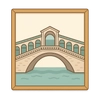
The Rialto Bridge is the oldest bridge across the Grand Canal in Venice, Italy.
Reads at Grades 6–8 Listens at Grades 4–8
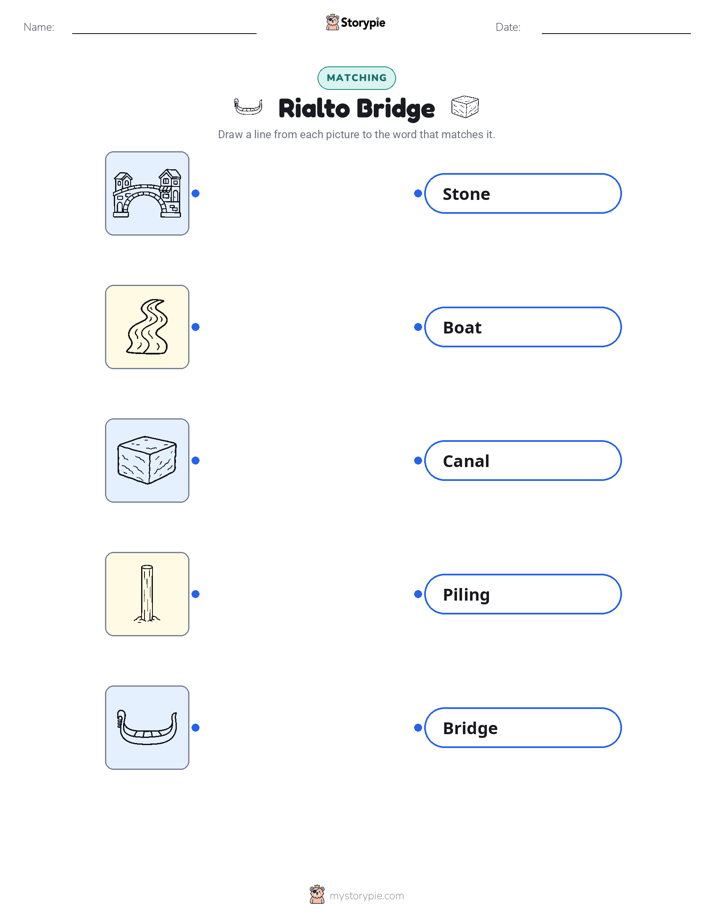
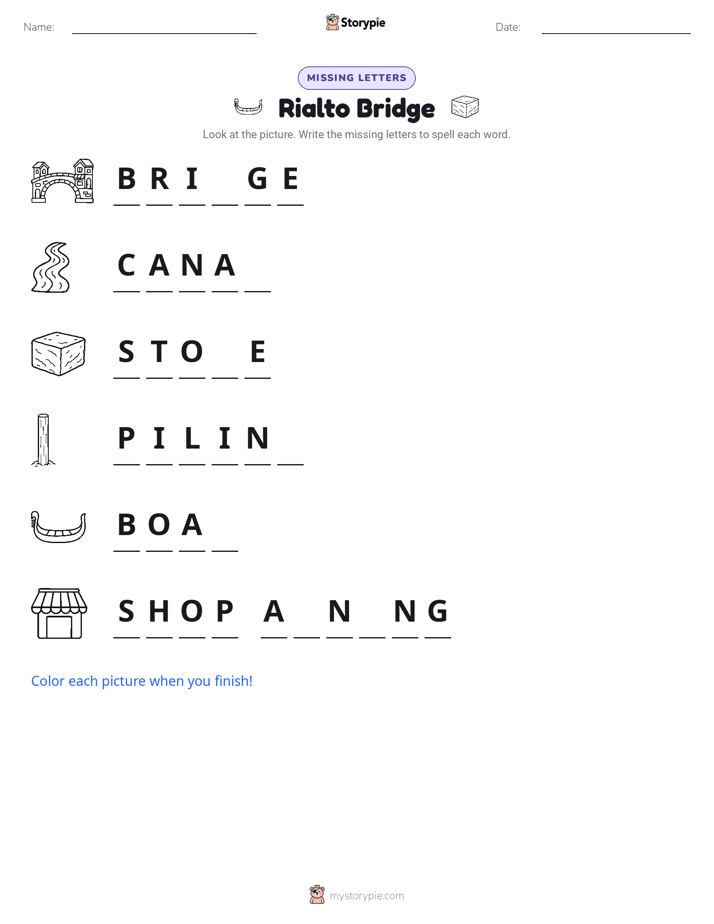
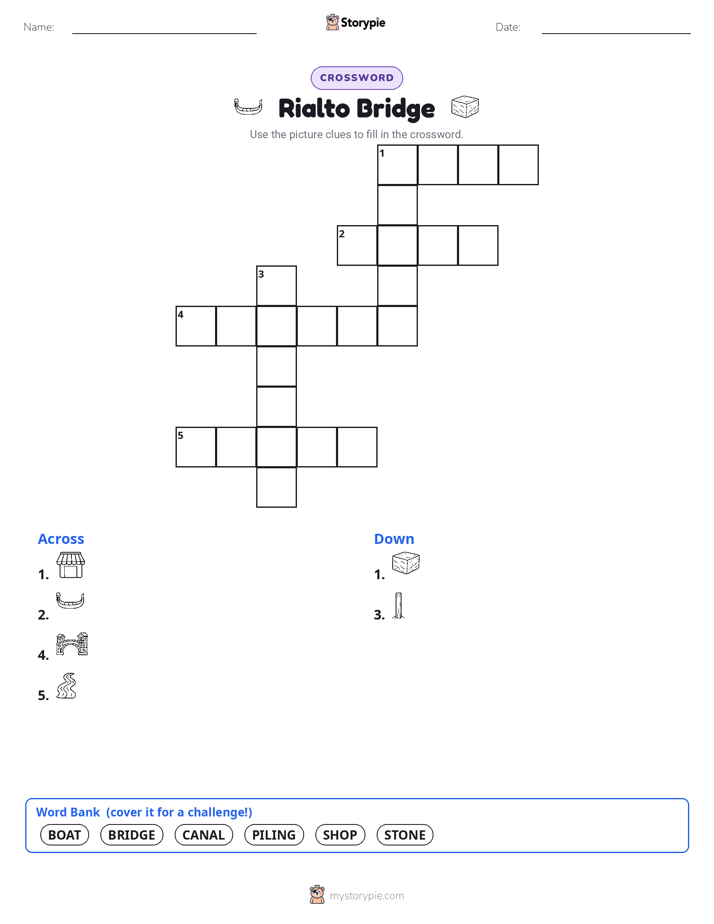
Print & create
Answer keys·No prep·Free with an account
28 worksheets · answer keys · full story · quiz · Ages 10-12 · CEFR B2
Plus adds 244,000+ more stories in 27 languages, audio for every one, and printables for all of them.
Just want Rialto Bridge?
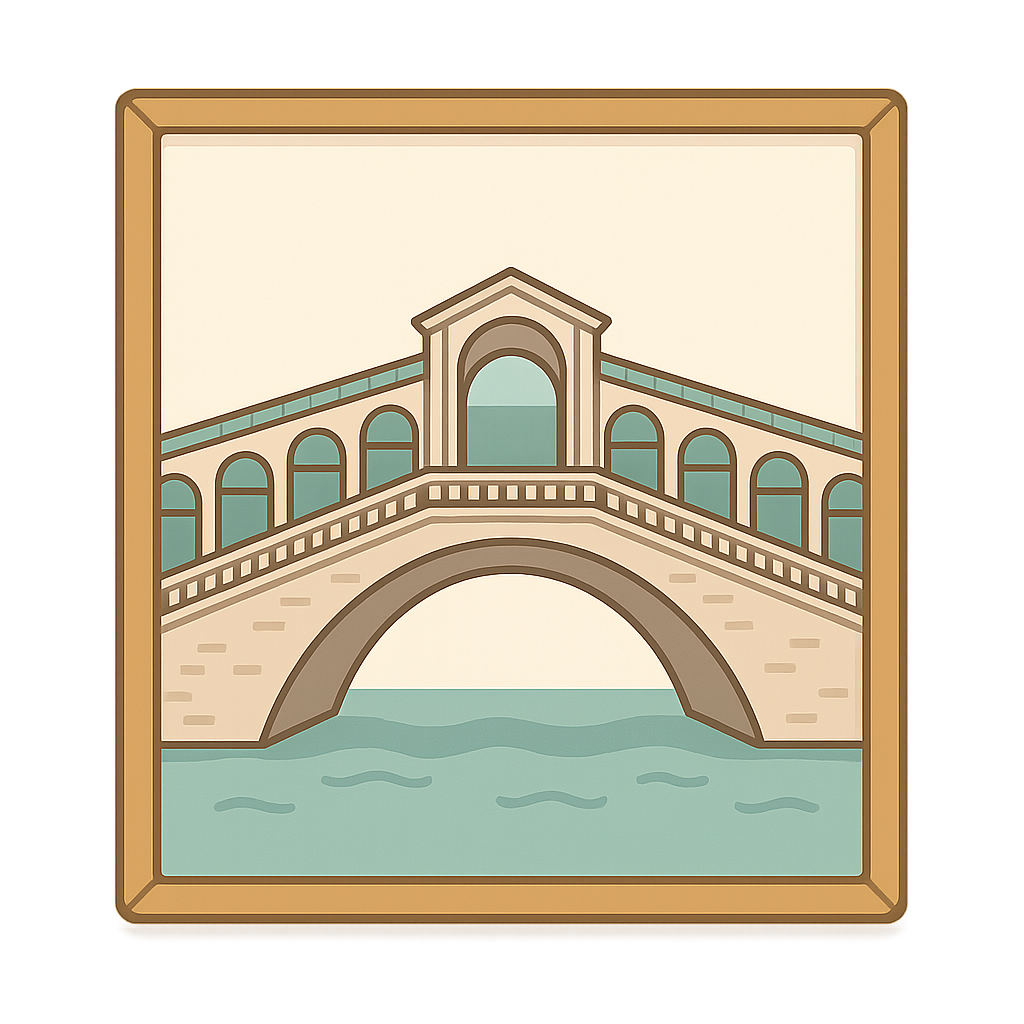
Even now, after centuries, I feel the gentle rhythm of the city in my very bones. The green water of the Grand Canal laps against my foundations, a constant, soothing pulse. Above, the sky is a brilliant canvas, but my world is one of sound and touch. I hear the melodic songs of gondoliers as their sleek black boats glide beneath my single, sweeping arch. I feel the vibrations of countless footsteps, a constant shuffle of leather, rubber, and wood as people hurry across my back. They come from every corner of the world, their voices a vibrant chorus of different languages, all mingling with the cries of seagulls and the distant chiming of church bells. I am made of pale Istrian stone, which warms under the Italian sun and glows in the moonlight. I am more than a crossing; I am a destination. My ramps are lined with bustling shops, their colorful awnings like festive flags. I connect the districts of San Marco and San Polo, but I do more than that. I am the bustling, beating heart of Venice, a place where commerce, art, and life flow together. I am the Rialto Bridge.
My story did not begin with stone. For a long time, my predecessors were made of wood, humble but essential links across the Grand Canal. They were practical, but they were also fragile. One of them, a pontoon bridge, was replaced by a more elaborate wooden structure with a central section that could be raised to allow tall ships to pass. But wood is no match for time and the crush of humanity. The most tragic day came in 1444, when a massive crowd gathered on the bridge to watch a boat parade celebrating a wedding. Under the immense weight, the old wooden structure groaned, splintered, and collapsed into the canal. It became clear to the leaders of Venice that they needed a solution as permanent and resilient as their great city. By the 16th century, the call went out for a new design, one made of stone. The competition drew the greatest minds of the era; even the legendary artist Michelangelo was considered for the project. But in the end, the honor was given to a local Venetian, an architect whose name meant 'of the bridge.' His name was Antonio da Ponte. His vision was bold and, to many, terrifying. He proposed a single, massive stone arch spanning the entire canal. When his plans were revealed in the late 1580s, critics scoffed. They predicted I would be too heavy, that my foundations would sink into the soft mud, and that I would crumble into the very water I was meant to cross. But Antonio had faith in his calculations and in the Venetian spirit of defying the impossible.
The Stone Heart of Venice
Even now, after centuries, I feel the gentle rhythm of the city in my very bones. The green water of the Grand Canal laps against my foundations, a constant, soothing pulse. Above, the sky is a brilliant canvas, but my world is one of sound and touch. I hear the melodic songs of gondoliers as their sleek black boats glide beneath my single, sweeping arch. I feel the vibrations of countless footsteps, a constant shuffle of leather, rubber, and wood as people hurry across my back. They come from every corner of the world, their voices a vibrant chorus of different languages, all mingling with the cries of seagulls and the distant chiming of church bells. I am made of pale Istrian stone, which warms under the Italian sun and glows in the moonlight. I am more than a crossing; I am a destination. My ramps are lined with bustling shops, their colorful awnings like festive flags. I connect the districts of San Marco and San Polo, but I do more than that. I am the bustling, beating heart of Venice, a place where commerce, art, and life flow together. I am the Rialto Bridge.
My story did not begin with stone. For a long time, my predecessors were made of wood, humble but essential links across the Grand Canal. They were practical, but they were also fragile. One of them, a pontoon bridge, was replaced by a more elaborate wooden structure with a central section that could be raised to allow tall ships to pass. But wood is no match for time and the crush of humanity. The most tragic day came in 1444, when a massive crowd gathered on the bridge to watch a boat parade celebrating a wedding. Under the immense weight, the old wooden structure groaned, splintered, and collapsed into the canal. It became clear to the leaders of Venice that they needed a solution as permanent and resilient as their great city. By the 16th century, the call went out for a new design, one made of stone. The competition drew the greatest minds of the era; even the legendary artist Michelangelo was considered for the project. But in the end, the honor was given to a local Venetian, an architect whose name meant 'of the bridge.' His name was Antonio da Ponte. His vision was bold and, to many, terrifying. He proposed a single, massive stone arch spanning the entire canal. When his plans were revealed in the late 1580s, critics scoffed. They predicted I would be too heavy, that my foundations would sink into the soft mud, and that I would crumble into the very water I was meant to cross. But Antonio had faith in his calculations and in the Venetian spirit of defying the impossible.
My creation was an epic feat of engineering, a battle against the water itself. Construction began on a monumental scale in 1588. To build my foundations, thousands upon thousands of alder wood pilings—long, sturdy poles—were driven deep into the soft, unstable mud of the canal floor. They had to go down more than ten feet to reach solid clay, creating a secure base that could bear my immense weight. Imagine the sound of the pile drivers, echoing across the water day after day, a percussive announcement of my arrival. Once this hidden forest of wood was in place, the true artistry began. Skilled stonemasons carved and shaped the brilliant white Istrian stone, a material so dense it could resist the saltwater's corrosive touch. Block by massive block, they built my elegant arch, a perfect curve rising over the canal. But Antonio da Ponte’s design included a revolutionary feature. I was not just a pathway; I was a marketplace. He designed two rows of shops to be built directly along my central walkway, their weight helping to stabilize the entire structure. When I was finally completed on a fine day in 1591, I was not just a bridge, but a floating street of commerce, immediately filled with merchants selling luxurious silks, gleaming jewels, and fragrant spices from faraway lands.
For more than four hundred years, I have stood firm. I have watched empires rise and fall, felt the rumble of new technologies, and seen Venice transform from a powerful maritime republic to a treasured world heritage site. I have withstood floods, tides, and the endless march of time. The faces of the merchants in my shops have changed, the fashions of the people crossing me have evolved, but the life that flows over me remains as constant as the canal below. I am more than just stone and mortar; I am a testament to Venetian ingenuity and the courage to pursue a daring dream. I connect the past with the present, a living piece of history. Every person who walks across my ramps, who pauses to watch the gondolas, or who buys a souvenir from one of my shops becomes a part of my ongoing story. And so, I remain, the stone heart of a city that dared to build its magnificent dreams right on top of the water.
Wow facts
About
The Rialto Bridge is the oldest bridge across the Grand Canal in Venice, Italy. A stone arch bridge designed by Antonio da Ponte, it was completed in 1591 and is a famous example of Renaissance architecture and engineering.
Take a Quiz
Question 1 of 5
In your own words, retell the story of the bridge's construction, from the problem that led to its creation to its completion.
Explore next



Want to do even more?
Go beyond exploring. Unlock tools that turn every story into real learning.

Storypie Plus for families
Full stories, quizzes, and printables. Nights and car rides, sorted.
- Unlimited audio stories
- Create Mode: your child stars in the story
- Offline downloads
- Printable worksheets & coloring pages

Why Storypie for Schools
Students engaged. Prep in seconds. Evenings back to you.
- Worksheets & Quizzes
- Classroom Management
- Formative Assessment
- Custom Curriculum & Lesson Plans
- 27 Languages

Why Storypie for Homeschool
Curriculum done. They'll ask for more. Hours back in your day.
- Worksheet Generator
- First-Person Audio Stories
- Built-in Comprehension Quizzes
- Custom Curriculum & Lesson Plans
- Print & Go Activities