English

Rialto Bridge
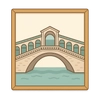
The Rialto Bridge is the oldest bridge across the Grand Canal in Venice, Italy.
Reads at Grades 3–5 Listens at Grades 1–5
Print & create
Answer keys·No prep·Free with an account
28 worksheets · answer keys · full story · quiz · Ages 8-10 · CEFR B1
Plus adds 244,000+ more stories in 27 languages, audio for every one, and printables for all of them.
Just want Rialto Bridge?
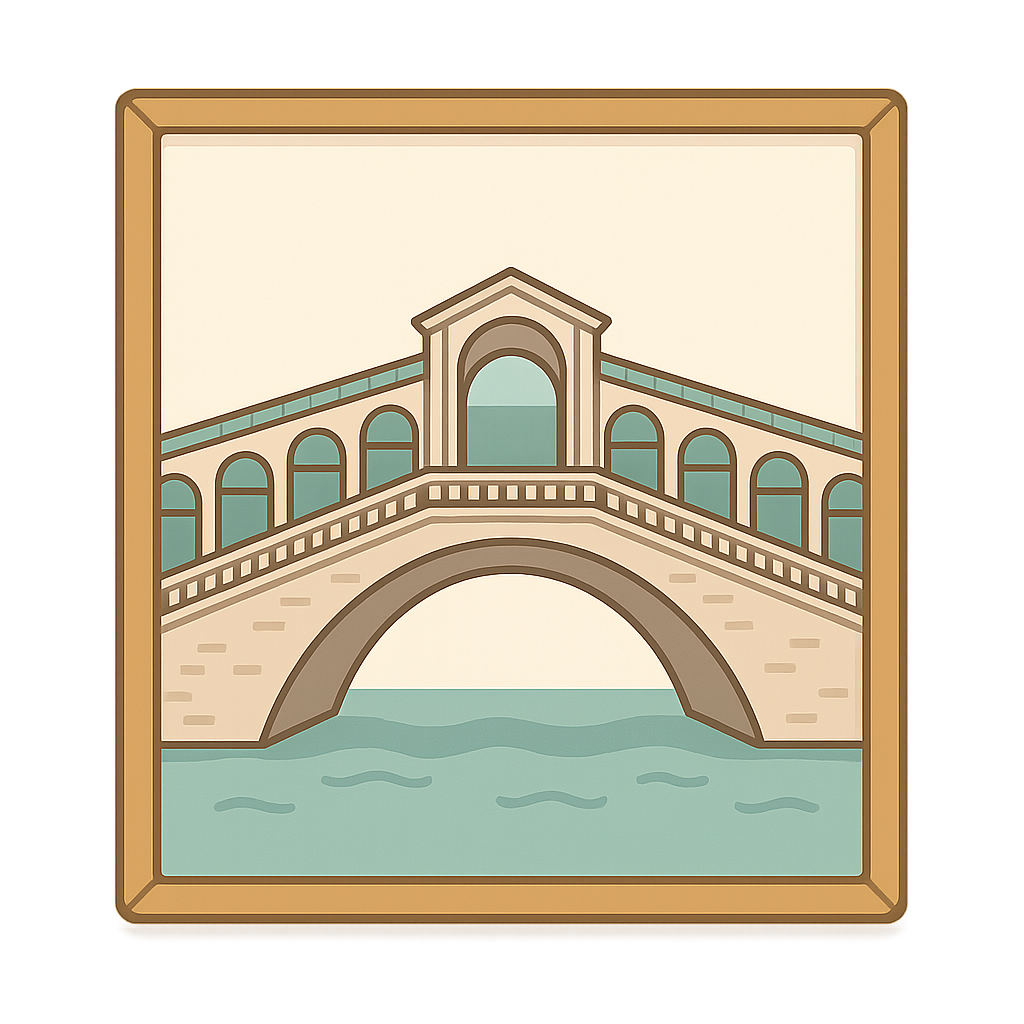
Imagine a city of shimmering water, where boats like graceful swans glide along watery streets instead of roads. Can you hear the sounds of singing gondoliers, the lively chatter from a bustling market filled with spices and silks, and the feeling of warm sunshine on ancient stone? I stretch over the widest and busiest of these water-roads, a strong back of white Istrian stone. People walk across me all day long, their footsteps a happy, tapping rhythm on my steps. I am lined with little shops whose colourful awnings flutter in the sea breeze. Before I tell you my name, I will give you a clue: I am the heart of Venice, Italy, a famous and beloved landmark. I am a bridge, but not just any bridge. I am the Rialto Bridge.
My story didn't begin with stone. Long, long ago, back in the 12th century, my very first version was a simple bridge of boats tied together, called a pontoon bridge. It was built around the year 1181 by a man named Nicolò Barattieri to help people cross the Grand Canal to get to the busy Rialto market on the other side. As Venice grew, a better bridge was needed, so a wooden one took its place around the year 1255. This new bridge was quite clever. It had a special section in the middle that could be raised with ropes and pulleys to let tall ships pass underneath. But being made of wood was very hard. I was damaged by fire in 1310 and again in 1444, when I collapsed under the weight of a huge crowd watching a boat parade. The people of Venice knew they needed something much stronger, something that would last for centuries.
The Story of the Rialto Bridge
Imagine a city of shimmering water, where boats like graceful swans glide along watery streets instead of roads. Can you hear the sounds of singing gondoliers, the lively chatter from a bustling market filled with spices and silks, and the feeling of warm sunshine on ancient stone? I stretch over the widest and busiest of these water-roads, a strong back of white Istrian stone. People walk across me all day long, their footsteps a happy, tapping rhythm on my steps. I am lined with little shops whose colourful awnings flutter in the sea breeze. Before I tell you my name, I will give you a clue: I am the heart of Venice, Italy, a famous and beloved landmark. I am a bridge, but not just any bridge. I am the Rialto Bridge.
My story didn't begin with stone. Long, long ago, back in the 12th century, my very first version was a simple bridge of boats tied together, called a pontoon bridge. It was built around the year 1181 by a man named Nicolò Barattieri to help people cross the Grand Canal to get to the busy Rialto market on the other side. As Venice grew, a better bridge was needed, so a wooden one took its place around the year 1255. This new bridge was quite clever. It had a special section in the middle that could be raised with ropes and pulleys to let tall ships pass underneath. But being made of wood was very hard. I was damaged by fire in 1310 and again in 1444, when I collapsed under the weight of a huge crowd watching a boat parade. The people of Venice knew they needed something much stronger, something that would last for centuries.
By the 1500s, it was time for a grand and permanent change. The leaders of Venice announced a contest to find the best design for a new stone me. It was a very important project, and famous architects and artists from all over Italy wanted the job. Even the great Michelangelo was rumored to have submitted an idea. But the winner was a clever and experienced architect named Antonio da Ponte. His last name, da Ponte, actually means 'of the Bridge' in Italian. Can you believe it? It was like he was born for the job. His idea was bold and daring: a single, graceful arch of stone that would leap across the canal. Many people were skeptical. They whispered that a single arch couldn't possibly support its own weight and the weight of the shops on top, and that I would surely crumble into the water. But Antonio knew how to build me strong. Between the years 1588 and 1591, his workers drove thousands of wooden posts—more than 6,000 in each foundation—deep into the mud under the canal to create a solid base. Then, stone by stone, they built my elegant arch and the two ramps on my sides, which they lined with the little shops that are still here today.
From the moment I was completed on the 20th of March, 1591, I was more than just a way to cross the water. I became a meeting place, a busy marketplace, and a landmark for the whole world to see and admire. For over four hundred years, I have watched Venice change around me. I've felt the footsteps of wealthy merchants selling sparkling jewels and fine silks in my shops. I've been a silent model for countless artists who have painted my portrait from the water's edge. I have welcomed visitors from every corner of the globe who come to walk across my stone steps and gaze at the Grand Canal. I connect not just two sides of the city, but people from all different times and places. When you see a picture of me in a book or walk across my stones yourself, you become a part of my long and happy story, a story that continues to be written every single day. I am a reminder that sometimes the most beautiful things we build are the ones that bring people together.
Wow facts
About
The Rialto Bridge is the oldest bridge across the Grand Canal in Venice, Italy. A stone arch bridge designed by Antonio da Ponte, it was completed in 1591 and is a famous example of Renaissance architecture and engineering.
Take a Quiz
Question 1 of 5
The story says Antonio da Ponte's design for a single arch was 'bold.' What does the word 'bold' mean in this sentence?
Explore next



Want to do even more?
Go beyond exploring. Unlock tools that turn every story into real learning.

Storypie Plus for families
Full stories, quizzes, and printables. Nights and car rides, sorted.
- Unlimited audio stories
- Create Mode: your child stars in the story
- Offline downloads
- Printable worksheets & coloring pages

Why Storypie for Schools
Students engaged. Prep in seconds. Evenings back to you.
- Worksheets & Quizzes
- Classroom Management
- Formative Assessment
- Custom Curriculum & Lesson Plans
- 27 Languages

Why Storypie for Homeschool
Curriculum done. They'll ask for more. Hours back in your day.
- Worksheet Generator
- First-Person Audio Stories
- Built-in Comprehension Quizzes
- Custom Curriculum & Lesson Plans
- Print & Go Activities