English

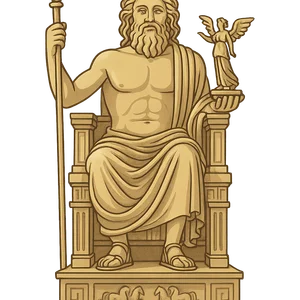
Statue of Zeus at Olympia
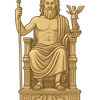
An enormous seated sculpture of the Greek god Zeus, created by the sculptor Phidias around 435 BCE.
Reads at Grades 6–8 Listens at Grades 4–8
Print & create
Answer keys·No prep·Free with an account
28 worksheets · answer keys · full story · quiz · Ages 10-12 · CEFR B2
Plus adds 244,000+ more stories in 27 languages, audio for every one, and printables for all of them.
Just want Statue of Zeus at Olympia?
Imagine stepping out of the bright Greek sun and into the cool, vast quiet of a temple. For a moment, all is darkness. As your eyes adjust, you see a glimmer, a soft light that doesn’t come from a window or a torch. It is the warm gleam of gold and the pale, smooth glow of ivory. Before you sits a figure so immense, so majestic, that you can only stand in silent awe. I was that figure. I could feel the hushed whispers of visitors who traveled hundreds of miles just to gaze upon me. I could smell the sweet scent of incense and offerings left at my feet. For centuries, I sat upon my throne, a silent giant watching over the sacred grounds that were my home. I am the Statue of Zeus, and for more than 800 years, my home was the very heart of Olympia.
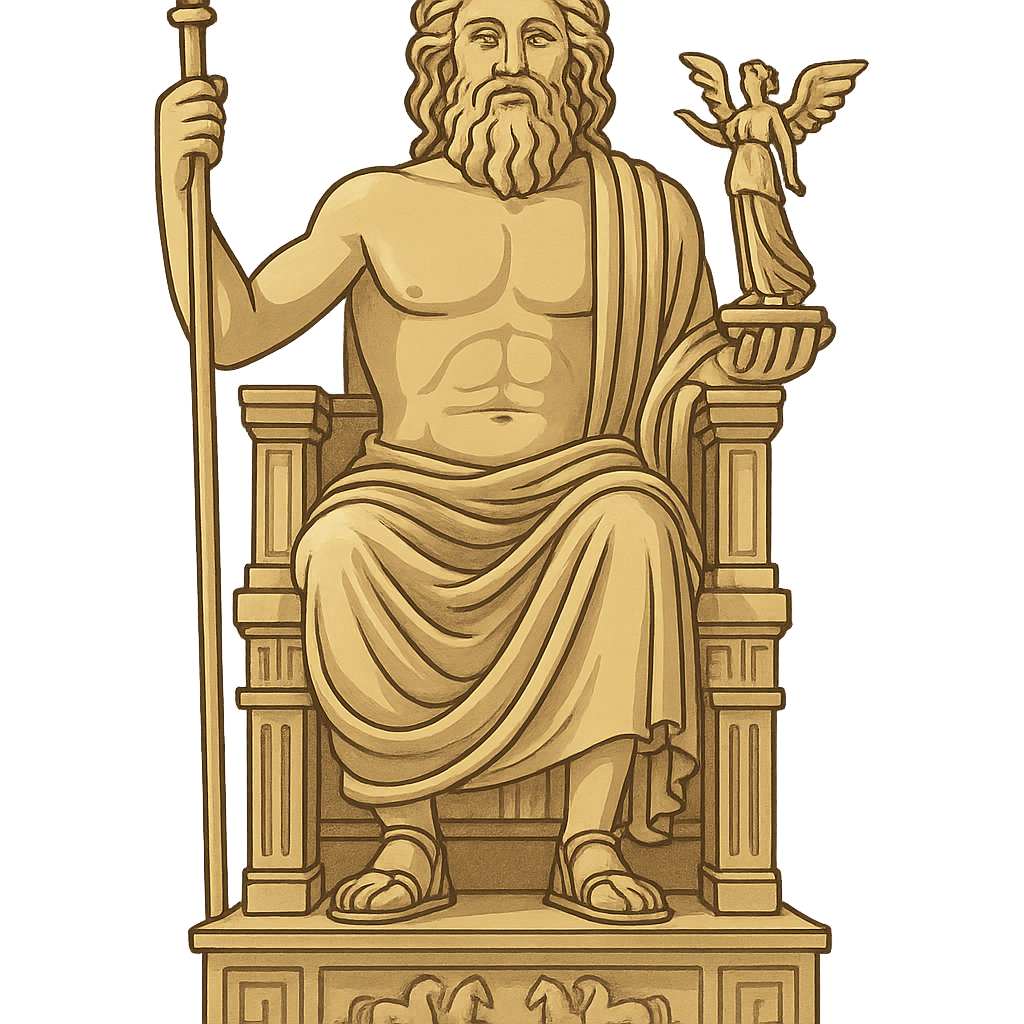
I was not born from stone, but from a vision in the mind of a brilliant artist. My creator was the famous sculptor Phidias, who had already earned great fame for his work on the Parthenon in Athens. Around the year 435 BCE, he came to Olympia to give the king of the gods a physical form. His workshop was built right next to my temple, and it was a place of incredible, focused creation. Phidias and his team started with a massive wooden frame, an inner skeleton that gave me my shape and seated posture. This frame, however, would never be seen. My skin was crafted from hundreds of individual plates of the finest, smoothest ivory, polished until they glowed with an inner light. My magnificent robe, the sandals on my feet, and my flowing beard and hair were all made from sheets of hammered gold that shimmered with every flicker of light. I stood over 40 feet tall, nearly touching the temple ceiling. My throne was a masterpiece in itself, built from cedarwood and inlaid with ebony, precious gems, and more ivory. It was adorned with intricate paintings and carvings of Greek myths and heroes. In my right hand, I held a smaller statue of Nike, the goddess of victory, also made of ivory and gold. In my left, I held a tall scepter topped with an eagle. Phidias didn't just build a statue; he brought a god to life.
The Ivory King of Olympia
Imagine stepping out of the bright Greek sun and into the cool, vast quiet of a temple. For a moment, all is darkness. As your eyes adjust, you see a glimmer, a soft light that doesn’t come from a window or a torch. It is the warm gleam of gold and the pale, smooth glow of ivory. Before you sits a figure so immense, so majestic, that you can only stand in silent awe. I was that figure. I could feel the hushed whispers of visitors who traveled hundreds of miles just to gaze upon me. I could smell the sweet scent of incense and offerings left at my feet. For centuries, I sat upon my throne, a silent giant watching over the sacred grounds that were my home. I am the Statue of Zeus, and for more than 800 years, my home was the very heart of Olympia.
I was not born from stone, but from a vision in the mind of a brilliant artist. My creator was the famous sculptor Phidias, who had already earned great fame for his work on the Parthenon in Athens. Around the year 435 BCE, he came to Olympia to give the king of the gods a physical form. His workshop was built right next to my temple, and it was a place of incredible, focused creation. Phidias and his team started with a massive wooden frame, an inner skeleton that gave me my shape and seated posture. This frame, however, would never be seen. My skin was crafted from hundreds of individual plates of the finest, smoothest ivory, polished until they glowed with an inner light. My magnificent robe, the sandals on my feet, and my flowing beard and hair were all made from sheets of hammered gold that shimmered with every flicker of light. I stood over 40 feet tall, nearly touching the temple ceiling. My throne was a masterpiece in itself, built from cedarwood and inlaid with ebony, precious gems, and more ivory. It was adorned with intricate paintings and carvings of Greek myths and heroes. In my right hand, I held a smaller statue of Nike, the goddess of victory, also made of ivory and gold. In my left, I held a tall scepter topped with an eagle. Phidias didn't just build a statue; he brought a god to life.
For centuries, I was the ultimate symbol of divine power and artistic perfection. I sat as the honored judge of the most famous athletic festival in history: the Olympic Games. Before their competitions, athletes would stand before me, their faces turned upward, hoping to earn my favor and the strength to achieve victory. But it wasn't just athletes who came. Philosophers and poets traveled to Olympia to contemplate my meaning, while kings and generals came from across the known world to pay their respects. To see me was not just to look at a work of art; it was an experience that left people speechless, overcome with a sense of wonder. The Roman general Aemilius Paullus was said to have been moved to his soul, feeling he had seen the god himself. For over eight centuries, I watched generations of people celebrate their gods and the potential of humanity. I was a constant, powerful presence, a reminder of what humans could create when they were inspired by their highest ideals.
But even for gods made of gold and ivory, times change. The Roman Empire rose, and its new faith, Christianity, replaced the old traditions. The Olympic Games, which I had watched over for so long, were ended in the year 393 CE. The temple fell quiet. Sometime in the 5th century CE, before my home could fall into ruin, I was carefully disassembled and transported on a new, long journey to the grand city of Constantinople. There, I was given a place of honor in a palace, treasured as a masterpiece of a bygone era. My final chapter came not from neglect, but from disaster. Around the year 475 CE, a great fire swept through the palace, and my wooden frame was consumed by the flames. My precious gold and ivory shell was lost forever. Though my physical form is gone, I am not forgotten. I live on as one of the Seven Wonders of the Ancient World, immortalized in the descriptions of ancient writers and in the imagination of everyone who hears my story. I am a reminder that the greatest creations can inspire a sense of wonder that outlasts even the strongest stone and the purest gold.
Wow facts
About
An enormous seated sculpture of the Greek god Zeus, created by the sculptor Phidias around 435 BCE. It was housed in the Temple of Zeus at Olympia, Greece, and was one of the Seven Wonders of the Ancient World.
Take a Quiz
Question 1 of 5
What is the main lesson or message the story conveys in its final paragraph?
Explore next




Want to do even more?
Go beyond exploring. Unlock tools that turn every story into real learning.

Storypie Plus for families
Full stories, quizzes, and printables. Nights and car rides, sorted.
- Unlimited audio stories
- Create Mode: your child stars in the story
- Offline downloads
- Printable worksheets & coloring pages

Why Storypie for Schools
Students engaged. Prep in seconds. Evenings back to you.
- Worksheets & Quizzes
- Classroom Management
- Formative Assessment
- Custom Curriculum & Lesson Plans
- 27 Languages

Why Storypie for Homeschool
Curriculum done. They'll ask for more. Hours back in your day.
- Worksheet Generator
- First-Person Audio Stories
- Built-in Comprehension Quizzes
- Custom Curriculum & Lesson Plans
- Print & Go Activities