English

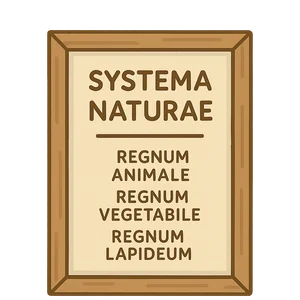
Systema Naturae
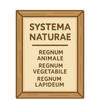
A groundbreaking book by Carl Linnaeus, first published in 1735…
Reads at Grades K-2 Listens at K–3
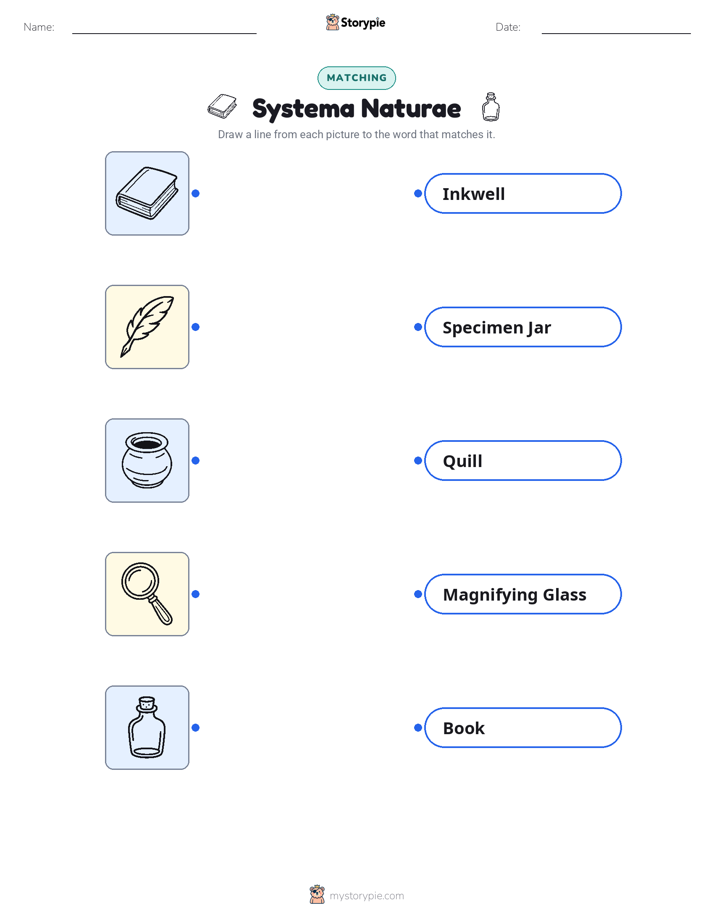
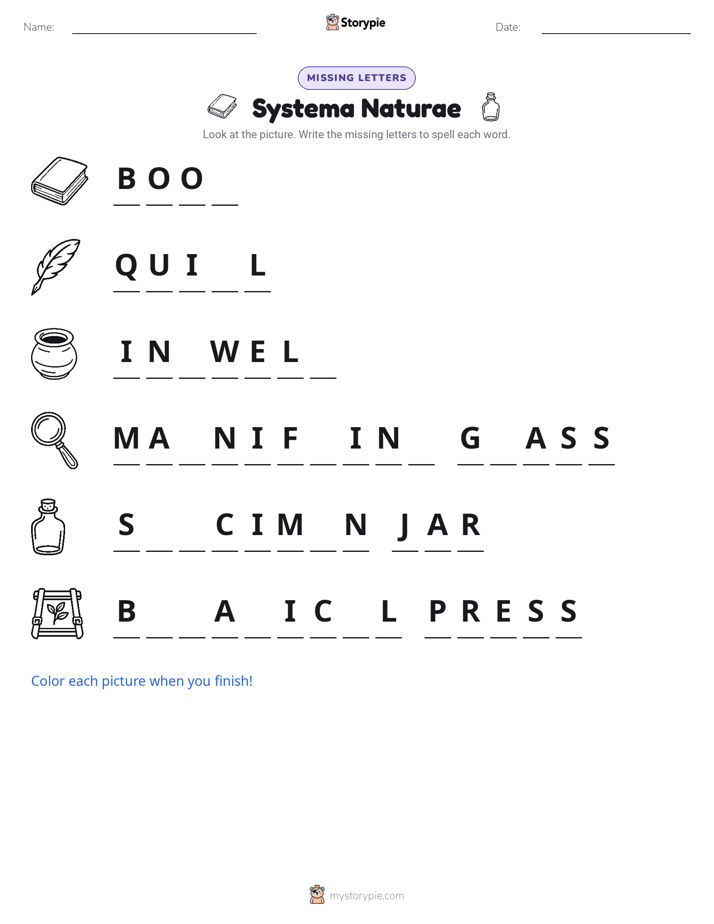
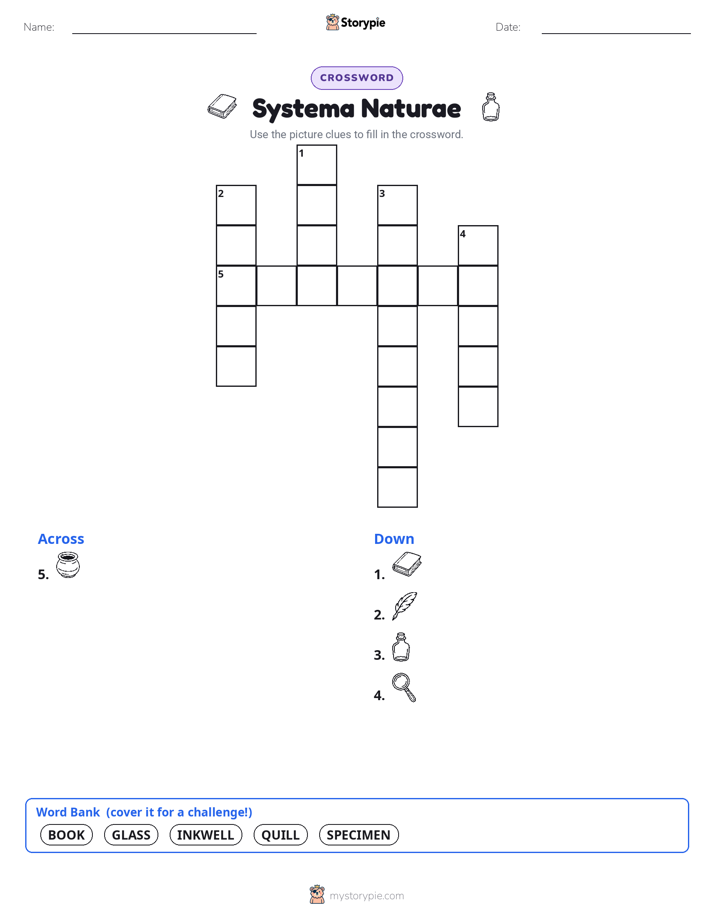
Print & create
Answer keys·No prep·Free with an account
28 worksheets · answer keys · full story · quiz · Ages 6-8 · CEFR A2
Plus adds 244,000+ more stories in 27 languages, audio for every one, and printables for all of them.
Just want Systema Naturae?
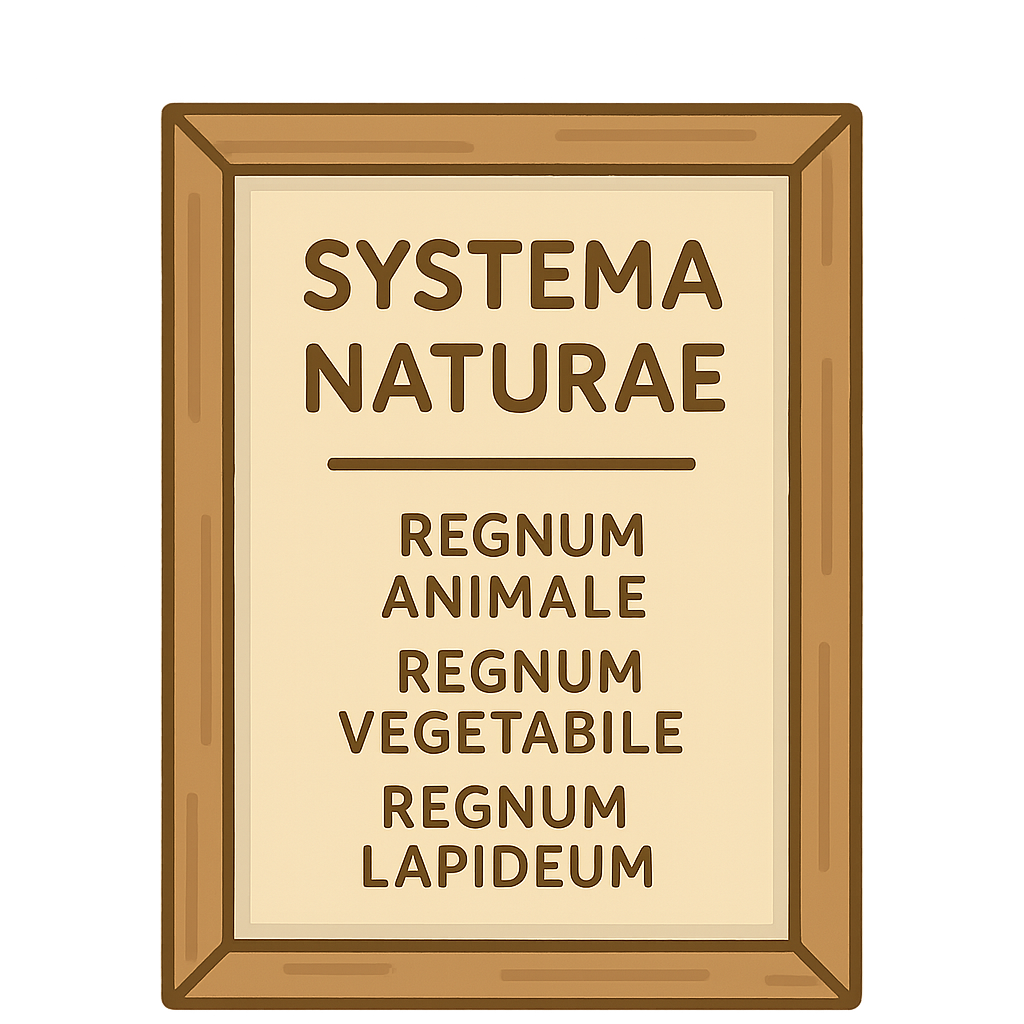
Imagine a world full of buzzing bees, beautiful flowers, and wiggly worms, but nobody could agree on what to call them. A beautiful blue butterfly in one town might be called a 'sky-wing,' while in the next town, people called it a 'jewel-flapper.' It was all very messy and confusing. How could anyone share what they learned about a creature if it had a hundred different names? That's where I came in. At first, I was just an idea, a plan written down on paper. I was a special book filled with lists and charts, designed to bring order to the wonderful chaos of nature. I am Systema Naturae, a book with a very big job.
My creator was a man from Sweden named Carl Linnaeus. He lived a very, very long time ago in the 1700s, and he loved nature more than anything. He would walk through forests and fields, looking closely at every petal on a flower and every leg on an insect. He saw that the world was like a giant, jumbled puzzle, and he had a dream to put all the pieces in the right place. His big idea was to give every single living thing a special two-part name that scientists all over the world could use and understand. So he got to work. He studied and sorted, grouping plants that looked alike and animals that acted alike. In the year 1735, I was finally born. I was just a thin little book back then, with only 11 pages, but I held his giant idea. I gave everything a 'first name' and a 'last name.' For example, the mighty lion was now known everywhere as *Panthera leo*. It was a secret code for all of nature.
The Book That Named the World
Imagine a world full of buzzing bees, beautiful flowers, and wiggly worms, but nobody could agree on what to call them. A beautiful blue butterfly in one town might be called a 'sky-wing,' while in the next town, people called it a 'jewel-flapper.' It was all very messy and confusing. How could anyone share what they learned about a creature if it had a hundred different names? That's where I came in. At first, I was just an idea, a plan written down on paper. I was a special book filled with lists and charts, designed to bring order to the wonderful chaos of nature. I am Systema Naturae, a book with a very big job.
My creator was a man from Sweden named Carl Linnaeus. He lived a very, very long time ago in the 1700s, and he loved nature more than anything. He would walk through forests and fields, looking closely at every petal on a flower and every leg on an insect. He saw that the world was like a giant, jumbled puzzle, and he had a dream to put all the pieces in the right place. His big idea was to give every single living thing a special two-part name that scientists all over the world could use and understand. So he got to work. He studied and sorted, grouping plants that looked alike and animals that acted alike. In the year 1735, I was finally born. I was just a thin little book back then, with only 11 pages, but I held his giant idea. I gave everything a 'first name' and a 'last name.' For example, the mighty lion was now known everywhere as Panthera leo. It was a secret code for all of nature.
I didn't stay small for long. Carl kept exploring, and other scientists from around the world started using his amazing idea. Whenever they found a new plant or animal, they would give it a special two-part name and add it to my pages. With each new version of me, I grew thicker and heavier. My most famous edition came out in the year 1758, and I was filled with thousands of names. I had become a special kind of dictionary for nature. Because of me, a scientist in Spain could write a letter to a scientist in Japan about Panthera leo, and they would both know they were talking about the exact same big cat. I helped show everyone how all living things were connected in one big family tree, from the tiniest beetle to the biggest blue whale.
My first pages are very old now, and you might only see them in a museum. But my idea is still alive and working hard every single day. When a scientist today discovers a new kind of colorful frog in the rainforest or a strange fish deep in the ocean, they still use my system to give it a unique, two-part name. My story shows that if you look at the world with curiosity, you can find amazing patterns. I am a reminder that everything in nature, from you to a buttercup to a bumblebee, has a special place and is beautifully connected to everything else.
Wow facts
About
A groundbreaking book by Carl Linnaeus, first published in 1735, that introduced a systematic approach to classifying and naming organisms, known as binomial nomenclature.
Take a Quiz
Question 1 of 4
Why did Carl Linnaeus create the book, Systema Naturae?
Explore next





Want to do even more?
Go beyond exploring. Unlock tools that turn every story into real learning.

Storypie Plus for families
Full stories, quizzes, and printables. Nights and car rides, sorted.
- Unlimited audio stories
- Create Mode: your child stars in the story
- Offline downloads
- Printable worksheets & coloring pages

Why Storypie for Schools
Students engaged. Prep in seconds. Evenings back to you.
- Worksheets & Quizzes
- Classroom Management
- Formative Assessment
- Custom Curriculum & Lesson Plans
- 27 Languages

Why Storypie for Homeschool
Curriculum done. They'll ask for more. Hours back in your day.
- Worksheet Generator
- First-Person Audio Stories
- Built-in Comprehension Quizzes
- Custom Curriculum & Lesson Plans
- Print & Go Activities