English

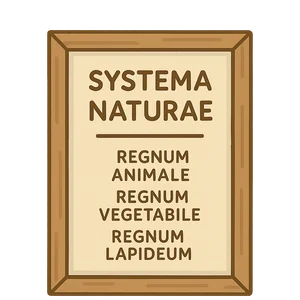
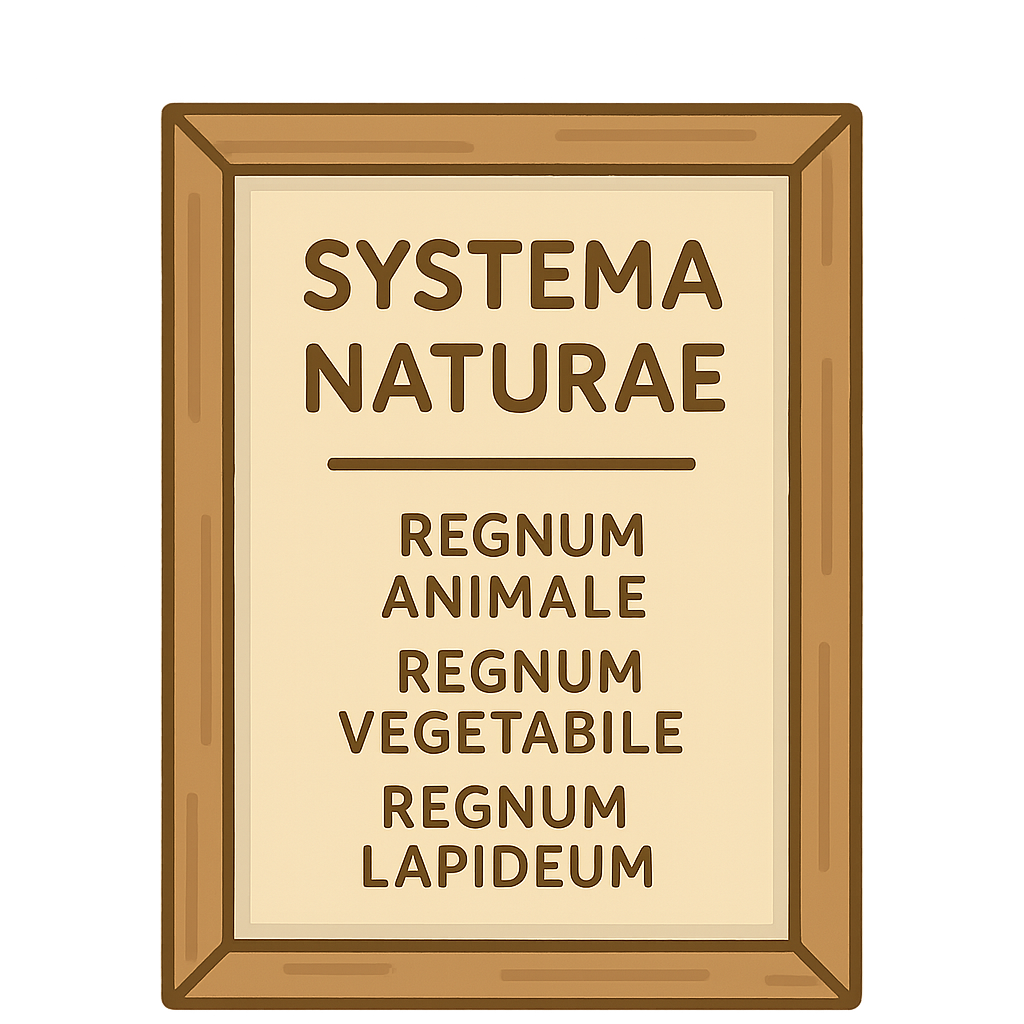
Systema Naturae
A groundbreaking book by Carl Linnaeus, first published in 1735…
Reads at Grades 3–5 Listens at Grades 1–5
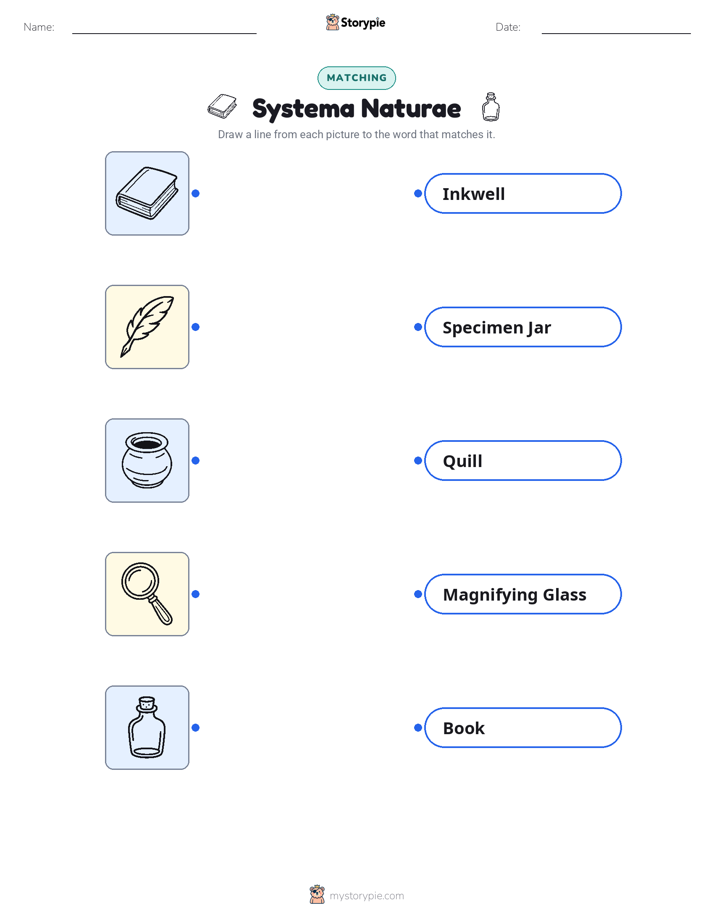
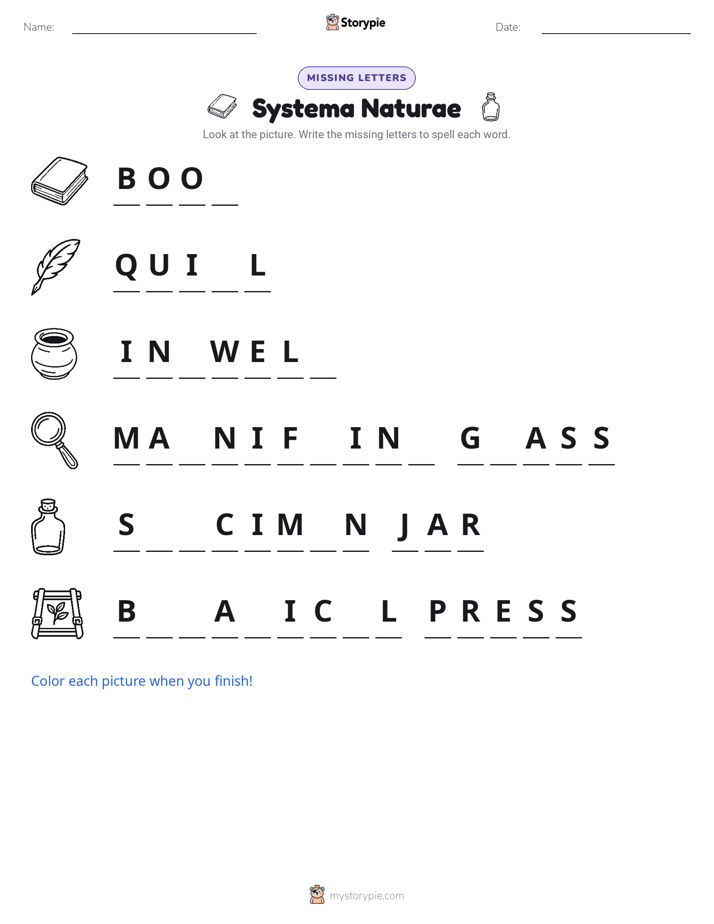
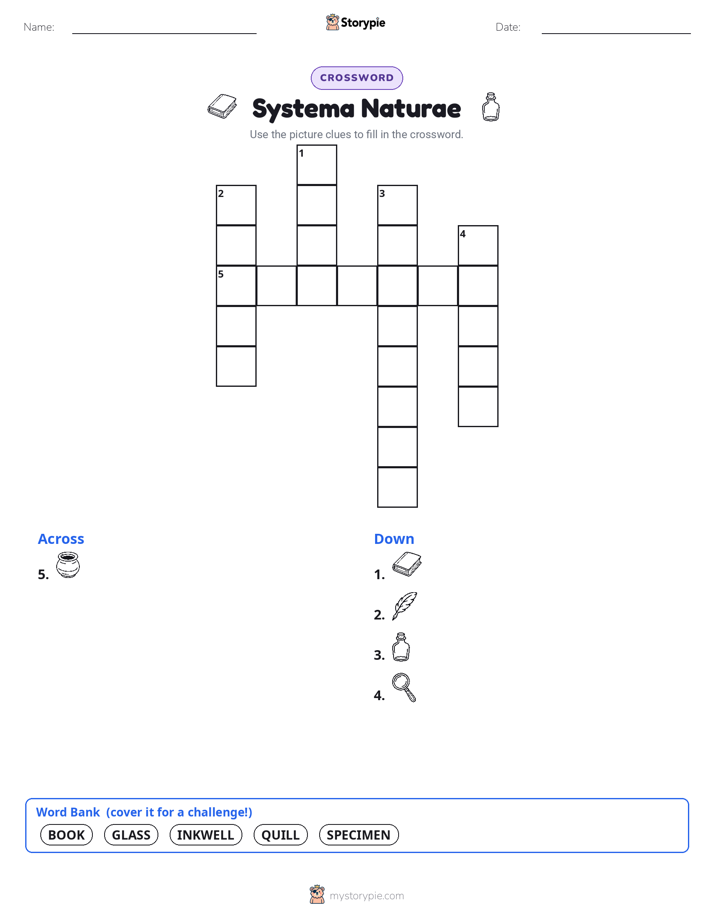
Print & create
Answer keys·No prep·Free with an account
28 worksheets · answer keys · full story · quiz · Ages 8-10 · CEFR B1
Plus adds 244,000+ more stories in 27 languages, audio for every one, and printables for all of them.
Just want Systema Naturae?
Imagine a world full of wonderful living things, but where nobody could agree on what to call them. A beautiful wild rose in England might have a completely different name in France, and another one in Spain. It was a beautiful but confusing jumble of names. A single flower could have ten different names in ten different towns. Can you imagine trying to talk to a friend in another country about your favorite animal if you were both calling it something different? That is the world I was born into. I was created from a desire for order, a dream to give everything its own special place. I am not just paper and ink, but an idea—a secret map to organize all of life. My pages were designed to hold a special place for every plant, every animal, and every mineral, each with its own unique, two-part name that everyone, everywhere, could understand. I am the voice that brings clarity to the chorus of nature. A curious and brilliant man from Sweden, who loved exploring the outdoors more than anything, dreamed me into being. He gave me a grand name: Systema Naturae.
My creator was a man named Carl Linnaeus. When he was a boy in Sweden in the early 1700s, he was completely fascinated by the world of plants. His teachers even called him "the little botanist" because he would rather study flowers than his lessons. But as he grew older and became a scientist himself, he became incredibly frustrated. How could people share their important discoveries if they couldn't even agree on a plant's name? He saw scientists writing long, rambling descriptions that were pages long just to identify one type of beetle. It was messy and confusing. He imagined a system so simple and clear that a scientist in Japan and a scientist in Brazil could know they were studying the exact same butterfly, just by looking at its name. So, on June 25th, 1735, I was finally born. My very first edition was published in the Netherlands, and you might be surprised to learn that I was very thin—only about twelve pages long, more like a small pamphlet than a big book. But Linnaeus saw me as a living project, something that would grow and change as our knowledge of the world grew. He and his students, who he famously called his "apostles," traveled across the globe. They climbed mountains in Europe, trekked through jungles in South America, and sailed to distant lands, all to find and document new species. With each discovery they made, I grew thicker and more complete, filled with new names and new families of life. Linnaeus gave me my most revolutionary idea: binomial nomenclature. It’s a fancy term, but it’s a simple and powerful idea. It meant that every living thing would get two names in Latin, a 'genus' name (which is like a big family name) and a 'species' name (which is like a personal first name). He even gave humans their name: Homo sapiens, which means "wise man".
The Book That Named the World
Imagine a world full of wonderful living things, but where nobody could agree on what to call them. A beautiful wild rose in England might have a completely different name in France, and another one in Spain. It was a beautiful but confusing jumble of names. A single flower could have ten different names in ten different towns. Can you imagine trying to talk to a friend in another country about your favorite animal if you were both calling it something different? That is the world I was born into. I was created from a desire for order, a dream to give everything its own special place. I am not just paper and ink, but an idea—a secret map to organize all of life. My pages were designed to hold a special place for every plant, every animal, and every mineral, each with its own unique, two-part name that everyone, everywhere, could understand. I am the voice that brings clarity to the chorus of nature. A curious and brilliant man from Sweden, who loved exploring the outdoors more than anything, dreamed me into being. He gave me a grand name: Systema Naturae.
My creator was a man named Carl Linnaeus. When he was a boy in Sweden in the early 1700s, he was completely fascinated by the world of plants. His teachers even called him "the little botanist" because he would rather study flowers than his lessons. But as he grew older and became a scientist himself, he became incredibly frustrated. How could people share their important discoveries if they couldn't even agree on a plant's name? He saw scientists writing long, rambling descriptions that were pages long just to identify one type of beetle. It was messy and confusing. He imagined a system so simple and clear that a scientist in Japan and a scientist in Brazil could know they were studying the exact same butterfly, just by looking at its name. So, on June 25th, 1735, I was finally born. My very first edition was published in the Netherlands, and you might be surprised to learn that I was very thin—only about twelve pages long, more like a small pamphlet than a big book. But Linnaeus saw me as a living project, something that would grow and change as our knowledge of the world grew. He and his students, who he famously called his "apostles," traveled across the globe. They climbed mountains in Europe, trekked through jungles in South America, and sailed to distant lands, all to find and document new species. With each discovery they made, I grew thicker and more complete, filled with new names and new families of life. Linnaeus gave me my most revolutionary idea: binomial nomenclature. It’s a fancy term, but it’s a simple and powerful idea. It meant that every living thing would get two names in Latin, a 'genus' name (which is like a big family name) and a 'species' name (which is like a personal first name). He even gave humans their name: Homo sapiens, which means "wise man".
Before I existed, things were chaotic. If a scientist wanted to describe a simple oak tree, they might have to write out a long Latin sentence: "Quercus foliis deciduis, sinuato-pinnatifidis, lobis subrotundis," which is quite a mouthful. I changed everything. Suddenly, with my system, that same tree was simply Quercus robur. Just two words. It was like giving everyone in the world a clear, shared dictionary for nature. My system was logical, like organizing books on shelves in a library. You could find exactly where every creature belonged, from the mightiest lion (Panthera leo) to the tiniest beetle. It showed how different species were related to each other. My 10th edition, which was published on January 1st, 1758, was a huge milestone. It became the official starting point for naming all animals, a rule that zoologists, the scientists who study animals, still follow to this very day. Can you believe it? A rule from over 250 years ago is still used every single day. Explorers and naturalists on great voyages, like those who sailed with Captain James Cook, carried my ideas with them across the oceans. When they discovered kangaroos in Australia or unique birds on tropical islands, they used my method to give them their official names. I helped people see the world not as a random collection of things, but as a vast, interconnected family with a beautiful, organized structure.
Centuries have passed since Carl Linnaeus first imagined me. Today, scientists know much more than he did, especially with incredible discoveries like DNA, the blueprint of life. Using DNA, they have learned that some of his original groupings needed to be changed. For example, he placed whales in the same group as fish because they lived in the water, but we now know they are mammals, more closely related to hippos. But his greatest idea—my system of two-part names—is still the heart of biology. My spirit lives on in every science textbook you read, every museum display you visit, and every single time a scientist discovers a new species and gives it its own special name. I was created to organize the wonder of the world, and I continue to inspire people to look closely, to ask questions, and to see the beautiful, orderly pattern in all living things. I am a reminder that understanding our world is a story that never ends.
Wow facts
About
A groundbreaking book by Carl Linnaeus, first published in 1735, that introduced a systematic approach to classifying and naming organisms, known as binomial nomenclature.
Take a Quiz
Question 1 of 5
In the story, I say my creator was 'fascinated' by plants. What does the word 'fascinated' mean?
Explore next





Want to do even more?
Go beyond exploring. Unlock tools that turn every story into real learning.

Storypie Plus for families
Full stories, quizzes, and printables. Nights and car rides, sorted.
- Unlimited audio stories
- Create Mode: your child stars in the story
- Offline downloads
- Printable worksheets & coloring pages

Why Storypie for Schools
Students engaged. Prep in seconds. Evenings back to you.
- Worksheets & Quizzes
- Classroom Management
- Formative Assessment
- Custom Curriculum & Lesson Plans
- 27 Languages

Why Storypie for Homeschool
Curriculum done. They'll ask for more. Hours back in your day.
- Worksheet Generator
- First-Person Audio Stories
- Built-in Comprehension Quizzes
- Custom Curriculum & Lesson Plans
- Print & Go Activities