English

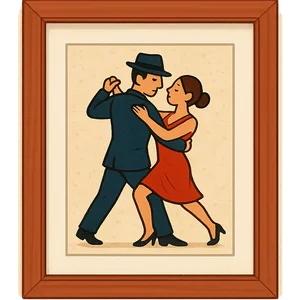
Tango
A passionate partner dance and music genre that originated in the late 19th century in the working-class port…
Reads at Grades 6–8 Listens at Grades 4–8
Print & create
Answer keys·No prep·Free with an account
28 worksheets · answer keys · full story · quiz · Ages 10-12 · CEFR B2
Plus adds 164,000+ more stories in 27 languages, audio for every one, and printables for all of them.
Just want Tango?
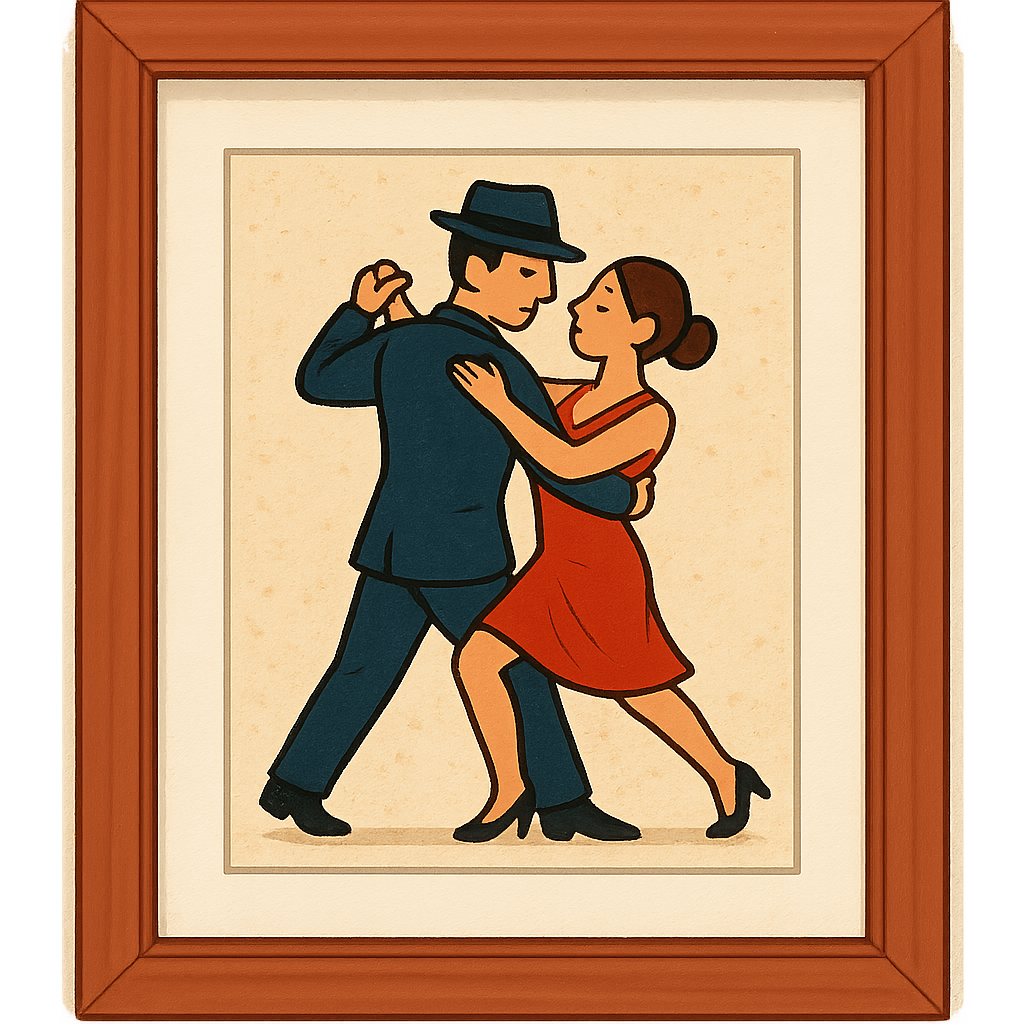
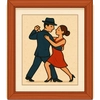
Listen. Can you hear it? A melancholy melody squeezes from the bellows of a bandoneón, a sound like a sigh and a heartbeat all at once. See the dancers? They hold each other in a close, serious embrace, their faces telling a story their lips do not speak. Their feet are a secret language, gliding and tapping across the floorboards—a sharp flick here, a slow, deliberate slide there. I am a conversation held in footsteps, a drama of longing and connection played out in three minutes. I was born in the crowded, dimly lit rooms of a city by the sea, a place where people from all over the world brought their hopes and their heartaches. In their loneliness, they found each other, and in their movements, they created me. I am the Tango.
My story begins in the bustling port neighborhoods, the barrios, of Buenos Aires, Argentina, and Montevideo, Uruguay, in the late 19th century. Around the 1880s, these cities were a vibrant, chaotic mix of cultures. Ships arrived every day carrying immigrants from Italy, Spain, and other parts of Europe, all searching for a new life. They joined the communities of local 'criollos'—people of Spanish descent born in the Americas—and the descendants of African people whose ancestors had been brought there. In the crowded courtyards and smoky cafes, these groups mingled. They didn't always share a language, but they shared a feeling of being far from home, a sense of struggle, and a deep desire to connect. From this melting pot, I was born. I wasn't created by a single person but by all of them. My rhythm has echoes of the African candombe, my melodies carry the nostalgia of European folk songs, and my spirit holds the proud defiance of the Argentinian gaucho. The bandoneón, an instrument brought over by German immigrants, became my soul, its sound perfectly capturing my mix of sadness and passion. I was their voice when words failed.
The Tango's Tale
Listen. Can you hear it? A melancholy melody squeezes from the bellows of a bandoneón, a sound like a sigh and a heartbeat all at once. See the dancers? They hold each other in a close, serious embrace, their faces telling a story their lips do not speak. Their feet are a secret language, gliding and tapping across the floorboards—a sharp flick here, a slow, deliberate slide there. I am a conversation held in footsteps, a drama of longing and connection played out in three minutes. I was born in the crowded, dimly lit rooms of a city by the sea, a place where people from all over the world brought their hopes and their heartaches. In their loneliness, they found each other, and in their movements, they created me. I am the Tango.
My story begins in the bustling port neighborhoods, the barrios, of Buenos Aires, Argentina, and Montevideo, Uruguay, in the late 19th century. Around the 1880s, these cities were a vibrant, chaotic mix of cultures. Ships arrived every day carrying immigrants from Italy, Spain, and other parts of Europe, all searching for a new life. They joined the communities of local 'criollos'—people of Spanish descent born in the Americas—and the descendants of African people whose ancestors had been brought there. In the crowded courtyards and smoky cafes, these groups mingled. They didn't always share a language, but they shared a feeling of being far from home, a sense of struggle, and a deep desire to connect. From this melting pot, I was born. I wasn't created by a single person but by all of them. My rhythm has echoes of the African candombe, my melodies carry the nostalgia of European folk songs, and my spirit holds the proud defiance of the Argentinian gaucho. The bandoneón, an instrument brought over by German immigrants, became my soul, its sound perfectly capturing my mix of sadness and passion. I was their voice when words failed.
For years, I belonged only to the working-class districts where I was born. I was considered too raw, too intense for the elegant halls of high society. But that all changed in the early 1910s. Argentinian sailors and wealthy travelers carried my music and my steps with them across the Atlantic Ocean. My first stop was Paris, the cultural capital of the world. At first, the Parisians were shocked. They called me scandalous, too dramatic, too intimate for a proper ballroom. But their shock quickly turned into fascination. The very passion they first feared soon became what they loved most about me. Before long, all of Paris was caught in a wave of 'Tango-mania'. Dance instructors couldn't teach my steps fast enough, and special tea parties were held just for dancing me. From Paris, my fame spread like wildfire across the globe. I traveled to London, Berlin, and even New York, becoming an international sensation. I was no longer just the secret dance of the Buenos Aires barrios; I was a symbol of exotic passion and sophisticated style.
While I was charming the world, I was also entering my greatest era back home in Argentina. The period from about 1935 to 1955 is known as my 'Golden Age'. By then, I was no longer an outsider. I was the heartbeat of Buenos Aires. Grand orchestras, led by famous conductors, played my melodies with sweeping, cinematic arrangements. My music poured from every radio and filled the dance halls every night. It was during this time that a singer with a voice as smooth as velvet gave me my story. His name was Carlos Gardel. He became my most famous voice, singing tales of love, betrayal, and heartbreak that resonated with everyone. His songs turned my instrumental melodies into powerful poems, and thanks to his films and recordings, his voice carried my spirit to every corner of the globe. During these years, I was more than just music and dance; I was the social fabric that connected the city, the soundtrack to people's lives.
Like all living things, I have continued to change and evolve. After my Golden Age, some worried I might fade away, but my spirit is too strong for that. In the mid-20th century, a brilliant composer named Astor Piazzolla took my traditional sounds and fused them with the complex harmonies of jazz and classical music. He created a new form called 'Tango Nuevo,' or New Tango, which was meant more for listening in concert halls than for dancing. Some traditionalists were outraged, but Piazzolla gave me a new life and a new audience. Then, in the 1980s, spectacular stage shows brought my dance back to international fame, reminding the world of my power and beauty. My journey reached a special milestone on September 30th, 2009, when UNESCO officially recognized me as an Intangible Cultural Heritage of Humanity. This great honor means I am treasured as a vital part of the world’s story. Today, people from Tokyo to Helsinki gather in dance halls to learn my steps and feel my embrace. I am still a conversation without words, a story of human connection that continues to be told, one passionate step at a time.
Wow facts
About
A passionate partner dance and music genre that originated in the late 19th century in the working-class port neighborhoods of Buenos Aires, Argentina, and Montevideo, Uruguay.
Take a Quiz
Question 1 of 5
Where did the Tango originate, and what was that environment like in the late 19th century?
Explore next


Want to do even more?
Go beyond exploring. Unlock tools that turn every story into real learning.

Storypie Plus for families
Full stories, quizzes, and printables. Nights and car rides, sorted.
- Unlimited audio stories
- Create Mode: your child stars in the story
- Offline downloads
- Printable worksheets & coloring pages

Why Storypie for Schools
Students engaged. Prep in seconds. Evenings back to you.
- Worksheets & Quizzes
- Classroom Management
- Formative Assessment
- Custom Curriculum & Lesson Plans
- 27 Languages

Why Storypie for Homeschool
Curriculum done. They'll ask for more. Hours back in your day.
- Worksheet Generator
- First-Person Audio Stories
- Built-in Comprehension Quizzes
- Custom Curriculum & Lesson Plans
- Print & Go Activities