English

Terracotta Army
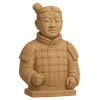
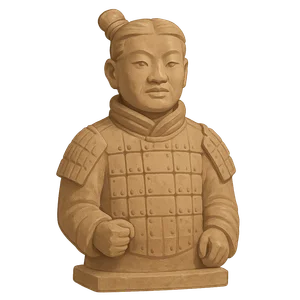
A collection of over 8,000 life-sized terracotta sculptures depicting the armies of Qin Shi Huang…
Reads at Grades 6–8 Listens at Grades 4–8
Print & create
Answer keys·No prep·Free with an account
28 worksheets · answer keys · full story · quiz · Ages 10-12 · CEFR B2
Plus adds 208,000+ more stories in 27 languages, audio for every one, and printables for all of them.
Just want Terracotta Army?
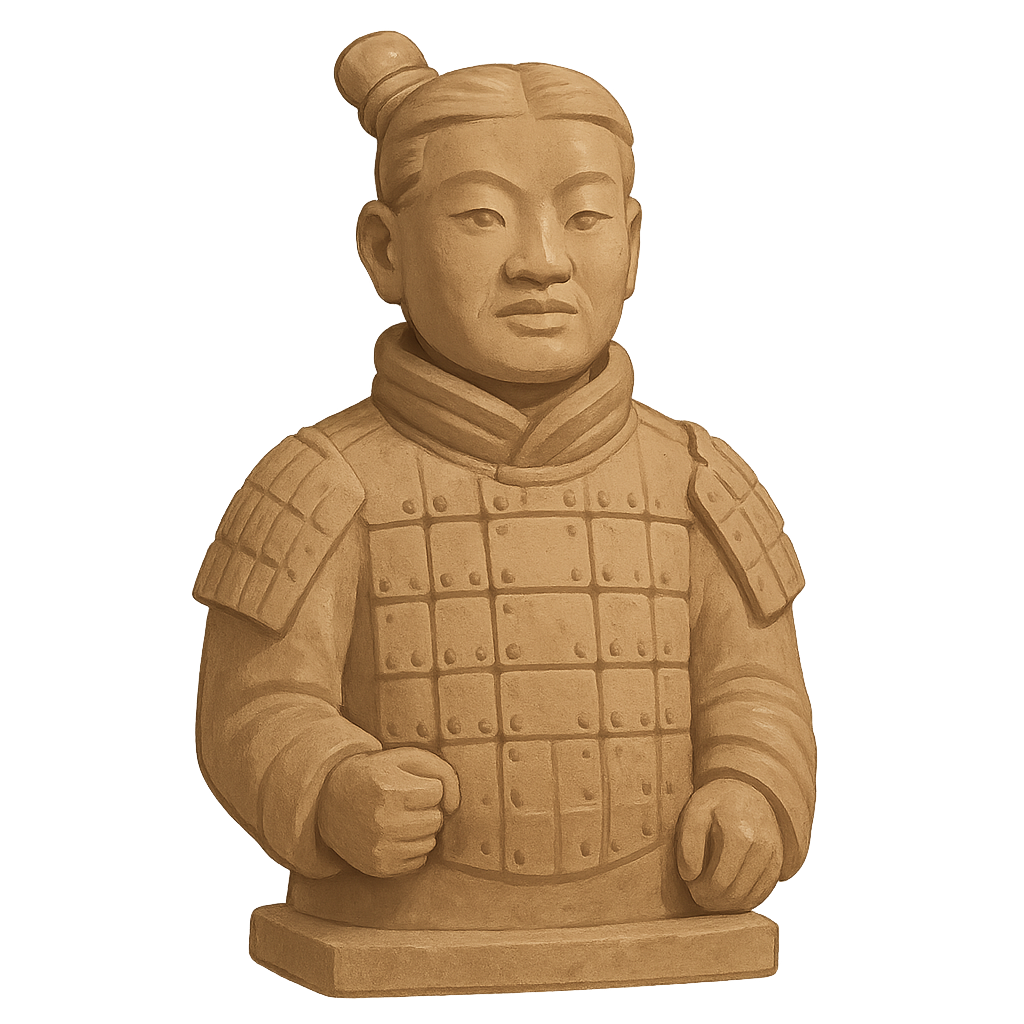
For more than two thousand years, my world was silent, patient, and completely dark. I stood shoulder to shoulder with thousands of my brothers, an army frozen in time, packed tightly in the cool, silent earth. We are not made of flesh and bone, but of clay, yet each one of us is unique. Look closely at my face, my armor, the way my hair is tied. My expression is my own, and the soldier next to me has another. We are generals, archers, charioteers, and infantrymen, each armed and ready for a battle that would never come. We were created for a single, secret purpose: to serve as the eternal guardians for our master in the afterlife. We were a promise of power that would never fade. We stood our post in total blackness, a hidden empire beneath the fields of farmers, while dynasties rose and fell in the world of light above. We waited. Then, after centuries of stillness, a sliver of light pierced our tomb, and our long watch was finally discovered. We are the Terracotta Army, and this is the story of our creation, our long wait, and our reawakening.
Our story begins with a man who was not just a king, but an emperor—the very first emperor of a unified China. His name was Qin Shi Huang, and he was a ruler of immense power and even greater ambition. Around 221 BCE, he had conquered all his rivals and brought the warring states together into one empire. He standardized weights, measures, and even writing, but his greatest project was his own immortality. He did not just want to be remembered; he wanted to rule forever, even in the life beyond death. To ensure his power in the next world, he commanded the construction of a vast mausoleum, and as part of it, an army to protect him. The work began long before, around 246 BCE, when he was still a young king. He gathered the most skilled artisans from across his empire. They took the rich, yellowish soil from the local land—a clay known as terracotta—and began to shape us. We were not mass-produced from a single mold. The artisans built our bodies in parts—legs, torsos, arms, and heads—and then assembled us. They gave each of us a different face, modeling us after real soldiers in the emperor's army. They etched fine lines into our armor to show the intricate details of leather and metal, and they equipped us with real bronze weapons—swords, spears, and crossbows that were still sharp after millennia. Once we were formed, we were fired in massive kilns at incredibly high temperatures until we were as hard as stone. But we were not left a plain, earthy color. The artisans painted us in brilliant, lifelike colors. Our robes were deep purple and vibrant red, our faces were painted with realistic skin tones, and our armor was detailed in green, blue, and black. We were a perfect, eternal reflection of the living, breathing army that had conquered a continent, ready to follow our emperor into eternity.
The Silent Guardians of the First Emperor
For more than two thousand years, my world was silent, patient, and completely dark. I stood shoulder to shoulder with thousands of my brothers, an army frozen in time, packed tightly in the cool, silent earth. We are not made of flesh and bone, but of clay, yet each one of us is unique. Look closely at my face, my armor, the way my hair is tied. My expression is my own, and the soldier next to me has another. We are generals, archers, charioteers, and infantrymen, each armed and ready for a battle that would never come. We were created for a single, secret purpose: to serve as the eternal guardians for our master in the afterlife. We were a promise of power that would never fade. We stood our post in total blackness, a hidden empire beneath the fields of farmers, while dynasties rose and fell in the world of light above. We waited. Then, after centuries of stillness, a sliver of light pierced our tomb, and our long watch was finally discovered. We are the Terracotta Army, and this is the story of our creation, our long wait, and our reawakening.
Our story begins with a man who was not just a king, but an emperor—the very first emperor of a unified China. His name was Qin Shi Huang, and he was a ruler of immense power and even greater ambition. Around 221 BCE, he had conquered all his rivals and brought the warring states together into one empire. He standardized weights, measures, and even writing, but his greatest project was his own immortality. He did not just want to be remembered; he wanted to rule forever, even in the life beyond death. To ensure his power in the next world, he commanded the construction of a vast mausoleum, and as part of it, an army to protect him. The work began long before, around 246 BCE, when he was still a young king. He gathered the most skilled artisans from across his empire. They took the rich, yellowish soil from the local land—a clay known as terracotta—and began to shape us. We were not mass-produced from a single mold. The artisans built our bodies in parts—legs, torsos, arms, and heads—and then assembled us. They gave each of us a different face, modeling us after real soldiers in the emperor's army. They etched fine lines into our armor to show the intricate details of leather and metal, and they equipped us with real bronze weapons—swords, spears, and crossbows that were still sharp after millennia. Once we were formed, we were fired in massive kilns at incredibly high temperatures until we were as hard as stone. But we were not left a plain, earthy color. The artisans painted us in brilliant, lifelike colors. Our robes were deep purple and vibrant red, our faces were painted with realistic skin tones, and our armor was detailed in green, blue, and black. We were a perfect, eternal reflection of the living, breathing army that had conquered a continent, ready to follow our emperor into eternity.
Our emperor, Qin Shi Huang, passed from the world of the living around 210 BCE. He was laid to rest in his grand tomb, which is said to contain rivers of mercury and treasures beyond imagination, and we were sealed in our underground pits to begin our eternal watch. The memory of our existence faded. The massive project was forgotten, and the entrances to our chambers were covered with earth and planted over. For centuries, farmers worked the land above us, completely unaware of the silent army standing in perfect battle formation just a few feet beneath their tools. Our brilliant paint, once exposed to the air and moisture, began to flake and fade, returning us to the color of the earth from which we were made. But our purpose never wavered. We stood our ground through more than twenty dynasties. Then, on March 29th, 1974, our silent vigil was broken. A group of local farmers were digging a well to find water during a drought. As one of them dug deeper, his shovel struck something hard. It was not a rock. It was the head of one of my comrades. At first, they were scared, but they continued to dig and soon realized they had found something extraordinary. Word spread quickly, and soon archaeologists from across China arrived. With delicate brushes and patient hands, they began to remove the dirt of centuries. They didn't just find one soldier. They uncovered an entire pit of us, then a second, and a third. The world was astonished. An entire army of life-sized clay soldiers, along with their horses and bronze chariots, had been hidden for over 2,200 years, and now it was seeing the light of day once more.
Today, we stand in the light, protected inside a massive museum built right over our excavation pits. We are no longer a secret. We are a bridge, connecting the modern world to the incredible history of ancient China. Millions of people travel from every corner of the globe to walk alongside our ranks. They look into our clay eyes and try to imagine the empire we were built to protect and the sheer scale of our emperor's vision. We are a silent testament to the grand dreams of Qin Shi Huang and a tribute to the astonishing skill and artistry of the hundreds of thousands of laborers and craftsmen who gave us life. We are proof that even things buried deep within the earth hold stories waiting to be told, and that the creativity of humanity can echo through time, sparking wonder and inspiring new generations to dream just as boldly.
Wow facts
About
A collection of over 8,000 life-sized terracotta sculptures depicting the armies of Qin Shi Huang, the first Emperor of China, created to protect him in the afterlife.
Take a Quiz
Question 1 of 5
What is the main theme of this story?
Explore next





Want to do even more?
Go beyond exploring. Unlock tools that turn every story into real learning.

Storypie Plus for families
Full stories, quizzes, and printables. Nights and car rides, sorted.
- Unlimited audio stories
- Create Mode: your child stars in the story
- Offline downloads
- Printable worksheets & coloring pages

Why Storypie for Schools
Students engaged. Prep in seconds. Evenings back to you.
- Worksheets & Quizzes
- Classroom Management
- Formative Assessment
- Custom Curriculum & Lesson Plans
- 27 Languages

Why Storypie for Homeschool
Curriculum done. They'll ask for more. Hours back in your day.
- Worksheet Generator
- First-Person Audio Stories
- Built-in Comprehension Quizzes
- Custom Curriculum & Lesson Plans
- Print & Go Activities