English

The Canterbury Tales
A collection of 24 stories written in Middle English by Geoffrey Chaucer between 1387 and 1400…
Reads at Grades 6–8 Listens at Grades 4–8
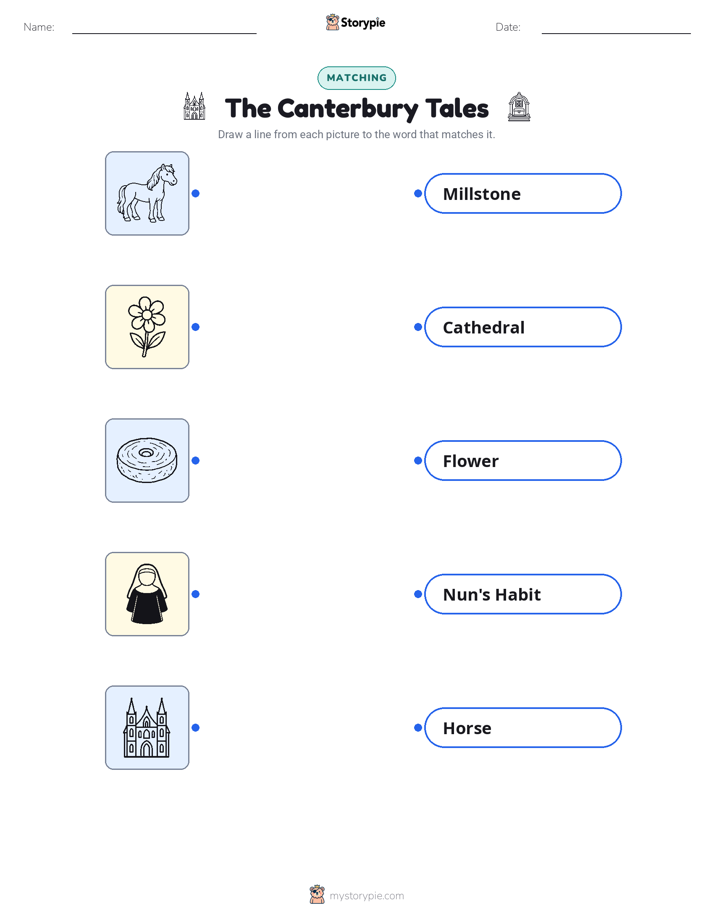
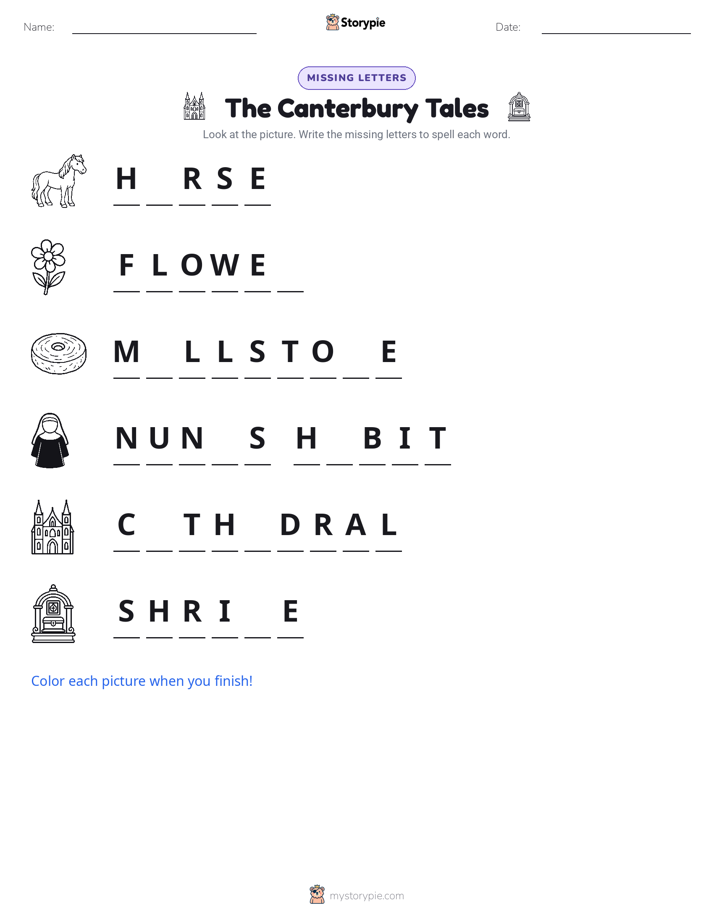
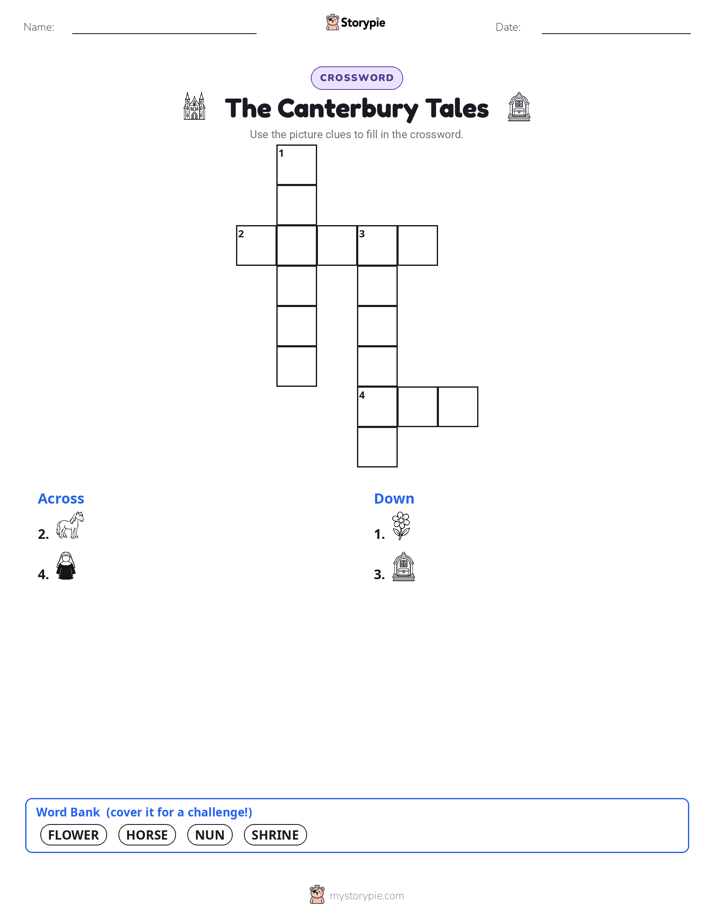
Print & create
Answer keys·No prep·Free with an account
28 worksheets · answer keys · full story · quiz · Ages 10-12 · CEFR B2
Plus adds 244,000+ more stories in 27 languages, audio for every one, and printables for all of them.
Just want The Canterbury Tales?
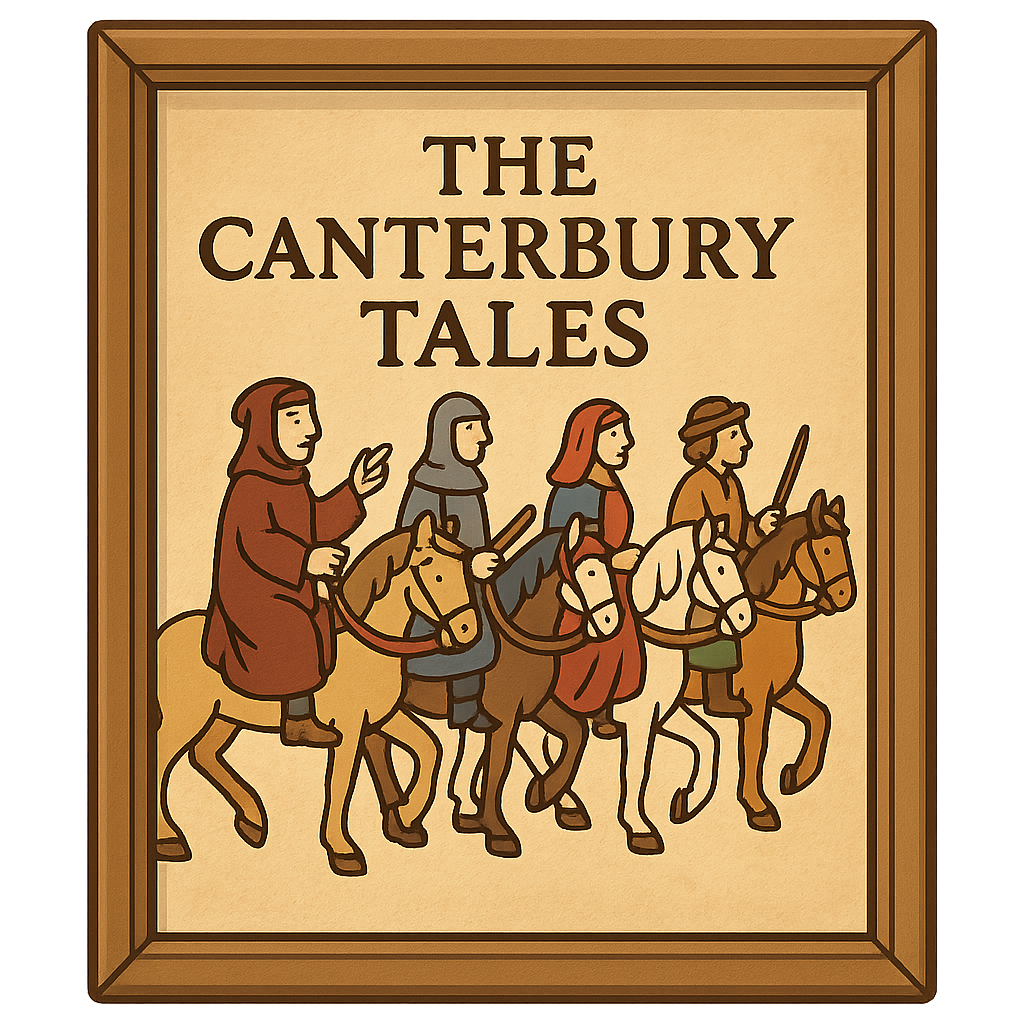
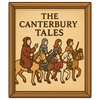
Begin not with paper and ink, but with the sounds of a journey. Imagine the clatter of horse hooves on a cobblestone road leaving London, the murmur of voices, and the scent of spring flowers in the air. I am not one voice, but many—a lively jumble of tales told to pass the time on a long walk. I carry the boisterous laugh of a miller, the quiet prayer of a nun, the bold story of a knight, and the clever wit of a scholar. Before you knew my name, you could feel the energy of the people whose stories I hold. I am a pilgrimage in words, a journey of the imagination, a chorus of voices on a dusty road. I am The Canterbury Tales.
My creator was a man named Geoffrey Chaucer, and he was a wonderful listener. He lived in England in the late 14th century and had a talent for observing all the different kinds of people around him. He saw that everyone, from a humble farmer to a wealthy merchant, had a story inside them. Between about 1387 and his death on October 25th, 1400, he gathered all the voices he had heard in his life and wove them into me. His grand idea was to write about a group of pilgrims from every walk of life, all traveling together from London to the Canterbury Cathedral to visit the shrine of Saint Thomas Becket. To make the long journey more enjoyable, the host of the inn proposes a storytelling contest: each pilgrim will tell two tales on the way there and two on the way back. The winner gets a free dinner. I was meant to have over 100 stories, but Chaucer filled me with 24 complete tales before his time ran out. He wrote me in a language called Middle English, which was the everyday language of the people. This was a radical choice, as most important books were written in Latin or French for the educated elite. For the first time, regular people could see themselves and their world in a great work of literature.
The Canterbury Tales: A Journey in Words
Begin not with paper and ink, but with the sounds of a journey. Imagine the clatter of horse hooves on a cobblestone road leaving London, the murmur of voices, and the scent of spring flowers in the air. I am not one voice, but many—a lively jumble of tales told to pass the time on a long walk. I carry the boisterous laugh of a miller, the quiet prayer of a nun, the bold story of a knight, and the clever wit of a scholar. Before you knew my name, you could feel the energy of the people whose stories I hold. I am a pilgrimage in words, a journey of the imagination, a chorus of voices on a dusty road. I am The Canterbury Tales.
My creator was a man named Geoffrey Chaucer, and he was a wonderful listener. He lived in England in the late 14th century and had a talent for observing all the different kinds of people around him. He saw that everyone, from a humble farmer to a wealthy merchant, had a story inside them. Between about 1387 and his death on October 25th, 1400, he gathered all the voices he had heard in his life and wove them into me. His grand idea was to write about a group of pilgrims from every walk of life, all traveling together from London to the Canterbury Cathedral to visit the shrine of Saint Thomas Becket. To make the long journey more enjoyable, the host of the inn proposes a storytelling contest: each pilgrim will tell two tales on the way there and two on the way back. The winner gets a free dinner. I was meant to have over 100 stories, but Chaucer filled me with 24 complete tales before his time ran out. He wrote me in a language called Middle English, which was the everyday language of the people. This was a radical choice, as most important books were written in Latin or French for the educated elite. For the first time, regular people could see themselves and their world in a great work of literature.
Because my creator, Chaucer, passed away in 1400 before I was complete, I am a story that famously has no ending. For many years, I existed only in precious, handwritten manuscripts, carefully copied by scribes with ink and quill. Each copy was a unique treasure, taking months or even years to produce, and only the very wealthy could afford one. But my big moment came almost a century later. Around the year 1476, a man named William Caxton brought a revolutionary invention to England from Germany: the printing press. He chose me to be one of the very first books ever printed in the English language. Suddenly, I could be reproduced in great numbers. My stories—of chivalry, humor, romance, and human folly—traveled across the country and, eventually, the world. My unfinished nature didn't stop people; it made them even more curious, with scholars and readers debating for centuries about how the journey would have ended and which pilgrim would have won the contest.
Hundreds of years have passed, and the world has changed in countless ways, but the voices within me still echo. Why? Because I am a time capsule of humanity. The people I carry are not so different from you and your friends. They tell jokes, get into arguments, feel shy, act bravely, and dream of better things. The Knight is honorable, the Wife of Bath is bold and funny, and the Miller is a rowdy troublemaker. I show that storytelling is one of the oldest and most powerful ways we have to understand each other. When you read my tales, you join that pilgrimage. You sit beside the knight, laugh with the Wife of Bath, and listen to stories that have been shared for over 600 years. I am a reminder that every person has a story worth telling, and that these stories are what connect us all across the ages.
Wow facts
About
A collection of 24 stories written in Middle English by Geoffrey Chaucer between 1387 and 1400, presented as a storytelling contest among a group of pilgrims traveling to Canterbury Cathedral.
Take a Quiz
Question 1 of 5
In your own words, describe the main events of The Canterbury Tales' 'life,' from its creation to its printing.
Explore next





Want to do even more?
Go beyond exploring. Unlock tools that turn every story into real learning.

Storypie Plus for families
Full stories, quizzes, and printables. Nights and car rides, sorted.
- Unlimited audio stories
- Create Mode: your child stars in the story
- Offline downloads
- Printable worksheets & coloring pages

Why Storypie for Schools
Students engaged. Prep in seconds. Evenings back to you.
- Worksheets & Quizzes
- Classroom Management
- Formative Assessment
- Custom Curriculum & Lesson Plans
- 27 Languages

Why Storypie for Homeschool
Curriculum done. They'll ask for more. Hours back in your day.
- Worksheet Generator
- First-Person Audio Stories
- Built-in Comprehension Quizzes
- Custom Curriculum & Lesson Plans
- Print & Go Activities