English

United States Constitution
The supreme law of the United States of America…
Reads at Grades 6–8 Listens at Grades 4–8
Print & create
Answer keys·No prep·Free with an account
28 worksheets · answer keys · full story · quiz · Ages 10-12 · CEFR B2
Plus adds 102,000+ more stories in 27 languages, audio for every one, and printables for all of them.
Just want United States Constitution?
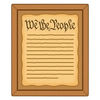
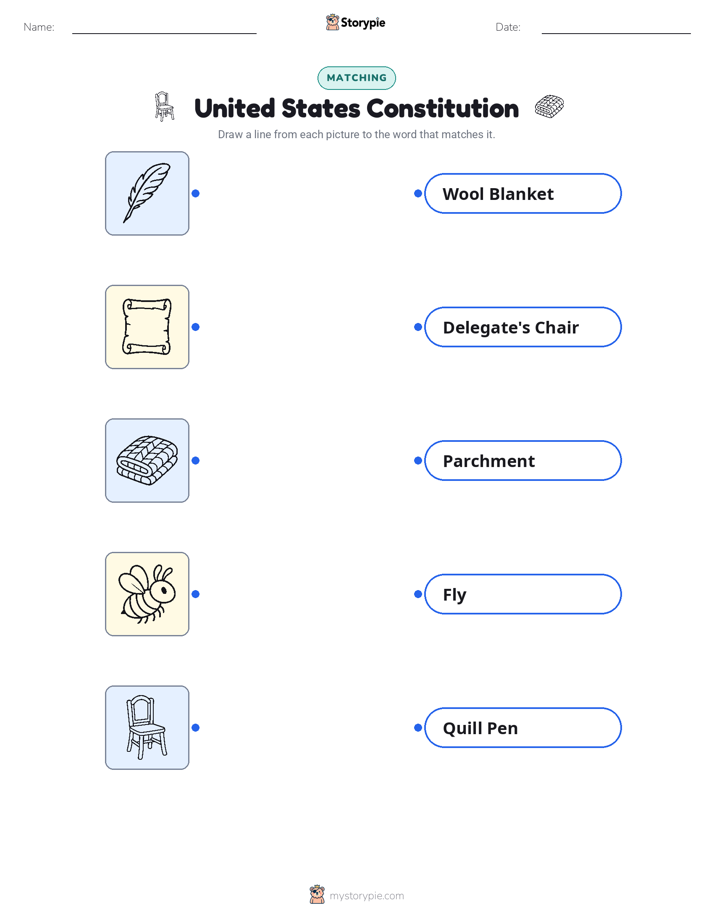
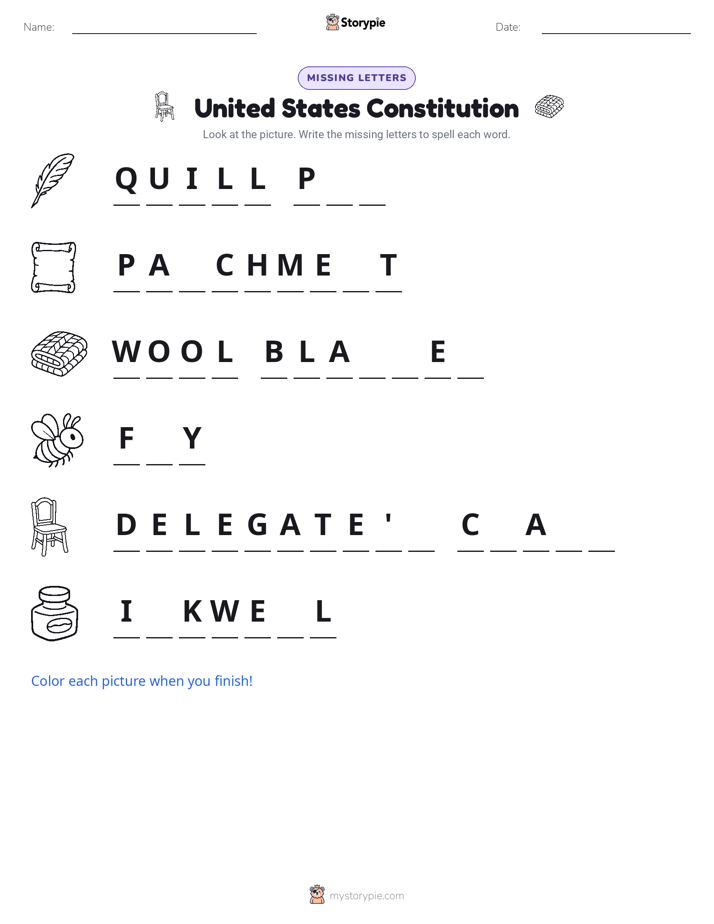
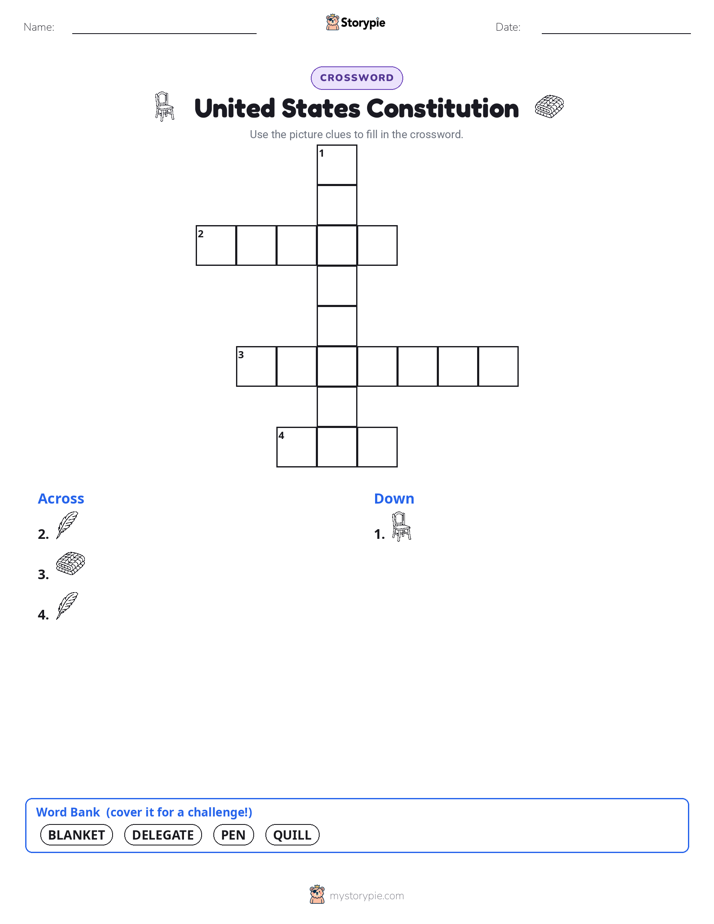
The air in the room was thick and heavy, like a wool blanket in the sweltering Philadelphia summer of 1787. Flies buzzed lazily near the windows, which were kept shut to ensure secrecy. The only sounds were the scratching of quill pens on parchment and the low, serious murmur of voices discussing the fate of a nation. I wasn't born of brick or stone, nor was I painted on a canvas. I am made of words and ideas, carefully chosen and fiercely debated, born from the arguments, hopes, and fears of the men gathered in that room. They were delegates from the newly independent states, and they felt the immense weight of the future on their shoulders. Their first attempt at a government, a document called the Articles of Confederation, had proven too weak to hold the young country together. The states argued amongst themselves, the economy was failing, and the nation was fragile. They knew they needed something stronger, something that could provide structure and balance, a guide that could last for generations. That is why they came together. They needed to create a new framework, a new blueprint for a government of the people. They needed to create me. I am the United States Constitution.
My creation was a long and difficult process, a true test of wills and intellect. For four long months, from May 25th until September 17th, 1787, the delegates debated every single word that would make up my form. The discussions were intense, filled with passion and disagreement. Some of the greatest minds of the time were there, shaping my very essence. A thoughtful Virginian named James Madison took meticulous notes on every speech and argument. He arrived with so many brilliant ideas about government that he is now known as the 'Father of the Constitution.' Presiding over the heated debates with a calm and steady hand was the respected hero of the revolution, George Washington. His presence brought a sense of order and gravity to the proceedings. And then there was the wise, elderly Benjamin Franklin, who, at 81 years old, used his humor and experience to encourage everyone to find common ground and compromise. I am, in many ways, a bundle of compromises. The delegates from large states argued with those from small states about how they should be represented in the new government. The solution was the Great Compromise, which created a Congress with two parts: the House of Representatives, where representation is based on population, and the Senate, where each state gets two votes. This brilliant idea ensured both big and small states felt their voices mattered. However, not all compromises were so elegant. My creators also made a difficult and painful compromise over the issue of slavery, a terrible contradiction to the ideals of liberty being discussed. It was a flaw that would haunt the nation and lead to immense suffering before it was finally addressed. After months of struggle, on September 17th, 1787, my final words were written on four large pages of parchment, and thirty-nine delegates came forward to sign their names, sending me out into the world.
I Am the Constitution
The air in the room was thick and heavy, like a wool blanket in the sweltering Philadelphia summer of 1787. Flies buzzed lazily near the windows, which were kept shut to ensure secrecy. The only sounds were the scratching of quill pens on parchment and the low, serious murmur of voices discussing the fate of a nation. I wasn't born of brick or stone, nor was I painted on a canvas. I am made of words and ideas, carefully chosen and fiercely debated, born from the arguments, hopes, and fears of the men gathered in that room. They were delegates from the newly independent states, and they felt the immense weight of the future on their shoulders. Their first attempt at a government, a document called the Articles of Confederation, had proven too weak to hold the young country together. The states argued amongst themselves, the economy was failing, and the nation was fragile. They knew they needed something stronger, something that could provide structure and balance, a guide that could last for generations. That is why they came together. They needed to create a new framework, a new blueprint for a government of the people. They needed to create me. I am the United States Constitution.
My creation was a long and difficult process, a true test of wills and intellect. For four long months, from May 25th until September 17th, 1787, the delegates debated every single word that would make up my form. The discussions were intense, filled with passion and disagreement. Some of the greatest minds of the time were there, shaping my very essence. A thoughtful Virginian named James Madison took meticulous notes on every speech and argument. He arrived with so many brilliant ideas about government that he is now known as the 'Father of the Constitution.' Presiding over the heated debates with a calm and steady hand was the respected hero of the revolution, George Washington. His presence brought a sense of order and gravity to the proceedings. And then there was the wise, elderly Benjamin Franklin, who, at 81 years old, used his humor and experience to encourage everyone to find common ground and compromise. I am, in many ways, a bundle of compromises. The delegates from large states argued with those from small states about how they should be represented in the new government. The solution was the Great Compromise, which created a Congress with two parts: the House of Representatives, where representation is based on population, and the Senate, where each state gets two votes. This brilliant idea ensured both big and small states felt their voices mattered. However, not all compromises were so elegant. My creators also made a difficult and painful compromise over the issue of slavery, a terrible contradiction to the ideals of liberty being discussed. It was a flaw that would haunt the nation and lead to immense suffering before it was finally addressed. After months of struggle, on September 17th, 1787, my final words were written on four large pages of parchment, and thirty-nine delegates came forward to sign their names, sending me out into the world.
My signing was a momentous occasion, but it was not the end of my journey; it was only the beginning. I was not yet the law of the land. I had to be sent to the states, and the people, through their elected representatives, had to agree to me, a process called ratification. At least nine of the thirteen states had to approve me before I could take effect. This led to a new round of intense debates across the country. Some people, known as Anti-Federalists, worried that I gave the new national government too much power. They feared it would become just like the monarchy they had fought to escape. They argued that I did not do enough to protect the individual freedoms of citizens. To address these valid concerns, my supporters, the Federalists, made a crucial promise: as soon as I was approved, they would add a list of specific rights that the government could not take away. This promise helped turn the tide. On June 21st, 1788, New Hampshire became the ninth state to ratify me, and I officially became the framework for the United States government. True to their word, my creators immediately began working on the promised additions. In 1791, they added the first ten changes, or amendments. This list is one of my most famous parts—it's called the Bill of Rights. It protects essential freedoms like the right to speak your mind freely, to practice any religion, to assemble peacefully, and to be guaranteed a fair trial if accused of a crime. These first ten promises were a powerful statement that the new government was built on a foundation of liberty for its people.
Perhaps the most brilliant feature my creators gave me was the ability to change and adapt over time. They understood that they could not predict the future and that the needs of the country would evolve. They designed me to be a 'living document.' This means I can be formally changed through a process of adding amendments, allowing future generations to correct my flaws and expand upon my promises. I was not perfect when I was written, and this ability to grow is what has allowed me to endure. Over the past two centuries, the American people have used this power to make profound changes. On December 6th, 1865, the 13th Amendment was ratified, finally ending the institution of slavery and correcting one of the deepest, most tragic flaws from my creation. It was a monumental step toward fulfilling the promise of liberty for all. Decades later, on August 18th, 1920, the 19th Amendment was passed, giving women the right to vote and doubling the number of citizens who could participate in their democracy. And on July 1st, 1971, the 26th Amendment lowered the voting age from 21 to 18, recognizing the rights of young people. Each amendment is like a conversation across time, a way for new generations to look at the nation's founding ideals and work to make the country's promise of 'a more perfect Union' a little more real for everyone.
Today, my original four parchment pages have a special home. You can visit me at the National Archives Museum in Washington, D.C. I am kept in a sealed case filled with argon gas to protect my aging ink and parchment from harm. Thousands of people from all over the world come to see me every year, looking at the words that shaped a nation. But my physical form is not what truly matters. My real home is in the hearts and minds of the people who believe in the principles of democracy and self-government. I am more than just a historical artifact; I am a rulebook for a fair government, a promise of fundamental rights, and a constant challenge to each generation to live up to our highest ideals. Every time citizens vote in an election, participate in a debate, protest an injustice, or serve on a jury, they are keeping me alive. My story is not finished. I am more than just words written over 200 years ago; I am an ongoing experiment in freedom, and you, as a citizen, are a vital part of writing the next chapter.
Wow facts
About
The supreme law of the United States of America, establishing the framework for the national government and guaranteeing fundamental rights for its citizens.
Take a Quiz
Question 1 of 5
In your own words, retell the main events of the Constitution's creation, from the debates in 1787 to the addition of the Bill of Rights in 1791.
Explore next






Want to do even more?
Go beyond exploring. Unlock tools that turn every story into real learning.

Storypie Plus for families
Full stories, quizzes, and printables. Nights and car rides, sorted.
- Unlimited audio stories
- Create Mode: your child stars in the story
- Offline downloads
- Printable worksheets & coloring pages

Why Storypie for Schools
Students engaged. Prep in seconds. Evenings back to you.
- Worksheets & Quizzes
- Classroom Management
- Formative Assessment
- Custom Curriculum & Lesson Plans
- 27 Languages

Why Storypie for Homeschool
Curriculum done. They'll ask for more. Hours back in your day.
- Worksheet Generator
- First-Person Audio Stories
- Built-in Comprehension Quizzes
- Custom Curriculum & Lesson Plans
- Print & Go Activities