English

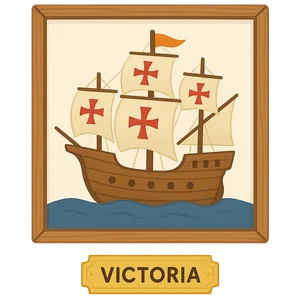
Victoria (ship)
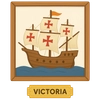
The Victoria was a Spanish carrack (nao) and the first ship to successfully circumnavigate the world as part…
Reads at Grades 6–8 Listens at Grades 4–8
Print & create
Answer keys·No prep·Free with an account
28 worksheets · answer keys · full story · quiz · Ages 10-12 · CEFR B2
Plus adds 244,000+ more stories in 27 languages, audio for every one, and printables for all of them.
Just want Victoria (ship)?
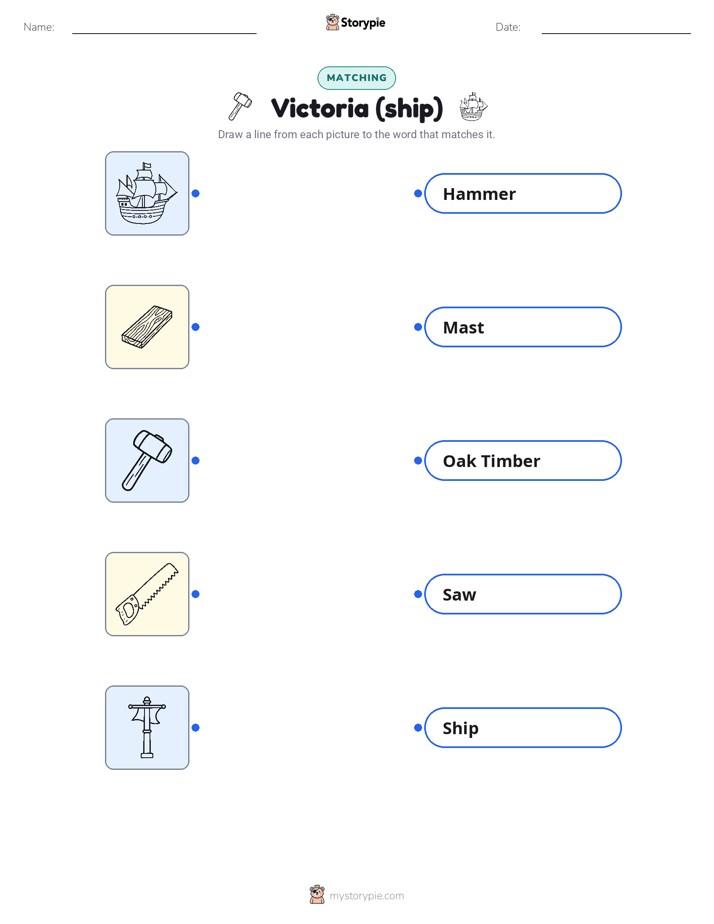
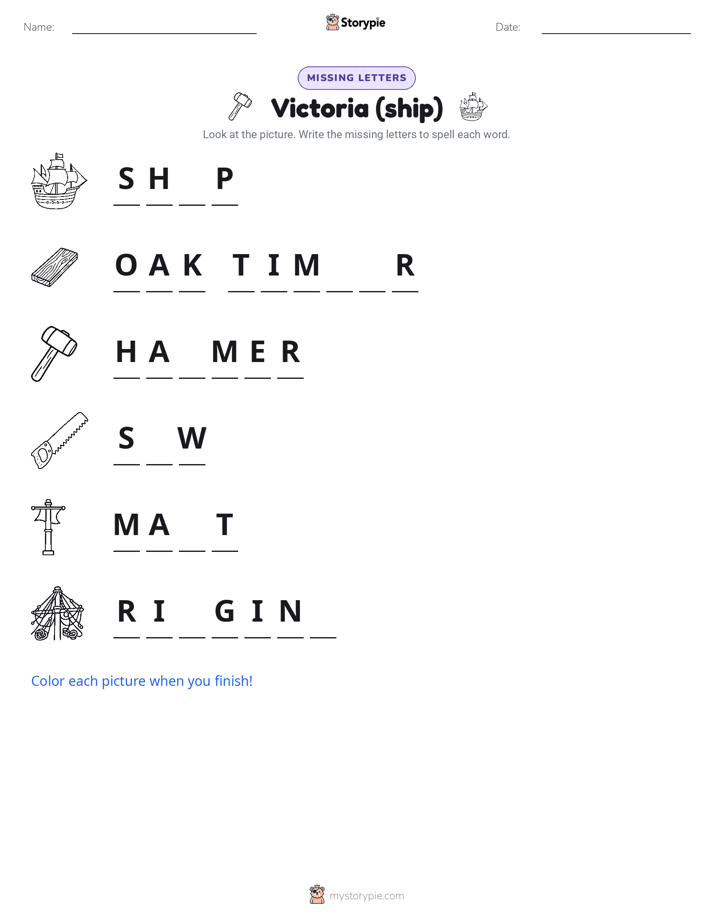
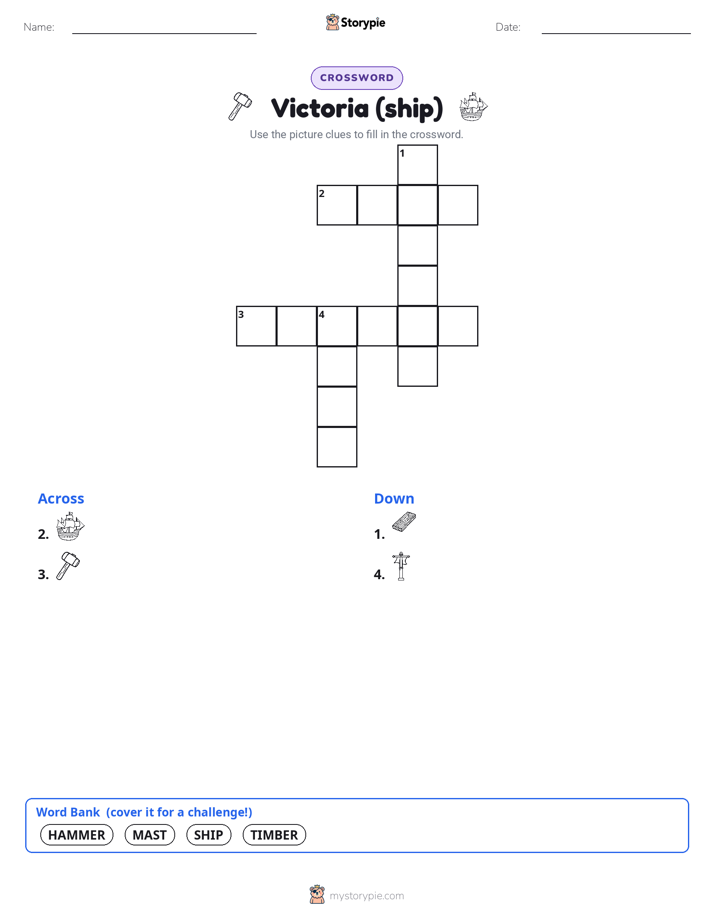
The first sensations I remember were the scent of the forest and the tang of the sea. I was born from strong Basque oak and tall pine, my timbers expertly shaped in a shipyard in Ondarroa, Spain. Around the year 1518, the air around me was a constant symphony of creation—the rhythmic clang of hammers on iron, the sharp rasp of saws through wood, and the salty wind whispering promises of the open ocean. My builders worked with a focused intensity, their hands knowing just how to curve my ribs and lay my planks to make me strong, resilient, and ready for a purpose I could only feel deep in my grain. I did not yet know my name, but I could sense I was part of a grand, secret design. A dream was being built into me, a revolutionary idea to sail west, not east, to reach the fabled Spice Islands. This was a route no one had ever successfully navigated, a journey that would challenge the very maps of the world. The men who planned my voyage spoke of glory, of unimaginable riches in cloves and nutmeg, but more than that, they spoke of discovery. They were charting a course into the complete unknown, and I was to be their vessel. As my masts were raised and my rigging was strung, my identity was finally given to me, a name that would one day be remembered for what we achieved together. I am the Victoria, and my story would circle the entire world.
The day we finally left was a blur of noise and emotion. On September 20th, 1519, I sailed from the port of Sanlúcar de Barrameda, my new sails catching the wind as crowds cheered from the shore. I was not alone; I was part of a proud fleet of five ships, an armada of exploration under the command of a brilliant and fiercely determined Portuguese captain sailing for Spain, Ferdinand Magellan. Our mission, financed by the Spanish Crown, was clear yet unimaginably difficult: find a westward passage through the newly discovered Americas to the Spice Islands of the East. The early part of our journey across the Atlantic was filled with both wonder and trepidation. We stopped in lands that are now part of Brazil and Argentina, marveling at the unfamiliar coastlines and meeting indigenous peoples. But as we pushed further south, the weather grew colder and the seas more violent. Fear began to creep into the hearts of the crew. We were sailing into uncharted territory, further south than any European ship had ever dared to venture. The coast seemed endless, a frustrating barrier to our goal. Then, in late 1520, after a brutal winter and quelling a mutiny, we found it: a narrow, winding, and incredibly dangerous waterway cutting through the tip of the continent. This passage, which would one day bear Magellan's name, was a nightmare of treacherous currents, sudden storms, and towering cliffs. It tested my hull and the crew’s spirit to their absolute limits, but we pushed through, emerging into a new, impossibly vast body of water.
The Victoria's Voyage: First Around the World
The first sensations I remember were the scent of the forest and the tang of the sea. I was born from strong Basque oak and tall pine, my timbers expertly shaped in a shipyard in Ondarroa, Spain. Around the year 1518, the air around me was a constant symphony of creation—the rhythmic clang of hammers on iron, the sharp rasp of saws through wood, and the salty wind whispering promises of the open ocean. My builders worked with a focused intensity, their hands knowing just how to curve my ribs and lay my planks to make me strong, resilient, and ready for a purpose I could only feel deep in my grain. I did not yet know my name, but I could sense I was part of a grand, secret design. A dream was being built into me, a revolutionary idea to sail west, not east, to reach the fabled Spice Islands. This was a route no one had ever successfully navigated, a journey that would challenge the very maps of the world. The men who planned my voyage spoke of glory, of unimaginable riches in cloves and nutmeg, but more than that, they spoke of discovery. They were charting a course into the complete unknown, and I was to be their vessel. As my masts were raised and my rigging was strung, my identity was finally given to me, a name that would one day be remembered for what we achieved together. I am the Victoria, and my story would circle the entire world.
The day we finally left was a blur of noise and emotion. On September 20th, 1519, I sailed from the port of Sanlúcar de Barrameda, my new sails catching the wind as crowds cheered from the shore. I was not alone; I was part of a proud fleet of five ships, an armada of exploration under the command of a brilliant and fiercely determined Portuguese captain sailing for Spain, Ferdinand Magellan. Our mission, financed by the Spanish Crown, was clear yet unimaginably difficult: find a westward passage through the newly discovered Americas to the Spice Islands of the East. The early part of our journey across the Atlantic was filled with both wonder and trepidation. We stopped in lands that are now part of Brazil and Argentina, marveling at the unfamiliar coastlines and meeting indigenous peoples. But as we pushed further south, the weather grew colder and the seas more violent. Fear began to creep into the hearts of the crew. We were sailing into uncharted territory, further south than any European ship had ever dared to venture. The coast seemed endless, a frustrating barrier to our goal. Then, in late 1520, after a brutal winter and quelling a mutiny, we found it: a narrow, winding, and incredibly dangerous waterway cutting through the tip of the continent. This passage, which would one day bear Magellan's name, was a nightmare of treacherous currents, sudden storms, and towering cliffs. It tested my hull and the crew’s spirit to their absolute limits, but we pushed through, emerging into a new, impossibly vast body of water.
Magellan, seeing the calm, gentle waters before us after the turmoil of the strait, named the ocean the 'Pacific,' meaning peaceful. But its peace was deceptive. For nearly 100 days, we saw nothing but an endless horizon of blue water. The sheer scale of this ocean was beyond anything anyone had imagined. My sister ships had already been lost; one wrecked in a storm, another deserted and turned back to Spain. I sailed on, a lone speck in an immense void. The hardship for the crew was immense. Their food rotted, their water turned foul, and scurvy, a terrible disease caused by a lack of vitamin C, ravaged their bodies. Yet, their spirit of discovery, fueled by Magellan’s unwavering resolve, kept them going. We finally made landfall in the islands now known as the Philippines. But our relief was tragically short-lived. In April of 1521, our courageous captain, Ferdinand Magellan, became involved in a local conflict and was killed in battle. The expedition was left leaderless and shattered. It seemed our historic mission was doomed to fail. However, a Basque mariner named Juan Sebastián Elcano, a skilled and pragmatic navigator, rose to the challenge. He took command of our depleted crew and vowed to see Magellan's vision through. Under his steady leadership, we pressed on. Finally, in November 1521, we limped into our long-sought destination: the Moluccas, the Spice Islands. The air was thick with the rich, exotic aromas of cloves and nutmeg. I watched as my cargo hold was filled with the precious spices we had sacrificed everything to find. The prize was ours.
Our mission was only half complete. Loaded with valuable spices, we still had to get home. With the eastward route controlled by the Portuguese, who were now our rivals, Elcano made a daring decision: we would continue sailing west, completing a full circle of the globe. The final leg of our journey was a desperate race across the Indian Ocean and around the southern tip of Africa. I was the only ship left from the five that had set out with such high hopes. My timbers groaned under the strain of the relentless waves, and my crew was skeletal and exhausted. We avoided ports to escape the Portuguese, meaning we couldn't stop for fresh supplies, and more men succumbed to starvation and illness. But we endured. On September 6th, 1522, almost exactly three years after we had departed, a Spanish lookout spotted my tattered form on the horizon. I limped back into the harbor of Sanlúcar de Barrameda, the same port from which I had sailed. My sails were shredded, my wood was bleached and weary, but my hold was full of priceless cloves, and my journey carried a story that would rewrite history. Of the roughly 270 men who had started the voyage, only 18 gaunt survivors were able to step ashore. I had done what was once thought impossible. I, the Victoria, was the first ship to ever circumnavigate the Earth.
My journey accomplished more than just bringing back spices. I provided the first definitive, physical proof that the world was round. My voyage revealed the true, staggering size of the Pacific Ocean and proved that the continents were all connected by a single, vast sea. The maps of the world were changed forever because of my path. Though my original wooden frame has long since returned to the earth, my voyage never truly ended. My spirit of adventure lives on in every person who looks at a map and dreams of distant lands. I stand as a timeless symbol of human courage, relentless curiosity, and the unwavering determination to push beyond known limits. The journey was filled with loss and unimaginable suffering, but it proved that with enough resilience, humanity could chart a course to a new understanding of the world. I remind everyone who hears my story to keep exploring, to wonder what lies just beyond the horizon, and to believe that a single, daring journey can change the way we see everything.
Wow facts
About
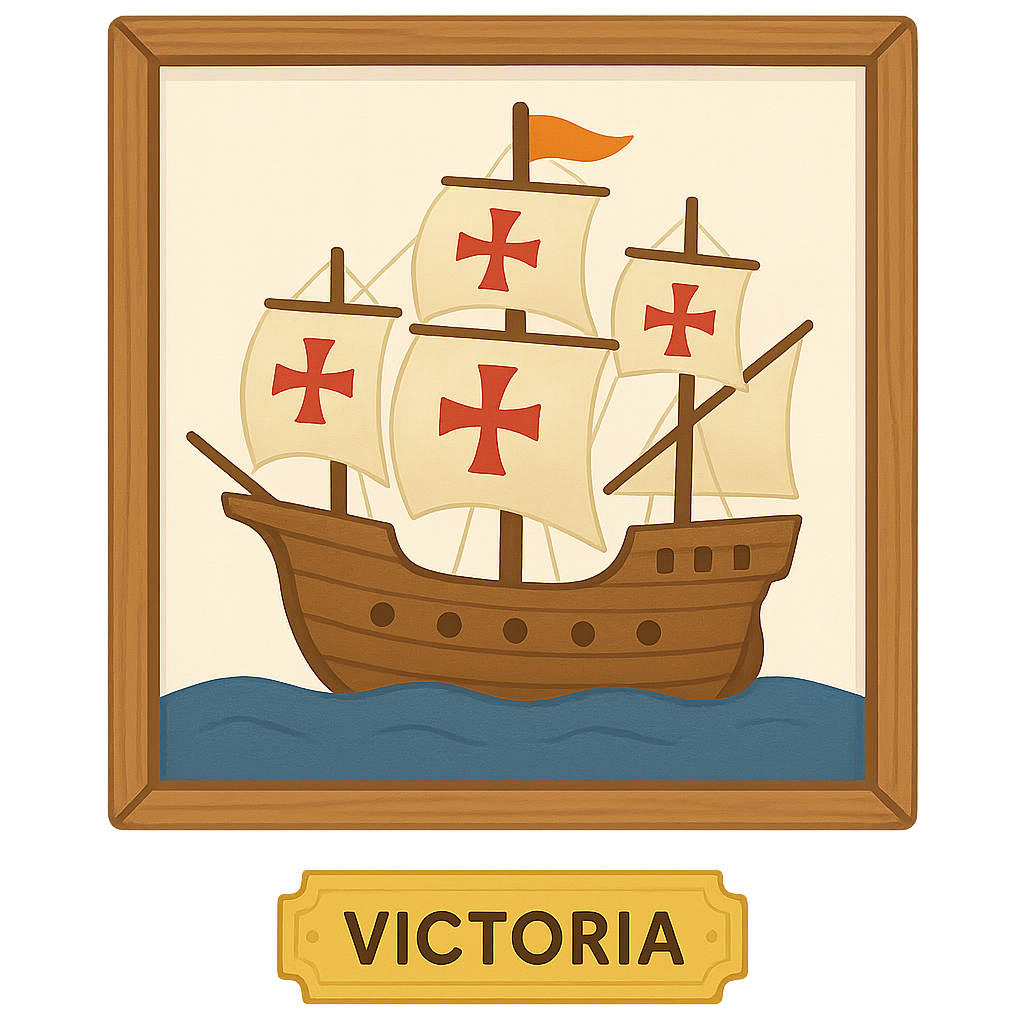
The Victoria was a Spanish carrack (nao) and the first ship to successfully circumnavigate the world as part of the Magellan-Elcano expedition (1519–1522).
Take a Quiz
Question 1 of 5
After Magellan's death, what motivated Juan Sebastián Elcano to continue the voyage instead of turning back?
Explore next

Want to do even more?
Go beyond exploring. Unlock tools that turn every story into real learning.

Storypie Plus for families
Full stories, quizzes, and printables. Nights and car rides, sorted.
- Unlimited audio stories
- Create Mode: your child stars in the story
- Offline downloads
- Printable worksheets & coloring pages

Why Storypie for Schools
Students engaged. Prep in seconds. Evenings back to you.
- Worksheets & Quizzes
- Classroom Management
- Formative Assessment
- Custom Curriculum & Lesson Plans
- 27 Languages

Why Storypie for Homeschool
Curriculum done. They'll ask for more. Hours back in your day.
- Worksheet Generator
- First-Person Audio Stories
- Built-in Comprehension Quizzes
- Custom Curriculum & Lesson Plans
- Print & Go Activities