English

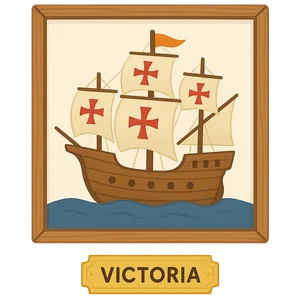
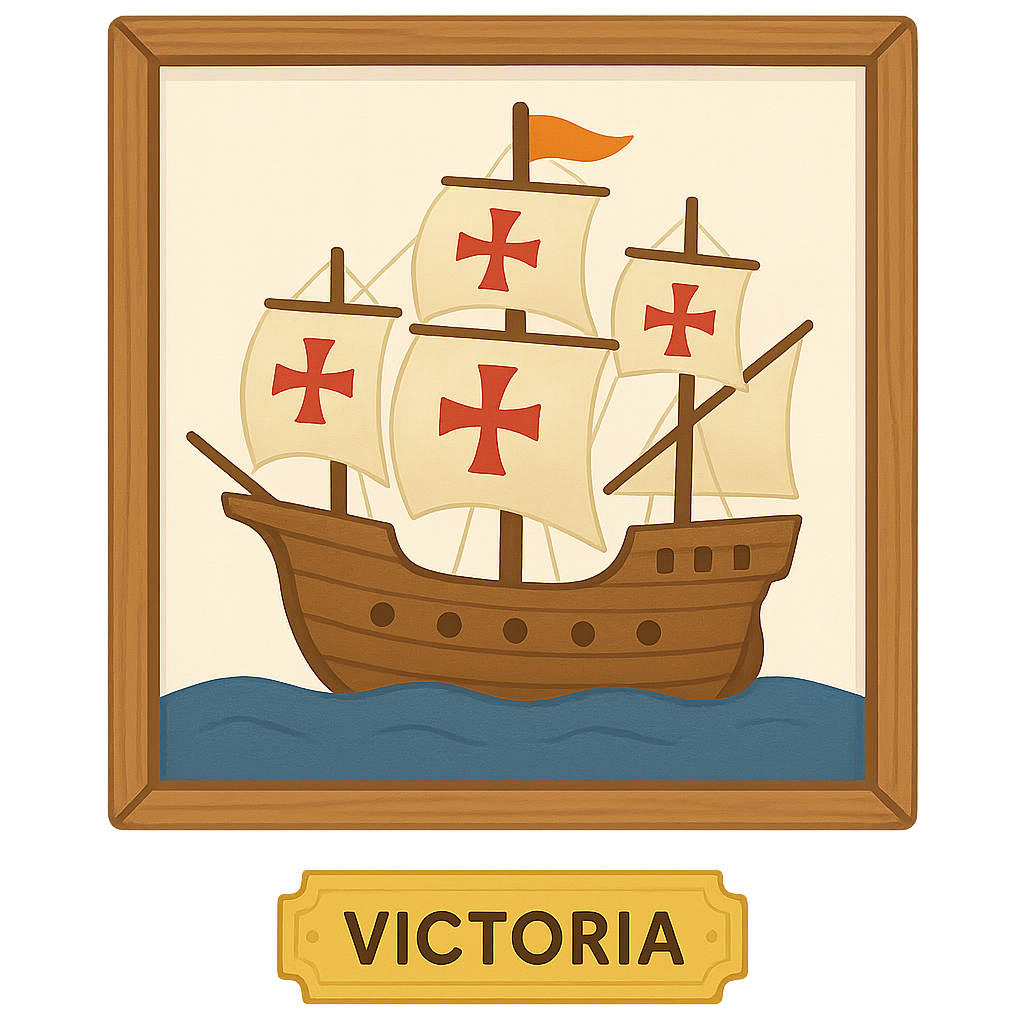
Victoria (ship)
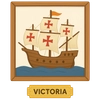
The Victoria was a Spanish carrack (nao) and the first ship to successfully circumnavigate the world as part…
Reads at Grades 3–5 Listens at Grades 1–5
Print & create
Answer keys·No prep·Free with an account
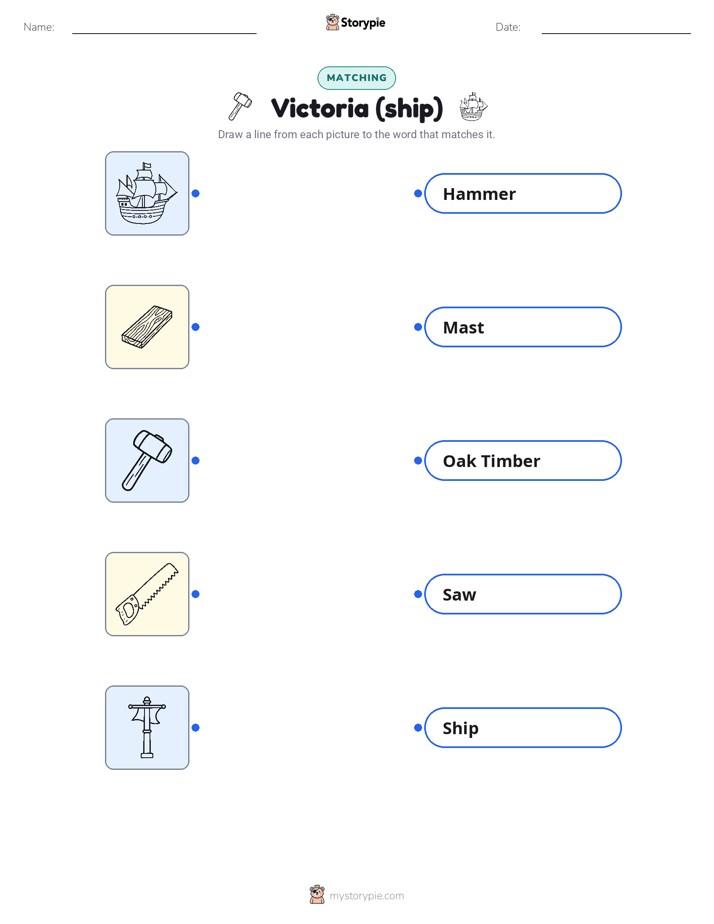
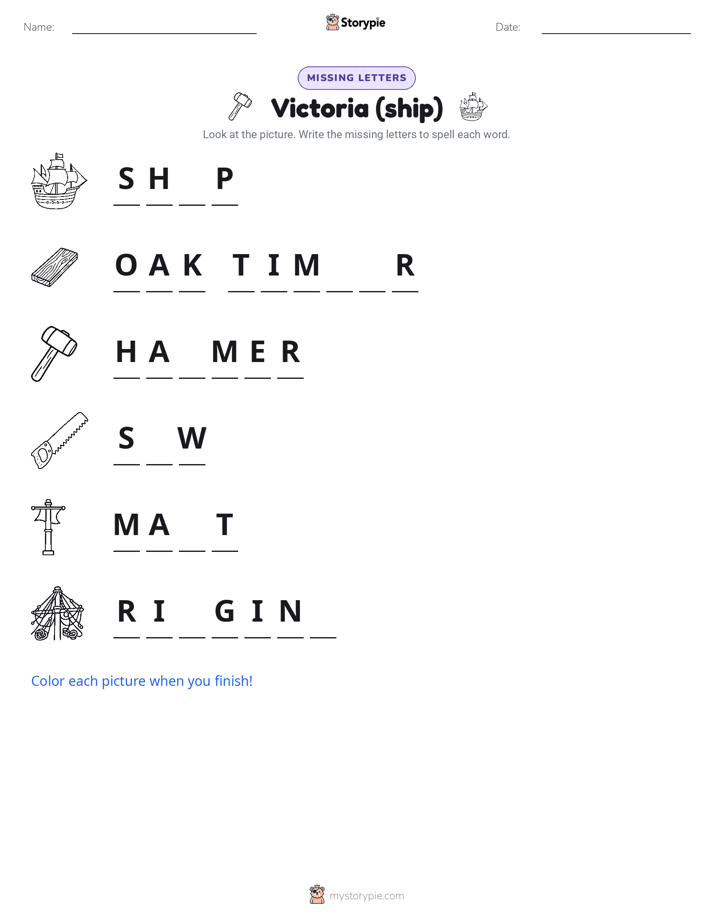
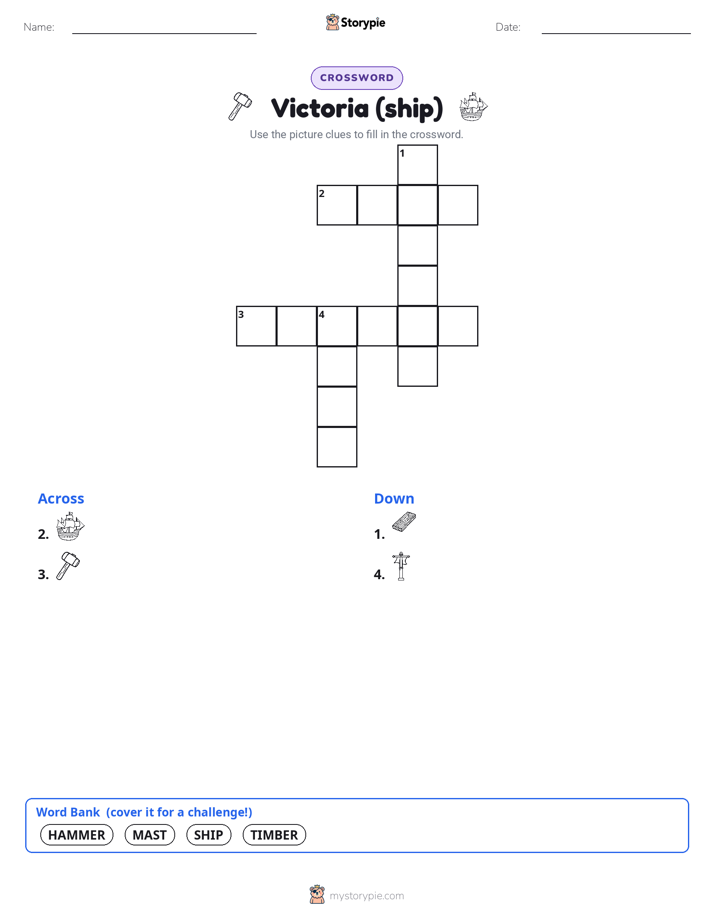
28 worksheets · answer keys · full story · quiz · Ages 8-10 · CEFR B1
Plus adds 244,000+ more stories in 27 languages, audio for every one, and printables for all of them.
Just want Victoria (ship)?
Can you hear that. It’s the sound of a thousand hammers, like a woodpecker’s song in a forest of wood. Can you smell that. It’s the sharp, sticky scent of tar and the fresh smell of pine from the forests of the Basque Country in Spain. That was my world as I came to life. I am a ship, and piece by piece, carpenters and shipbuilders shaped my strong oak ribs and fastened my pine planks. They hammered and sawed, sealing every gap with tar to keep the mighty ocean out. With every plank they added, I felt stronger, bigger, and more important. I could feel a purpose growing inside my wooden heart, a longing for the deep blue water. I didn’t know it yet, but I was being built not just for a journey, but for an adventure that would change the world forever.
Once I was whole, with tall masts that reached for the sky and sails as white as clouds, I was given my name: Victoria. I learned I was part of a special fleet of five ships called the Armada de Molucca. Our leader was a brave and determined Portuguese captain named Ferdinand Magellan. He had a grand dream, a mission given to him by the King of Spain. We were to sail west, across a huge unknown ocean, to find a new path to the Spice Islands. These islands were famous for cloves, cinnamon, and nutmeg, which were worth more than gold back then. On August 10th, 1519, our fleet left the city of Seville, our sails catching the wind as we headed down the river. The excitement was like a current running through my wooden beams. Then, on September 20th, 1519, we left the port of Sanlúcar de Barrameda and sailed out into the great, wide Atlantic Ocean. The adventure had begun.
I Am the Victoria, the Ship That Sailed the World
Can you hear that. It’s the sound of a thousand hammers, like a woodpecker’s song in a forest of wood. Can you smell that. It’s the sharp, sticky scent of tar and the fresh smell of pine from the forests of the Basque Country in Spain. That was my world as I came to life. I am a ship, and piece by piece, carpenters and shipbuilders shaped my strong oak ribs and fastened my pine planks. They hammered and sawed, sealing every gap with tar to keep the mighty ocean out. With every plank they added, I felt stronger, bigger, and more important. I could feel a purpose growing inside my wooden heart, a longing for the deep blue water. I didn’t know it yet, but I was being built not just for a journey, but for an adventure that would change the world forever.
Once I was whole, with tall masts that reached for the sky and sails as white as clouds, I was given my name: Victoria. I learned I was part of a special fleet of five ships called the Armada de Molucca. Our leader was a brave and determined Portuguese captain named Ferdinand Magellan. He had a grand dream, a mission given to him by the King of Spain. We were to sail west, across a huge unknown ocean, to find a new path to the Spice Islands. These islands were famous for cloves, cinnamon, and nutmeg, which were worth more than gold back then. On August 10th, 1519, our fleet left the city of Seville, our sails catching the wind as we headed down the river. The excitement was like a current running through my wooden beams. Then, on September 20th, 1519, we left the port of Sanlúcar de Barrameda and sailed out into the great, wide Atlantic Ocean. The adventure had begun.
Sailing across the Atlantic was a true test of my strength. Giant waves crashed over my decks, and fierce winds tore at my sails. Some days, the sky was a brilliant blue and the sea was calm. On other days, storms raged, and I was tossed about like a toy. Can you imagine being so far from home that all you could see in every direction was water. The sailors grew tired and restless as we sailed south along the coast of South America, searching for a secret passage to the other side. For months, they searched. Finally, in October of 1520, they found it. It was a twisting, tricky maze of water between rocky islands and icy cliffs. We carefully navigated through what is now called the Strait of Magellan. When we finally emerged on the other side, the water was so calm and peaceful that Captain Magellan named it the Pacific Ocean, which means “peaceful sea.”
Our journey across the Pacific was quiet, but it was also incredibly long and difficult. For more than three months, we saw no land. The crew’s food and water ran low, and many men became sick and weak. It was a time of great hardship. When we finally reached the islands that are now the Philippines, everyone was relieved. But great sadness was waiting for us there. On April 27th, 1521, our brave captain, Ferdinand Magellan, was killed in a battle with local islanders. His dream of circling the world was left unfinished. With our leader gone and other ships from our fleet lost or destroyed, our mission was in danger. A new leader had to step forward. A skilled Spanish sailor named Juan Sebastián Elcano took command of me, determined to complete our voyage home.
Now, I was the only ship left in the fleet strong enough to make the final journey. Under Captain Elcano’s command, my hull was filled with a precious cargo of cloves from the Spice Islands. My mission was to get this treasure and my remaining crew safely back to Spain. We began the long voyage home, sailing across the vast Indian Ocean and facing dangerous seas as we rounded the southern tip of Africa. It was a route our crew had never traveled, and we were all alone on the enormous ocean. I creaked and groaned, but my oak beams held strong. After many long months, we finally spotted a familiar coastline. On September 6th, 1522, nearly three years after we had left, I sailed proudly back into a Spanish harbor. I was battered and worn, but I had made it. I was the first ship to ever circumnavigate the globe.
My long, hard journey was over, but my story was just beginning. By sailing all the way around the world, my crew and I proved that the Earth was round. We also showed that the world’s oceans were all connected and that the globe was much, much bigger than anyone had ever imagined. Maps had to be redrawn, and people’s understanding of the planet changed forever. I became a symbol of human courage, determination, and the endless spirit of discovery. My voyage reminds everyone that if you are brave enough to sail beyond the horizon, you might just discover a whole new world. And that is a story that never ends.
Wow facts
About
The Victoria was a Spanish carrack (nao) and the first ship to successfully circumnavigate the world as part of the Magellan-Elcano expedition (1519–1522).
Take a Quiz
Question 1 of 5
Who was the first captain of the Victoria on its famous voyage?
Explore next
Want to do even more?
Go beyond exploring. Unlock tools that turn every story into real learning.

Storypie Plus for families
Full stories, quizzes, and printables. Nights and car rides, sorted.
- Unlimited audio stories
- Create Mode: your child stars in the story
- Offline downloads
- Printable worksheets & coloring pages

Why Storypie for Schools
Students engaged. Prep in seconds. Evenings back to you.
- Worksheets & Quizzes
- Classroom Management
- Formative Assessment
- Custom Curriculum & Lesson Plans
- 27 Languages

Why Storypie for Homeschool
Curriculum done. They'll ask for more. Hours back in your day.
- Worksheet Generator
- First-Person Audio Stories
- Built-in Comprehension Quizzes
- Custom Curriculum & Lesson Plans
- Print & Go Activities