English

Battle of Gettysburg
A major three-day battle of the American Civil War fought in July 1863 in and around the town of Gettysburg…
Reads at Grades 3–5 Listens at Grades 1–5
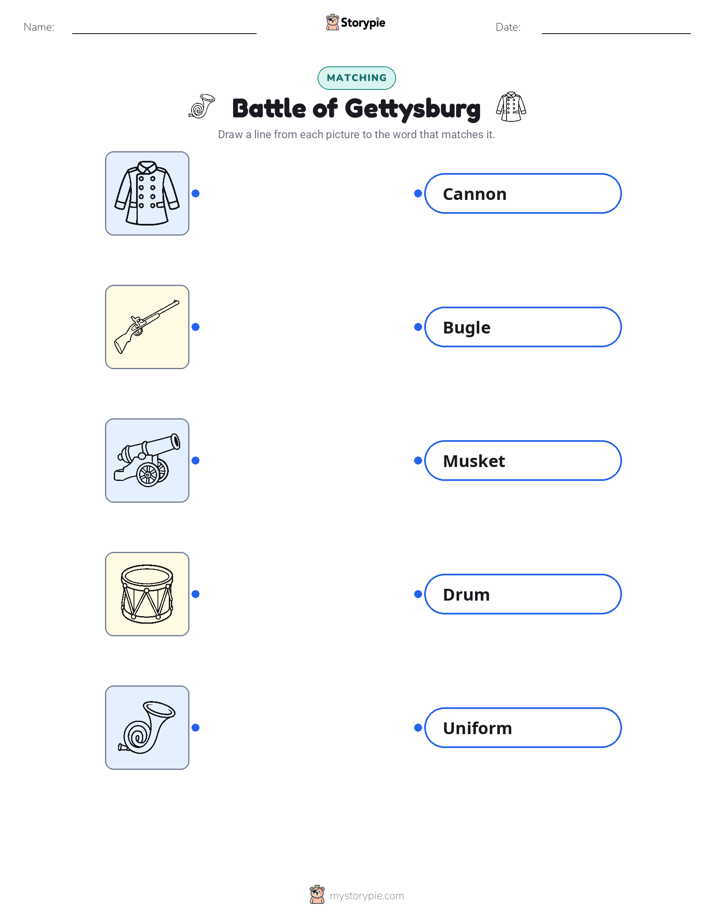
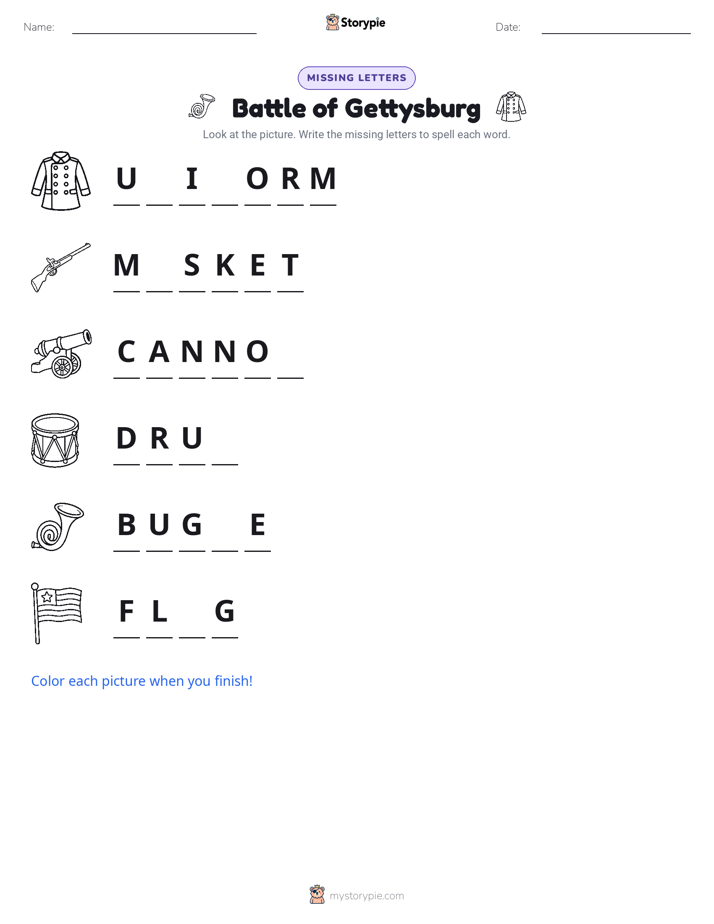
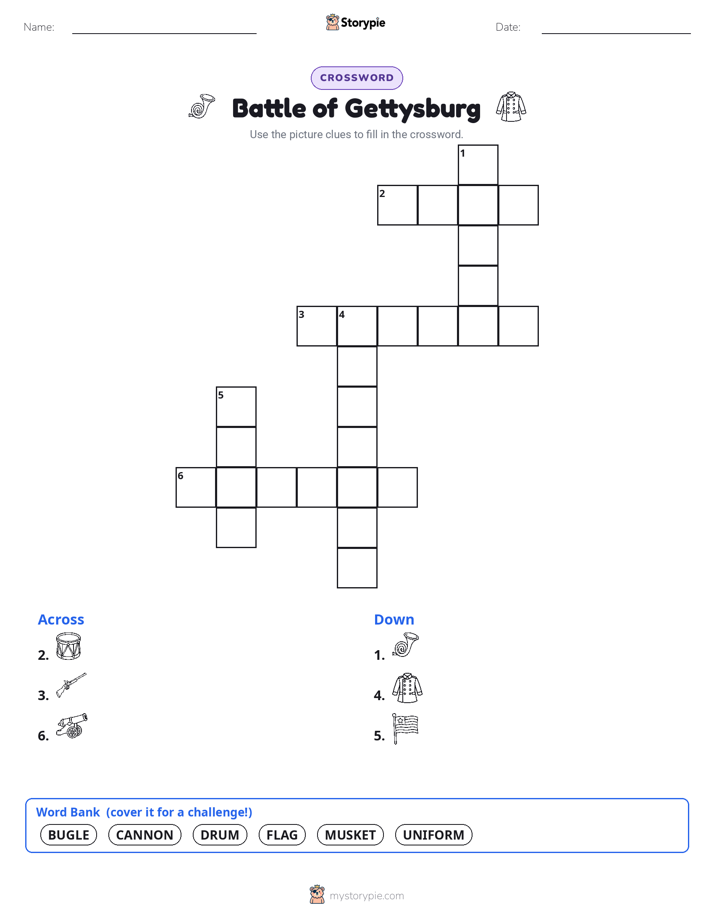
Print & create
Answer keys·No prep·Free with an account
28 worksheets · answer keys · full story · quiz · Ages 8-10 · CEFR B1
Plus adds 102,000+ more stories in 27 languages, audio for every one, and printables for all of them.
Just want Battle of Gettysburg?
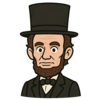
My name is Abraham Lincoln, and I had the great and heavy honor of being the President of the United States during one of its most difficult times. Our country was like a house divided against itself. Brothers were fighting brothers in a great Civil War. It was a fight to decide if we would remain one single nation, the United States of America, or split into two. More than that, it was a fight to end the terrible practice of slavery, which kept millions of people from being free. From my office in Washington D.C., I spent many long nights worrying. The weight of the nation felt like it was resting right on my shoulders. I read reports, signed orders, and prayed for the safety of our soldiers and our people, both in the North and in the South. In the summer of 1863, I knew a very important moment was coming. Our Union army was preparing to face the Confederate army in a small town none of us had ever paid much mind to before. A town in Pennsylvania called Gettysburg. I knew that what happened there could change everything, and I waited, hoping for the best but fearing the worst for our beloved country.
For three long days, from July 1st to July 3rd, 1863, the fate of our nation was decided on the fields of Gettysburg. I was not there on the battlefield, charging with the soldiers. My post was in the capital, where my job was to lead the entire country. My only connection to the battle was a telegraph machine that sat in the War Department office. It clicked and clacked day and night, tapping out messages from the front lines. With every message, my heart would leap with either hope or dread. I learned of the fierce fighting at hills with names like Little Round Top and Culp's Hill. I heard how our Union soldiers, led by a determined General named George Meade, stood strong against the army of General Robert E. Lee. I pictured the bravery of our men, fighting to protect the idea that all people are created equal. On the third day, July 3rd, the Confederate army made one last, giant charge across an open field. It was a moment of incredible bravery and incredible sadness. I waited and waited for news. When the message finally came that General Meade's army had held its ground and won the battle, a wave of relief washed over me. We had done it. We had protected our country. But my relief was mixed with a deep, heavy sorrow. So many brave men had lost their lives on that field. The victory was important, but the cost was immense, and I mourned for every single soldier.
A Promise at Gettysburg
My name is Abraham Lincoln, and I had the great and heavy honor of being the President of the United States during one of its most difficult times. Our country was like a house divided against itself. Brothers were fighting brothers in a great Civil War. It was a fight to decide if we would remain one single nation, the United States of America, or split into two. More than that, it was a fight to end the terrible practice of slavery, which kept millions of people from being free. From my office in Washington D.C., I spent many long nights worrying. The weight of the nation felt like it was resting right on my shoulders. I read reports, signed orders, and prayed for the safety of our soldiers and our people, both in the North and in the South. In the summer of 1863, I knew a very important moment was coming. Our Union army was preparing to face the Confederate army in a small town none of us had ever paid much mind to before. A town in Pennsylvania called Gettysburg. I knew that what happened there could change everything, and I waited, hoping for the best but fearing the worst for our beloved country.
For three long days, from July 1st to July 3rd, 1863, the fate of our nation was decided on the fields of Gettysburg. I was not there on the battlefield, charging with the soldiers. My post was in the capital, where my job was to lead the entire country. My only connection to the battle was a telegraph machine that sat in the War Department office. It clicked and clacked day and night, tapping out messages from the front lines. With every message, my heart would leap with either hope or dread. I learned of the fierce fighting at hills with names like Little Round Top and Culp's Hill. I heard how our Union soldiers, led by a determined General named George Meade, stood strong against the army of General Robert E. Lee. I pictured the bravery of our men, fighting to protect the idea that all people are created equal. On the third day, July 3rd, the Confederate army made one last, giant charge across an open field. It was a moment of incredible bravery and incredible sadness. I waited and waited for news. When the message finally came that General Meade's army had held its ground and won the battle, a wave of relief washed over me. We had done it. We had protected our country. But my relief was mixed with a deep, heavy sorrow. So many brave men had lost their lives on that field. The victory was important, but the cost was immense, and I mourned for every single soldier.
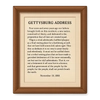
Several months later, on November 19th, 1863, I traveled by train to that same town of Gettysburg. The fields that had roared with cannon fire were now quiet and still. My purpose for visiting was a solemn one: to help dedicate a part of the battlefield as a final resting place, a cemetery, for the Union soldiers who had given their lives there. Walking across the grounds, I felt the importance of the moment. These men had made the ultimate sacrifice, and we, the living, had a duty to make sure they did not die for nothing. I had been asked to say a few words. I wrote my speech carefully, not to be long, but to be meaningful. I wanted to remind everyone why we were fighting this war. When it was my turn to speak, I stood before the crowd and talked about our nation, which was founded on the idea of liberty. I said that the brave men who fought at Gettysburg did so to ensure our nation would have a 'new birth of freedom.' My greatest hope, which I shared with the world that day, was that our 'government of the people, by the people, for the people, shall not perish from the earth.' That promise was my way of honoring those soldiers. It was a promise to them, and to all future generations, that we would continue working to build a country that was truly united and truly free for everyone.
Wow facts
About
A major three-day battle of the American Civil War fought in July 1863 in and around the town of Gettysburg, Pennsylvania, which resulted in a decisive Union victory and is often considered the war's turning point.
Take a Quiz
Question 1 of 5
In the story, the phrase 'a new birth of freedom' most nearly means what?
Explore next

Want to do even more?
Go beyond exploring. Unlock tools that turn every story into real learning.

Storypie Plus for families
Full stories, quizzes, and printables. Nights and car rides, sorted.
- Unlimited audio stories
- Create Mode: your child stars in the story
- Offline downloads
- Printable worksheets & coloring pages

Why Storypie for Schools
Students engaged. Prep in seconds. Evenings back to you.
- Worksheets & Quizzes
- Classroom Management
- Formative Assessment
- Custom Curriculum & Lesson Plans
- 27 Languages

Why Storypie for Homeschool
Curriculum done. They'll ask for more. Hours back in your day.
- Worksheet Generator
- First-Person Audio Stories
- Built-in Comprehension Quizzes
- Custom Curriculum & Lesson Plans
- Print & Go Activities