English

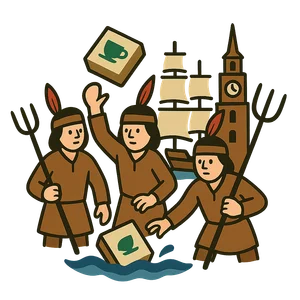
Boston Tea Party
The Boston Tea Party was a political protest on December 16th, 1773, where American colonists…
Reads at Grades 6–8 Listens at Grades 4–8
Print & create
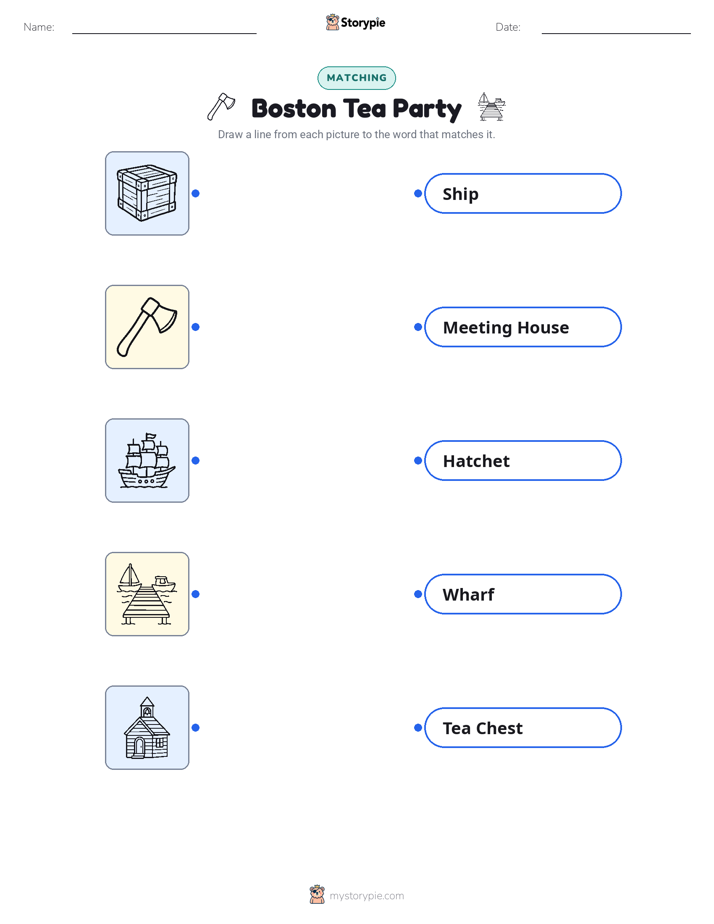
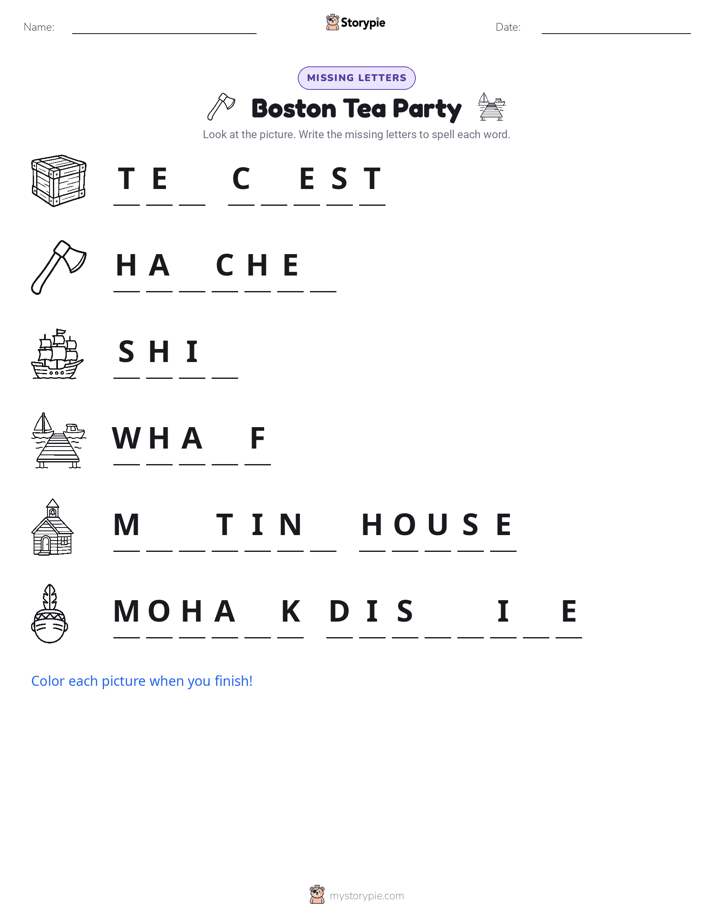
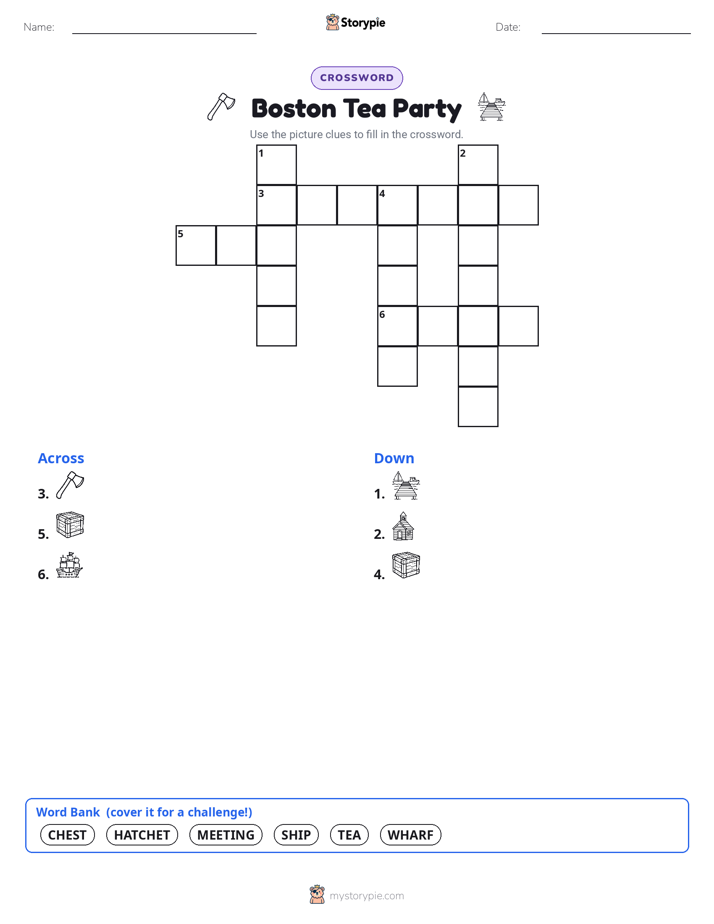
Answer keys·No prep·Free with an account
28 worksheets · answer keys · full story · quiz · Ages 10-12 · CEFR B2
Plus adds 102,000+ more stories in 27 languages, audio for every one, and printables for all of them.
Just want Boston Tea Party?
My name is Samuel Adams, and I lived in a time when the seeds of a new nation were just beginning to sprout. Let me take you back to the autumn of 1773 in my home city of Boston. Boston was a lively port, with ships arriving daily, their masts like a forest against the skyline. But beneath the surface of this bustling city, a deep anger was simmering among my fellow colonists. For years, the British Parliament, an ocean away in London, had been imposing laws and taxes upon us without our consent. We had no one to speak for us, no one to represent our interests in their government. This, we declared, was 'taxation without representation,' and it felt deeply unjust. It was as if someone you’d never met was making rules for your family and taking your allowance without asking. In 1773, they passed the Tea Act. This law didn't create a new tax, but it gave the British East India Company a monopoly, meaning we were forced to buy our tea from them and only them. It was cheaper, yes, but that wasn't the point. The principle was what mattered. We saw it as yet another attempt by King George III to control every aspect of our lives, from our government to the tea we drank in our homes. We believed that if we accepted this, there would be no end to their control. A storm was brewing, and it wasn’t one that would be fought with cannons and muskets, but with conviction and courage.
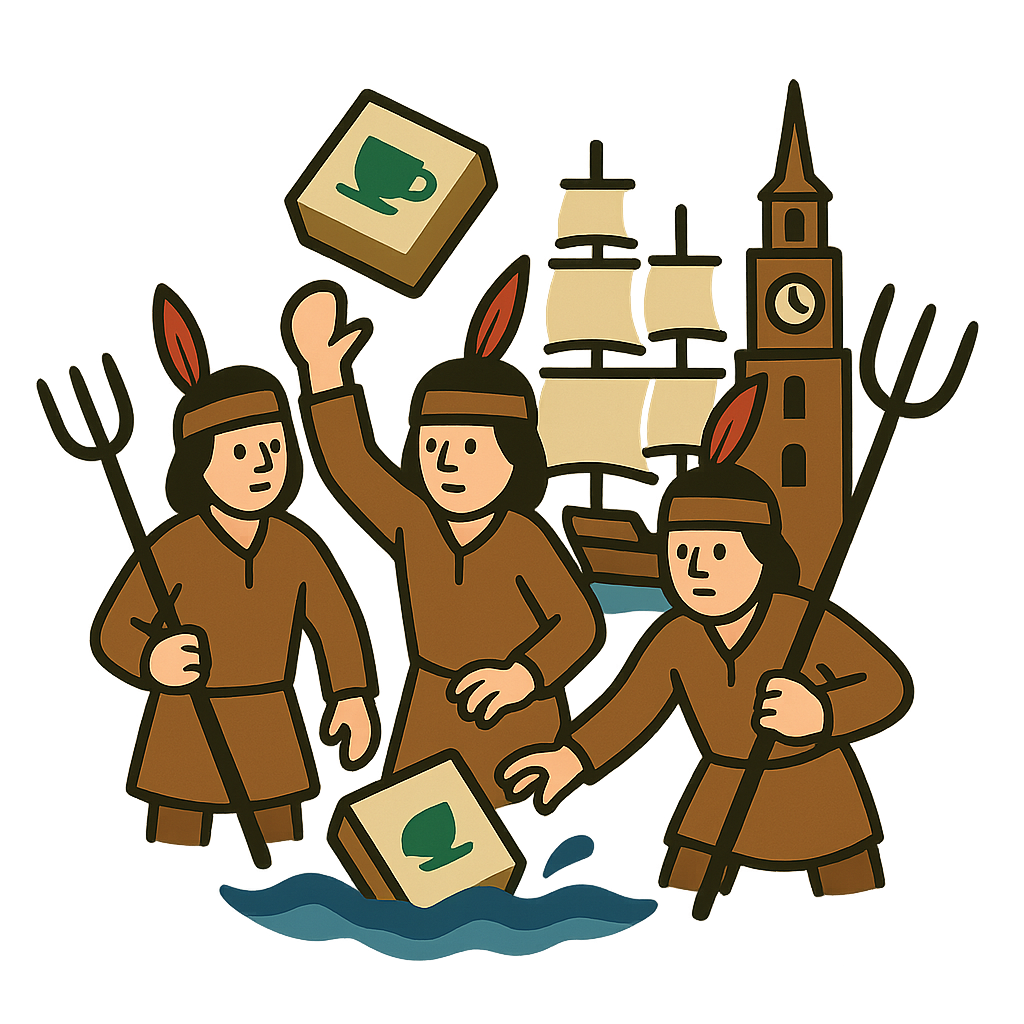
The tension in Boston grew thicker with each passing day. By early December, three ships loaded with British tea—the Dartmouth, the Eleanor, and the Beaver—were docked at Griffin’s Wharf, their cargo a symbol of our oppression. We refused to let the tea be unloaded. We held town meetings, gathering thousands of citizens to debate our next move. Our final meeting took place on the cold, tense evening of December 16th, 1773, at the Old South Meeting House. The building was packed to the rafters with thousands of colonists, our voices echoing as we demanded that the Royal Governor send the ships back to England. But his answer was a firm no. The tea had to be unloaded. As his refusal was announced, a heavy silence fell over the crowd. I stood up and declared, 'This meeting can do nothing more to save the country.' It was a prearranged signal. My words marked the end of debate and the beginning of action. That night, a group of us, the Sons of Liberty, put our secret plan into motion. We disguised ourselves as Mohawk Indians, not to blame them, but to symbolize that we were Americans, not British subjects, and to protect our families from retaliation. I can still feel the chill of the December air as we marched in determined silence from the meeting house to the wharf. There was no shouting, no riotous behavior, just the steady tramp of boots on cobblestone. When we reached the ships, we worked with quiet efficiency. The rhythmic crack of hatchets splitting open wooden crates filled the night. One by one, we hoisted the heavy chests to the rails of the ships and dumped their contents into the dark, frigid waters of Boston Harbor. We destroyed 342 chests of tea that night, and nothing else. We were careful not to damage any other part of the ships or the sailors' personal property. This was not a mindless act of destruction; it was a powerful, focused protest against tyranny.
The Boston Tea Party
My name is Samuel Adams, and I lived in a time when the seeds of a new nation were just beginning to sprout. Let me take you back to the autumn of 1773 in my home city of Boston. Boston was a lively port, with ships arriving daily, their masts like a forest against the skyline. But beneath the surface of this bustling city, a deep anger was simmering among my fellow colonists. For years, the British Parliament, an ocean away in London, had been imposing laws and taxes upon us without our consent. We had no one to speak for us, no one to represent our interests in their government. This, we declared, was 'taxation without representation,' and it felt deeply unjust. It was as if someone you’d never met was making rules for your family and taking your allowance without asking. In 1773, they passed the Tea Act. This law didn't create a new tax, but it gave the British East India Company a monopoly, meaning we were forced to buy our tea from them and only them. It was cheaper, yes, but that wasn't the point. The principle was what mattered. We saw it as yet another attempt by King George III to control every aspect of our lives, from our government to the tea we drank in our homes. We believed that if we accepted this, there would be no end to their control. A storm was brewing, and it wasn’t one that would be fought with cannons and muskets, but with conviction and courage.
The tension in Boston grew thicker with each passing day. By early December, three ships loaded with British tea—the Dartmouth, the Eleanor, and the Beaver—were docked at Griffin’s Wharf, their cargo a symbol of our oppression. We refused to let the tea be unloaded. We held town meetings, gathering thousands of citizens to debate our next move. Our final meeting took place on the cold, tense evening of December 16th, 1773, at the Old South Meeting House. The building was packed to the rafters with thousands of colonists, our voices echoing as we demanded that the Royal Governor send the ships back to England. But his answer was a firm no. The tea had to be unloaded. As his refusal was announced, a heavy silence fell over the crowd. I stood up and declared, 'This meeting can do nothing more to save the country.' It was a prearranged signal. My words marked the end of debate and the beginning of action. That night, a group of us, the Sons of Liberty, put our secret plan into motion. We disguised ourselves as Mohawk Indians, not to blame them, but to symbolize that we were Americans, not British subjects, and to protect our families from retaliation. I can still feel the chill of the December air as we marched in determined silence from the meeting house to the wharf. There was no shouting, no riotous behavior, just the steady tramp of boots on cobblestone. When we reached the ships, we worked with quiet efficiency. The rhythmic crack of hatchets splitting open wooden crates filled the night. One by one, we hoisted the heavy chests to the rails of the ships and dumped their contents into the dark, frigid waters of Boston Harbor. We destroyed 342 chests of tea that night, and nothing else. We were careful not to damage any other part of the ships or the sailors' personal property. This was not a mindless act of destruction; it was a powerful, focused protest against tyranny.
The next morning, the harbor was stained brown with tea leaves, a visible sign of our defiance. There was a quiet sense of pride among us, but also a deep uncertainty. We had thrown down a challenge to the most powerful empire on Earth. How would they respond? King George III and Parliament were furious. Their answer came in the form of a series of harsh laws we called the Intolerable Acts. In 1774, they closed the Port of Boston until we paid for the tea, crippling our economy. They took away our right to hold town meetings and put our colony under military rule. They thought these punishments would crush our spirit and isolate Boston from the other colonies. But their plan backfired spectacularly. Instead of breaking us, Britain’s heavy-handed response united us. The other colonies saw that what happened to Boston could happen to them. They sent supplies and messages of support, and for the first time, we began to see ourselves not as Virginians or New Yorkers, but as Americans with a common cause. The Boston Tea Party became a symbol, an echo in the harbor that rippled across all thirteen colonies. It showed that ordinary people, when united by principle, could stand up to injustice. It was one of the key sparks that lit the flame of the American Revolution, a reminder that a single, brave action can change the course of history and pave the way for freedom.
Wow facts
About
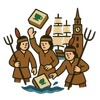
The Boston Tea Party was a political protest on December 16th, 1773, where American colonists, frustrated with British 'taxation without representation,' dumped 342 chests of tea into Boston Harbor. This act of defiance, led by the Sons of Liberty, escalated tensions and became a pivotal event leading to the American Revolution.
Take a Quiz
Question 1 of 5
In your own words, retell the main events of the night of December 16th, 1773, as described by Samuel Adams.
Explore next






Want to do even more?
Go beyond exploring. Unlock tools that turn every story into real learning.

Storypie Plus for families
Full stories, quizzes, and printables. Nights and car rides, sorted.
- Unlimited audio stories
- Create Mode: your child stars in the story
- Offline downloads
- Printable worksheets & coloring pages

Why Storypie for Schools
Students engaged. Prep in seconds. Evenings back to you.
- Worksheets & Quizzes
- Classroom Management
- Formative Assessment
- Custom Curriculum & Lesson Plans
- 27 Languages

Why Storypie for Homeschool
Curriculum done. They'll ask for more. Hours back in your day.
- Worksheet Generator
- First-Person Audio Stories
- Built-in Comprehension Quizzes
- Custom Curriculum & Lesson Plans
- Print & Go Activities