English

Boston Tea Party
The Boston Tea Party was a political protest on December 16th, 1773, where American colonists…
Reads at Grades 3–5 Listens at Grades 1–5
Print & create
Answer keys·No prep·Free with an account
28 worksheets · answer keys · full story · quiz · Ages 8-10 · CEFR B1
Plus adds 102,000+ more stories in 27 languages, audio for every one, and printables for all of them.
Just want Boston Tea Party?
My name is Samuel Adams, and I lived in a bustling city called Boston long ago. In the year 1773, a feeling of frustration was brewing in my city, like a storm gathering over the harbor. We were colonists, which meant we were ruled by King George III, who lived across the vast Atlantic Ocean in Great Britain. The king and his government kept putting taxes on us for things we used every day, like paper and glass. The newest and most frustrating one was the Tea Act. This law said we could only buy tea from one British company, and we had to pay a tax on it. This might not sound like a big deal, but it made us furious. We had no one in the British government to speak for us or vote on these laws. Imagine your teacher making a rule that you had to pay for every pencil you use, but you never got a chance to say if you thought the rule was fair. That’s what we called “taxation without representation,” and it felt terribly unjust. We were being asked to follow rules we had no part in making, and we decided that something had to be done.
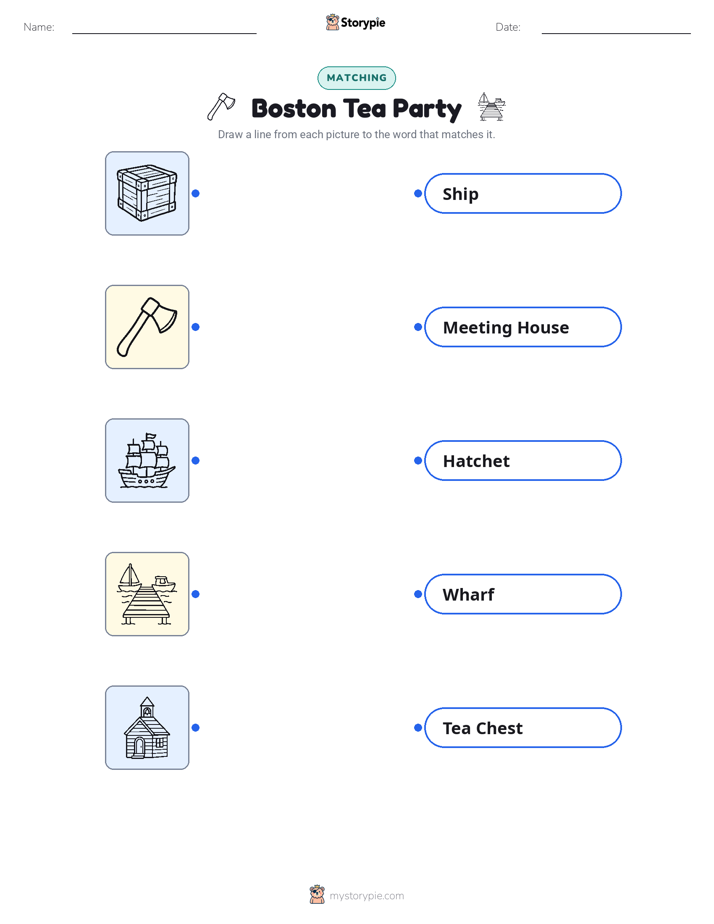
In late November, the tension in Boston grew thicker when three large ships sailed into our harbor. Their names were the Dartmouth, the Eleanor, and the Beaver. They weren't carrying treasure or supplies for the city; their holds were filled with chest after chest of British tea. According to the law, if the tea sat on those ships in the harbor for 20 days, the tax had to be paid whether we bought the tea or not. The clock was ticking. My friends and I, a group we called the Sons of Liberty, knew we couldn't let that happen. We held huge meetings at a place called the Old South Meeting House. Thousands of concerned colonists crammed inside, their voices rising with passion and anger. We talked for hours, trying to convince the governor to send the ships back to England, but he refused. With the deadline of December 16th drawing closer, we knew we needed a bolder plan. We met in secret, whispering our ideas. We decided we wouldn't hurt anyone or damage the ships. We would only destroy the tea to send a clear message to the king. To protect ourselves, we planned a disguise. We would dress as Mohawk Indians, not to blame them, but as a symbol that we were no longer just British subjects. We were something new. We were Americans.
Samuel Adams and the Boston Tea Party
My name is Samuel Adams, and I lived in a bustling city called Boston long ago. In the year 1773, a feeling of frustration was brewing in my city, like a storm gathering over the harbor. We were colonists, which meant we were ruled by King George III, who lived across the vast Atlantic Ocean in Great Britain. The king and his government kept putting taxes on us for things we used every day, like paper and glass. The newest and most frustrating one was the Tea Act. This law said we could only buy tea from one British company, and we had to pay a tax on it. This might not sound like a big deal, but it made us furious. We had no one in the British government to speak for us or vote on these laws. Imagine your teacher making a rule that you had to pay for every pencil you use, but you never got a chance to say if you thought the rule was fair. That’s what we called “taxation without representation,” and it felt terribly unjust. We were being asked to follow rules we had no part in making, and we decided that something had to be done.
In late November, the tension in Boston grew thicker when three large ships sailed into our harbor. Their names were the Dartmouth, the Eleanor, and the Beaver. They weren't carrying treasure or supplies for the city; their holds were filled with chest after chest of British tea. According to the law, if the tea sat on those ships in the harbor for 20 days, the tax had to be paid whether we bought the tea or not. The clock was ticking. My friends and I, a group we called the Sons of Liberty, knew we couldn't let that happen. We held huge meetings at a place called the Old South Meeting House. Thousands of concerned colonists crammed inside, their voices rising with passion and anger. We talked for hours, trying to convince the governor to send the ships back to England, but he refused. With the deadline of December 16th drawing closer, we knew we needed a bolder plan. We met in secret, whispering our ideas. We decided we wouldn't hurt anyone or damage the ships. We would only destroy the tea to send a clear message to the king. To protect ourselves, we planned a disguise. We would dress as Mohawk Indians, not to blame them, but as a symbol that we were no longer just British subjects. We were something new. We were Americans.
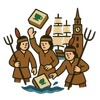
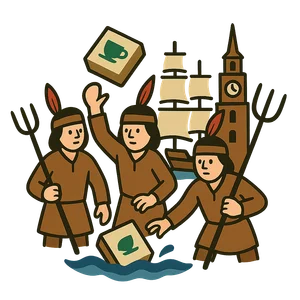
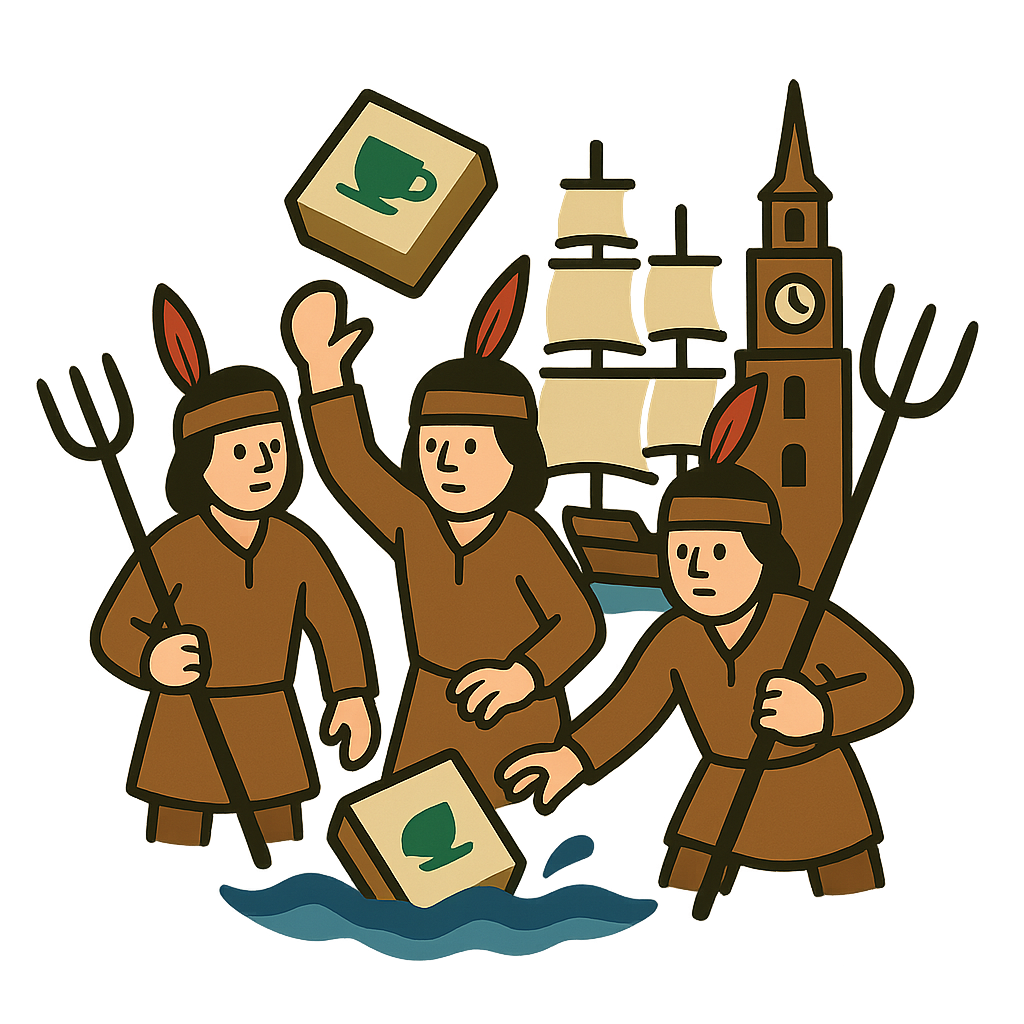
On the cold, dark night of December 16th, 1773, our plan went into action. After our final meeting, a great crowd of us marched quietly but with firm steps down to Griffin’s Wharf where the tea ships were docked. The air was crisp and smelled of salt from the sea. The only sounds were our footsteps on the cobblestones and the lapping of the dark water against the wooden ships. We were not a wild mob; we were determined. I watched as men, disguised and silent, boarded the three ships. They worked for hours under the pale light of the moon. I heard the sharp crack of axes splitting open the heavy wooden tea chests. Then came the splash, over and over again, as 342 chests of tea were heaved overboard into the chilly waters of Boston Harbor. The harbor slowly turned into one giant, brown teapot. We made sure that nothing else was stolen or broken. A padlock that was accidentally broken was even replaced the next day. Our protest was an act of defiance, targeted only at the unfair tax that had been forced upon us.
When the sun rose the next morning, the tea was still floating in clumps on the water. We had made our statement. But our actions created ripples that spread far beyond Boston Harbor. When King George III heard what we had done, he was furious. As punishment, he passed harsh new laws that closed Boston’s port, which meant no ships could come in or out to trade. He hoped to crush our spirit, but his plan backfired. Instead of dividing us, the king’s punishment united the colonies. People from other colonies sent food and supplies to help Boston. Our protest, which became known as the Boston Tea Party, showed everyone that a group of determined citizens could stand together against injustice. It was one of the most important steps on the long road that would eventually lead to the American Revolution and the creation of a brand new nation, the United States of America.
Wow facts
About
The Boston Tea Party was a political protest on December 16th, 1773, where American colonists, frustrated with British 'taxation without representation,' dumped 342 chests of tea into Boston Harbor. This act of defiance, led by the Sons of Liberty, escalated tensions and became a pivotal event leading to the American Revolution.
Take a Quiz
Question 1 of 5
Why did Samuel Adams and the other colonists disguise themselves as Mohawk Indians?
Explore next

Want to do even more?
Go beyond exploring. Unlock tools that turn every story into real learning.

Storypie Plus for families
Full stories, quizzes, and printables. Nights and car rides, sorted.
- Unlimited audio stories
- Create Mode: your child stars in the story
- Offline downloads
- Printable worksheets & coloring pages

Why Storypie for Schools
Students engaged. Prep in seconds. Evenings back to you.
- Worksheets & Quizzes
- Classroom Management
- Formative Assessment
- Custom Curriculum & Lesson Plans
- 27 Languages

Why Storypie for Homeschool
Curriculum done. They'll ask for more. Hours back in your day.
- Worksheet Generator
- First-Person Audio Stories
- Built-in Comprehension Quizzes
- Custom Curriculum & Lesson Plans
- Print & Go Activities