English

Bronze Age
A historical period, lasting from approximately 3300 BCE to 1200 BCE…
Reads at Grades 6–8 Listens at Grades 4–8
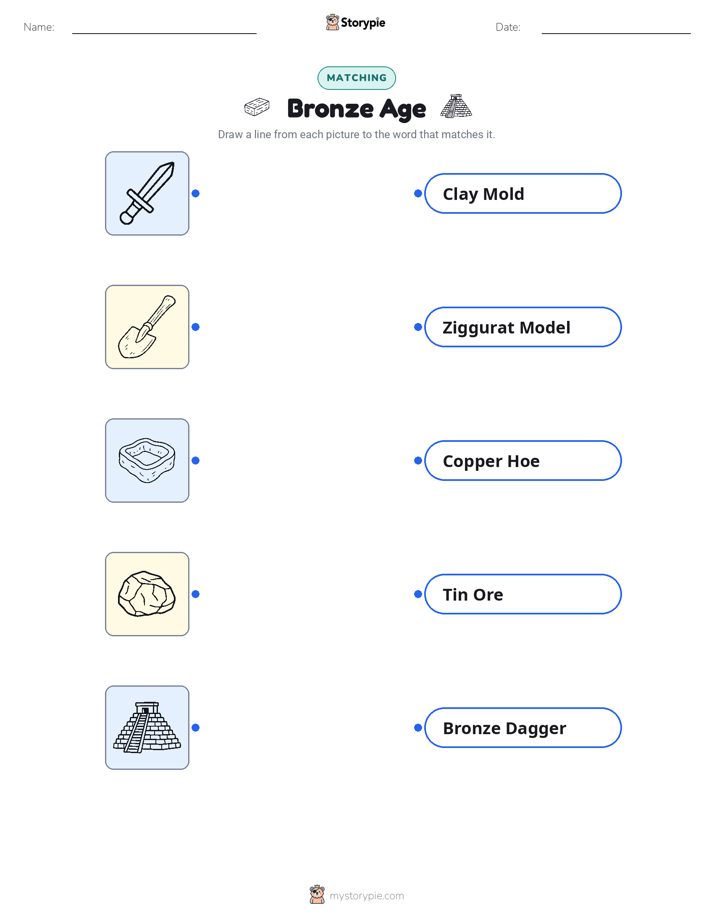
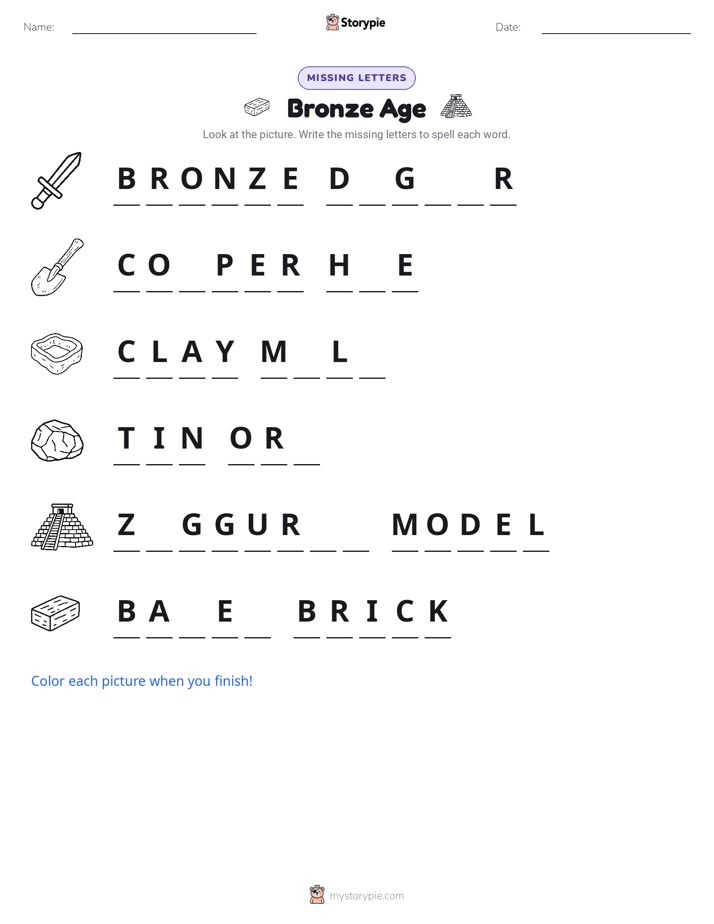
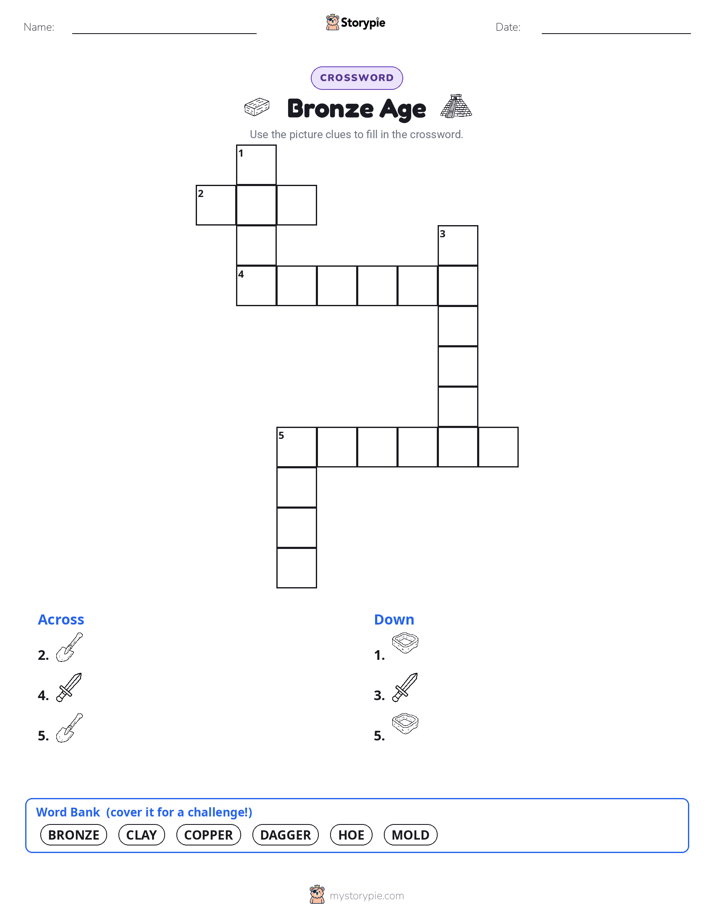
Print & create
Answer keys·No prep·Free with an account
28 worksheets · answer keys · full story · quiz · Ages 10-12 · CEFR B2
Plus adds 244,000+ more stories in 27 languages, audio for every one, and printables for all of them.
Just want Bronze Age?
My name is Ashur, and my story is cast in the glow of the forge. I was born in the great city of Ur, in the land between the two rivers, Mesopotamia, nearly four thousand years ago, around the year 1800 BCE. Our city was a marvel of baked mud brick, with a towering ziggurat that reached for the heavens and canals that shimmered under the hot sun. My father was a coppersmith, as was his father before him. From the time I could walk, the rhythmic clang of his hammer was the music of my life. Our workshop was always filled with the earthy smell of clay molds and the sharp scent of cooling metal. We made everything the city needed from copper: farming hoes, knives for the kitchen, razors for the barbers, and daggers for the city guards. But copper, for all its beauty, had a weakness. It was a soft metal. I saw it every day. A farmer would return with a hoe, its edge bent and useless after striking a stubborn rock. A soldier would bring us a dagger with a blunted tip, complaining it couldn't pierce a leather shield. My father would sigh, heat the metal until it glowed like a sunset, and hammer it back into shape. It was good for business, but I often wondered if there was something better. Merchants who traveled the great trade routes would sometimes stop at our forge. They brought tales from distant lands—of Egypt and the mountains of Anatolia. They spoke of a new metal, a substance that was harder than copper, that held an edge longer, and shone with the brilliance of the sun itself. They called it bronze. This word was a whisper, a mystery, a promise of a new kind of strength that I yearned to understand.
The Age of Bronze
My name is Ashur, and my story is cast in the glow of the forge. I was born in the great city of Ur, in the land between the two rivers, Mesopotamia, nearly four thousand years ago, around the year 1800 BCE. Our city was a marvel of baked mud brick, with a towering ziggurat that reached for the heavens and canals that shimmered under the hot sun. My father was a coppersmith, as was his father before him. From the time I could walk, the rhythmic clang of his hammer was the music of my life. Our workshop was always filled with the earthy smell of clay molds and the sharp scent of cooling metal. We made everything the city needed from copper: farming hoes, knives for the kitchen, razors for the barbers, and daggers for the city guards. But copper, for all its beauty, had a weakness. It was a soft metal. I saw it every day. A farmer would return with a hoe, its edge bent and useless after striking a stubborn rock. A soldier would bring us a dagger with a blunted tip, complaining it couldn't pierce a leather shield. My father would sigh, heat the metal until it glowed like a sunset, and hammer it back into shape. It was good for business, but I often wondered if there was something better. Merchants who traveled the great trade routes would sometimes stop at our forge. They brought tales from distant lands—of Egypt and the mountains of Anatolia. They spoke of a new metal, a substance that was harder than copper, that held an edge longer, and shone with the brilliance of the sun itself. They called it bronze. This word was a whisper, a mystery, a promise of a new kind of strength that I yearned to understand.
My real education began when I was old enough to work the bellows, feeding air to the hungry flames of the forge. My father taught me the secrets of metal. I learned how to read the color of the flame and the glow of the copper to know when it was ready to be poured. But the secret of bronze remained elusive. One evening, after a long day of repairs, my father finally decided I was ready. He showed me a small, heavy, silver-gray rock. 'This,' he said, his voice low and serious, 'is the key. It is called tin.' He explained that by melting a small amount of this rare tin with our plentiful copper, we could create something entirely new and powerful: bronze. The first time I saw it happen was like watching magic. The heat from the charcoal furnace was a physical force, pressing against my skin. My father carefully added the tin to the crucible of molten, shimmering copper. A new light, brighter and more golden, flared from the pot. When he poured it into a dagger mold and we later quenched it in water, the hiss was sharper, more final. The dagger that emerged was heavier, stronger, and when my father sharpened it, the edge was keener than any I had ever felt. But tin was not found in the lands around our city. To create more bronze, we had to trade for it, and the journey was long and dangerous. When I was a young man, I joined a caravan bound for the Zagros Mountains to the east. For weeks, we traveled across dusty plains and into rocky foothills, our donkeys laden with grain, textiles, and pottery to trade. I met people from mountain tribes who spoke different languages and worshipped different gods, yet they understood the value of what we sought. Trading our goods for their heavy tin ores was a careful negotiation. The journey back was perilous, and we were always wary of bandits. But when we returned to Ur, our packs heavy with the key to our future, I felt a sense of triumph. We didn't just bring back a metal; we brought back the very substance of a new age.
Returning to the forge with our precious tin, we began to transform our world. The change started in the fields. We crafted plowshares from bronze that did not bend or break when they hit hard soil. Farmers could now plow deeper and faster, turning over more land than ever before. The harvests became more bountiful, and with more food, our city grew larger and wealthier. My work became more important than I could have ever imagined. The king's soldiers were next. We melted down their old, soft copper weapons and recast them in bronze. We forged helmets that could deflect a blow, shields that did not dent, and long, sharp swords that gave our city's army a fearsome advantage. Powerful kings could now equip larger, more effective armies, and great empires began to rise, their foundations built on the strength of the metal I created. This new technology rippled through every part of our lives. Because tin was so valuable and bronze was in such high demand, our trade deals became more complex. Merchants needed to keep precise records of their inventories and transactions. This led to a greater need for scribes, men who could press wedge-shaped marks, cuneiform, into wet clay tablets. I would often see them in the marketplace, their styluses flying across the clay, recording a shipment of tin from the mountains or an order for fifty bronze spearheads for the royal guard. Our simple act of mixing two metals was forging a new kind of civilization, one built on surplus food, military power, and written records.
Now, my hair is the color of the tin we once traveled so far to find, and my hands are gnarled from a lifetime of holding a hammer. I am a master smith, and young apprentices listen to my stories of the old days, when the world was made of soft copper. I look around my city and see my life's work everywhere. I see it in the strong tools the builders use to construct new temples, in the gleaming statues of our gods that stand in the city square, and in the sharp weapons our guards carry to keep us safe. Our civilization did not just discover bronze; we were cast and shaped by it, just as I shape the metal in my forge. The age of copper was a time of beginnings, but the Age of Bronze was a time of building empires, of writing laws, and of creating lasting art. My journey began with a simple curiosity, a question about whether we could make something better. I learned that the greatest strength often comes from combining different things to create something new. I have passed this knowledge, this secret of the forge, to my children and their children. It is my legacy, a story cast in metal, a reminder that with courage and new ideas, we have the power to forge a better, stronger world.
Wow facts
About
A historical period, lasting from approximately 3300 BCE to 1200 BCE, characterized by the widespread use of bronze for making tools, weapons, and other objects.
Take a Quiz
Question 1 of 5
In your own words, describe the problem Ashur's society had with copper and explain how bronze solved it.
Explore next


Want to do even more?
Go beyond exploring. Unlock tools that turn every story into real learning.

Storypie Plus for families
Full stories, quizzes, and printables. Nights and car rides, sorted.
- Unlimited audio stories
- Create Mode: your child stars in the story
- Offline downloads
- Printable worksheets & coloring pages

Why Storypie for Schools
Students engaged. Prep in seconds. Evenings back to you.
- Worksheets & Quizzes
- Classroom Management
- Formative Assessment
- Custom Curriculum & Lesson Plans
- 27 Languages

Why Storypie for Homeschool
Curriculum done. They'll ask for more. Hours back in your day.
- Worksheet Generator
- First-Person Audio Stories
- Built-in Comprehension Quizzes
- Custom Curriculum & Lesson Plans
- Print & Go Activities