English

Bronze Age
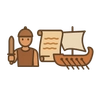
A historical period, lasting from approximately 3300 BCE to 1200 BCE…
Reads at Grades K-2 Listens at K–3
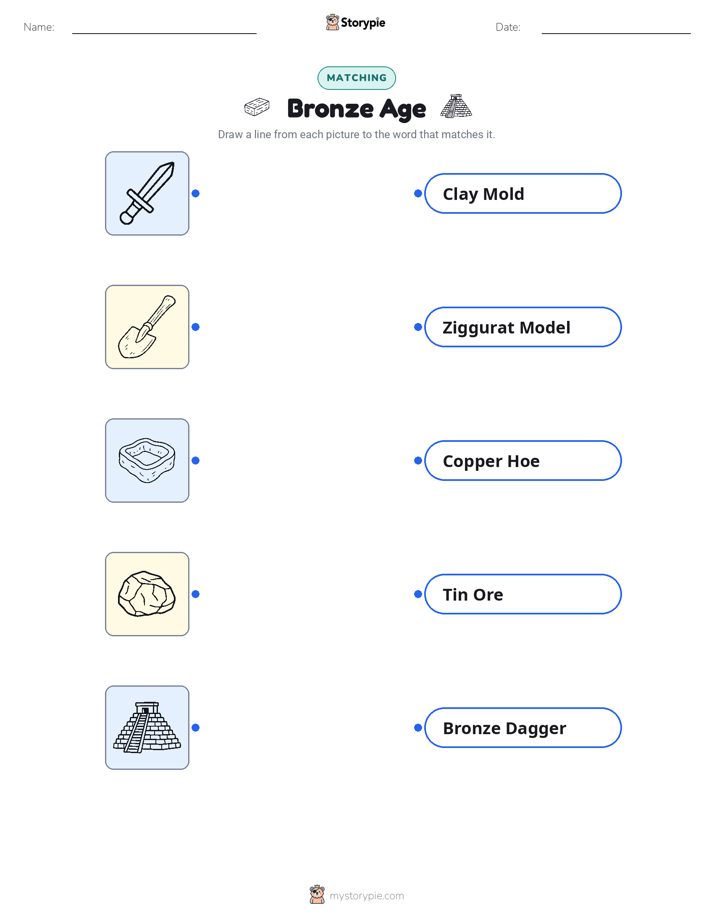
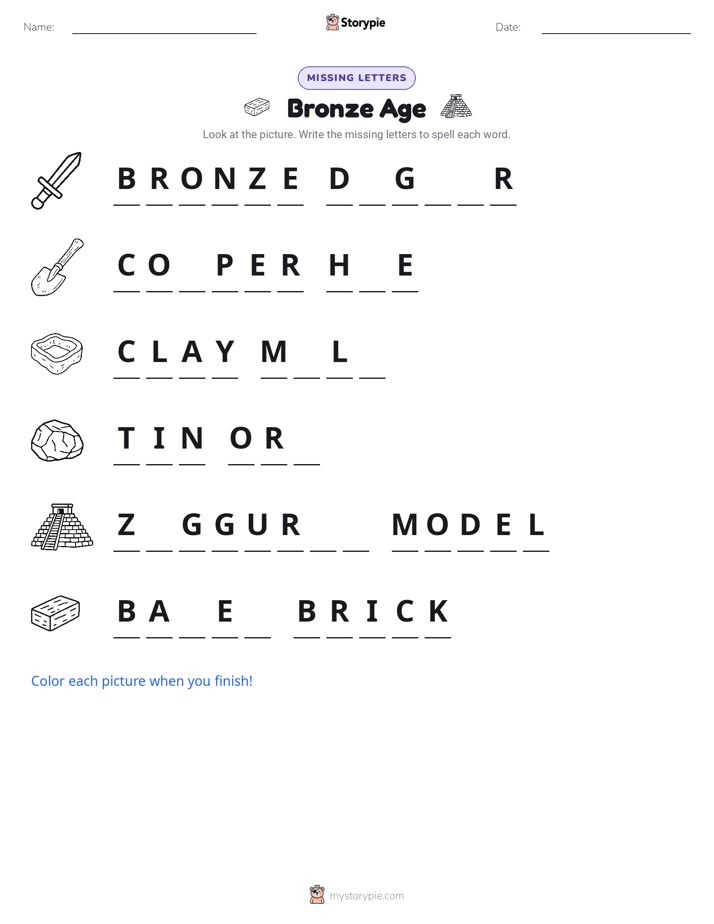
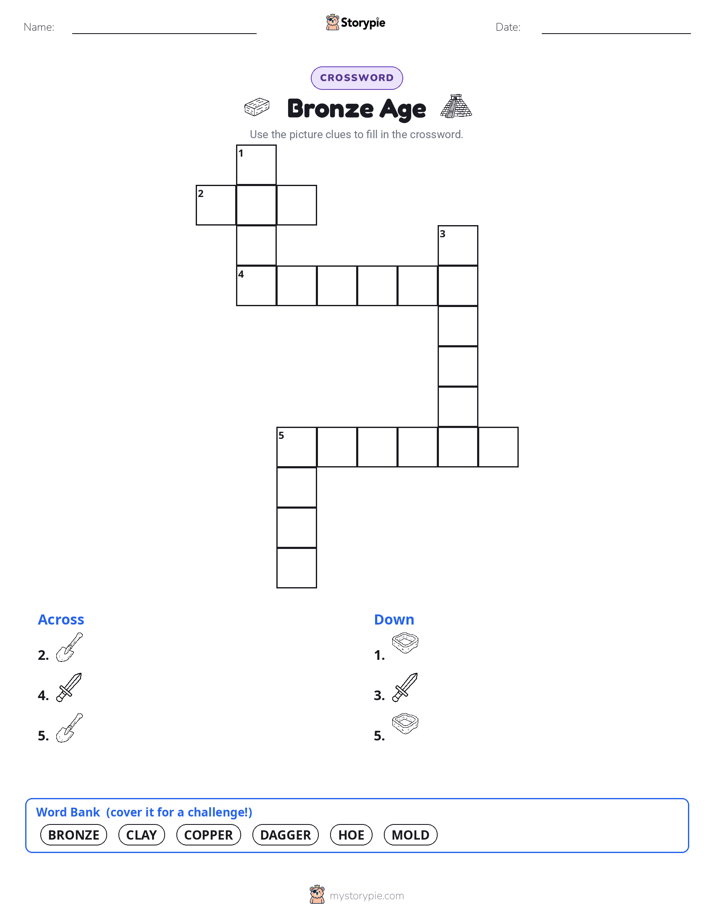
Print & create
Answer keys·No prep·Free with an account
28 worksheets · answer keys · full story · quiz · Ages 6-8 · CEFR A2
Plus adds 244,000+ more stories in 27 languages, audio for every one, and printables for all of them.
Just want Bronze Age?
Hello. My name is Elara, and I want to tell you a story about my home from a long, long time ago. I lived in a small village made of wood and mud huts. Life was simple, but it was also hard work. My father was a farmer, and his plow was just a big piece of wood with a sharp stone tied to the end. Every day, he would push it through the dirt to get the ground ready for seeds. But sometimes, with a loud crack, the stone would break. He would get so frustrated. Our other tools weren't much better. We had knives and axe heads made from a soft, reddish metal called copper. It was pretty, but it wasn't very strong. If you hit a tree too hard with a copper axe, the blade would bend. Imagine trying to cut your food with a fork that kept getting floppy. That’s what it was like. We spent so much of our day fixing tools that it was hard to get everything else done.
My favorite place in the village was the metalsmith's workshop. It was always hot and smelled like smoke and fire. The metalsmiths were like magicians to me. They could take ugly rocks from the ground and turn them into useful copper tools using a super-hot fire called a forge. One day, I saw them doing something I had never seen before. They took the usual reddish rocks that held copper and mixed them with some new, dull gray rocks that a trader brought to our village. My friend whispered to me, “What are they doing?”. The head metalsmith just smiled and said, “Watch. We are trying something new.”. He heated all the rocks in the forge until they glowed brighter than the sun and melted into a thick, fiery liquid. Then, he carefully mixed the two melted metals together. The liquid swirled and shimmered, and when he poured it into a stone mold, it was not the reddish color of copper. It was a beautiful, shining, golden color. We all gasped. It was like he had captured sunlight in a bowl.
Elara and the Glowing Metal
Hello. My name is Elara, and I want to tell you a story about my home from a long, long time ago. I lived in a small village made of wood and mud huts. Life was simple, but it was also hard work. My father was a farmer, and his plow was just a big piece of wood with a sharp stone tied to the end. Every day, he would push it through the dirt to get the ground ready for seeds. But sometimes, with a loud crack, the stone would break. He would get so frustrated. Our other tools weren't much better. We had knives and axe heads made from a soft, reddish metal called copper. It was pretty, but it wasn't very strong. If you hit a tree too hard with a copper axe, the blade would bend. Imagine trying to cut your food with a fork that kept getting floppy. That’s what it was like. We spent so much of our day fixing tools that it was hard to get everything else done.
My favorite place in the village was the metalsmith's workshop. It was always hot and smelled like smoke and fire. The metalsmiths were like magicians to me. They could take ugly rocks from the ground and turn them into useful copper tools using a super-hot fire called a forge. One day, I saw them doing something I had never seen before. They took the usual reddish rocks that held copper and mixed them with some new, dull gray rocks that a trader brought to our village. My friend whispered to me, “What are they doing?”. The head metalsmith just smiled and said, “Watch. We are trying something new.”. He heated all the rocks in the forge until they glowed brighter than the sun and melted into a thick, fiery liquid. Then, he carefully mixed the two melted metals together. The liquid swirled and shimmered, and when he poured it into a stone mold, it was not the reddish color of copper. It was a beautiful, shining, golden color. We all gasped. It was like he had captured sunlight in a bowl.
After the golden liquid cooled down, the metalsmith pulled a brand new axe head from the mold. It was heavier and shinier than any copper axe I had ever seen. To test it, he struck it against a large stone. Instead of bending or breaking, it made a loud, clear ringing sound, like a bell. “CLANG.”. He then took it to a log and swung it. The axe sliced right through the wood, clean and easy. He held it up and shouted, “This is bronze.”. Soon, everything changed for our village. The metalsmiths made strong bronze tips for my father’s plow, and he could farm a whole field without it breaking. They made sharp bronze axes that helped us build bigger and better homes. My mother even got a beautiful bronze pin to hold her cloak closed. We had so many strong tools and grew so much extra food that we were able to trade with other villages for things we needed. Learning how to make bronze didn't just give us a new metal. It helped us build a better, stronger world for everyone.
Wow facts
About
A historical period, lasting from approximately 3300 BCE to 1200 BCE, characterized by the widespread use of bronze for making tools, weapons, and other objects.
Take a Quiz
Question 1 of 4
Why was it hard for Elara's father to work in the fields?
Explore next

Want to do even more?
Go beyond exploring. Unlock tools that turn every story into real learning.

Storypie Plus for families
Full stories, quizzes, and printables. Nights and car rides, sorted.
- Unlimited audio stories
- Create Mode: your child stars in the story
- Offline downloads
- Printable worksheets & coloring pages

Why Storypie for Schools
Students engaged. Prep in seconds. Evenings back to you.
- Worksheets & Quizzes
- Classroom Management
- Formative Assessment
- Custom Curriculum & Lesson Plans
- 27 Languages

Why Storypie for Homeschool
Curriculum done. They'll ask for more. Hours back in your day.
- Worksheet Generator
- First-Person Audio Stories
- Built-in Comprehension Quizzes
- Custom Curriculum & Lesson Plans
- Print & Go Activities