English

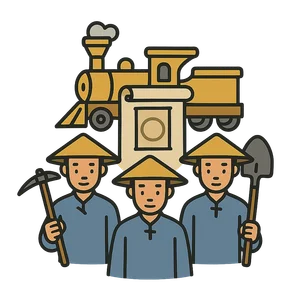
Chinese Railroad Workers
The approximately 12,000 to 20…
Reads at Grades 3–5 Listens at Grades 1–5
Print & create
Answer keys·No prep·Free with an account
28 worksheets · answer keys · full story · quiz · Ages 8-10 · CEFR B1
Plus adds 244,000+ more stories in 27 languages, audio for every one, and printables for all of them.
Just want Chinese Railroad Workers?
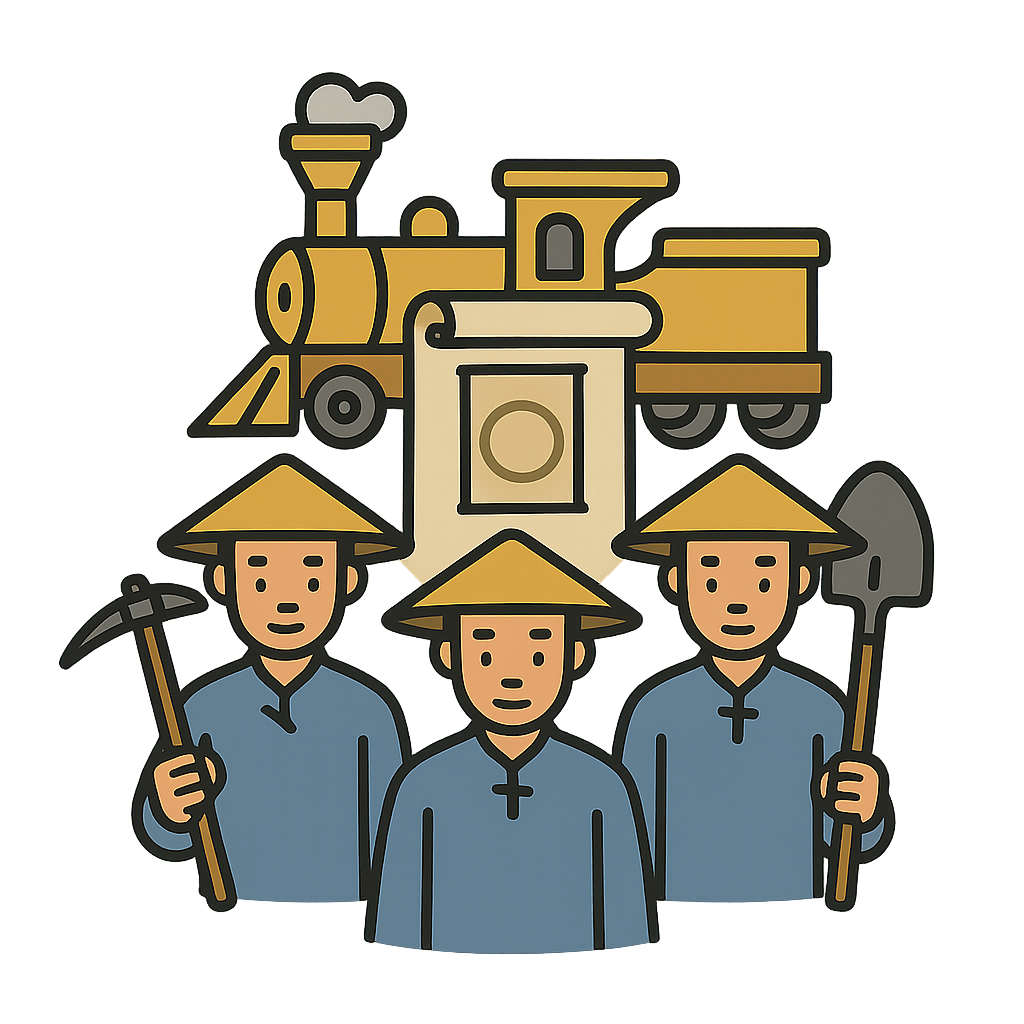
My name is Wong Fook, and my story begins not in the mountains of America, but in my small village in China. In the year 1865, my home was struggling, and there was little work and not enough food. We heard stories of a faraway land across the great Pacific Ocean called America, or 'Gam Saan'—Gold Mountain. It was said that a man could earn enough money there to send back to his family and give them a better life. The dream of Gold Mountain filled my heart with hope, so I said a difficult goodbye to my parents and my village. The journey on the boat was long and hard. We were packed tightly together for weeks, with the endless blue water all around us. When we finally saw the coast of California, my stomach fluttered with a mix of excitement and fear. I was a stranger in a new land, but I held onto the promise of Gam Saan. I did not know then that I would not be digging for gold, but helping to build a great iron dragon that would connect the entire country.
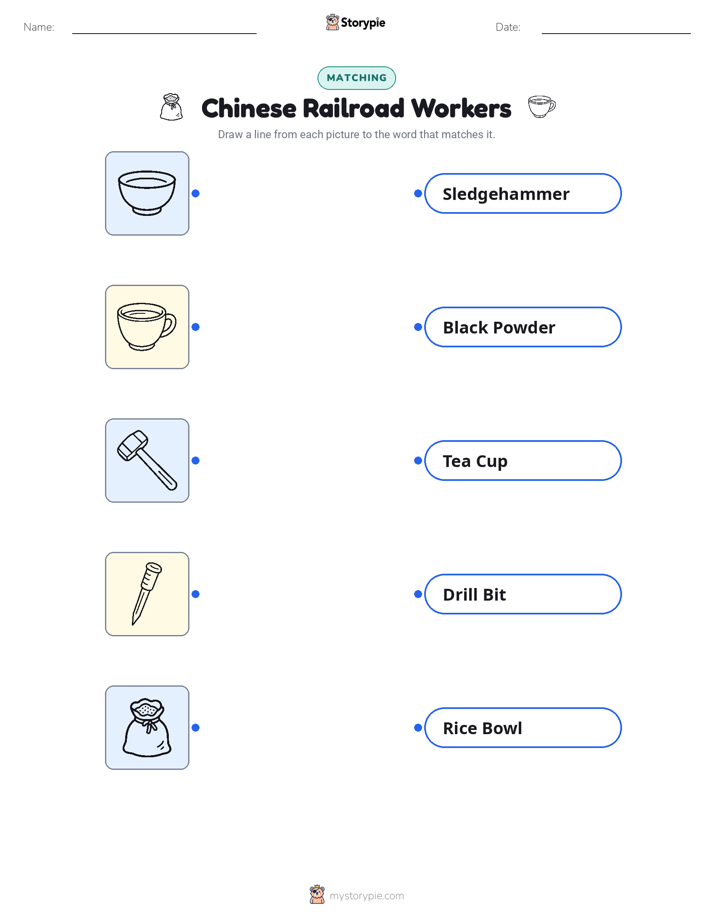
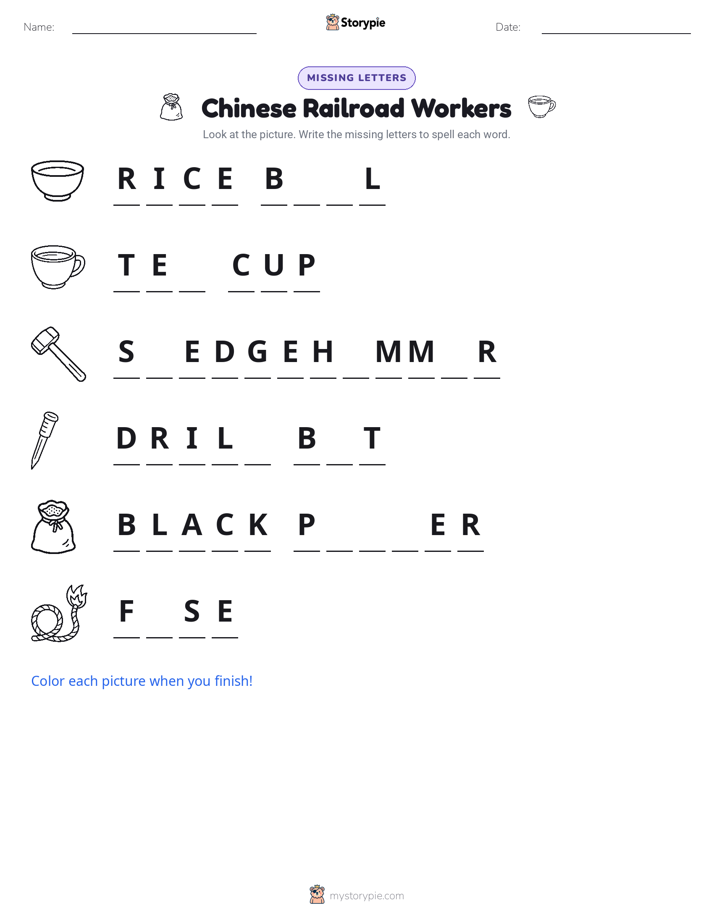
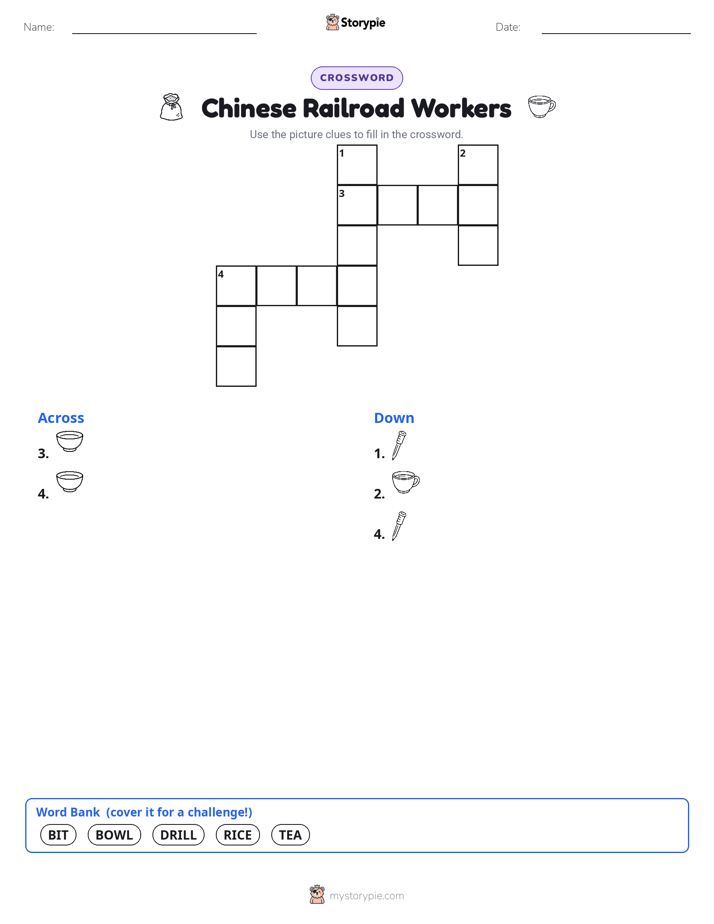
My new life began in the towering Sierra Nevada mountains. The bosses of the Central Pacific Railroad needed many strong workers to do a job that others thought was impossible: to lay steel tracks over and through the rocky peaks. My first days were overwhelming. The clang of hundreds of hammers hitting steel spikes echoed through the canyons all day long. The work was more difficult than I could have ever imagined. In the summer, the sun was hot and unforgiving. In the winter, the snow was so deep that it could bury our tents and create dangerous avalanches. We had the most dangerous job of all: blasting tunnels through mountains of solid granite. We would drill holes, stuff them with gunpowder, light a fuse, and run. The smell of the black powder and the bone-shaking boom of the explosion was something I never got used to. But I was not alone. Thousands of other men from my homeland worked beside me. At night, we would gather around the fire, sharing bowls of rice and tea, and telling stories of our villages. This friendship, our camaraderie, gave us the strength to face each difficult day. We were a family, bound together by our hard work and our shared dream.
Wong Fook and the Iron Dragon
My name is Wong Fook, and my story begins not in the mountains of America, but in my small village in China. In the year 1865, my home was struggling, and there was little work and not enough food. We heard stories of a faraway land across the great Pacific Ocean called America, or 'Gam Saan'—Gold Mountain. It was said that a man could earn enough money there to send back to his family and give them a better life. The dream of Gold Mountain filled my heart with hope, so I said a difficult goodbye to my parents and my village. The journey on the boat was long and hard. We were packed tightly together for weeks, with the endless blue water all around us. When we finally saw the coast of California, my stomach fluttered with a mix of excitement and fear. I was a stranger in a new land, but I held onto the promise of Gam Saan. I did not know then that I would not be digging for gold, but helping to build a great iron dragon that would connect the entire country.
My new life began in the towering Sierra Nevada mountains. The bosses of the Central Pacific Railroad needed many strong workers to do a job that others thought was impossible: to lay steel tracks over and through the rocky peaks. My first days were overwhelming. The clang of hundreds of hammers hitting steel spikes echoed through the canyons all day long. The work was more difficult than I could have ever imagined. In the summer, the sun was hot and unforgiving. In the winter, the snow was so deep that it could bury our tents and create dangerous avalanches. We had the most dangerous job of all: blasting tunnels through mountains of solid granite. We would drill holes, stuff them with gunpowder, light a fuse, and run. The smell of the black powder and the bone-shaking boom of the explosion was something I never got used to. But I was not alone. Thousands of other men from my homeland worked beside me. At night, we would gather around the fire, sharing bowls of rice and tea, and telling stories of our villages. This friendship, our camaraderie, gave us the strength to face each difficult day. We were a family, bound together by our hard work and our shared dream.
For two years, we worked from the moment the sun rose until it disappeared behind the mountains. We did the same dangerous work as the white workers, but we were paid less money and given no chance for better positions. It did not feel fair. My friends and I would talk quietly at night about this injustice. We were proud of our work, but we deserved to be treated with respect. So, on June 24th, 1867, we made a brave decision. Thousands of us, all up and down the mountain, peacefully laid down our tools. We did not shout or fight. We simply stopped working. This was our strike. We sent a message to the railroad bosses demanding the same pay as the other workers and a shorter workday. It was a frightening thing to do. The bosses were angry and even cut off our food supplies, thinking they could starve us back to work. But we stood together, quietly and firmly, showing them that our work had value and that we deserved to be treated fairly.
The strike ended after about a week, and while not all our demands were met, we had shown our strength and unity. We went back to work with our heads held high, and slowly, some conditions did get better. We continued to carve our way through the mountains, and finally, the day came when our tracks met the tracks of the Union Pacific Railroad coming from the east. On May 10th, 1869, at a place called Promontory Summit in Utah, the last 'Golden Spike' was hammered into the ground. The country was connected. I felt a huge wave of pride watching the two 'iron dragons' meet. We had done it. We had conquered the impossible mountains. But my pride was mixed with sadness. When they took the famous photograph to celebrate, none of my Chinese brothers were invited to be in it. It was as if our hard work was invisible. Our story was not told that day, but our legacy is in every inch of that track. We helped build America, and the strength and spirit we showed is a story that should always be remembered.
Wow facts
About
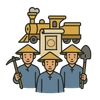
The approximately 12,000 to 20,000 Chinese immigrants who performed the dangerous and essential labor of building the western section of the First Transcontinental Railroad in the 1860s.
Take a Quiz
Question 1 of 5
In the story, the workers shared 'camaraderie.' Based on how it's used, what does camaraderie mean?
Explore next




Want to do even more?
Go beyond exploring. Unlock tools that turn every story into real learning.

Storypie Plus for families
Full stories, quizzes, and printables. Nights and car rides, sorted.
- Unlimited audio stories
- Create Mode: your child stars in the story
- Offline downloads
- Printable worksheets & coloring pages

Why Storypie for Schools
Students engaged. Prep in seconds. Evenings back to you.
- Worksheets & Quizzes
- Classroom Management
- Formative Assessment
- Custom Curriculum & Lesson Plans
- 27 Languages

Why Storypie for Homeschool
Curriculum done. They'll ask for more. Hours back in your day.
- Worksheet Generator
- First-Person Audio Stories
- Built-in Comprehension Quizzes
- Custom Curriculum & Lesson Plans
- Print & Go Activities