English

Cuban Missile Crisis
A 13-day political and military standoff in October 1962 between the United States and the Soviet Union over…
Reads at Grades 3–5 Listens at Grades 1–5
Print & create
Answer keys·No prep·Free with an account
28 worksheets · answer keys · full story · quiz · Ages 8-10 · CEFR B1
Plus adds 102,000+ more stories in 27 languages, audio for every one, and printables for all of them.
Just want Cuban Missile Crisis?
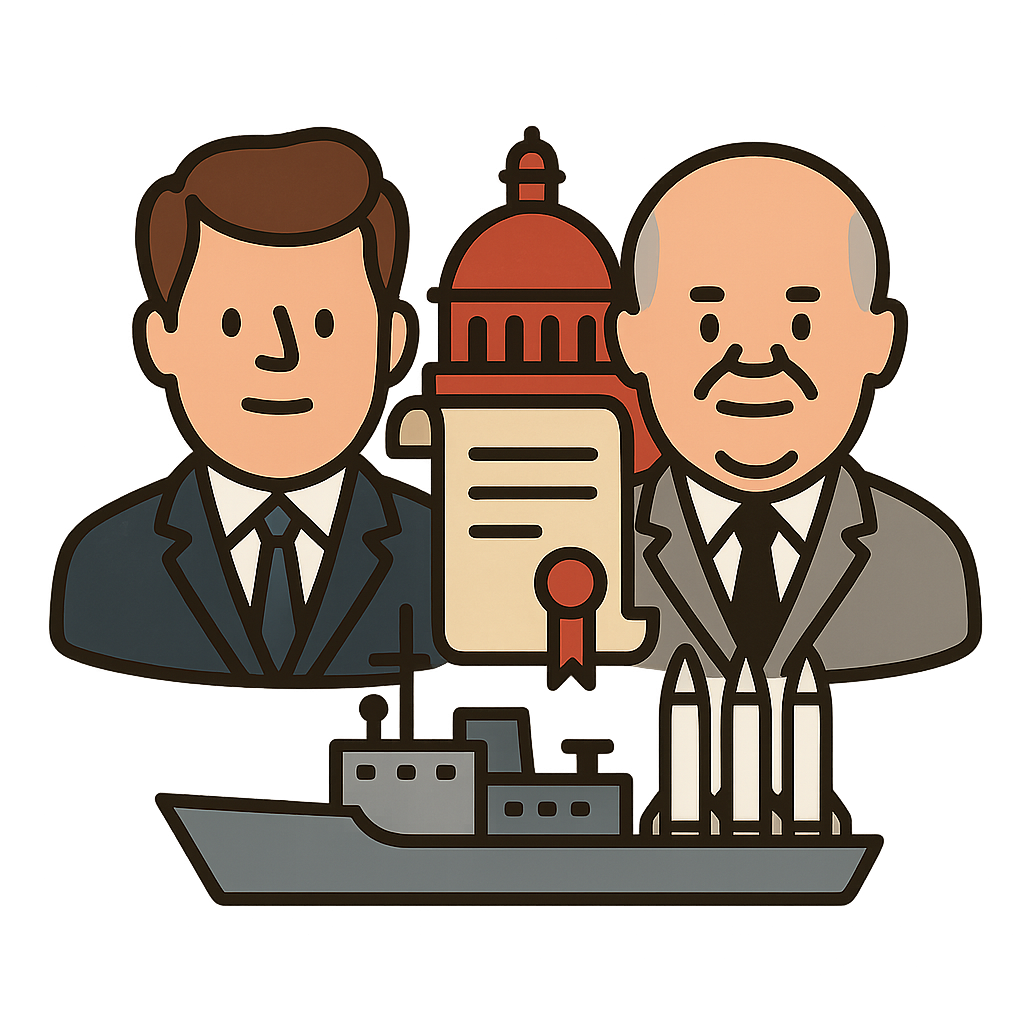
Hello there. My name is John F. Kennedy, but people often called me Jack. I had the very important job of being the President of the United States during a time called the 1960s. It was an exciting time, with new music and new ideas, but it was also a very tense time. My country and another giant country called the Soviet Union were in a 'Cold War'. Now, this wasn't a war with soldiers fighting in fields. It was a war of spies, secrets, and deep mistrust. We disagreed on almost everything, and both sides had powerful weapons that made everyone nervous. On the morning of October 16th, 1962, that nervousness turned into real fear. My advisors came into my office looking very serious. They unrolled large photographs taken by a secret spy plane. The pictures showed fields and palm trees on the island of Cuba, which is very close to the coast of Florida. But hidden among those trees were shocking new structures: launch sites for powerful nuclear missiles. The Soviet Union was secretly placing weapons just a stone's throw from our home. My heart sank. The world had just become a much more dangerous place.
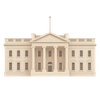
For the next thirteen days, the White House didn't feel like a home; it felt like the center of a storm. I gathered a group of my smartest and most trusted advisors, and we met day and night in the Cabinet Room. We called ourselves the Executive Committee, or 'ExComm' for short. The air was thick with worry. What should we do? Some of my military leaders, brave and strong men, believed we had only one choice: to launch an immediate air strike to destroy the missile sites before they could be used. They argued it was the only way to guarantee our safety. But I kept picturing what would happen next. An attack on Cuba would likely be seen as an act of war by the Soviet Union. They would strike back, and a small conflict could spiral into a terrible world war, one fought with the most destructive weapons ever created. I couldn't risk that. I chose a different path. On October 22nd, I decided we would set up a naval 'quarantine' around Cuba. This meant our powerful Navy ships would form a ring in the ocean, a line that Soviet ships carrying more weapons would not be allowed to cross. It was a strong move, but not an attack. It was a way of saying, 'We are serious, but we still want to talk.' Then came the hardest part: waiting. We watched as Soviet ships steamed toward our quarantine line. The whole world watched with us, holding its breath. Would they stop, or would they challenge us? Every tick of the clock felt like an hour.
Thirteen Days on the Brink
Hello there. My name is John F. Kennedy, but people often called me Jack. I had the very important job of being the President of the United States during a time called the 1960s. It was an exciting time, with new music and new ideas, but it was also a very tense time. My country and another giant country called the Soviet Union were in a 'Cold War'. Now, this wasn't a war with soldiers fighting in fields. It was a war of spies, secrets, and deep mistrust. We disagreed on almost everything, and both sides had powerful weapons that made everyone nervous. On the morning of October 16th, 1962, that nervousness turned into real fear. My advisors came into my office looking very serious. They unrolled large photographs taken by a secret spy plane. The pictures showed fields and palm trees on the island of Cuba, which is very close to the coast of Florida. But hidden among those trees were shocking new structures: launch sites for powerful nuclear missiles. The Soviet Union was secretly placing weapons just a stone's throw from our home. My heart sank. The world had just become a much more dangerous place.
For the next thirteen days, the White House didn't feel like a home; it felt like the center of a storm. I gathered a group of my smartest and most trusted advisors, and we met day and night in the Cabinet Room. We called ourselves the Executive Committee, or 'ExComm' for short. The air was thick with worry. What should we do? Some of my military leaders, brave and strong men, believed we had only one choice: to launch an immediate air strike to destroy the missile sites before they could be used. They argued it was the only way to guarantee our safety. But I kept picturing what would happen next. An attack on Cuba would likely be seen as an act of war by the Soviet Union. They would strike back, and a small conflict could spiral into a terrible world war, one fought with the most destructive weapons ever created. I couldn't risk that. I chose a different path. On October 22nd, I decided we would set up a naval 'quarantine' around Cuba. This meant our powerful Navy ships would form a ring in the ocean, a line that Soviet ships carrying more weapons would not be allowed to cross. It was a strong move, but not an attack. It was a way of saying, 'We are serious, but we still want to talk.' Then came the hardest part: waiting. We watched as Soviet ships steamed toward our quarantine line. The whole world watched with us, holding its breath. Would they stop, or would they challenge us? Every tick of the clock felt like an hour.
Just when it seemed like a clash was unavoidable, something amazing happened: we started communicating. The Soviet leader, Nikita Khrushchev, and I began sending letters and secret messages to each other. My own brother, Robert, played a crucial role in these secret talks. Instead of threats, we used words to find a way out of the danger. We were like two people standing on a ledge, carefully trying to help each other step back to safety. Finally, on October 28th, 1962, we reached a deal. The Soviet Union agreed to take the missiles apart and ship them back home. In return, I gave my public promise that the United States would never invade Cuba. We also made a secret promise to remove some of our own missiles from Turkey, a country near the Soviet Union. When the news was announced, it felt like the whole world let out a sigh of relief. We had stood at the brink of disaster and chosen peace. Looking back, the Cuban Missile Crisis taught me, and the world, a powerful lesson. It showed that even when things are at their most frightening, talking and trying to understand each other is the bravest and most powerful tool we have. Finding a peaceful solution is always better than starting a fight, a lesson that is just as important for kids in a schoolyard as it is for leaders of nations.
Wow facts
About
A 13-day political and military standoff in October 1962 between the United States and the Soviet Union over the installation of nuclear-armed Soviet missiles on Cuba, which brought the world to the brink of nuclear war.
Take a Quiz
Question 1 of 5
In the story, President Kennedy said the 'Cold War' was not a war with 'soldiers fighting in fields.' What does that really mean?
Explore next


Want to do even more?
Go beyond exploring. Unlock tools that turn every story into real learning.

Storypie Plus for families
Full stories, quizzes, and printables. Nights and car rides, sorted.
- Unlimited audio stories
- Create Mode: your child stars in the story
- Offline downloads
- Printable worksheets & coloring pages

Why Storypie for Schools
Students engaged. Prep in seconds. Evenings back to you.
- Worksheets & Quizzes
- Classroom Management
- Formative Assessment
- Custom Curriculum & Lesson Plans
- 27 Languages

Why Storypie for Homeschool
Curriculum done. They'll ask for more. Hours back in your day.
- Worksheet Generator
- First-Person Audio Stories
- Built-in Comprehension Quizzes
- Custom Curriculum & Lesson Plans
- Print & Go Activities