English


Dutch Golden Age
A period in the 17th century in the Netherlands (Dutch Republic) characterized by great wealth…
Reads at Grades 3–5 Listens at Grades 1–5
Print & create
Answer keys·No prep·Free with an account
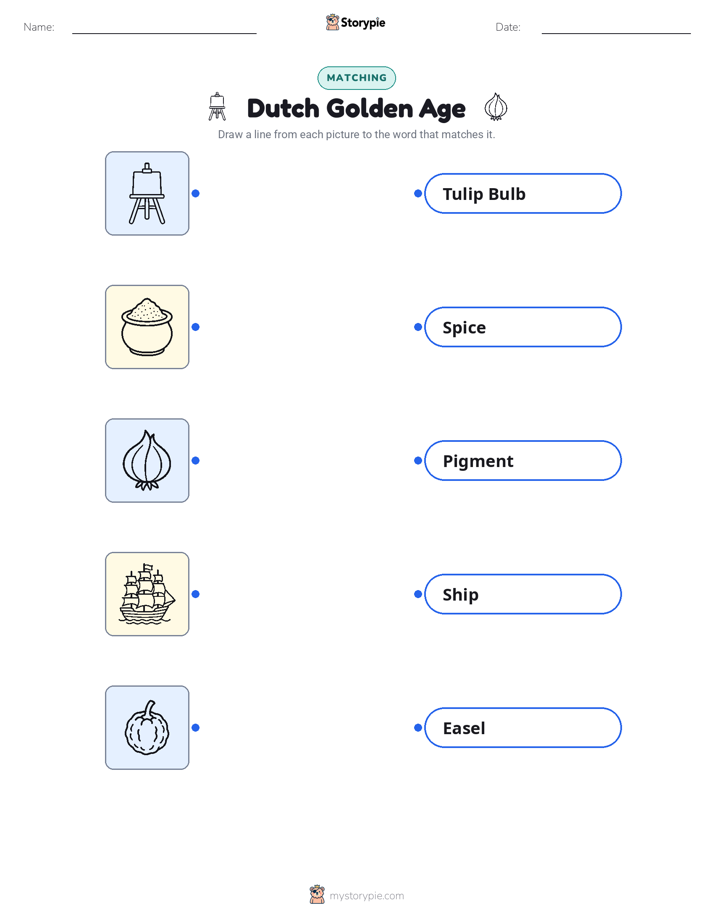
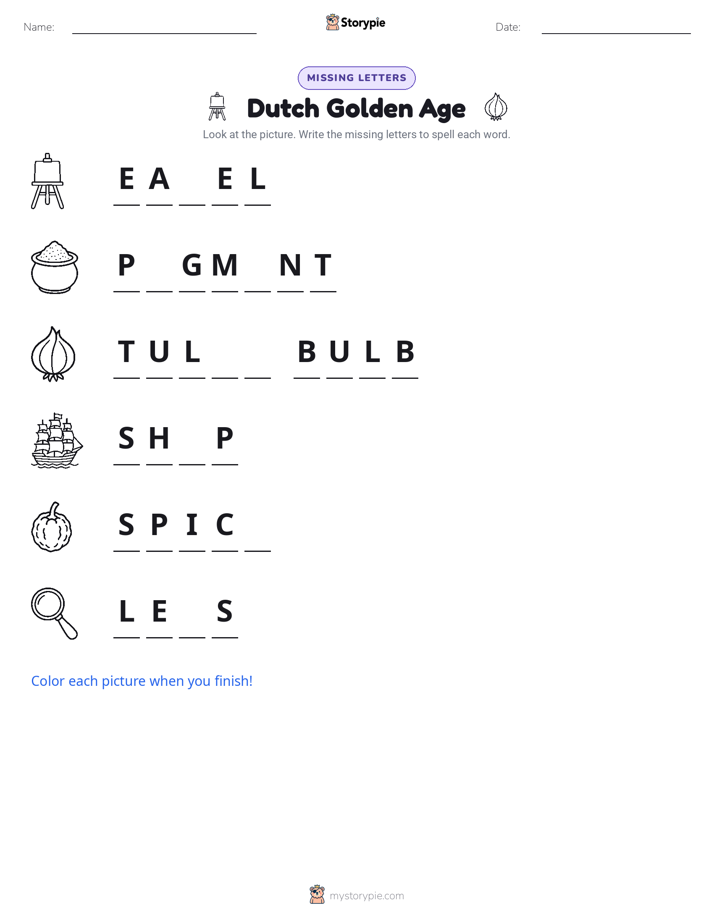
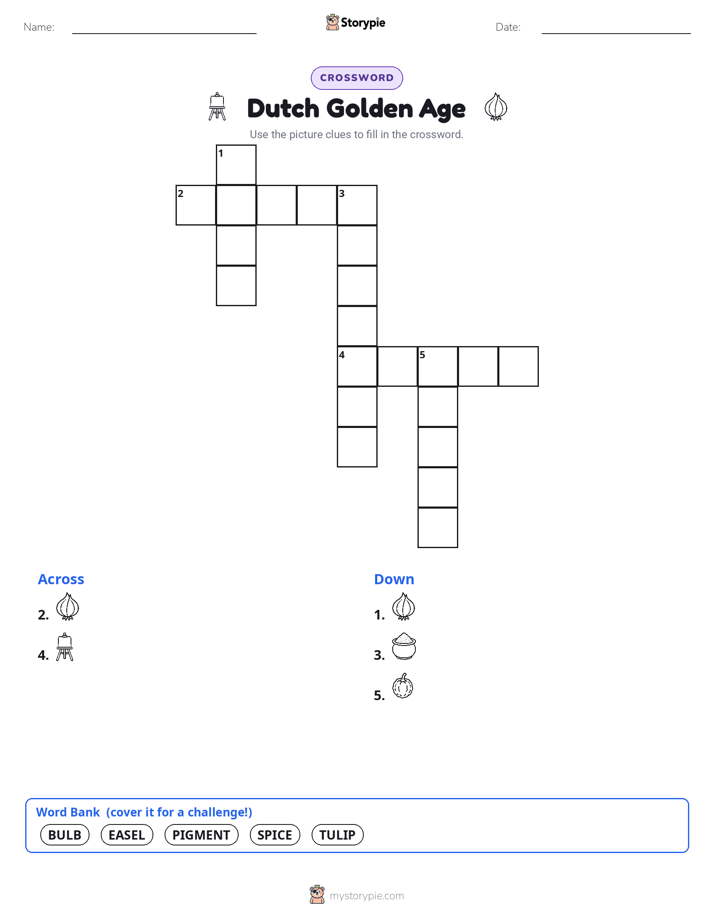
28 worksheets · answer keys · full story · quiz · Ages 8-10 · CEFR B1
Plus adds 164,000+ more stories in 27 languages, audio for every one, and printables for all of them.
Just want Dutch Golden Age?

My name is Rembrandt van Rijn, and I am a painter. I lived during a time of great excitement in the city of Amsterdam, way back in the 17th century. It was a period people now call the Dutch Golden Age, and I can tell you, it truly felt golden. Our city was the busiest place you could imagine. Tall ships with giant sails lined the canals, having traveled across vast oceans from faraway lands. They brought back treasures we had never seen before: fragrant spices that made the air smell sweet, colorful fabrics, and strange new foods. The marketplaces were a whirlwind of activity, a tapestry of sounds, smells, and sights. You could hear dozens of different languages being spoken as merchants and sailors from all over the world gathered to trade their goods. For the first time in a long while, our country was at peace. This peace, combined with our success in trade, meant that people had more time and money to appreciate the finer things in life. Art, science, and new ideas were flourishing everywhere you looked. It felt like our small country was the center of the world, and for an artist like me, it was the most inspiring place to be. Every face in the crowd held a story, and I wanted to capture them all on my canvas.
Come, step into my workshop. Be careful where you walk. There are canvases leaning against the walls and pots of pigment on every table. Can you smell that? It is the sharp, earthy scent of linseed oil and turpentine, the smell of creation itself. My studio was always a bustling place, filled with my students who were eager to learn the art of painting. They would grind pigments to make our paints, stretch canvases, and practice drawing by copying my work. It was a messy, noisy, but wonderful place. Around the year 1640, I received my most exciting commission yet. The captain of the Amsterdam city guard, a man named Frans Banninck Cocq, asked me to paint a group portrait of his entire company of soldiers. Now, most group portraits at the time were quite stiff. The men would just sit or stand in a neat row, looking straight ahead. It was rather boring. I knew I had to do something different. I wanted to capture the energy and pride of these men. I imagined them not posing for a painting, but bursting into action, as if they were marching out of the darkness and into the light to defend our city. It was a huge challenge. I had to fit so many people onto one enormous canvas and make each one feel important. I spent two years, until 1642, working on this painting, which people would later call *The Night Watch*. I used light to guide your eye, making the captain and his lieutenant the brightest figures, and I even added other characters, like a young girl carrying a chicken, to make the scene feel more alive. It was the most complicated and ambitious painting of my career, but I was proud to create something that showed the dynamic spirit of our city.
Rembrandt and the Dutch Golden Age
My name is Rembrandt van Rijn, and I am a painter. I lived during a time of great excitement in the city of Amsterdam, way back in the 17th century. It was a period people now call the Dutch Golden Age, and I can tell you, it truly felt golden. Our city was the busiest place you could imagine. Tall ships with giant sails lined the canals, having traveled across vast oceans from faraway lands. They brought back treasures we had never seen before: fragrant spices that made the air smell sweet, colorful fabrics, and strange new foods. The marketplaces were a whirlwind of activity, a tapestry of sounds, smells, and sights. You could hear dozens of different languages being spoken as merchants and sailors from all over the world gathered to trade their goods. For the first time in a long while, our country was at peace. This peace, combined with our success in trade, meant that people had more time and money to appreciate the finer things in life. Art, science, and new ideas were flourishing everywhere you looked. It felt like our small country was the center of the world, and for an artist like me, it was the most inspiring place to be. Every face in the crowd held a story, and I wanted to capture them all on my canvas.
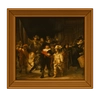
Come, step into my workshop. Be careful where you walk. There are canvases leaning against the walls and pots of pigment on every table. Can you smell that? It is the sharp, earthy scent of linseed oil and turpentine, the smell of creation itself. My studio was always a bustling place, filled with my students who were eager to learn the art of painting. They would grind pigments to make our paints, stretch canvases, and practice drawing by copying my work. It was a messy, noisy, but wonderful place. Around the year 1640, I received my most exciting commission yet. The captain of the Amsterdam city guard, a man named Frans Banninck Cocq, asked me to paint a group portrait of his entire company of soldiers. Now, most group portraits at the time were quite stiff. The men would just sit or stand in a neat row, looking straight ahead. It was rather boring. I knew I had to do something different. I wanted to capture the energy and pride of these men. I imagined them not posing for a painting, but bursting into action, as if they were marching out of the darkness and into the light to defend our city. It was a huge challenge. I had to fit so many people onto one enormous canvas and make each one feel important. I spent two years, until 1642, working on this painting, which people would later call The Night Watch. I used light to guide your eye, making the captain and his lieutenant the brightest figures, and I even added other characters, like a young girl carrying a chicken, to make the scene feel more alive. It was the most complicated and ambitious painting of my career, but I was proud to create something that showed the dynamic spirit of our city.
When I look back on my life's work, I see that I was interested in more than just painting wealthy captains and merchants. I believed that every person, no matter how rich or poor, old or young, had a soul worth capturing. I painted the weathered face of an old woman, seeing the stories of a long life in her wrinkles. I painted myself over and over again, not because I was vain, but because I was fascinated by how a person changes over time. My secret weapon was always light. I loved the way light could fall on a person's face, leaving other parts in deep shadow. This technique, which some call 'chiaroscuro', wasn't just for looks. It was how I showed emotion. A bright light could show surprise or joy, while a deep shadow could suggest sadness or a hidden thought. It made my paintings feel dramatic, as if you had walked in on a very important moment. My hope was that my art would teach people to look more closely at the world around them. The Dutch Golden Age was a time of discovery, not just in trade and science, but in art. I wanted my paintings to be a reminder that there is beauty, importance, and a powerful story inside every single one of us.
Wow facts
About
A period in the 17th century in the Netherlands (Dutch Republic) characterized by great wealth, artistic masterpieces, scientific discovery, and global trade.
Take a Quiz
Question 1 of 5
In the story, Rembrandt says his workshop was 'bustling.' What does 'bustling' mean?
Explore next



Want to do even more?
Go beyond exploring. Unlock tools that turn every story into real learning.

Storypie Plus for families
Full stories, quizzes, and printables. Nights and car rides, sorted.
- Unlimited audio stories
- Create Mode: your child stars in the story
- Offline downloads
- Printable worksheets & coloring pages

Why Storypie for Schools
Students engaged. Prep in seconds. Evenings back to you.
- Worksheets & Quizzes
- Classroom Management
- Formative Assessment
- Custom Curriculum & Lesson Plans
- 27 Languages

Why Storypie for Homeschool
Curriculum done. They'll ask for more. Hours back in your day.
- Worksheet Generator
- First-Person Audio Stories
- Built-in Comprehension Quizzes
- Custom Curriculum & Lesson Plans
- Print & Go Activities