English

Indian Independence Movement
A series of events and movements from the mid-19th century to 1947 with the ultimate aim of ending British…
Reads at Grades 3–5 Listens at Grades 1–5
Print & create
Answer keys·No prep·Free with an account
24 worksheets · answer keys · full story · quiz · Ages 8-10 · CEFR B1
Plus adds 102,000+ more stories in 27 languages, audio for every one, and printables for all of them.
Just want Indian Independence Movement?
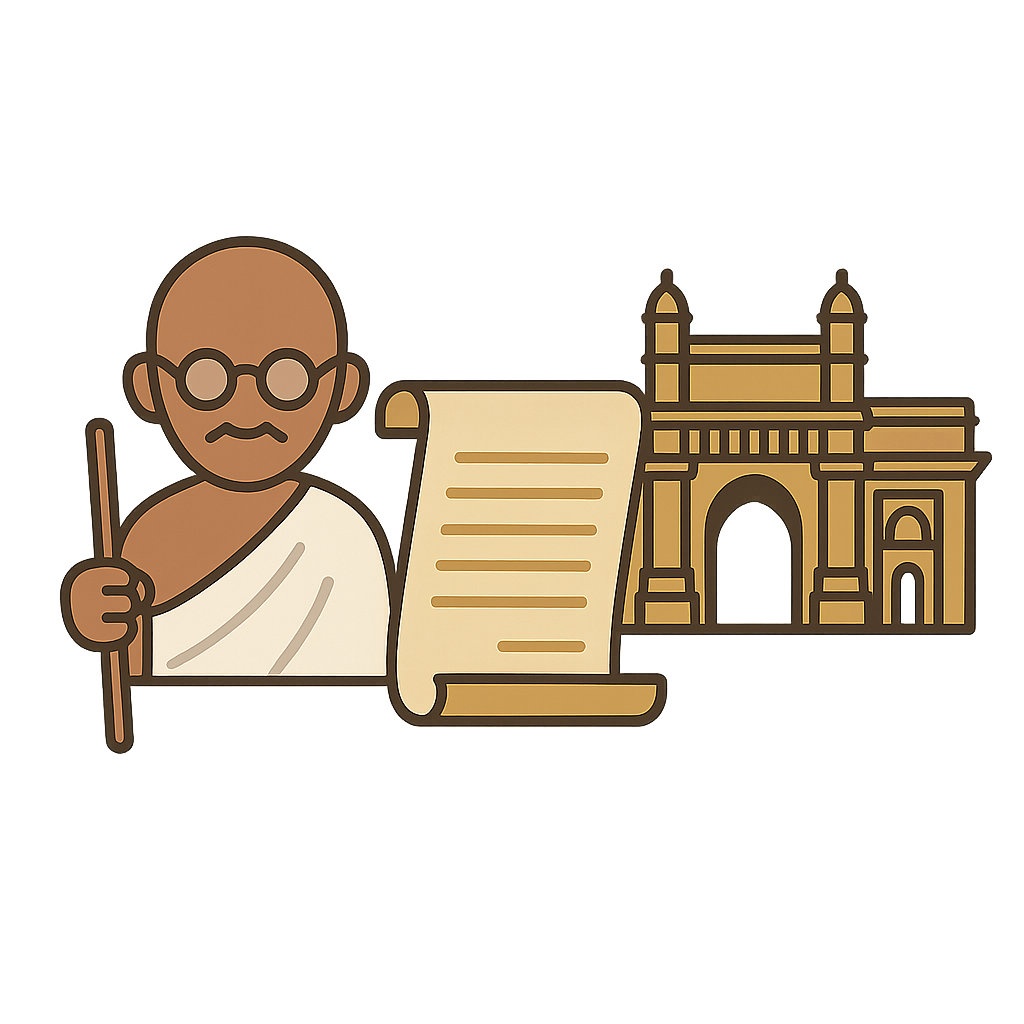
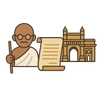
My name is Mohandas Karamchand Gandhi, but many people came to call me Mahatma, which means 'great soul'. I lived in a beautiful and ancient land called India, my home. For many years, India was not ruled by its own people. It was ruled by Great Britain, a country far across the sea. It felt as though we were guests in our own house, with someone else making all the rules. I dreamed of a different India, one where we were free to make our own choices, live in peace, and build our own future. But how could we achieve this dream against such a powerful empire? I did not believe in using fists or weapons. I believed in a different kind of strength. I called it 'Satyagraha', which means 'truth-force'. It is the power that comes from standing firmly for what is right. I also taught 'Ahimsa', which is the idea of non-violence. It meant we would not harm anyone, not even with our words or our thoughts. Our weapons would be courage, kindness, and the truth. It was a great challenge, but I believed that these peaceful tools were the most powerful forces in the world.
Our biggest test of this peaceful strength came in the year 1930. The British government had made a law that was very unfair to my people. The law said that we were not allowed to make or sell our own salt. We had to buy it from the British, who put a heavy tax on it, making it expensive for everyone. Salt is something every person needs to live, especially in a hot country like ours. This law was a symbol of their control over our lives, and I knew we had to oppose it. So, I decided on a simple, peaceful plan. We would walk to the sea and make our own salt. On March 12th, 1930, I began a long journey with a small group of followers. Our destination was the coastal village of Dandi, 240 miles away. As we walked, our small group grew into a massive crowd. Day after day, thousands of people from villages and towns joined us. The sound of our walking feet was a quiet but powerful drumbeat for freedom. We walked for 24 days, sleeping under the stars and sharing what little food we had. There was a feeling of hope in the air that was stronger than any army. On the morning of April 6th, 1930, we finally arrived at the Arabian Sea. The sun was rising, and the world felt quiet and still. I walked to the water's edge, bent down, and scooped up a small lump of salty mud. By doing this, I had broken the British law. I had made Indian salt. It was a simple act, but it sent a message across the world that we would not obey unjust laws. The British authorities were not pleased. Soon, they began arresting many of us, including me. But we did not resist. We went to jail peacefully, knowing that our cause was just. Our strength was not in fighting, but in our unity and our unwavering commitment to non-violence.
My Walk for Freedom
My name is Mohandas Karamchand Gandhi, but many people came to call me Mahatma, which means 'great soul'. I lived in a beautiful and ancient land called India, my home. For many years, India was not ruled by its own people. It was ruled by Great Britain, a country far across the sea. It felt as though we were guests in our own house, with someone else making all the rules. I dreamed of a different India, one where we were free to make our own choices, live in peace, and build our own future. But how could we achieve this dream against such a powerful empire? I did not believe in using fists or weapons. I believed in a different kind of strength. I called it 'Satyagraha', which means 'truth-force'. It is the power that comes from standing firmly for what is right. I also taught 'Ahimsa', which is the idea of non-violence. It meant we would not harm anyone, not even with our words or our thoughts. Our weapons would be courage, kindness, and the truth. It was a great challenge, but I believed that these peaceful tools were the most powerful forces in the world.
Our biggest test of this peaceful strength came in the year 1930. The British government had made a law that was very unfair to my people. The law said that we were not allowed to make or sell our own salt. We had to buy it from the British, who put a heavy tax on it, making it expensive for everyone. Salt is something every person needs to live, especially in a hot country like ours. This law was a symbol of their control over our lives, and I knew we had to oppose it. So, I decided on a simple, peaceful plan. We would walk to the sea and make our own salt. On March 12th, 1930, I began a long journey with a small group of followers. Our destination was the coastal village of Dandi, 240 miles away. As we walked, our small group grew into a massive crowd. Day after day, thousands of people from villages and towns joined us. The sound of our walking feet was a quiet but powerful drumbeat for freedom. We walked for 24 days, sleeping under the stars and sharing what little food we had. There was a feeling of hope in the air that was stronger than any army. On the morning of April 6th, 1930, we finally arrived at the Arabian Sea. The sun was rising, and the world felt quiet and still. I walked to the water's edge, bent down, and scooped up a small lump of salty mud. By doing this, I had broken the British law. I had made Indian salt. It was a simple act, but it sent a message across the world that we would not obey unjust laws. The British authorities were not pleased. Soon, they began arresting many of us, including me. But we did not resist. We went to jail peacefully, knowing that our cause was just. Our strength was not in fighting, but in our unity and our unwavering commitment to non-violence.
Our struggle continued for many more years after the Salt March. We faced difficult times, but we never gave up our dream of a free India. We continued our peaceful protests, showing the world that you could stand up for your rights without raising a single weapon. Finally, our peaceful determination succeeded. The day we had all been waiting for arrived on August 15th, 1947. On that day, India became an independent country. I will never forget the feeling of seeing our new Indian flag, with its stripes of saffron, white, and green, flying high against the blue sky. It was a symbol that we were finally the masters of our own destiny. The journey was long and hard, but it taught us and the world a very important lesson. It showed that courage and truth are more powerful than armies. It proved that non-violence is not a sign of weakness, but the greatest strength a person can have. My life's work was to show that you can change the world not through force, but through peace, kindness, and an unshakeable belief in what is right.
Wow facts
About
A series of events and movements from the mid-19th century to 1947 with the ultimate aim of ending British rule in India. Led by figures like Mahatma Gandhi, it was notable for its large-scale use of non-violent resistance and civil disobedience.
Take a Quiz
Question 1 of 5
In the story, Gandhi says his followers would use 'Satyagraha' or 'truth-force'. What does 'truth-force' most likely mean?
Explore next




Want to do even more?
Go beyond exploring. Unlock tools that turn every story into real learning.

Storypie Plus for families
Full stories, quizzes, and printables. Nights and car rides, sorted.
- Unlimited audio stories
- Create Mode: your child stars in the story
- Offline downloads
- Printable worksheets & coloring pages

Why Storypie for Schools
Students engaged. Prep in seconds. Evenings back to you.
- Worksheets & Quizzes
- Classroom Management
- Formative Assessment
- Custom Curriculum & Lesson Plans
- 27 Languages

Why Storypie for Homeschool
Curriculum done. They'll ask for more. Hours back in your day.
- Worksheet Generator
- First-Person Audio Stories
- Built-in Comprehension Quizzes
- Custom Curriculum & Lesson Plans
- Print & Go Activities