English

Industrial Revolution
A period of major technological, social…
Reads at Grades K-2 Listens at K–3
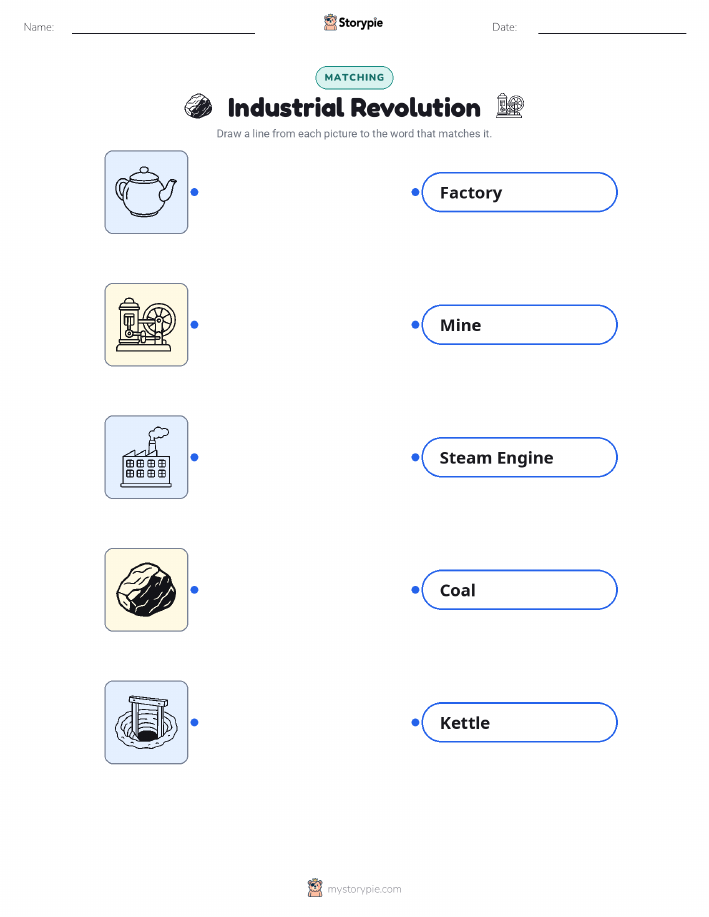
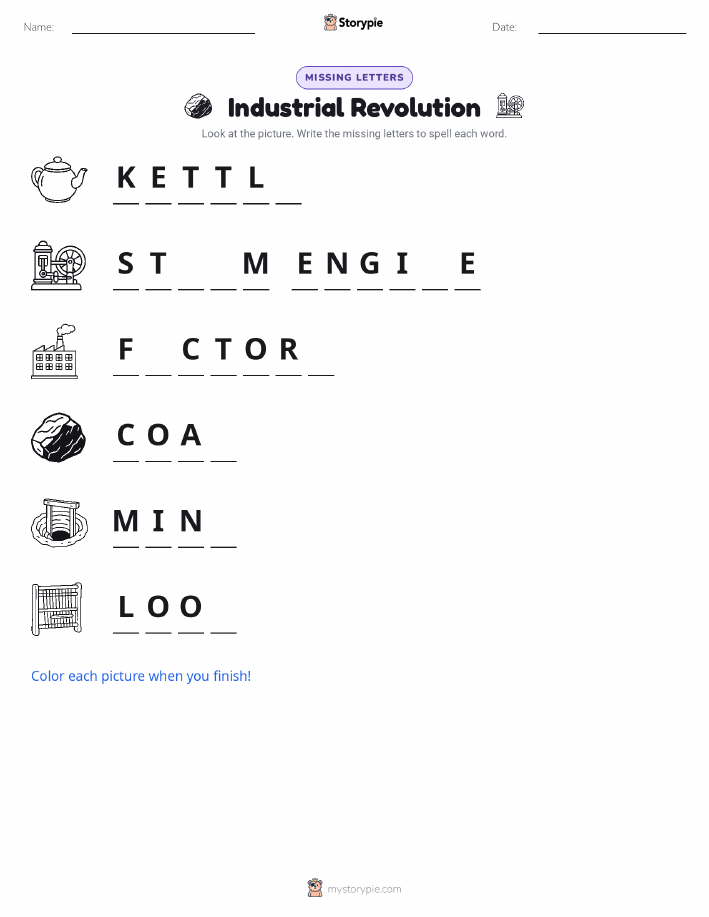
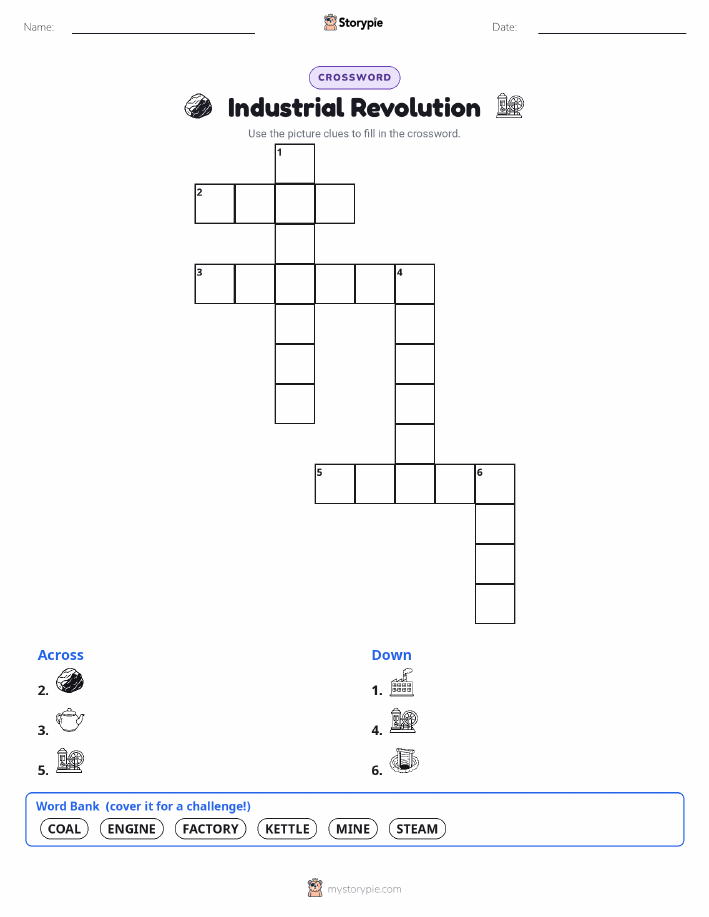
Print & create
Answer keys·No prep·Free with an account
28 worksheets · answer keys · full story · quiz · Ages 6-8 · CEFR A2
Plus adds 279,000+ more stories in 27 languages, audio for every one, and printables for all of them.
Just want Industrial Revolution?
Hello there. My name is James Watt. When I was a boy, I loved to tinker and figure out how things worked. My favorite puzzle was my aunt’s tea kettle. I would watch it for hours as the lid jiggled up and down. 'What makes it do that?' I wondered. It was the steam, of course. Back then, the world was much quieter. If you wanted something made, a person had to make it with their own hands. If you needed to move something heavy, you used a strong horse or the power of a flowing river to turn a waterwheel. Life moved at a slower pace. But I always felt a big change was just around the corner, puffing like that little tea kettle.
One day, when I was a grown-up instrument maker, a friend brought me a special puzzle to solve. It was a model of a steam engine, a huffing, puffing iron giant. This engine was supposed to pump water out of deep mines, but it wasn't very good at its job. It worked by filling a big room with hot steam and then cooling it down to create a pull. The problem was, it had to cool down and heat up the same room over and over again. Imagine trying to run a race but having to stop for a long, chilly nap every few steps. It was so slow and wasted so much energy. I knew there had to be a better way to make this giant run without getting so tired. I tinkered with it for months, but the puzzle just wouldn't click into place.
Then, one sunny Sunday in the year 1765, I went for a walk to clear my head. I was thinking about that lazy engine when suddenly, like a flash of lightning—Aha. I had it. The idea popped into my head, and it was so simple. 'What if the steam had its own separate room to cool down in?' I thought. That way, the main part of the engine, the part that did all the work, could stay hot all the time. It wouldn't have to waste time and energy cooling down and heating back up. I imagined a pipe leading the used steam away to a special cold box where it could turn back into water. This would make the engine faster, stronger, and much more powerful. I was so excited I could barely wait to get back to my workshop and try it. I said to myself, 'This will change everything.'
James Watt and the Puzzling Steam Engine
Hello there. My name is James Watt. When I was a boy, I loved to tinker and figure out how things worked. My favorite puzzle was my aunt’s tea kettle. I would watch it for hours as the lid jiggled up and down. 'What makes it do that?' I wondered. It was the steam, of course. Back then, the world was much quieter. If you wanted something made, a person had to make it with their own hands. If you needed to move something heavy, you used a strong horse or the power of a flowing river to turn a waterwheel. Life moved at a slower pace. But I always felt a big change was just around the corner, puffing like that little tea kettle.
One day, when I was a grown-up instrument maker, a friend brought me a special puzzle to solve. It was a model of a steam engine, a huffing, puffing iron giant. This engine was supposed to pump water out of deep mines, but it wasn't very good at its job. It worked by filling a big room with hot steam and then cooling it down to create a pull. The problem was, it had to cool down and heat up the same room over and over again. Imagine trying to run a race but having to stop for a long, chilly nap every few steps. It was so slow and wasted so much energy. I knew there had to be a better way to make this giant run without getting so tired. I tinkered with it for months, but the puzzle just wouldn't click into place.
Then, one sunny Sunday in the year 1765, I went for a walk to clear my head. I was thinking about that lazy engine when suddenly, like a flash of lightning—Aha. I had it. The idea popped into my head, and it was so simple. 'What if the steam had its own separate room to cool down in?' I thought. That way, the main part of the engine, the part that did all the work, could stay hot all the time. It wouldn't have to waste time and energy cooling down and heating back up. I imagined a pipe leading the used steam away to a special cold box where it could turn back into water. This would make the engine faster, stronger, and much more powerful. I was so excited I could barely wait to get back to my workshop and try it. I said to myself, 'This will change everything.'
It took a lot of hard work, but with my good friend Matthew Boulton, we built my new steam engine. And it worked better than I ever dreamed. Soon, our engines were chugging and puffing all over the country. Instead of just one person weaving cloth, our engines could power huge rooms filled with machines, all clacking and whirring at once. They pumped water out of deep mines so miners could dig for coal safely. Before long, my ideas even helped create the first steam trains, puffing along iron tracks and connecting towns like never before. The world was becoming a busier, noisier, and more exciting place, all powered by steam.
A lesson from the Past
Looking back, it all started with a curious boy watching a tea kettle. My one little 'Aha.' moment helped power a whole new world. So always remember to ask questions and look closely at the world around you. Never stop tinkering with puzzles and trying to find a better way. You never know when your own big idea might pop into your head and change the world, too.
Wow facts
About
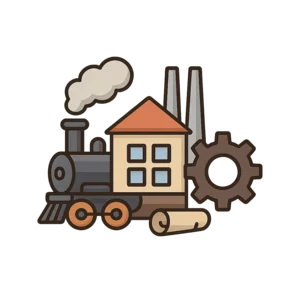
A period of major technological, social, and economic change where manufacturing moved from homes to factories, powered by new machines like the steam engine.
Take a Quiz
Question 1 of 4
Why was the old steam engine so slow?
Explore next





Want to do even more?
Go beyond exploring. Unlock tools that turn every story into real learning.

Storypie Plus for families
Full stories, quizzes, and printables. Nights and car rides, sorted.
- Unlimited audio stories
- Create Mode: your child stars in the story
- Offline downloads
- Printable worksheets & coloring pages

Why Storypie for Schools
Students engaged. Prep in seconds. Evenings back to you.
- Worksheets & Quizzes
- Classroom Management
- Formative Assessment
- Custom Curriculum & Lesson Plans
- 27 Languages

Why Storypie for Homeschool
Curriculum done. They'll ask for more. Hours back in your day.
- Worksheet Generator
- First-Person Audio Stories
- Built-in Comprehension Quizzes
- Custom Curriculum & Lesson Plans
- Print & Go Activities