English

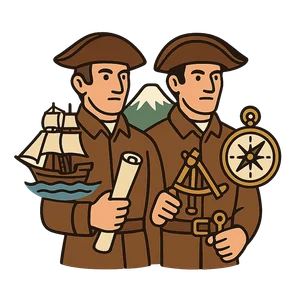
Lewis and Clark Expedition
A U.S.
Reads at Grades 6–8 Listens at Grades 4–8
Print & create
Answer keys·No prep·Free with an account
28 worksheets · answer keys · full story · quiz · Ages 10-12 · CEFR B2
Plus adds 102,000+ more stories in 27 languages, audio for every one, and printables for all of them.
Just want Lewis and Clark Expedition?
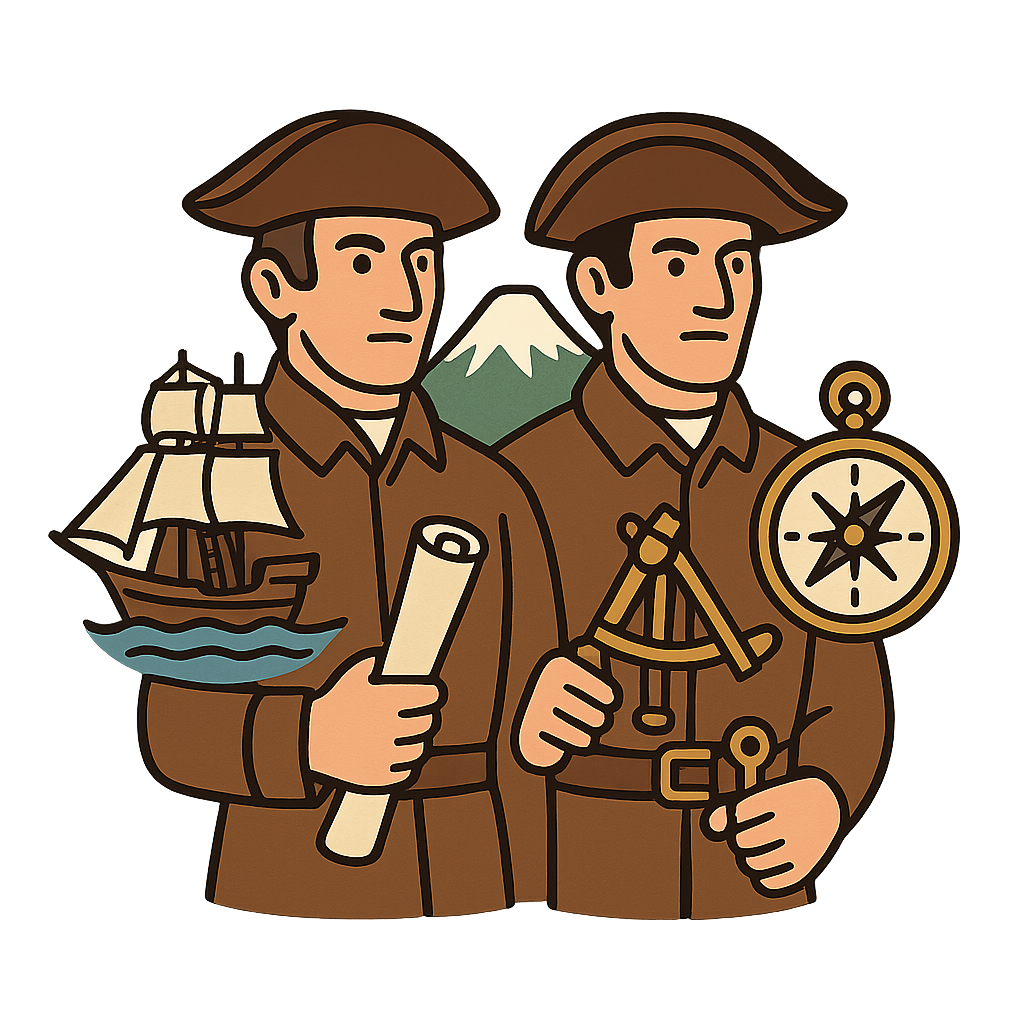
My name is Meriwether Lewis, and in 1803, my life changed forever. I was serving as the private secretary to my friend, President Thomas Jefferson, a man with a mind as vast as the country he led. At that time, America was much smaller than it is today. But President Jefferson had just completed a remarkable deal with France called the Louisiana Purchase. With the stroke of a pen, he had doubled the size of the United States, acquiring a massive territory that stretched from the Mississippi River all the way to the Rocky Mountains. The problem was, no American truly knew what was out there. It was a giant mystery on the map, a place of rumors and legends. President Jefferson entrusted me with a mission of immense importance. He asked me to lead an expedition through this new land, all the way to the Pacific Ocean. Our goals were clear and ambitious. First, we were to find the most direct water route across the continent for trade, what many called the Northwest Passage. Second, we needed to create detailed maps, charting the rivers and mountains for all who would follow. Third, I was to be a scientist, documenting every new plant, animal, and mineral we encountered. Finally, and perhaps most importantly, we were to establish peaceful contact and trade with the Native American tribes who called that land home. I knew I could not undertake such a monumental task alone. I immediately wrote to my old friend and former army comrade, William Clark. He was a skilled mapmaker, a strong leader, and a man I trusted completely. I asked him to be my co-captain, and to my great relief, he accepted. Together, we would lead the Corps of Discovery into the great, uncharted West.
A Journey Across a Continent
My name is Meriwether Lewis, and in 1803, my life changed forever. I was serving as the private secretary to my friend, President Thomas Jefferson, a man with a mind as vast as the country he led. At that time, America was much smaller than it is today. But President Jefferson had just completed a remarkable deal with France called the Louisiana Purchase. With the stroke of a pen, he had doubled the size of the United States, acquiring a massive territory that stretched from the Mississippi River all the way to the Rocky Mountains. The problem was, no American truly knew what was out there. It was a giant mystery on the map, a place of rumors and legends. President Jefferson entrusted me with a mission of immense importance. He asked me to lead an expedition through this new land, all the way to the Pacific Ocean. Our goals were clear and ambitious. First, we were to find the most direct water route across the continent for trade, what many called the Northwest Passage. Second, we needed to create detailed maps, charting the rivers and mountains for all who would follow. Third, I was to be a scientist, documenting every new plant, animal, and mineral we encountered. Finally, and perhaps most importantly, we were to establish peaceful contact and trade with the Native American tribes who called that land home. I knew I could not undertake such a monumental task alone. I immediately wrote to my old friend and former army comrade, William Clark. He was a skilled mapmaker, a strong leader, and a man I trusted completely. I asked him to be my co-captain, and to my great relief, he accepted. Together, we would lead the Corps of Discovery into the great, uncharted West.
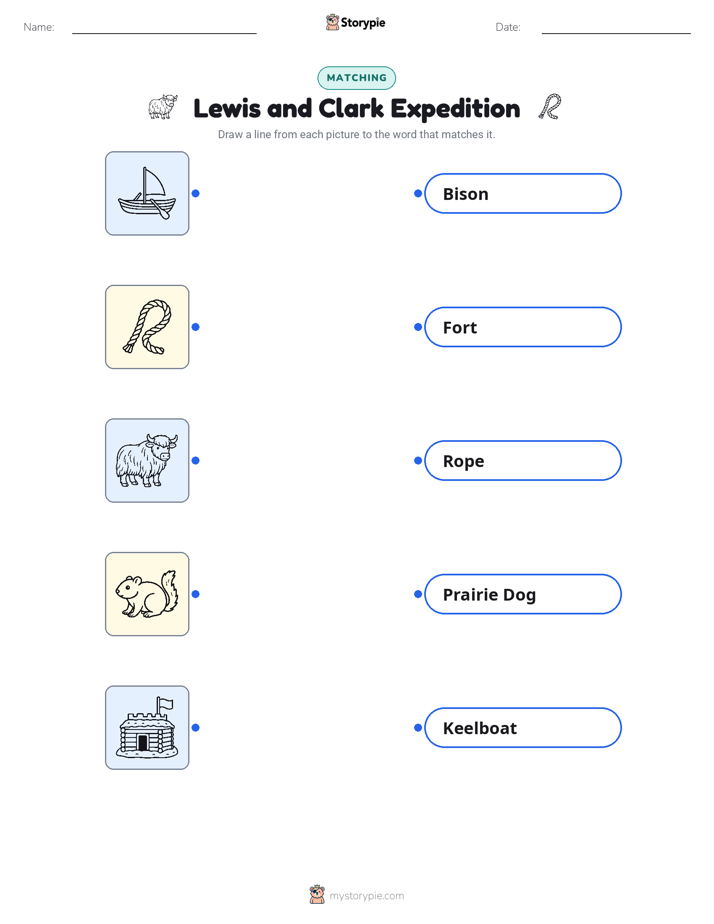
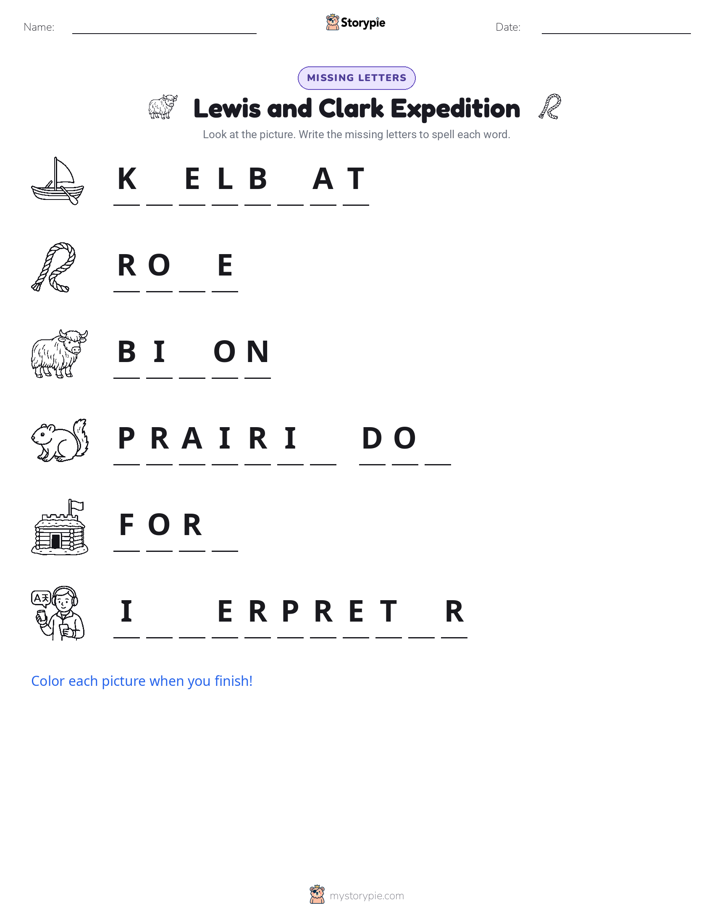
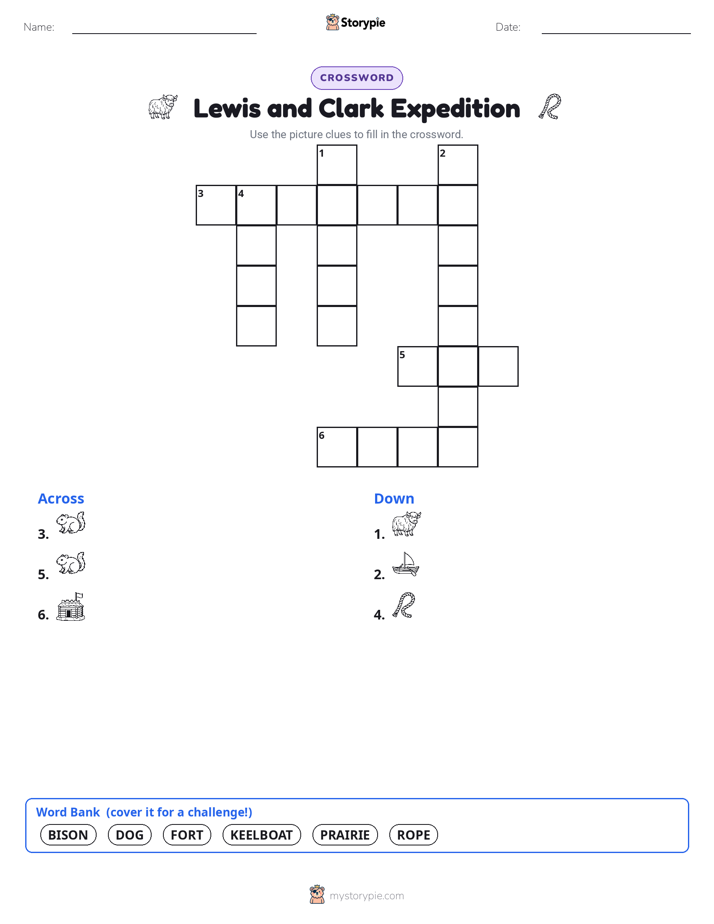
We spent months preparing, gathering supplies, and carefully selecting the brave men who would form our Corps of Discovery. On May 14th, 1804, our journey officially began as we pushed our keelboat and two smaller crafts into the powerful current of the Missouri River near St. Louis. That first summer was a test of endurance. We fought against the river's current every day, pulling our heavy boats upstream with ropes from the muddy banks. The heat was scorching, the mosquitoes were relentless, and the work was back-breaking. But with every mile, the landscape grew wilder and more magnificent than anything we had ever seen. We documented hundreds of species new to American science, including the clever prairie dog, which we called a “barking squirrel.” We marveled at the immense herds of bison that stretched to the horizon on the Great Plains. As winter approached, we built a fort near the villages of the Mandan and Hidatsa peoples in what is now North Dakota. They were generous hosts, and we learned much from them. It was there that we met two people who would become essential to our survival. A French-Canadian fur trader named Toussaint Charbonneau offered his services as an interpreter, but it was his young Shoshone wife, Sacagawea, who proved to be our greatest blessing. She was only a teenager and had her infant son, Jean Baptiste, with her, but she possessed incredible knowledge and resilience. When spring arrived in 1805, she and her family joined us as we continued west. Her presence was a sign of peace to the tribes we met; no war party traveled with a woman and a child. She taught us which plants were safe to eat and which were medicine. Her calm courage was an inspiration. Our greatest challenge still lay ahead: the colossal, snow-capped peaks of the Rocky Mountains. They were a formidable barrier, far larger than we had imagined. We knew we could not cross them without horses, and our fate rested on finding the Shoshone people, Sacagawea's own tribe, from whom she had been taken years before.
After a grueling journey through the mountains, a moment of incredible fortune occurred. We encountered a band of Shoshone, and in a reunion that felt like a miracle, their chief, Cameahwait, turned out to be Sacagawea's long-lost brother. Because of her, we were able to trade for the horses that were essential for crossing the treacherous Bitterroot Mountains. Finally, after more than a year and a half of struggle, in November of 1805, Captain Clark wrote the triumphant words in his journal: “Ocian in view. O. the joy.” We had reached the Pacific Ocean. The sound of the crashing waves was the most beautiful music I had ever heard. The entire crew felt a profound sense of relief and accomplishment. That winter, we needed to build a shelter. In a decision that was truly ahead of its time, we all voted on where to build our winter quarters, which we named Fort Clatsop. It was a remarkable moment, as every member of the expedition was given a voice, including Sacagawea and Clark's enslaved companion, York. After a long, damp winter, we began our long journey home in the spring of 1806. To cover more ground, Captain Clark and I split our party for a time, exploring different routes before reuniting on the Missouri River. On September 23rd, 1806, we finally paddled into St. Louis. The townspeople were stunned to see us; we had been gone for so long that many had presumed us lost forever. We returned not with a simple water route, which we learned did not exist, but with something far more valuable. We brought back journals filled with knowledge, priceless maps that would guide a nation westward, and stories of the vast, beautiful, and complex land that was now part of the United States. Our journey was a testament to courage and teamwork, proving that with perseverance and a shared purpose, humans can overcome incredible obstacles and step boldly into the unknown.
Wow facts
About
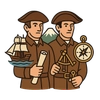
A U.S. military expedition, led by Captain Meriwether Lewis and First Lieutenant William Clark, to explore the newly acquired Louisiana Purchase and find a water route to the Pacific Ocean.
Take a Quiz
Question 1 of 5
In your own words, describe the main goals President Jefferson gave to Lewis and Clark for their expedition.
Explore next



Want to do even more?
Go beyond exploring. Unlock tools that turn every story into real learning.

Storypie Plus for families
Full stories, quizzes, and printables. Nights and car rides, sorted.
- Unlimited audio stories
- Create Mode: your child stars in the story
- Offline downloads
- Printable worksheets & coloring pages

Why Storypie for Schools
Students engaged. Prep in seconds. Evenings back to you.
- Worksheets & Quizzes
- Classroom Management
- Formative Assessment
- Custom Curriculum & Lesson Plans
- 27 Languages

Why Storypie for Homeschool
Curriculum done. They'll ask for more. Hours back in your day.
- Worksheet Generator
- First-Person Audio Stories
- Built-in Comprehension Quizzes
- Custom Curriculum & Lesson Plans
- Print & Go Activities