English

Mexican War of Independence
The Mexican War of Independence was an armed conflict that ended the rule of Spain over the territory of New…
Reads at Grades 6–8 Listens at Grades 4–8
Print & create
Answer keys·No prep·Free with an account
28 worksheets · answer keys · full story · quiz · Ages 10-12 · CEFR B2
Plus adds 102,000+ more stories in 27 languages, audio for every one, and printables for all of them.
Just want Mexican War of Independence?
My name is Miguel Hidalgo y Costilla, and though my life began simply, my story became intertwined with the birth of a nation. I was a priest in the small, sun-drenched town of Dolores, in the land then known as New Spain. This land, which you now know as Mexico, was a place of breathtaking beauty, with rugged mountains and vibrant fields. But beneath this beauty, there was a deep and painful unfairness that had lasted for almost 300 years. We lived under the rule of Spain, a country an ocean away. The most powerful positions and the greatest wealth were given only to those born in Spain, the peninsulares. Those of us of Spanish descent but born here, the criollos like myself, were treated as second-class citizens in our own homeland. And for the mestizos, of mixed heritage, and the Indigenous people, whose ancestors had lived here for centuries, life was even harder, filled with poverty and injustice. I could not stand by and watch my people suffer. In the quiet of my home, I began to meet with trusted friends, men like Ignacio Allende and Juan Aldama, who were captains in the army and shared my frustration. We would gather in secret, reading books that were forbidden by the Spanish government—books from Europe that spoke of liberty, equality, and the right of people to govern themselves. These ideas lit a fire in our hearts. We dreamed of a new nation, a Mexico where the riches of the land would benefit all its people, not just a distant king. We planned and whispered, knowing the great risk we were taking. To speak of independence was treason, punishable by death. But the dream of freedom was too powerful to ignore.
The Cry for Mexican Independence
My name is Miguel Hidalgo y Costilla, and though my life began simply, my story became intertwined with the birth of a nation. I was a priest in the small, sun-drenched town of Dolores, in the land then known as New Spain. This land, which you now know as Mexico, was a place of breathtaking beauty, with rugged mountains and vibrant fields. But beneath this beauty, there was a deep and painful unfairness that had lasted for almost 300 years. We lived under the rule of Spain, a country an ocean away. The most powerful positions and the greatest wealth were given only to those born in Spain, the peninsulares. Those of us of Spanish descent but born here, the criollos like myself, were treated as second-class citizens in our own homeland. And for the mestizos, of mixed heritage, and the Indigenous people, whose ancestors had lived here for centuries, life was even harder, filled with poverty and injustice. I could not stand by and watch my people suffer. In the quiet of my home, I began to meet with trusted friends, men like Ignacio Allende and Juan Aldama, who were captains in the army and shared my frustration. We would gather in secret, reading books that were forbidden by the Spanish government—books from Europe that spoke of liberty, equality, and the right of people to govern themselves. These ideas lit a fire in our hearts. We dreamed of a new nation, a Mexico where the riches of the land would benefit all its people, not just a distant king. We planned and whispered, knowing the great risk we were taking. To speak of independence was treason, punishable by death. But the dream of freedom was too powerful to ignore.
Our secret, however, was not kept as well as we had hoped. By the early days of September 1810, the Spanish authorities learned of our plans. Word reached us that they had issued orders for our arrest. We were at a crossroads. We could flee and save ourselves, letting our dream die, or we could act immediately, turning our quiet rebellion into an open fight for freedom. The choice was clear, but my heart pounded with a mix of terror and determination. In the cold, dark hours before dawn on September 16th, 1810, I made my decision. I walked to my small parish church, took hold of the thick rope, and began to ring the bells. The sound shattered the morning silence, not calling the people to a regular mass, but to the birth of a revolution. Soon, the townspeople gathered in the courtyard, their faces filled with confusion and concern. Standing before them, I delivered the speech that would change our history forever, a call to arms now known as the 'Grito de Dolores,' the Cry of Dolores. I spoke of the centuries of injustice, of the wealth that had been taken from our land, and of the dignity that had been denied to our people. 'Long live our Lady of Guadalupe. Death to bad government.' I cried out, my voice filled with all the passion I felt. I asked them if they would fight to be free. Their response was a roar of agreement that echoed through the town. To unite this diverse crowd of farmers, miners, and laborers, I took a banner from the church sacristy—an image of the Virgin of Guadalupe, a symbol deeply loved and respected by all people of Mexico. Holding it high, I declared her the patroness of our rebellion. At that moment, we were no longer just a small group of plotters. We were an army, an army of ordinary people united by a single, powerful idea: independence.
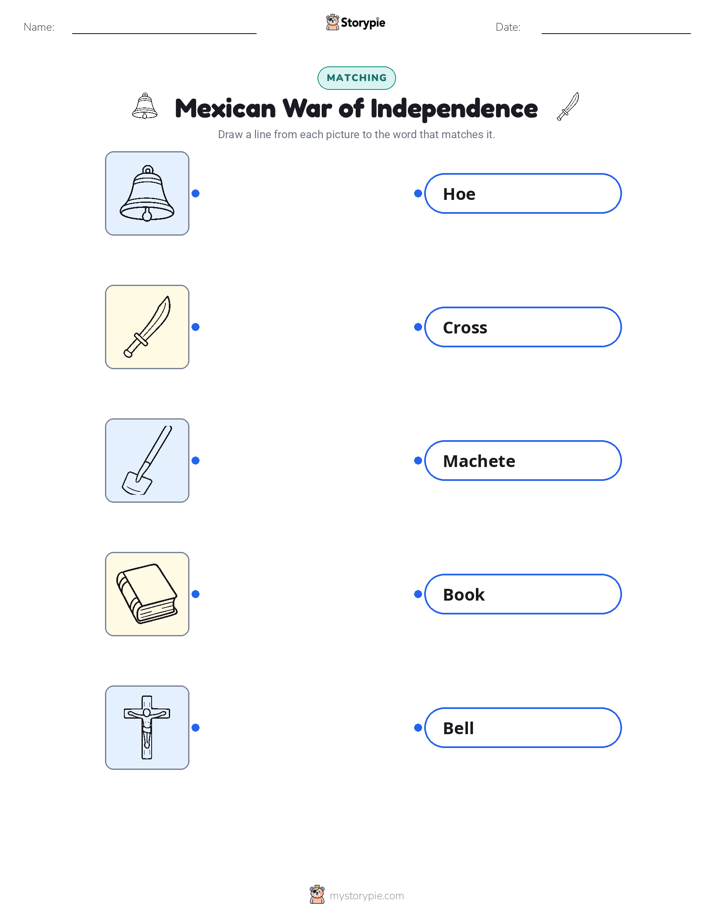
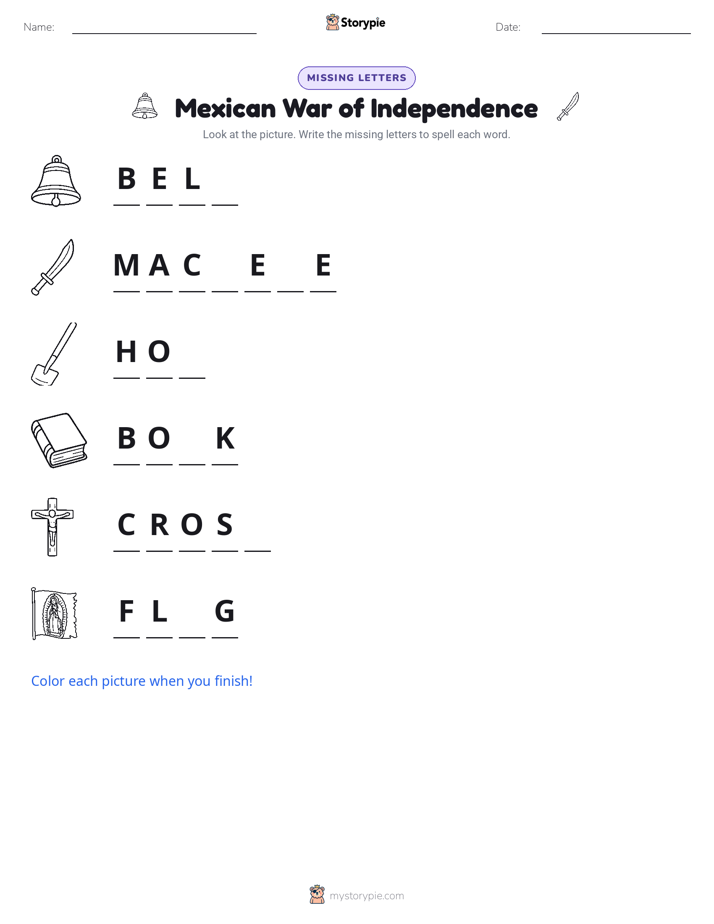
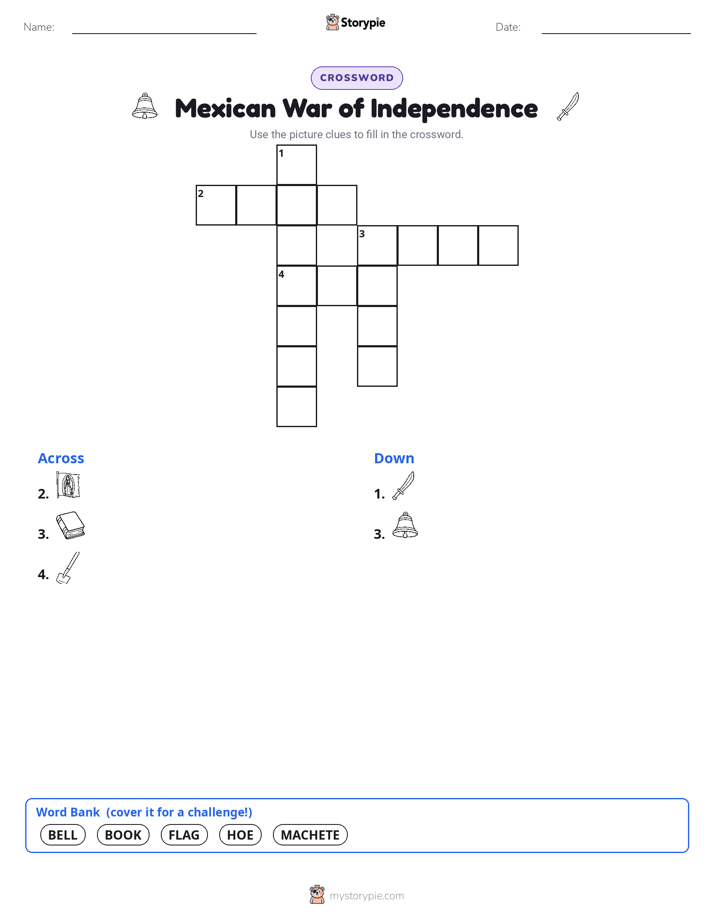
The days and weeks that followed were a whirlwind of hope, struggle, and immense sadness. Our army grew with every town we passed, swelling to tens of thousands of people. Most were not trained soldiers. They were men and women, young and old, armed with farming tools like machetes and hoes, sticks, and an unshakeable courage. We marched across the country, and our sheer numbers and passion led to early victories. We took important cities like Celaya and Guanajuato. With each success, the belief that we could truly defeat the Spanish army grew stronger. The feeling of seeing people who had known only oppression stand up for their rights was one of the greatest joys of my life. However, the path of war is never easy. Our army was vast but undisciplined, and the violence that erupted was often chaotic and difficult to control, which brought me great sorrow. We faced the trained and well-equipped Spanish royalist army, and the fighting was brutal. We won battles, but we also suffered terrible defeats. In the end, our momentum stalled. On March 21st, 1811, my allies and I were betrayed and captured at the Wells of Baján. My time as a leader of the rebellion was over. I was put on trial and, as I had always known was possible, I was executed. But as I faced my end, I did not feel that I had failed. I knew that the Cry of Dolores had awakened the spirit of Mexico. The fight was not over; it had only just begun. I had passed the torch to other brave leaders, like my former student, José María Morelos, who would carry on the struggle for freedom with great skill and dedication.
Though my own life ended in 1811, my spirit watched as the seeds of revolution I had planted grew into a mighty tree. The war for independence was a long and difficult struggle, lasting for ten more years after my death. Many brave men and women continued the fight, inspired by the dream we had shared in my small church in Dolores. Leaders like Vicente Guerrero and Guadalupe Victoria refused to surrender, keeping the flame of liberty alive through years of hardship. Finally, the moment we had all longed for arrived. On August 24th, 1821, the Treaty of Córdoba was signed, officially recognizing Mexico as an independent nation, completely free from Spanish rule. The fight was over. A new nation was born. My role was to be the spark, the voice that dared to cry out for freedom in the dark. I learned that one person's courage can inspire thousands, and that an idea, once it takes root in the hearts of the people, can never truly be defeated. The story of Mexico's birth is a reminder that even when the path is difficult and the outcome uncertain, standing up for what is right has the power to change the world. Cherish the freedom you have, for it was won with great sacrifice, and never forget the power of your own voice to speak for justice.
Wow facts
About
The Mexican War of Independence was an armed conflict that ended the rule of Spain over the territory of New Spain in 1821. Lasting over a decade, the struggle began with the 'Grito de Dolores' by Miguel Hidalgo y Costilla and led to the creation of the sovereign nation of Mexico.
Take a Quiz
Question 1 of 5
In your own words, describe the key events that happened from the moment Miguel Hidalgo rang the church bells to his capture.
Explore next




Want to do even more?
Go beyond exploring. Unlock tools that turn every story into real learning.

Storypie Plus for families
Full stories, quizzes, and printables. Nights and car rides, sorted.
- Unlimited audio stories
- Create Mode: your child stars in the story
- Offline downloads
- Printable worksheets & coloring pages

Why Storypie for Schools
Students engaged. Prep in seconds. Evenings back to you.
- Worksheets & Quizzes
- Classroom Management
- Formative Assessment
- Custom Curriculum & Lesson Plans
- 27 Languages

Why Storypie for Homeschool
Curriculum done. They'll ask for more. Hours back in your day.
- Worksheet Generator
- First-Person Audio Stories
- Built-in Comprehension Quizzes
- Custom Curriculum & Lesson Plans
- Print & Go Activities