English

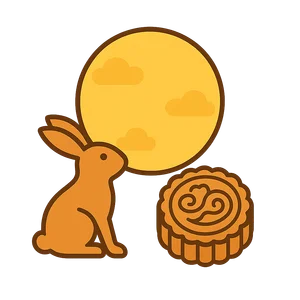
Mid-Autumn Festival
A traditional harvest festival celebrated in Chinese culture and other East and Southeast Asian countries.
Reads at Grades 6–8 Listens at Grades 4–8
Print & create
Answer keys·No prep·Free with an account
28 worksheets · answer keys · full story · quiz · Ages 10-12 · CEFR B2
Plus adds 164,000+ more stories in 27 languages, audio for every one, and printables for all of them.
Just want Mid-Autumn Festival?
Greetings from Chang'an, the heart of the Great Tang Dynasty. My name is Wei, and I have the distinct honor of serving as a poet in the imperial court of our wise Emperor Xuanzong. The air in our grand capital is electric with anticipation. Silks of every color flutter in the marketplace, and the scent of roasting chestnuts and sweet pastries hangs in the air. This is because the 15th day of the 8th lunar month is nearly upon us. We call this night Zhongqiu Jie, the Mid-Autumn Festival. For generations, my people have celebrated this day. It marks the middle of autumn, when the moon is at its fullest and most brilliant. It is a time to give thanks for the abundance of the summer harvest—the rice, the wheat, the fruits that will sustain us through the winter. Long before our dynasty, farmers would gaze at that perfect silver orb in the sky and pray for a bountiful year. Now, that ancient tradition has blossomed into a magnificent celebration of family, gratitude, and the timeless beauty of the moon. All across the empire, from the humblest village to the sprawling palace grounds where I stand, families prepare to gather. They travel for days, crossing rivers and mountains, just to be together on this one special night, sharing a meal under the light of the same moon that connects us all.
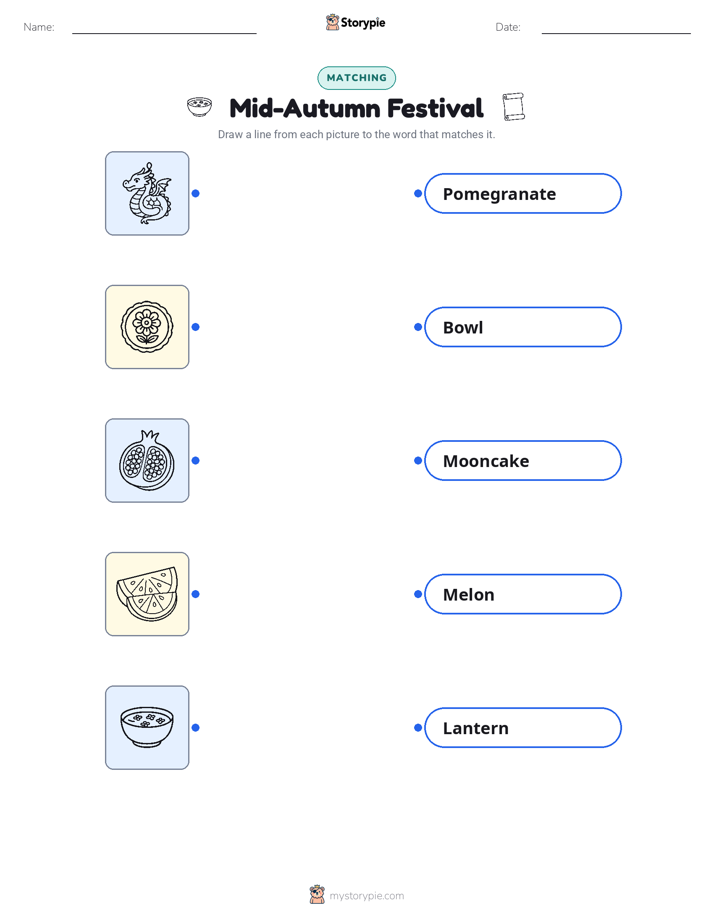
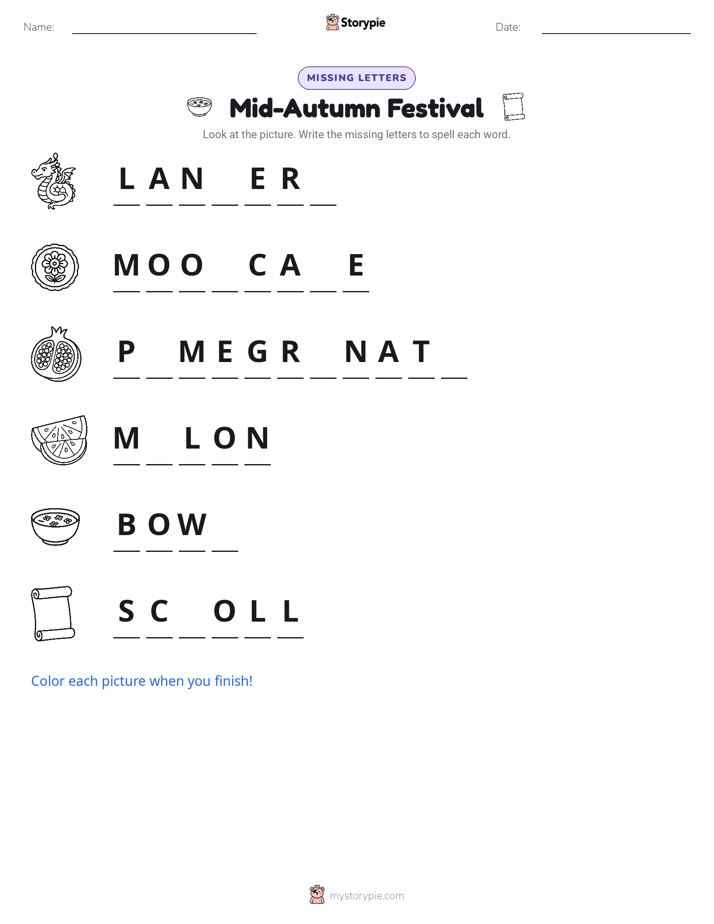
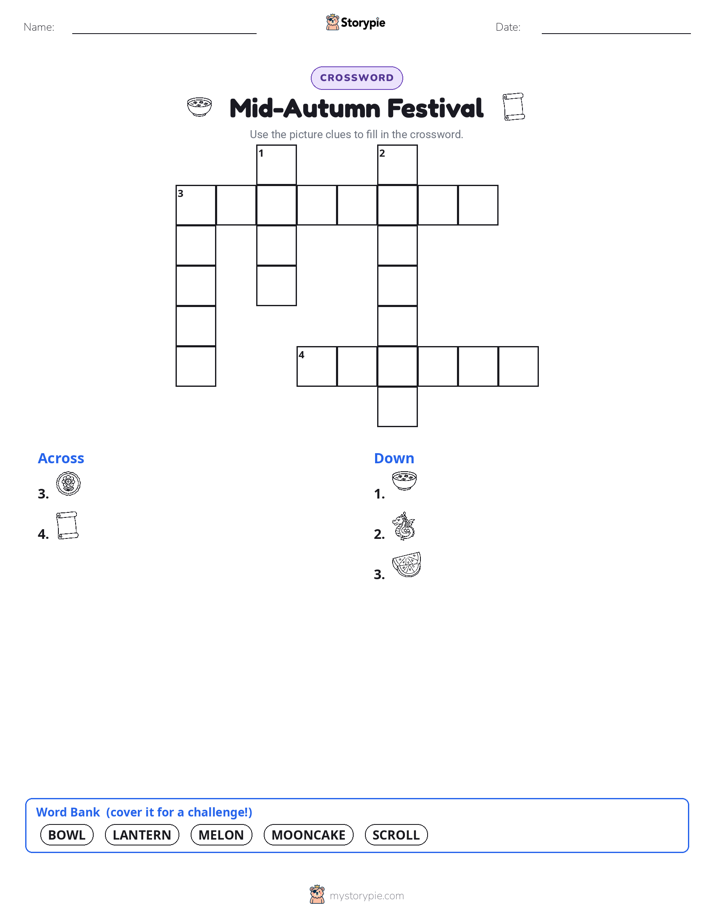
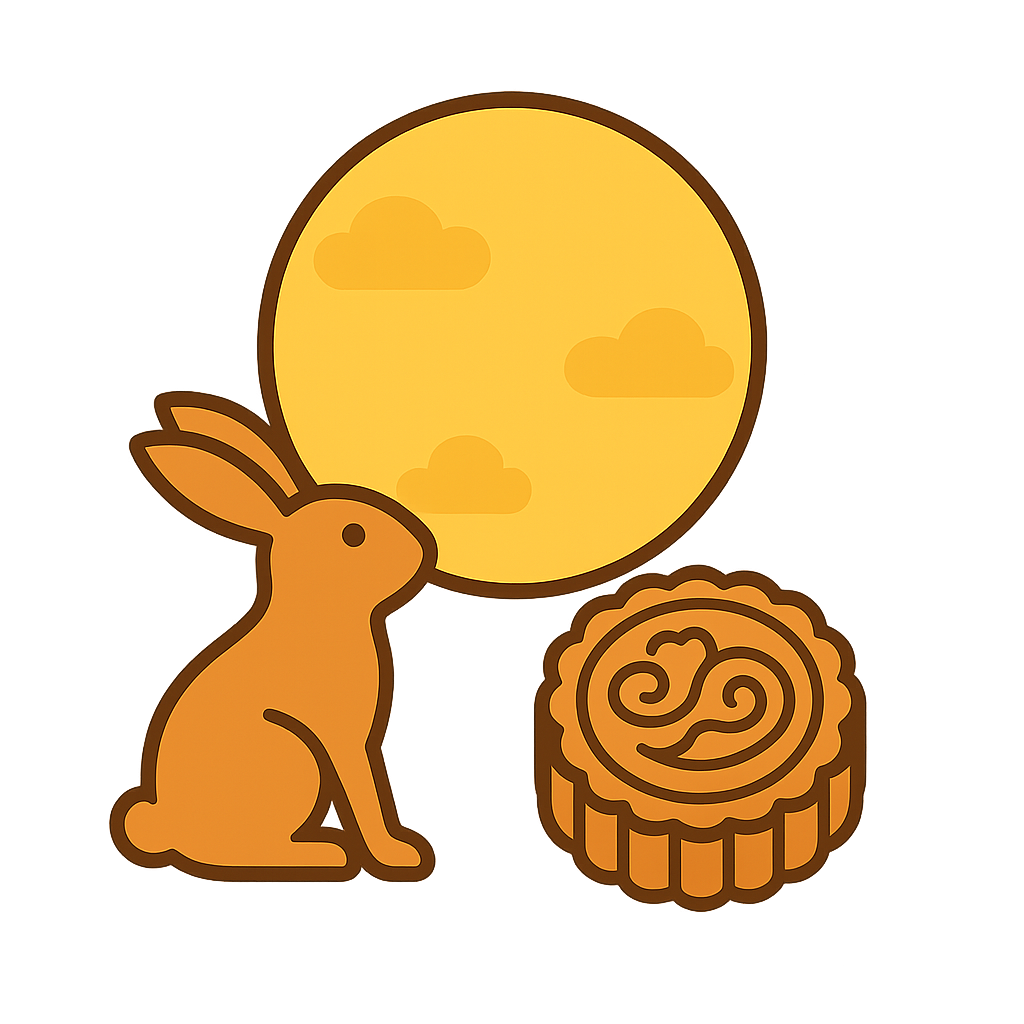
On the night of the festival, the imperial palace is transformed into a world of pure magic. Thousands of silk lanterns, crafted in the shapes of dragons, fish, and phoenixes, cast a warm, gentle glow upon the stone pathways and tranquil gardens. In the center of the royal courtyard, a grand feast is laid out on long tables. But the most important offerings are placed on altars facing east, to greet the rising moon. Sliced pomegranates, round melons, and stacks of delicate, round pastries called mooncakes are presented. As we gather, the court storytellers share the legend of Chang'e, the Moon Goddess. They tell us of the heroic archer, Hou Yi, who saved the world by shooting down nine of the ten suns that were scorching the earth. As a reward, he was given an elixir of immortality. But a greedy apprentice tried to steal it. To protect the elixir, Hou Yi's wife, the beautiful Chang'e, drank it herself. Her body became weightless, and she floated up, up, up into the sky until she landed on the moon. There she remains, a symbol of grace and sacrifice, with only a Jade Rabbit for a companion. We eat the mooncakes in her honor. Their round shape symbolizes the full moon and, more importantly, the completeness of a family gathered together. Each cake is a work of art, pressed with intricate designs of flowers or characters for 'harmony.' The fillings are a sweet surprise—some with lotus seed paste, others with red bean or a salted egg yolk in the center, representing the moon itself. We sip fragrant osmanthus wine and recite poetry, our words carried on the cool night air as we gaze at Chang'e's celestial home.
A Poet's Mid-Autumn Night
Greetings from Chang'an, the heart of the Great Tang Dynasty. My name is Wei, and I have the distinct honor of serving as a poet in the imperial court of our wise Emperor Xuanzong. The air in our grand capital is electric with anticipation. Silks of every color flutter in the marketplace, and the scent of roasting chestnuts and sweet pastries hangs in the air. This is because the 15th day of the 8th lunar month is nearly upon us. We call this night Zhongqiu Jie, the Mid-Autumn Festival. For generations, my people have celebrated this day. It marks the middle of autumn, when the moon is at its fullest and most brilliant. It is a time to give thanks for the abundance of the summer harvest—the rice, the wheat, the fruits that will sustain us through the winter. Long before our dynasty, farmers would gaze at that perfect silver orb in the sky and pray for a bountiful year. Now, that ancient tradition has blossomed into a magnificent celebration of family, gratitude, and the timeless beauty of the moon. All across the empire, from the humblest village to the sprawling palace grounds where I stand, families prepare to gather. They travel for days, crossing rivers and mountains, just to be together on this one special night, sharing a meal under the light of the same moon that connects us all.
On the night of the festival, the imperial palace is transformed into a world of pure magic. Thousands of silk lanterns, crafted in the shapes of dragons, fish, and phoenixes, cast a warm, gentle glow upon the stone pathways and tranquil gardens. In the center of the royal courtyard, a grand feast is laid out on long tables. But the most important offerings are placed on altars facing east, to greet the rising moon. Sliced pomegranates, round melons, and stacks of delicate, round pastries called mooncakes are presented. As we gather, the court storytellers share the legend of Chang'e, the Moon Goddess. They tell us of the heroic archer, Hou Yi, who saved the world by shooting down nine of the ten suns that were scorching the earth. As a reward, he was given an elixir of immortality. But a greedy apprentice tried to steal it. To protect the elixir, Hou Yi's wife, the beautiful Chang'e, drank it herself. Her body became weightless, and she floated up, up, up into the sky until she landed on the moon. There she remains, a symbol of grace and sacrifice, with only a Jade Rabbit for a companion. We eat the mooncakes in her honor. Their round shape symbolizes the full moon and, more importantly, the completeness of a family gathered together. Each cake is a work of art, pressed with intricate designs of flowers or characters for 'harmony.' The fillings are a sweet surprise—some with lotus seed paste, others with red bean or a salted egg yolk in the center, representing the moon itself. We sip fragrant osmanthus wine and recite poetry, our words carried on the cool night air as we gaze at Chang'e's celestial home.
But this festival of peace and family holds other stories, whispers I have heard from merchants who travel the long roads, tales of a time yet to come. They speak of a future dynasty, the Yuan, when our lands will be under the rule of Mongol conquerors. In this future time, our people will yearn for freedom, but the rulers will watch them so closely that planning a rebellion will seem impossible. How could they coordinate an uprising across the entire empire without being discovered? The legend says the answer was baked into the very mooncakes we enjoy tonight. The brilliant rebel leader, Zhu Yuanzhang, and his advisor, Liu Bowen, devised a clever plan. They received permission to distribute thousands of mooncakes to the Chinese citizens as a blessing to celebrate the festival. But hidden inside each cake was a secret message on a small piece of paper. The message was simple and powerful: 'Uprise on the 15th day of the 8th lunar month.' When the night of the Mid-Autumn Festival arrived, families broke open their cakes, found the hidden notes, and a massive, coordinated rebellion was launched. In this tale, the symbol of family unity became a symbol of a nation's unity, a delicious and daring act of defiance that helped restore our people's freedom.
As I stand here tonight, centuries before that fabled rebellion, the moon I see is the same one that will one day illuminate that act of courage. It is the same moon that watched over the ancient farmers and the goddess Chang'e. It reminds me that while our traditions may evolve, their heart remains the same. Whether a mooncake holds a sweet filling or a secret call for freedom, its roundness always speaks of togetherness. I look up at its perfect, silver face and think of my own family, many miles from the capital, looking at this very same moon. And I hope that you, reading my words so many years from now, will step outside on a clear autumn night. When you look up, know that you are looking at the same celestial body that I see. It has watched over emperors and poets, families and rebels. It is a timeless reminder that no matter how far apart we are, or what challenges we face, we are all connected under its gentle, unchanging light.
Wow facts
About
A traditional harvest festival celebrated in Chinese culture and other East and Southeast Asian countries. It is held on the 15th day of the 8th month of the Chinese lunisolar calendar with a full moon at night, celebrating family reunion and thanksgiving.
Take a Quiz
Question 1 of 5
Summarize the main idea of this story in one or two sentences.
Explore next



Want to do even more?
Go beyond exploring. Unlock tools that turn every story into real learning.

Storypie Plus for families
Full stories, quizzes, and printables. Nights and car rides, sorted.
- Unlimited audio stories
- Create Mode: your child stars in the story
- Offline downloads
- Printable worksheets & coloring pages

Why Storypie for Schools
Students engaged. Prep in seconds. Evenings back to you.
- Worksheets & Quizzes
- Classroom Management
- Formative Assessment
- Custom Curriculum & Lesson Plans
- 27 Languages

Why Storypie for Homeschool
Curriculum done. They'll ask for more. Hours back in your day.
- Worksheet Generator
- First-Person Audio Stories
- Built-in Comprehension Quizzes
- Custom Curriculum & Lesson Plans
- Print & Go Activities