English

Ming Dynasty
The Ming Dynasty was an imperial dynasty of China, ruling from 1368 to 1644.
Reads at Grades 6–8 Listens at Grades 4–8
Print & create
Answer keys·No prep·Free with an account
28 worksheets · answer keys · full story · quiz · Ages 10-12 · CEFR B2
Plus adds 102,000+ more stories in 27 languages, audio for every one, and printables for all of them.
Just want Ming Dynasty?
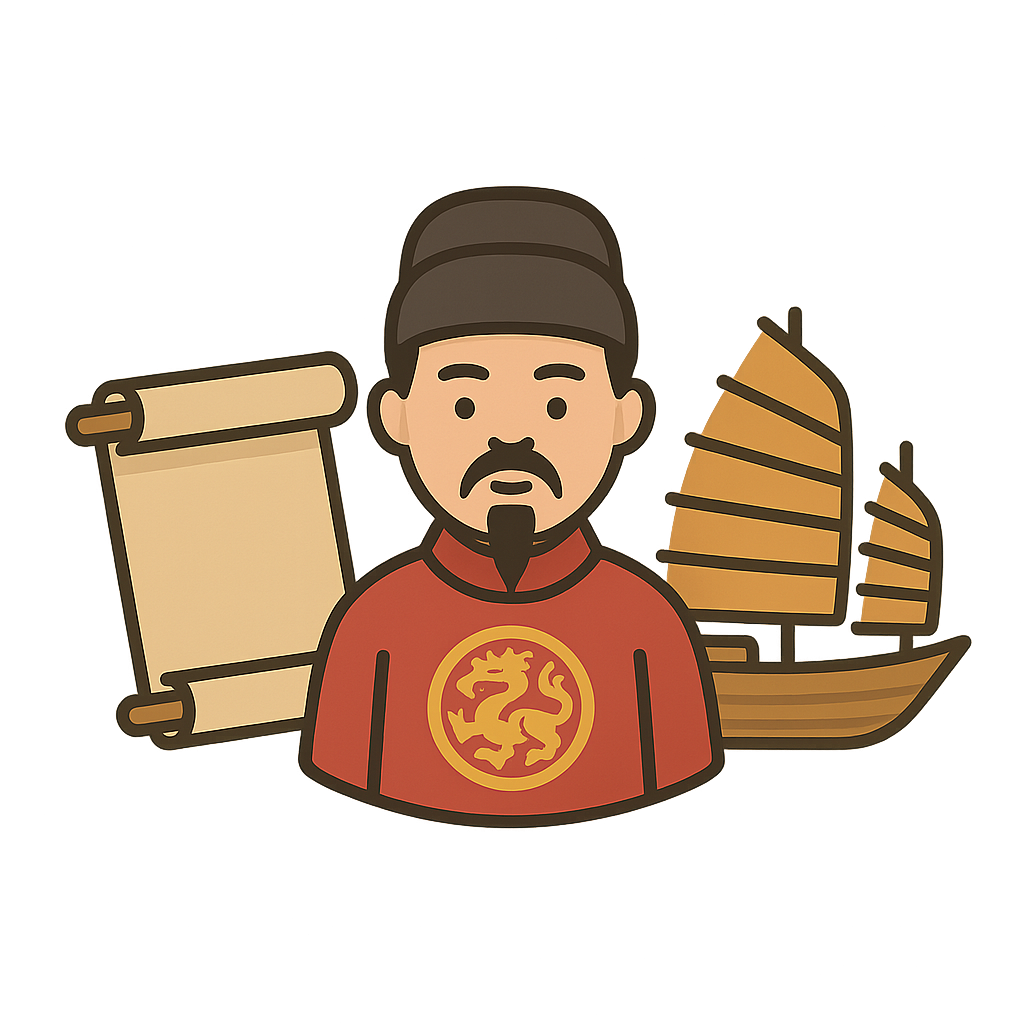
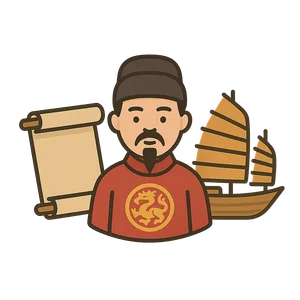
My name is Zhu Yuanzhang, though the world would come to know me by another name. My story does not begin in a palace, surrounded by silk and scholars. It begins in the dirt of a poor farming village in eastern China during the 14th century. I was born in 1328, under the rule of the Yuan Dynasty, which was founded by the Mongol conquerors. For many of us, the Han Chinese people, it was a time of great hardship. Our rulers seemed distant, and nature itself felt like an enemy. The great Yellow River would often flood, destroying the crops we depended on for survival, and famines were a constant shadow over our lives. I grew up knowing the sharp pain of an empty stomach and the fear that came with a failed harvest. Then, in the year 1344, a disaster worse than any flood or famine struck my village. A terrible plague swept through, and in a matter of weeks, it stole everything from me. I watched, helpless, as it took my father, my mother, and my older brothers. At sixteen years old, I was left an orphan, with nothing but the clothes on my back and a heart full of grief. I sought refuge in a Buddhist monastery, but even there, food was scarce. The feeling of unrest was everywhere, a low rumble of anger and desperation. People whispered that the Mongol emperors had lost the 'Mandate of Heaven,' the divine right to rule, proven by the endless disasters. It was in this world of sorrow and suffering that I joined a group of rebels known as the Red Turbans in 1352. I was no longer just a boy seeking survival; I was a young man who believed we had to fight for a better future.
The Rise of the Brilliant Dynasty
My name is Zhu Yuanzhang, though the world would come to know me by another name. My story does not begin in a palace, surrounded by silk and scholars. It begins in the dirt of a poor farming village in eastern China during the 14th century. I was born in 1328, under the rule of the Yuan Dynasty, which was founded by the Mongol conquerors. For many of us, the Han Chinese people, it was a time of great hardship. Our rulers seemed distant, and nature itself felt like an enemy. The great Yellow River would often flood, destroying the crops we depended on for survival, and famines were a constant shadow over our lives. I grew up knowing the sharp pain of an empty stomach and the fear that came with a failed harvest. Then, in the year 1344, a disaster worse than any flood or famine struck my village. A terrible plague swept through, and in a matter of weeks, it stole everything from me. I watched, helpless, as it took my father, my mother, and my older brothers. At sixteen years old, I was left an orphan, with nothing but the clothes on my back and a heart full of grief. I sought refuge in a Buddhist monastery, but even there, food was scarce. The feeling of unrest was everywhere, a low rumble of anger and desperation. People whispered that the Mongol emperors had lost the 'Mandate of Heaven,' the divine right to rule, proven by the endless disasters. It was in this world of sorrow and suffering that I joined a group of rebels known as the Red Turbans in 1352. I was no longer just a boy seeking survival; I was a young man who believed we had to fight for a better future.
I began my life as a rebel as a simple soldier, but I quickly learned that a sharp mind was as powerful as a sharp sword. While others fought with brute force, I studied our enemies, observed their movements, and learned to anticipate their strategies. I earned the respect of my fellow soldiers not by shouting the loudest, but by leading with courage and ensuring they were cared for. A leader who does not value his people is not a leader at all. My reputation grew, and soon I was commanding my own forces. My first great challenge and greatest opportunity came in 1356. I saw that to truly build a new China, we needed a strong, stable base of operations, a capital from which we could govern justly. My eyes fell upon the strategic city of Jiqing, on the banks of the Yangtze River. After a fierce battle, my forces captured it. I renamed it Nanjing, the 'Southern Capital,' and it became the heart of our growing movement. The years that followed were a long and difficult struggle. From 1356 to 1368, China was a fractured land. I was not only fighting the armies of the Yuan Dynasty, but also competing with other powerful rebel leaders who had their own ambitions. It was a time of constant warfare, but my goal was clear: to end the chaos, unite the people under one banner, and restore peace to the land. I knew this could only be done by driving the Yuan rulers out of China for good. Finally, the moment came. In the summer of 1368, I sent my most trusted general, Xu Da, on a grand campaign to the north. His target was the Yuan capital, Dadu, the city we now call Beijing. The Mongol emperor, seeing my massive army approach, fled the city. On September 14th, 1368, my forces marched into Dadu, marking the end of the Yuan Dynasty's rule over China. Earlier that year, on January 23rd, 1368, standing before my officials and generals in my capital of Nanjing, I had already declared the founding of a new dynasty. A new era for our people had begun.
I was no longer Zhu Yuanzhang, the peasant boy. I took the reign title 'Hongwu,' meaning 'Vastly Martial,' and became the first emperor of our new dynasty. I chose to name our dynasty the 'Ming.' In our language, Ming means 'brilliant,' and that is what I wanted for our nation: a brilliant light after decades of darkness and suffering. My work was far from over; in fact, the hardest part had just begun. The country was scarred by years of war, and the people were weary. As emperor, my first duty was to them. I introduced policies to help poor farmers, giving them land and lowering their taxes so they could rebuild their lives. I created a comprehensive and fair code of laws, known as the 'Da Ming Lü,' so that justice would apply to everyone, not just the powerful. I also reformed the government, determined to root out corruption and ensure that my officials served the people honorably. I laid the foundation for a dynasty that would last for nearly 300 years. The Ming Dynasty would go on to build the magnificent Forbidden City in our new capital and send Admiral Zheng He's treasure fleets across the oceans to explore the world. These incredible achievements were built upon the strong, stable, and prosperous China we fought so hard to create. My life is a testament to the idea that where you begin does not determine where you will end. A humble boy from a starving village can rise to lead a nation, all through courage, perseverance, and a deep and abiding desire to bring a 'brilliant' light to the world.
Wow facts
About
The Ming Dynasty was an imperial dynasty of China, ruling from 1368 to 1644. It was founded by the Hongwu Emperor after the collapse of the Mongol-led Yuan Dynasty and is remembered for its cultural achievements, major construction projects, and maritime exploration.
Take a Quiz
Question 1 of 5
In your own words, describe the main events of Zhu Yuanzhang's life from his youth until he became emperor.
Explore next




Want to do even more?
Go beyond exploring. Unlock tools that turn every story into real learning.

Storypie Plus for families
Full stories, quizzes, and printables. Nights and car rides, sorted.
- Unlimited audio stories
- Create Mode: your child stars in the story
- Offline downloads
- Printable worksheets & coloring pages

Why Storypie for Schools
Students engaged. Prep in seconds. Evenings back to you.
- Worksheets & Quizzes
- Classroom Management
- Formative Assessment
- Custom Curriculum & Lesson Plans
- 27 Languages

Why Storypie for Homeschool
Curriculum done. They'll ask for more. Hours back in your day.
- Worksheet Generator
- First-Person Audio Stories
- Built-in Comprehension Quizzes
- Custom Curriculum & Lesson Plans
- Print & Go Activities