English


Monarch Butterfly Migration
The decades-long scientific quest led by Dr.
Reads at Grades 3–5 Listens at Grades 1–5
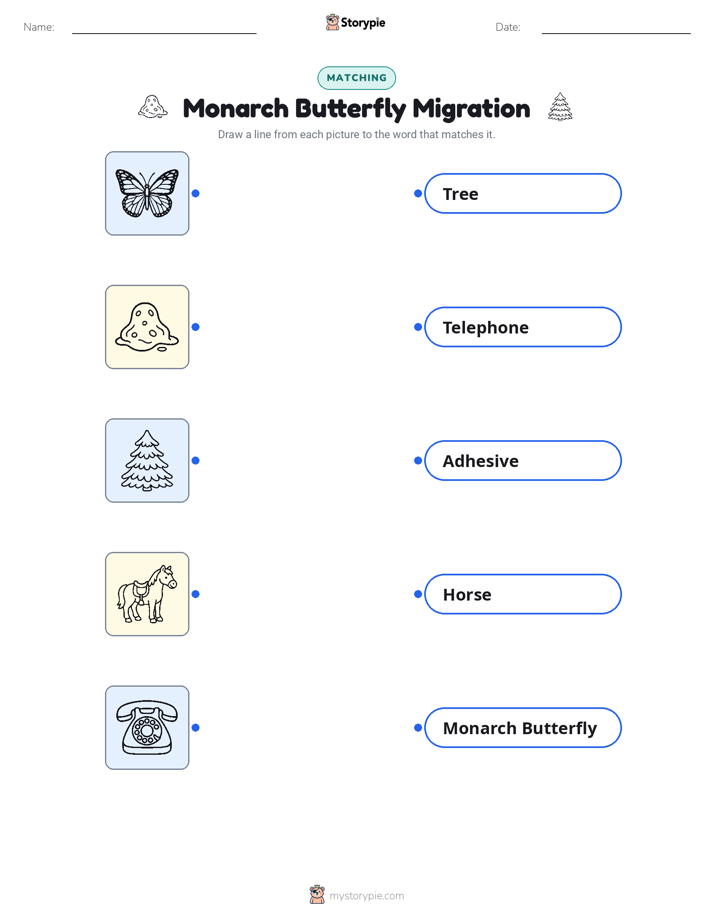
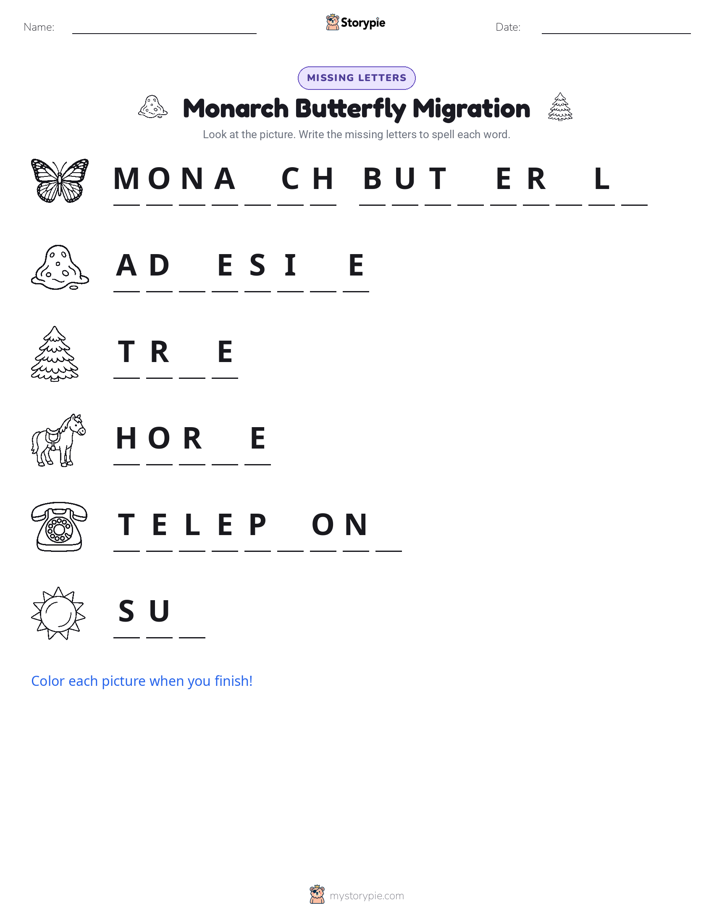
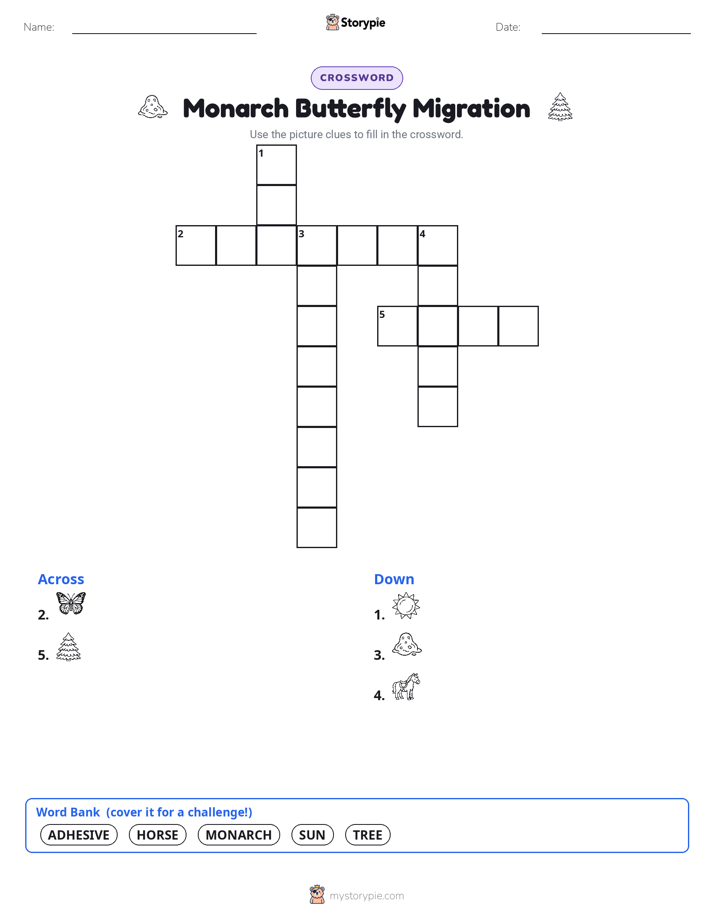
Print & create
Answer keys·No prep·Free with an account
28 worksheets · answer keys · full story · quiz · Ages 8-10 · CEFR B1
Plus adds 102,000+ more stories in 27 languages, audio for every one, and printables for all of them.
Just want Monarch Butterfly Migration?

Hello there. My name is Dr. Fred Urquhart, and I’d like to tell you a story about a question that buzzed in my head for my entire life. When I was just a boy, I was fascinated by monarch butterflies. Their wings were like tiny stained-glass windows, orange and black, fluttering through the summer air. But every autumn, they would disappear. All of them. Where did they go. It was a giant mystery, and nobody seemed to have the answer. That question followed me as I grew up, went to university, and became a scientist. My wonderful wife, Norah, was just as curious as I was. We talked about it all the time. Starting in the 1940s, we decided we wouldn't just wonder anymore. We were going to dedicate our lives to solving this puzzle. We wanted to follow the monarchs and discover their secret winter hideaway. It felt like an impossible task. Following a tiny insect across an entire continent seemed like trying to find one specific grain of sand on a huge beach. But we were determined. The mystery was too exciting to ignore, and we knew that if we could solve it, we would learn something incredible about the natural world.
Our biggest challenge was figuring out how to track something so small and delicate. You can’t put a heavy radio collar on a butterfly. After much thought, Norah and I came up with an idea that seemed a little crazy at the time. We designed a tiny, feather-light tag that could be gently stuck to a monarch’s wing. The tag was like a miniature license plate, and it read, “Send to Zoology University Toronto Canada.” We hoped that if someone found a tagged butterfly, they would mail it back to us, telling us where and when they found it. But Norah and I couldn't tag millions of butterflies by ourselves. We needed help. So, we asked everyday people to join our team. We wrote articles in magazines and gave talks, inviting families, teachers, and students to become our “citizen scientists,” or as I liked to call them, our “butterfly detectives.” Thousands of people answered our call. They became our eyes and ears all across North America. For nearly forty years, this army of volunteers carefully caught monarchs, placed the tiny tags on their wings, and let them go. Every time a tag was returned, it was a thrilling moment. It was another piece of the puzzle. Slowly, like connecting dots on a giant map, the migration path began to appear. We saw that the butterflies were flying south, heading toward Mexico. We were getting closer, but the final destination was still a secret.
The Mystery of the Monarchs
Hello there. My name is Dr. Fred Urquhart, and I’d like to tell you a story about a question that buzzed in my head for my entire life. When I was just a boy, I was fascinated by monarch butterflies. Their wings were like tiny stained-glass windows, orange and black, fluttering through the summer air. But every autumn, they would disappear. All of them. Where did they go. It was a giant mystery, and nobody seemed to have the answer. That question followed me as I grew up, went to university, and became a scientist. My wonderful wife, Norah, was just as curious as I was. We talked about it all the time. Starting in the 1940s, we decided we wouldn't just wonder anymore. We were going to dedicate our lives to solving this puzzle. We wanted to follow the monarchs and discover their secret winter hideaway. It felt like an impossible task. Following a tiny insect across an entire continent seemed like trying to find one specific grain of sand on a huge beach. But we were determined. The mystery was too exciting to ignore, and we knew that if we could solve it, we would learn something incredible about the natural world.
Our biggest challenge was figuring out how to track something so small and delicate. You can’t put a heavy radio collar on a butterfly. After much thought, Norah and I came up with an idea that seemed a little crazy at the time. We designed a tiny, feather-light tag that could be gently stuck to a monarch’s wing. The tag was like a miniature license plate, and it read, “Send to Zoology University Toronto Canada.” We hoped that if someone found a tagged butterfly, they would mail it back to us, telling us where and when they found it. But Norah and I couldn't tag millions of butterflies by ourselves. We needed help. So, we asked everyday people to join our team. We wrote articles in magazines and gave talks, inviting families, teachers, and students to become our “citizen scientists,” or as I liked to call them, our “butterfly detectives.” Thousands of people answered our call. They became our eyes and ears all across North America. For nearly forty years, this army of volunteers carefully caught monarchs, placed the tiny tags on their wings, and let them go. Every time a tag was returned, it was a thrilling moment. It was another piece of the puzzle. Slowly, like connecting dots on a giant map, the migration path began to appear. We saw that the butterflies were flying south, heading toward Mexico. We were getting closer, but the final destination was still a secret.
Then, in 1975, we received the call we had been waiting for. Two of our volunteers in Mexico, Ken Brugger and Catalina Trail, had followed the butterflies deep into the mountains. They had found it. They had found the secret place. Norah and I could hardly believe it. We had to see it for ourselves. On January 9th, 1976, we traveled to a remote mountaintop covered in oyamel fir trees. As we walked into the forest, it grew quiet, and the air felt cold. Then I looked up. I gasped. The trees weren’t green. They were blazing orange. Millions upon millions of monarch butterflies were clustered together on the branches, so many that the branches bent down from their weight. When the sun warmed them, they would all take flight at once, filling the air with the soft, rustling sound of a million tiny wings. It was more beautiful and amazing than I had ever imagined. We had solved the mystery. After a lifetime of searching, we finally knew where the monarchs went. Looking back, I realize that we didn't do it alone. It was the hard work of thousands of people, our butterfly detectives, that made this discovery possible. It taught me that even the biggest mysteries can be solved when people work together, driven by curiosity and a love for our planet’s amazing creatures.
Wow facts
About
The decades-long scientific quest led by Dr. Fred and Norah Urquhart to track the monarch butterfly's migration, culminating in the 1975 discovery of their wintering sites in the mountains of central Mexico.
Take a Quiz
Question 1 of 5
In the story, Dr. Urquhart said that finding one butterfly was like trying to find 'one specific grain of sand on a huge beach.' What does this phrase mean?
Explore next






Want to do even more?
Go beyond exploring. Unlock tools that turn every story into real learning.

Storypie Plus for families
Full stories, quizzes, and printables. Nights and car rides, sorted.
- Unlimited audio stories
- Create Mode: your child stars in the story
- Offline downloads
- Printable worksheets & coloring pages

Why Storypie for Schools
Students engaged. Prep in seconds. Evenings back to you.
- Worksheets & Quizzes
- Classroom Management
- Formative Assessment
- Custom Curriculum & Lesson Plans
- 27 Languages

Why Storypie for Homeschool
Curriculum done. They'll ask for more. Hours back in your day.
- Worksheet Generator
- First-Person Audio Stories
- Built-in Comprehension Quizzes
- Custom Curriculum & Lesson Plans
- Print & Go Activities