English

Peloponnesian War
The Peloponnesian War was a major conflict in ancient Greece fought from 431 to 404 BCE between the Athenian…
Reads at Grades 3–5 Listens at Grades 1–5
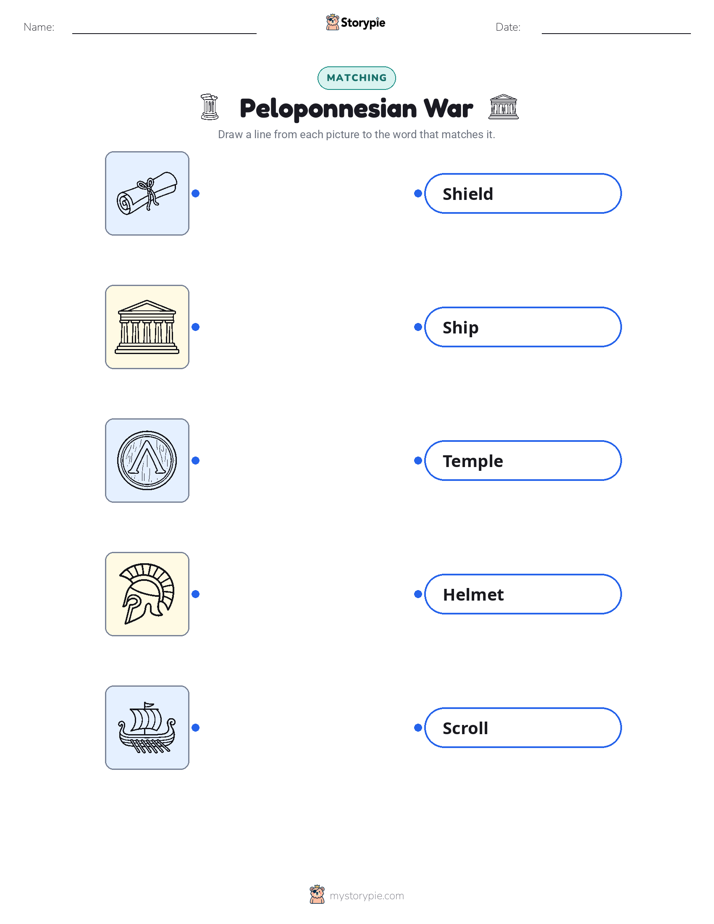
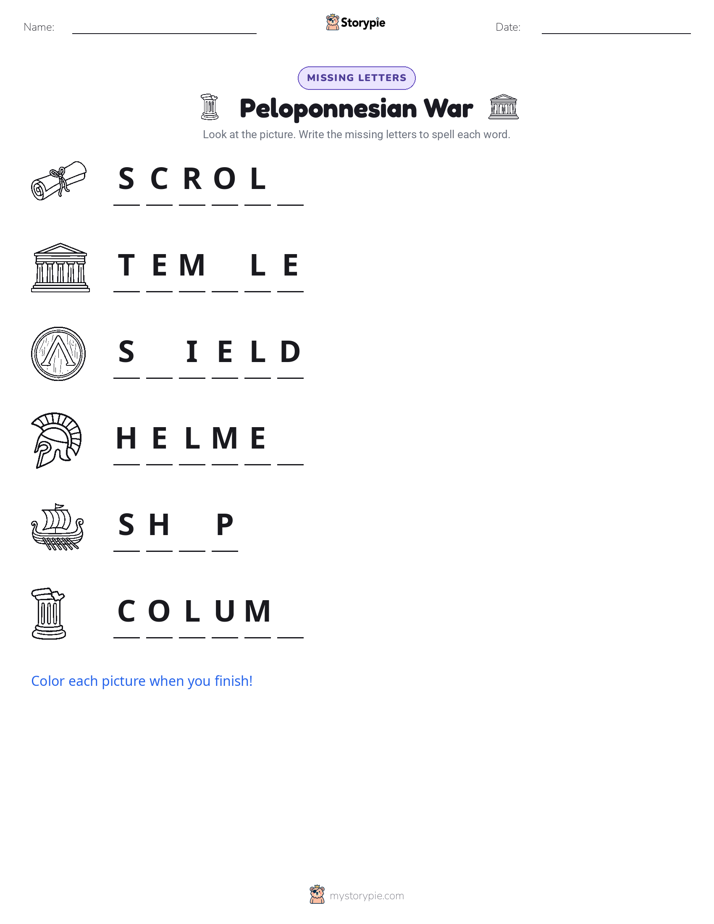
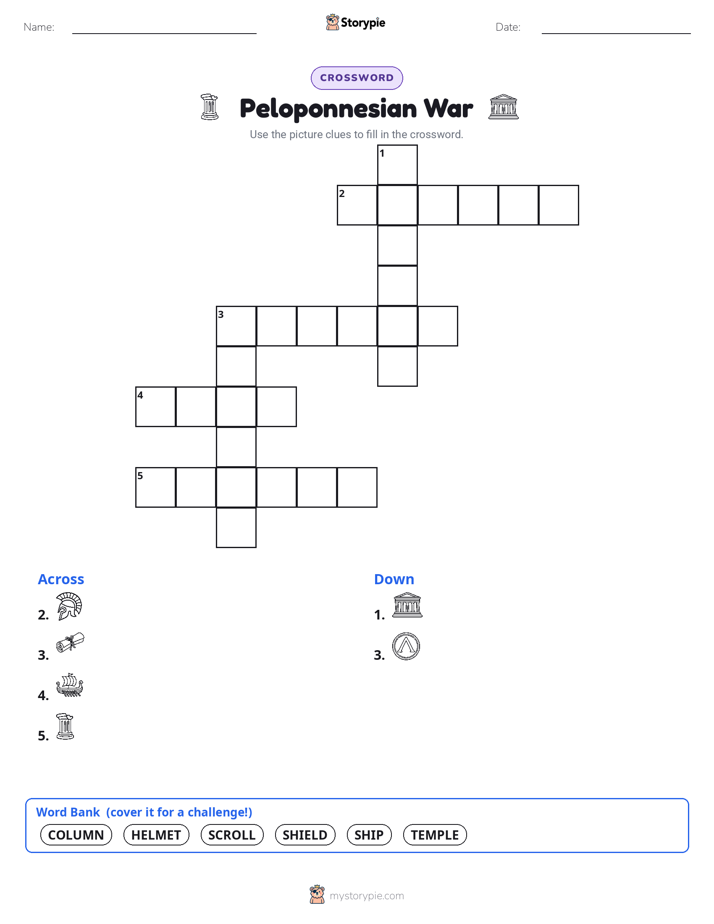
Print & create
Answer keys·No prep·Free with an account
28 worksheets · answer keys · full story · quiz · Ages 8-10 · CEFR B1
Plus adds 102,000+ more stories in 27 languages, audio for every one, and printables for all of them.
Just want Peloponnesian War?
Hello there. My name is Thucydides, and I was a general for the great city of Athens many, many years ago. My home was a wondrous place. In Athens, we believed in democracy, which meant our citizens had a voice in how we were governed. Our streets were filled with magnificent temples, lively marketplaces, and some of the most brilliant thinkers the world has ever known. I was lucky enough to call one of them, a curious man named Socrates, my friend. We loved to discuss big ideas about justice, knowledge, and courage. Our city was a beacon of art and learning. But not all of Greece was like Athens. Our greatest rival was the city-state of Sparta. The Spartans were different. They were famous warriors, trained from childhood to be the strongest and bravest soldiers in the land. While we Athenians built statues and wrote plays, the Spartans perfected their army. For a long time, our two cities watched each other carefully. But as our power and influence grew, so did Sparta's fear. They worried Athens would become too strong and try to rule all of Greece. This growing fear and mistrust, like a dark cloud, slowly gathered over our lands. By the year 431 BCE, the storm was ready to break. Our two cities, and all of our allies, stood on the brink of a terrible conflict that would be known as the Peloponnesian War.
When the war began, the Spartan army marched right into our territory, known as Attica. They were masters of land battles, and we knew we could not defeat their powerful army in an open field. So, our wise leader, Pericles, came up with a bold plan. He ordered all of our people from the countryside to come inside the city of Athens, which was protected by a set of massive walls called the 'Long Walls.' These walls stretched for miles, all the way to the sea, so our ships could continue to bring us food and supplies. From the top of the walls, we watched as the Spartans burned our farms and olive groves. It was difficult to see our beautiful lands destroyed, but we felt safe. However, our safety came at a cost. The city became incredibly crowded, with families living in makeshift shelters in every open space. Then, in 430 BCE, a new and even more terrifying enemy appeared. It was not an army we could fight with spears and shields. It was a dreadful sickness, a plague that swept through our packed city. People grew terribly ill with fevers and coughs, and thousands died. I myself caught the sickness. I remember the burning fever and the feeling of hopelessness, but somehow, I survived. Our great leader, Pericles, was not so fortunate. He died from the plague, and Athens lost its guiding voice. A few years later, I was commanding a fleet of ships as a general. When I failed in a mission, I was exiled from Athens. Though it pained me to leave my home, this exile gave me a unique chance. I could travel freely and speak to people from both sides of the war, Spartans and Athenians alike, to record the true story of what was happening.
Thucydides: A Story of the Great Peloponnesian War
Hello there. My name is Thucydides, and I was a general for the great city of Athens many, many years ago. My home was a wondrous place. In Athens, we believed in democracy, which meant our citizens had a voice in how we were governed. Our streets were filled with magnificent temples, lively marketplaces, and some of the most brilliant thinkers the world has ever known. I was lucky enough to call one of them, a curious man named Socrates, my friend. We loved to discuss big ideas about justice, knowledge, and courage. Our city was a beacon of art and learning. But not all of Greece was like Athens. Our greatest rival was the city-state of Sparta. The Spartans were different. They were famous warriors, trained from childhood to be the strongest and bravest soldiers in the land. While we Athenians built statues and wrote plays, the Spartans perfected their army. For a long time, our two cities watched each other carefully. But as our power and influence grew, so did Sparta's fear. They worried Athens would become too strong and try to rule all of Greece. This growing fear and mistrust, like a dark cloud, slowly gathered over our lands. By the year 431 BCE, the storm was ready to break. Our two cities, and all of our allies, stood on the brink of a terrible conflict that would be known as the Peloponnesian War.
When the war began, the Spartan army marched right into our territory, known as Attica. They were masters of land battles, and we knew we could not defeat their powerful army in an open field. So, our wise leader, Pericles, came up with a bold plan. He ordered all of our people from the countryside to come inside the city of Athens, which was protected by a set of massive walls called the 'Long Walls.' These walls stretched for miles, all the way to the sea, so our ships could continue to bring us food and supplies. From the top of the walls, we watched as the Spartans burned our farms and olive groves. It was difficult to see our beautiful lands destroyed, but we felt safe. However, our safety came at a cost. The city became incredibly crowded, with families living in makeshift shelters in every open space. Then, in 430 BCE, a new and even more terrifying enemy appeared. It was not an army we could fight with spears and shields. It was a dreadful sickness, a plague that swept through our packed city. People grew terribly ill with fevers and coughs, and thousands died. I myself caught the sickness. I remember the burning fever and the feeling of hopelessness, but somehow, I survived. Our great leader, Pericles, was not so fortunate. He died from the plague, and Athens lost its guiding voice. A few years later, I was commanding a fleet of ships as a general. When I failed in a mission, I was exiled from Athens. Though it pained me to leave my home, this exile gave me a unique chance. I could travel freely and speak to people from both sides of the war, Spartans and Athenians alike, to record the true story of what was happening.
The war dragged on for what felt like a lifetime—twenty-seven long and exhausting years. Both sides won great victories and suffered terrible defeats. A whole generation of young people grew up knowing nothing but conflict. Finally, in the year 404 BCE, Athens was defeated. Our navy was destroyed, our great walls were torn down, and we were forced to surrender to Sparta. The war was over, but the cost was immense for everyone. All of Greece was weakened by the endless fighting. The golden age of my city had come to an end. As I looked back on all the destruction, I knew I had to finish the work I had started during my exile. I wrote down everything I had seen and learned, not to celebrate heroes or victories, but to create an accurate record of the war. I wrote my history so that people in the future could study it and understand the true causes and consequences of war. I hoped they might learn from our mistakes—from our pride, our fear, and our refusal to seek peace until it was too late. Even though Athens lost the war and its empire, I believe our greatest contributions survived. The ideas we cherished, like democracy and the freedom to think and ask questions, did not die. They have been passed down through the centuries, inspiring people all over the world to this day.
Wow facts
About
The Peloponnesian War was a major conflict in ancient Greece fought from 431 to 404 BCE between the Athenian Empire and the Peloponnesian League, led by Sparta. The war reshaped the ancient Greek world, ending the Golden Age of Athens and leaving Athens severely weakened, while Sparta emerged as the dominant power in Greece.
Take a Quiz
Question 1 of 5
What does the word 'mistrust' mean in the sentence, 'This growing fear and mistrust...slowly gathered over our lands'?
Explore next


Want to do even more?
Go beyond exploring. Unlock tools that turn every story into real learning.

Storypie Plus for families
Full stories, quizzes, and printables. Nights and car rides, sorted.
- Unlimited audio stories
- Create Mode: your child stars in the story
- Offline downloads
- Printable worksheets & coloring pages

Why Storypie for Schools
Students engaged. Prep in seconds. Evenings back to you.
- Worksheets & Quizzes
- Classroom Management
- Formative Assessment
- Custom Curriculum & Lesson Plans
- 27 Languages

Why Storypie for Homeschool
Curriculum done. They'll ask for more. Hours back in your day.
- Worksheet Generator
- First-Person Audio Stories
- Built-in Comprehension Quizzes
- Custom Curriculum & Lesson Plans
- Print & Go Activities