English

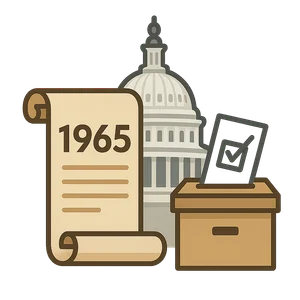
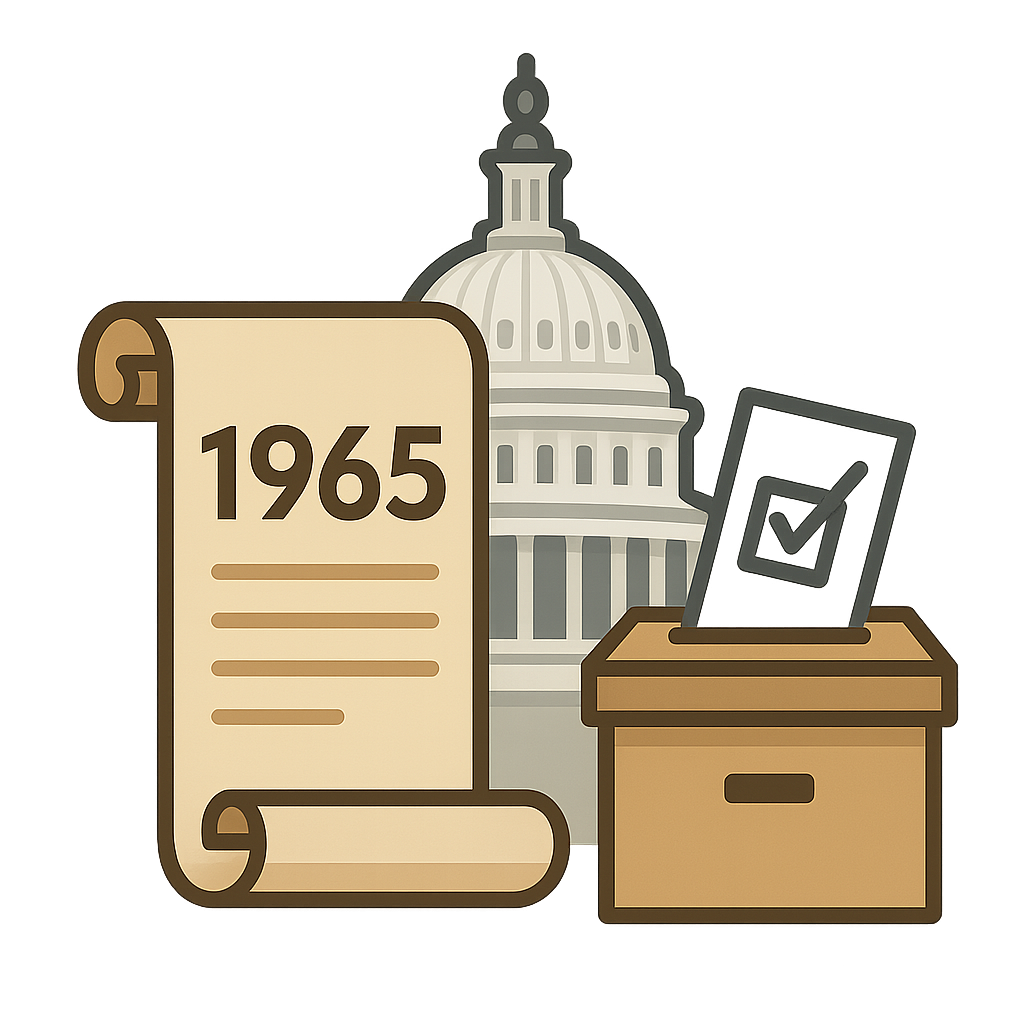
Voting Rights Act of 1965
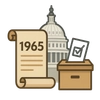
A landmark piece of United States federal legislation that prohibits racial discrimination in voting…
Reads at Grades 6–8 Listens at Grades 4–8
Print & create
Answer keys·No prep·Free with an account
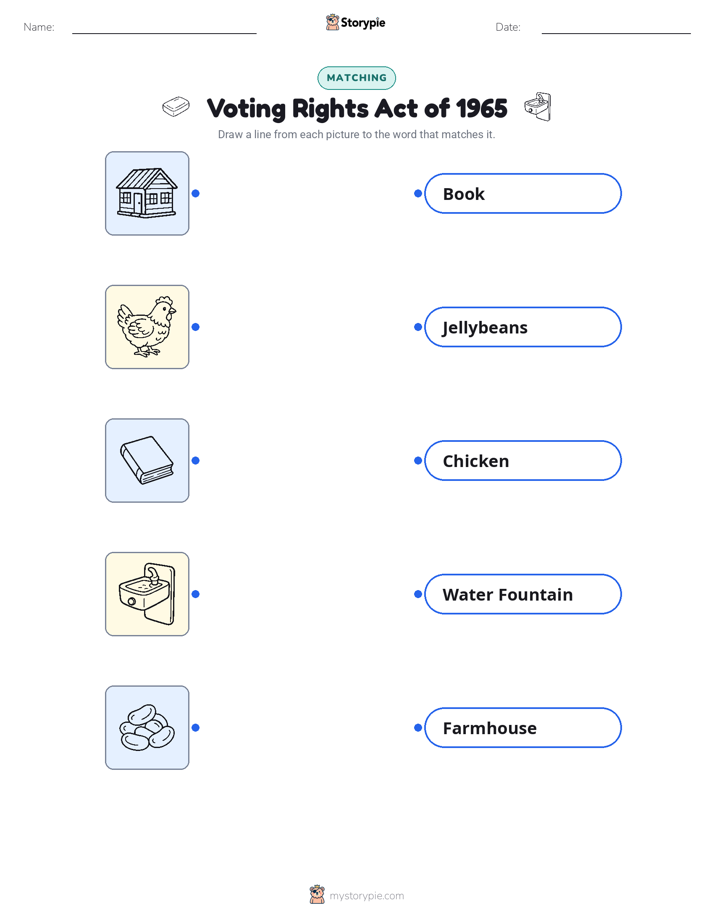
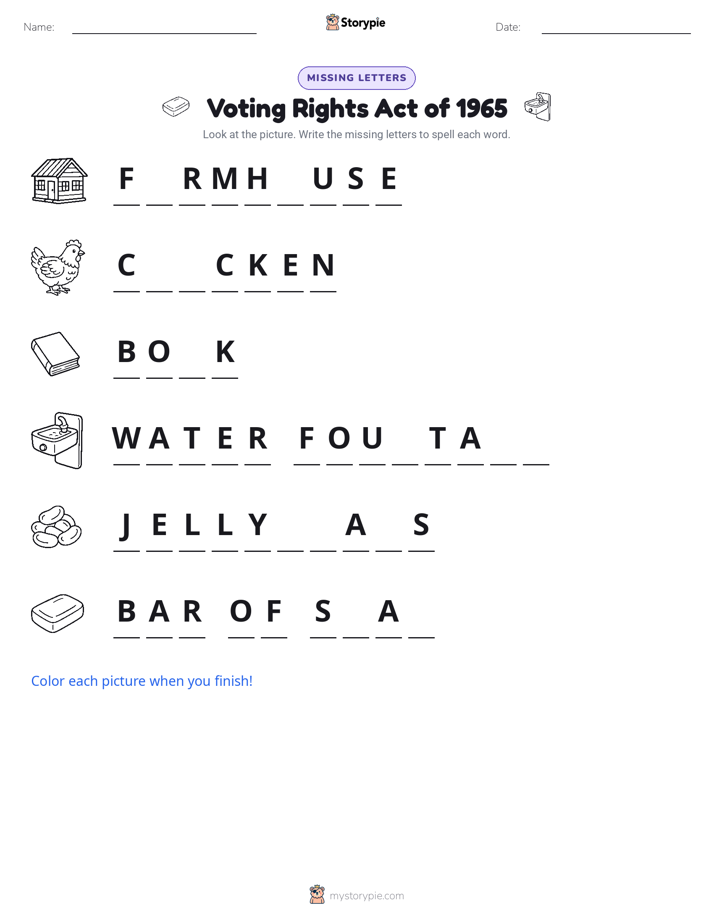
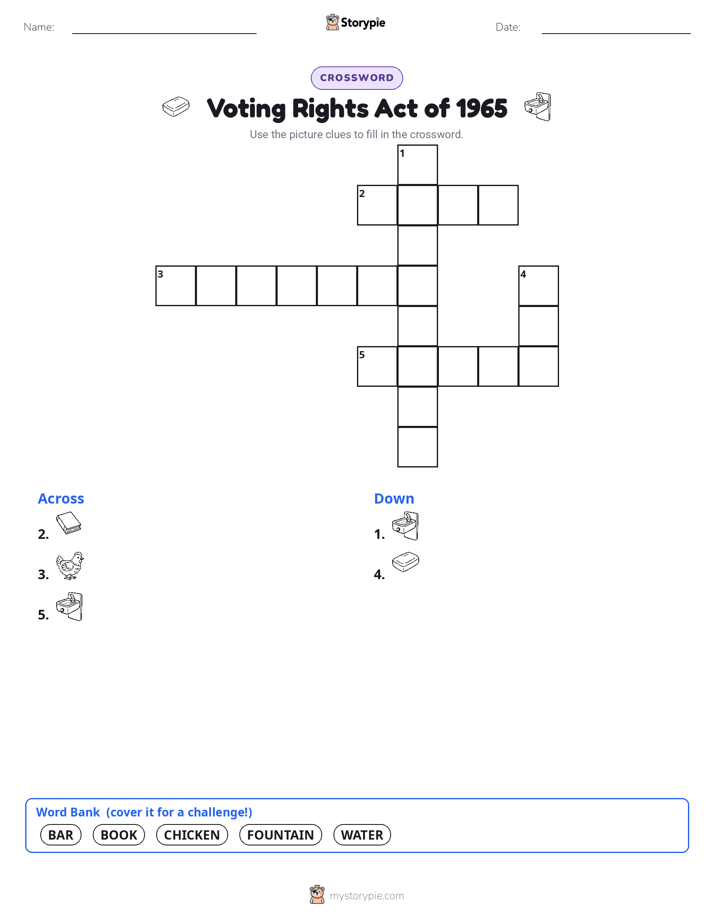
28 worksheets · answer keys · full story · quiz · Ages 10-12 · CEFR B2
Plus adds 102,000+ more stories in 27 languages, audio for every one, and printables for all of them.
Just want Voting Rights Act of 1965?
My name is John Lewis, and my story begins long ago, on a small farm near Troy, Alabama, where I grew up surrounded by my family. Even as a young boy, I felt a deep sense of fairness. I preached to our chickens, imagining a world where everyone was treated with kindness and respect. But the world outside our farm wasn't always fair. In the 1940s and 1950s, America was a place of deep division, a system called segregation meant that Black people like me were treated as less than our white neighbors. We had separate schools, separate water fountains, and separate entrances to buildings. But one of the most unjust things was that we were denied a fundamental right of every American citizen: the right to vote.
Voting is the language of democracy; it is how we tell our leaders what we need and how we shape our country's future. Yet, when Black citizens tried to register to vote, they were met with impossible barriers. There were poll taxes, which forced people to pay a fee they couldn't afford just to cast a ballot. Then there were the so-called 'literacy tests.' These weren't tests of reading at all; they were designed to be failed. An official might ask someone to guess how many jellybeans were in a jar or how many bubbles were in a bar of soap. Answering incorrectly meant you were denied your right to vote. This wasn't just unfair; it was a deliberate attempt to silence our voices. I knew this was wrong. Inspired by the powerful words of Dr. Martin Luther King Jr., who spoke of nonviolent change, I decided to dedicate my life to fighting for justice. I joined the Civil Rights Movement, believing with all my heart that securing the right to vote was the key to unlocking a better, more equal America for everyone.
Good Trouble: My Journey for the Right to Vote
My name is John Lewis, and my story begins long ago, on a small farm near Troy, Alabama, where I grew up surrounded by my family. Even as a young boy, I felt a deep sense of fairness. I preached to our chickens, imagining a world where everyone was treated with kindness and respect. But the world outside our farm wasn't always fair. In the 1940s and 1950s, America was a place of deep division, a system called segregation meant that Black people like me were treated as less than our white neighbors. We had separate schools, separate water fountains, and separate entrances to buildings. But one of the most unjust things was that we were denied a fundamental right of every American citizen: the right to vote.
Voting is the language of democracy; it is how we tell our leaders what we need and how we shape our country's future. Yet, when Black citizens tried to register to vote, they were met with impossible barriers. There were poll taxes, which forced people to pay a fee they couldn't afford just to cast a ballot. Then there were the so-called 'literacy tests.' These weren't tests of reading at all; they were designed to be failed. An official might ask someone to guess how many jellybeans were in a jar or how many bubbles were in a bar of soap. Answering incorrectly meant you were denied your right to vote. This wasn't just unfair; it was a deliberate attempt to silence our voices. I knew this was wrong. Inspired by the powerful words of Dr. Martin Luther King Jr., who spoke of nonviolent change, I decided to dedicate my life to fighting for justice. I joined the Civil Rights Movement, believing with all my heart that securing the right to vote was the key to unlocking a better, more equal America for everyone.
By 1965, our movement had gained momentum, but we knew we needed to do something dramatic to show the world the injustice we faced in the South. We decided to march the 54 miles from Selma, Alabama, to the state capitol in Montgomery to demand fair voting rights. On Sunday, March 7th, 1965, I put on my backpack, containing an apple, a toothbrush, and a book, and prepared to lead about 600 peaceful marchers. I was only 25 years old, but I felt a heavy sense of responsibility. As we walked through the streets of Selma, we were quiet and determined. Our destination was the Edmund Pettus Bridge, which spanned the Alabama River. As we reached the crest of the bridge, we saw a wall of state troopers waiting for us on the other side. They ordered us to turn back, but we were there to protest peacefully for our constitutional rights. We stood our ground, holding our heads high.
What happened next is a day that is now known as 'Bloody Sunday.' The troopers advanced, using force against us, unarmed and peaceful citizens. The air filled with chaos and fear. I was struck on the head and fell to the ground, thinking I might not survive. But what hurt far more than any physical blow was the hatred aimed at us simply for wanting to be treated as equal human beings. Unbeknownst to the troopers, television cameras were there, broadcasting the entire horrifying scene to the rest of the country. People across America sat in their living rooms and watched in shock as nonviolent protesters were attacked. They could no longer ignore the reality of what was happening in Selma. The images from that bridge created a national outcry. People from all walks of life, of all races and religions, were moved to action. They sent letters and made calls to Washington, demanding that our government protect the rights of its own people. That day on the bridge was a turning point; our pain had awakened the conscience of the nation.
In the days and weeks that followed, the pressure on President Lyndon B. Johnson and the United States Congress became immense. Our peaceful protest had shown the world the urgent need for new laws. President Johnson, who had once been hesitant, went before a joint session of Congress and delivered one of the most powerful speeches of his life. I watched on television as he declared that the cause of equal rights was a cause for all Americans. He even used the anthem of our movement, saying, 'And we shall overcome.' Hearing the President of the United States say those words brought tears to my eyes. It was a sign that our struggle was finally being recognized at the highest level of government.
A few months later, on August 6th, 1965, I was invited to Washington, D.C., to witness the signing of the Voting Rights Act. I stood in the Capitol Rotunda as President Johnson signed the bill into law, officially making all of those unfair poll taxes and literacy tests illegal. The law gave the federal government the power to oversee elections in places where discrimination had been the worst. The impact was immediate. In the years that followed, millions of Black Americans registered to vote for the first time. Our voices, which had been silenced for so long, could finally be heard in the halls of power. My journey taught me that one person, one march, one moment of courage can change the world. It is why I have always said that it is important to get into 'good trouble, necessary trouble'—to stand up and speak out against injustice wherever you see it. Your vote is your voice, and it is the most powerful nonviolent tool we have to build a better world.
Wow facts
About
A landmark piece of United States federal legislation that prohibits racial discrimination in voting, signed into law by President Lyndon B. Johnson during the height of the Civil Rights Movement.
Take a Quiz
Question 1 of 5
In your own words, summarize the events that happened on the Edmund Pettus Bridge on 'Bloody Sunday.'
Explore next



Want to do even more?
Go beyond exploring. Unlock tools that turn every story into real learning.

Storypie Plus for families
Full stories, quizzes, and printables. Nights and car rides, sorted.
- Unlimited audio stories
- Create Mode: your child stars in the story
- Offline downloads
- Printable worksheets & coloring pages

Why Storypie for Schools
Students engaged. Prep in seconds. Evenings back to you.
- Worksheets & Quizzes
- Classroom Management
- Formative Assessment
- Custom Curriculum & Lesson Plans
- 27 Languages

Why Storypie for Homeschool
Curriculum done. They'll ask for more. Hours back in your day.
- Worksheet Generator
- First-Person Audio Stories
- Built-in Comprehension Quizzes
- Custom Curriculum & Lesson Plans
- Print & Go Activities