English

All Saints' Day - Polish
A Polish national and Catholic holiday on November 1st…
Reads at Grades 3–5 Listens at Grades 1–5
Print & create
Answer keys·No prep·Free with an account
28 worksheets · answer keys · full story · quiz · Ages 8-10 · CEFR B1
Plus adds 279,000+ more stories in 27 languages, audio for every one, and printables for all of them.
Just want All Saints' Day - Polish?
I am All Saints' Day, a day of memory and reflection. In Poland, many people know me by my Polish name, Wszystkich Świętych. My date is always the same each year, arriving on the 1st of November. Because I am a public holiday in Poland, schools and most workplaces are closed. This gives families the special opportunity to pause their busy lives and come together to observe my traditions. My main purpose is to provide a quiet, dedicated time for people to remember and honor those who are no longer with them, connecting generations of family through acts of remembrance.
My history is very long, stretching back for more than a thousand years. My origins are in the Christian faith, where I was established as a day to honor all the saints. This includes the saints who are famous and whose stories are told often, but it also includes countless others who are not known by name. It is a way to recognize the goodness in many people. My observance on November 1st became official for many parts of the Christian world during the 9th century. A leader of the Catholic Church, Pope Gregory IV, made this decision, creating a single, shared day for this important act of honor and remembrance. This long history has given my traditions deep roots and meaning for the people who observe me.
In Poland, my most significant and widely practiced tradition is the visiting of cemeteries. While this might sound sad, it is a day filled with love, respect, and a sense of connection. For many families, this is one of the most important days of the year for gathering. People will often travel for many hours, crossing long distances by car or train, to return to their hometowns. They go to the specific cemeteries where their parents, grandparents, and even more distant ancestors are buried. It is a powerful pilgrimage of memory, as children, parents, and grandchildren stand together at the gravesites of their loved ones, sharing stories and ensuring that the memories of their family members continue to be honored.
All Saints' Day in Poland: A Day of Light and Remembrance
I am All Saints' Day, a day of memory and reflection. In Poland, many people know me by my Polish name, Wszystkich Świętych. My date is always the same each year, arriving on the 1st of November. Because I am a public holiday in Poland, schools and most workplaces are closed. This gives families the special opportunity to pause their busy lives and come together to observe my traditions. My main purpose is to provide a quiet, dedicated time for people to remember and honor those who are no longer with them, connecting generations of family through acts of remembrance.
My history is very long, stretching back for more than a thousand years. My origins are in the Christian faith, where I was established as a day to honor all the saints. This includes the saints who are famous and whose stories are told often, but it also includes countless others who are not known by name. It is a way to recognize the goodness in many people. My observance on November 1st became official for many parts of the Christian world during the 9th century. A leader of the Catholic Church, Pope Gregory IV, made this decision, creating a single, shared day for this important act of honor and remembrance. This long history has given my traditions deep roots and meaning for the people who observe me.
In Poland, my most significant and widely practiced tradition is the visiting of cemeteries. While this might sound sad, it is a day filled with love, respect, and a sense of connection. For many families, this is one of the most important days of the year for gathering. People will often travel for many hours, crossing long distances by car or train, to return to their hometowns. They go to the specific cemeteries where their parents, grandparents, and even more distant ancestors are buried. It is a powerful pilgrimage of memory, as children, parents, and grandchildren stand together at the gravesites of their loved ones, sharing stories and ensuring that the memories of their family members continue to be honored.
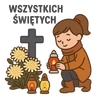
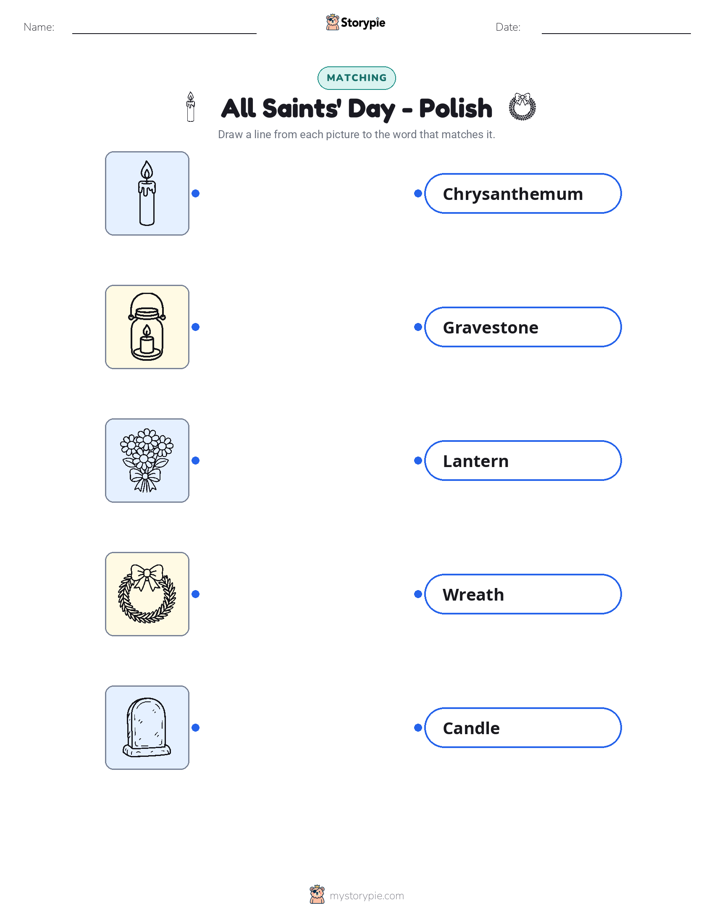
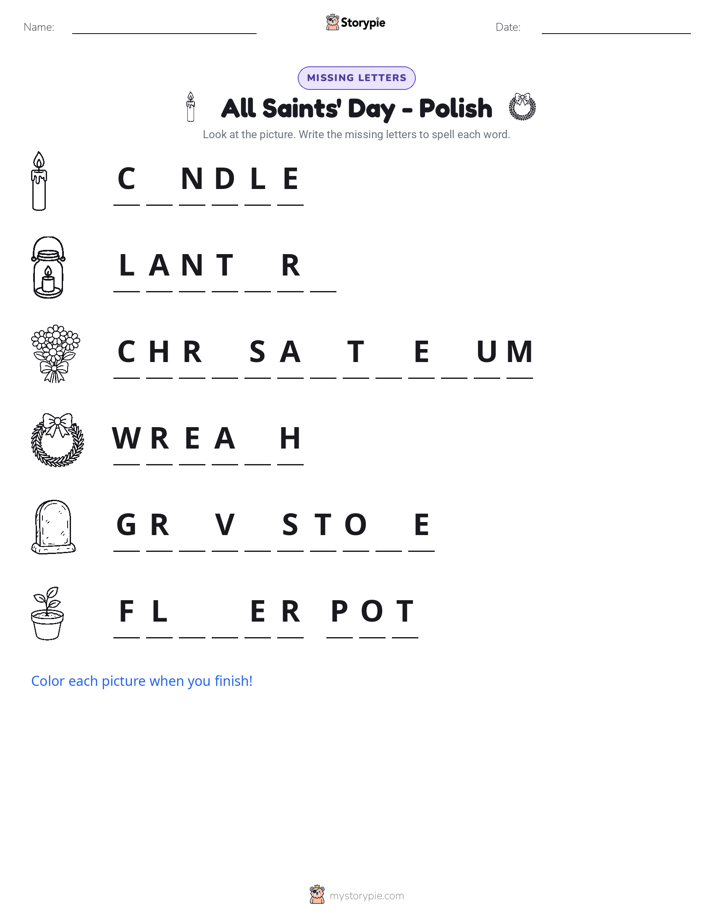
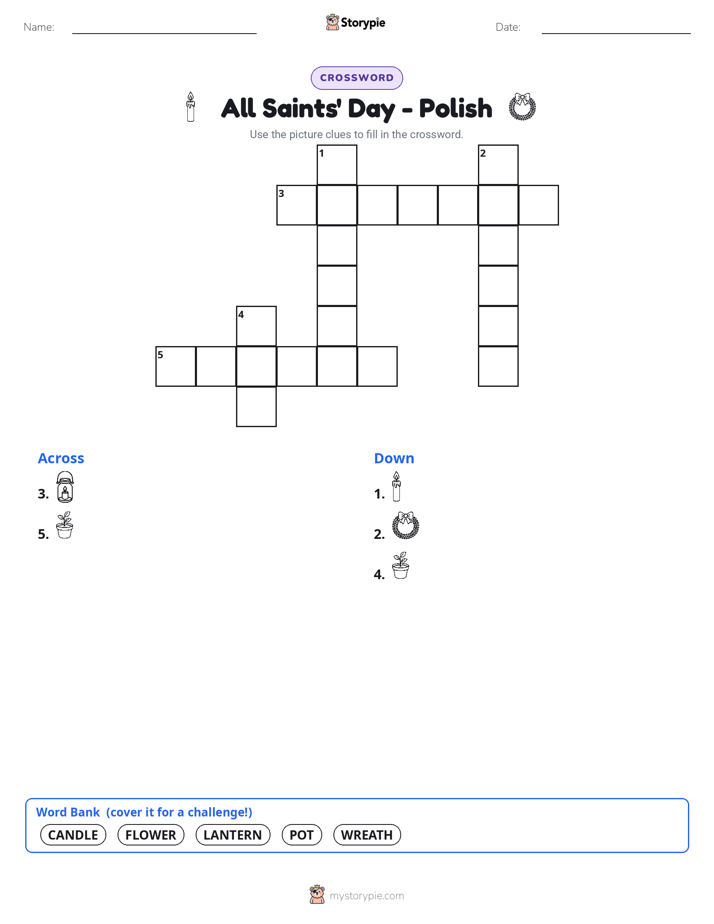
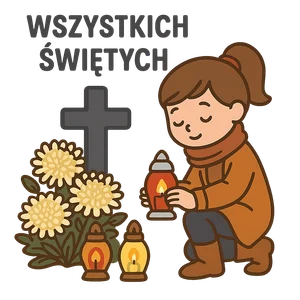
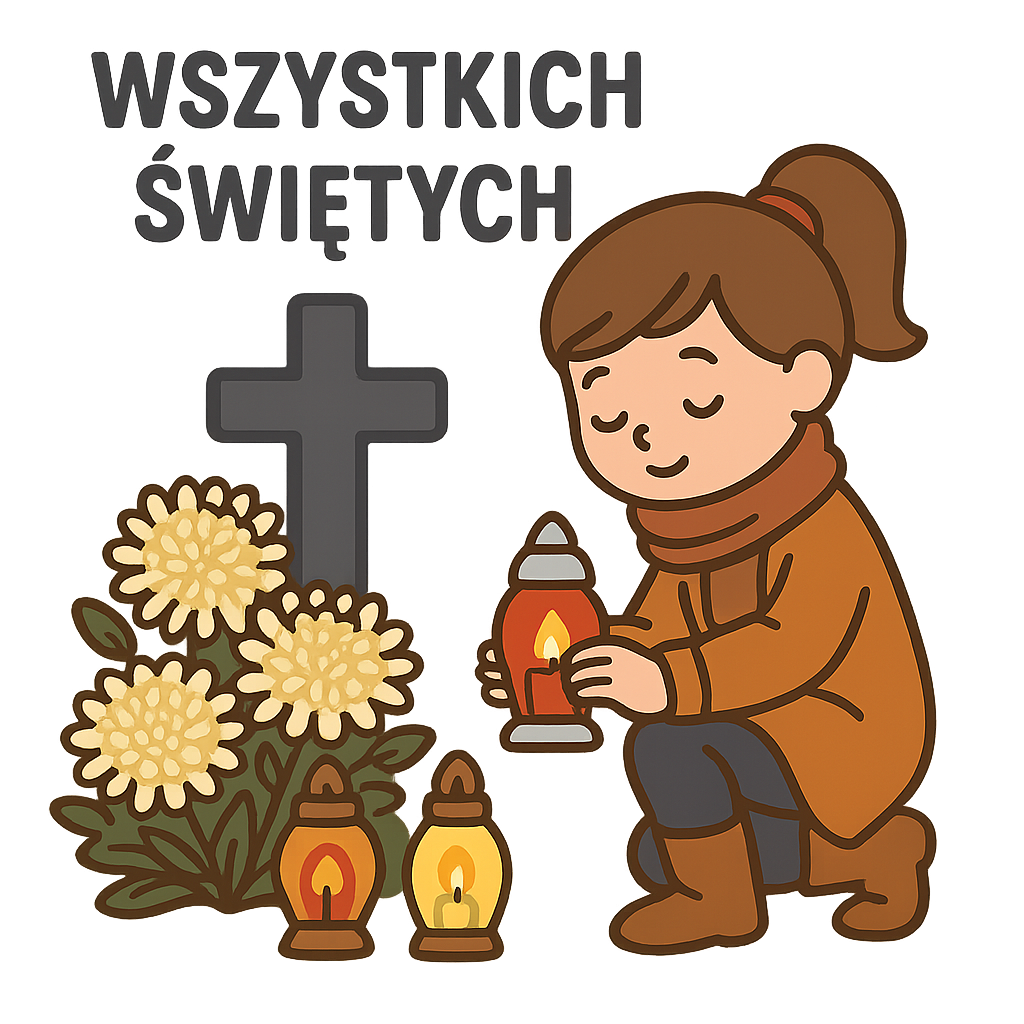
Preparations for my arrival begin in the days just before November 1st. These preparations are an important part of the tradition and are often done by families working together. They go to the cemeteries to tend to the graves of their relatives. This is a very hands-on act of care. Families will wash the gravestones, carefully removing any dirt or leaves that have gathered over the year. They pull weeds and tidy the entire area, making the space clean and respectful. Once everything is clean, the decorating begins. The graves are adorned with beautiful flowers, most commonly chrysanthemums in many different colors. Then, families place special candles called znicze (pronounced ZNEE-cheh) on and around the gravestones. These are not just simple candles; they are housed in ornate glass jars, often in shades of red, white, yellow, or blue. These jars serve a practical purpose: they shield the candle’s flame from the wind and rain, allowing it to burn steadily for many hours, sometimes even for days.
As the afternoon of November 1st turns into evening, a truly beautiful transformation takes place in cemeteries all across Poland. The sun sets, and the darkness is pushed back by the gentle, flickering light of thousands upon thousands of znicze. The cemeteries begin to glow, creating a breathtaking sea of light. The atmosphere that this creates is not scary or spooky at all. Instead, it is peaceful, quiet, and very solemn. Families walk slowly along the pathways, the soft light illuminating their faces. They might pause at a relative’s grave, say a quiet prayer, or simply stand together in shared silence. This glowing scene is a powerful symbol of memory, with each small flame representing a life being remembered. It is a time for quiet reflection, for feeling connected to family history, and for experiencing a unique sense of community with all the other families who have gathered for the same purpose.
Wow facts
About
A Polish national and Catholic holiday on November 1st, primarily observed by visiting cemeteries to honor the memory of deceased loved ones with flowers and candles.
Take a Quiz
Question 1 of 5
What does the word 'solemn' mean when describing the atmosphere in the cemeteries?
Want to do even more?
Go beyond exploring. Unlock tools that turn every story into real learning.

Storypie Plus for families
Full stories, quizzes, and printables. Nights and car rides, sorted.
- Unlimited audio stories
- Create Mode: your child stars in the story
- Offline downloads
- Printable worksheets & coloring pages

Why Storypie for Schools
Students engaged. Prep in seconds. Evenings back to you.
- Worksheets & Quizzes
- Classroom Management
- Formative Assessment
- Custom Curriculum & Lesson Plans
- 27 Languages

Why Storypie for Homeschool
Curriculum done. They'll ask for more. Hours back in your day.
- Worksheet Generator
- First-Person Audio Stories
- Built-in Comprehension Quizzes
- Custom Curriculum & Lesson Plans
- Print & Go Activities