English

Easter - Ukrainian
Velykden, or Ukrainian Easter…
Reads at Grades 6–8 Listens at Grades 4–8
Print & create
Answer keys·No prep·Free with an account
28 worksheets · answer keys · full story · quiz · Ages 10-12 · CEFR B2
Plus adds 279,000+ more stories in 27 languages, audio for every one, and printables for all of them.
Just want Easter - Ukrainian?
I am Velykden, a name that means 'Great Day' in the Ukrainian language. Many people also know me as Ukrainian Easter. For Ukrainian Christians, I am considered the most important and joyous holiday of the entire year. My observance is a deeply meaningful celebration of the Christian belief in the resurrection of Jesus Christ from the dead. This event is seen as a victory over death, and so my arrival marks a time of profound joy, spiritual renewal, and the promise of new beginnings, much like the spring season in which I appear.
My date is not fixed; it changes each year, always falling in the vibrant season of spring. The timing of my celebration is determined by the Julian calendar, an older calendar still used by many Eastern Orthodox Churches for liturgical purposes. This is different from the Gregorian calendar that is standard in many Western countries. Because of this calendrical difference, people in Ukraine and members of the Ukrainian diaspora living around the world often celebrate me on a different Sunday than Easter is observed in other Christian traditions. This unique timing is a significant part of my identity, connecting modern observers to centuries of history and practice.
The week leading up to my arrival is a period of intense and meaningful activity called Holy Week, or Strastnyi Tydzhen in Ukrainian. It is a time for both spiritual reflection and practical preparation for the great feast to come. One of the most important days of this week is known as Clean Thursday, or Chystyi Chetver. On this day, families traditionally undertake a thorough cleaning of their homes, scrubbing and tidying every corner. This physical act of cleaning is symbolic, representing a spiritual purification and a desire to welcome the 'Great Day' into a home that is fresh and orderly. Clean Thursday is also when the wonderful aroma of baking fills the air, as it is the traditional day for preparing my special holiday bread.
Velykden: The Great Day of Ukrainian Easter
I am Velykden, a name that means 'Great Day' in the Ukrainian language. Many people also know me as Ukrainian Easter. For Ukrainian Christians, I am considered the most important and joyous holiday of the entire year. My observance is a deeply meaningful celebration of the Christian belief in the resurrection of Jesus Christ from the dead. This event is seen as a victory over death, and so my arrival marks a time of profound joy, spiritual renewal, and the promise of new beginnings, much like the spring season in which I appear.
My date is not fixed; it changes each year, always falling in the vibrant season of spring. The timing of my celebration is determined by the Julian calendar, an older calendar still used by many Eastern Orthodox Churches for liturgical purposes. This is different from the Gregorian calendar that is standard in many Western countries. Because of this calendrical difference, people in Ukraine and members of the Ukrainian diaspora living around the world often celebrate me on a different Sunday than Easter is observed in other Christian traditions. This unique timing is a significant part of my identity, connecting modern observers to centuries of history and practice.
The week leading up to my arrival is a period of intense and meaningful activity called Holy Week, or Strastnyi Tydzhen in Ukrainian. It is a time for both spiritual reflection and practical preparation for the great feast to come. One of the most important days of this week is known as Clean Thursday, or Chystyi Chetver. On this day, families traditionally undertake a thorough cleaning of their homes, scrubbing and tidying every corner. This physical act of cleaning is symbolic, representing a spiritual purification and a desire to welcome the 'Great Day' into a home that is fresh and orderly. Clean Thursday is also when the wonderful aroma of baking fills the air, as it is the traditional day for preparing my special holiday bread.
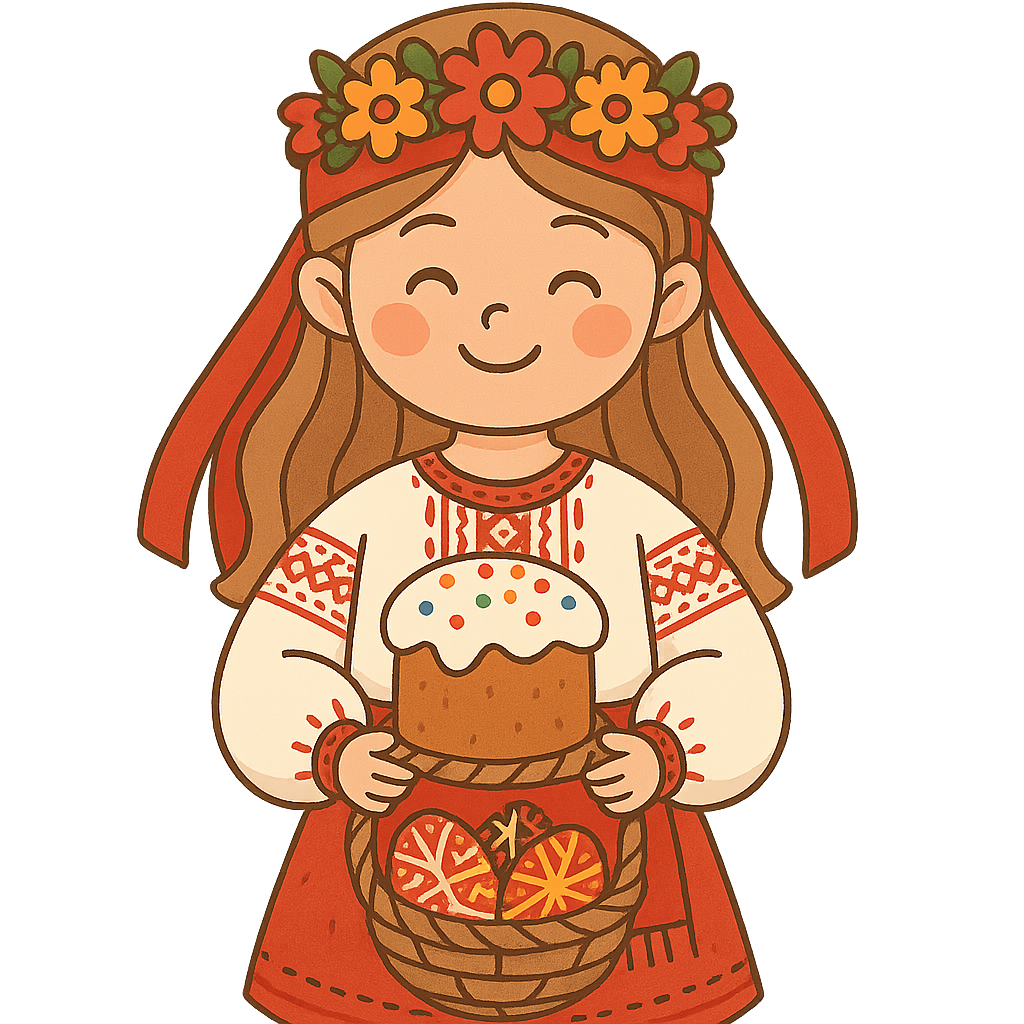
This bread, called paska, is a tall, round loaf of sweet, yeast-leavened bread. It is much richer than ordinary bread, often containing eggs, butter, and sugar. But paska is more than just a delicious food; it is a centerpiece of the celebration and a work of art. Bakers meticulously decorate the top of each loaf with symbolic ornaments made from dough. These might include crosses, swirls, rosettes, or birds, each with its own meaning related to faith, life, and prosperity. The care taken in baking and decorating the paska shows the reverence and anticipation with which families prepare for my celebration.
Alongside the paska, one of my most famous and cherished traditions is the creation of pysanky. These are not simply dyed eggs; they are intricate masterpieces of folk art, each one a carrier of wishes and prayers. The process of making a pysanka is a form of meditation. Using a special stylus called a kistka, artists draw complex designs onto the shell of a raw egg with melted beeswax. The egg is then dipped into a series of colorful dyes, from lightest to darkest. The wax protects the covered areas from the dye, and after each color bath, more wax is applied to preserve that color. Finally, the wax is melted away to reveal the stunning, multi-colored pattern beneath. Each symbol and color has a traditional meaning; for example, geometric shapes can represent eternity, animals can symbolize strength, and plants can stand for growth and life. The patterns are wishes for health, fertility, love, and protection for the person who receives the egg.
On the night before my celebration begins, or very early on Sunday morning, families carefully arrange a selection of special foods in a wicker basket to be taken to church. This basket is a beautiful sight, often lined with a hand-embroidered cloth. Inside, the decorated paska takes a central place, surrounded by the colorful pysanky. Other traditional foods are included, each with its own significance. There is often sausage, known as kovbasa, representing generosity and God's favor. A lump of cheese, called syr, and a sphere of butter, maslo, symbolize the richness of the promised land. A small container of horseradish, or krin, is also included, its bitterness a reminder of the bitterness of Christ's suffering, which has been overcome by the joy of the resurrection. A lit candle is placed in the basket to represent Christ as the light of the world. At the church, a priest blesses these baskets with holy water, sanctifying the food that will become the first meal eaten after the long fast of Lent.
My celebration officially begins when families return home from the church service with their blessed baskets. The fast is broken with a shared meal that starts in a special way. The head of the household takes one of the blessed hard-boiled eggs and peels it, sharing a piece with every person at the table. This act symbolizes family unity and the hope that they will always be together. As they share the egg, they exchange greetings of the day. One person will joyfully proclaim, 'Khrystos Voskres!' which means 'Christ is Risen!' The traditional and equally joyful response is 'Voistynu Voskres!,' which translates to 'Indeed, He is Risen!' This exchange is heard throughout the day as people visit friends and family, sharing the good news and the spirit of the holiday.
My observance is not confined to homes and churches; it also spills out into the community with joyful activities. Near the church grounds, it is common to see young people performing haivky. These are traditional spring songs and circle dances that have been passed down through generations. Their melodies and movements celebrate the arrival of spring and the renewal of nature, echoing my own themes of new life and rebirth. Another popular custom is a friendly game called 'bitky,' or egg tapping. Two people each hold a decorated, hard-boiled egg and gently tap the ends together. The person whose egg remains uncracked is the winner. This playful competition brings laughter and fun to the day's gatherings, uniting friends and family in a lighthearted tradition.
Today, I remain a vital and cherished celebration for Ukrainians in their homeland and all over the world. My traditions are carefully preserved and passed on to new generations, serving as a powerful link to their cultural heritage and religious faith. For families who gather to share the blessed paska and exchange pysanky, I am a time to reaffirm bonds of kinship and community. My customs, from the solemn preparations of Holy Week to the joyful songs of haivky, are more than just old practices; they are a living expression of hope, a vibrant symbol of spring's triumph over winter, and a profound celebration of the continuation of life.
Wow facts
About
Velykden, or Ukrainian Easter, is a major religious and cultural holiday celebrating the resurrection of Jesus Christ, known for its rich traditions like decorated pysanky eggs and special blessed food baskets.
Take a Quiz
Question 1 of 5
Based on the story, what is the symbolic meaning behind families thoroughly cleaning their homes on Clean Thursday?
Want to do even more?
Go beyond exploring. Unlock tools that turn every story into real learning.

Storypie Plus for families
Full stories, quizzes, and printables. Nights and car rides, sorted.
- Unlimited audio stories
- Create Mode: your child stars in the story
- Offline downloads
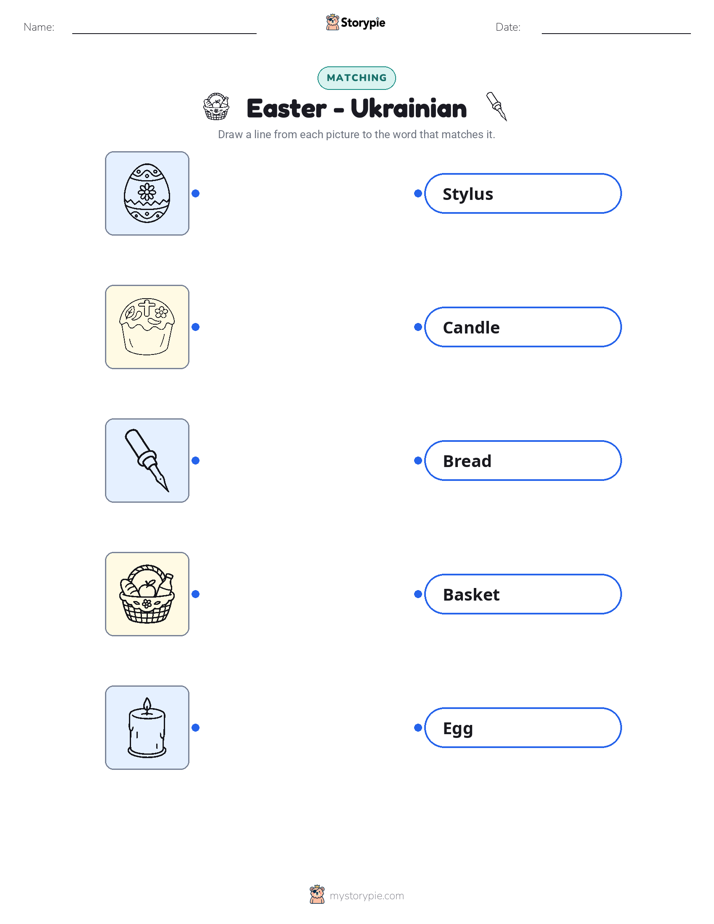
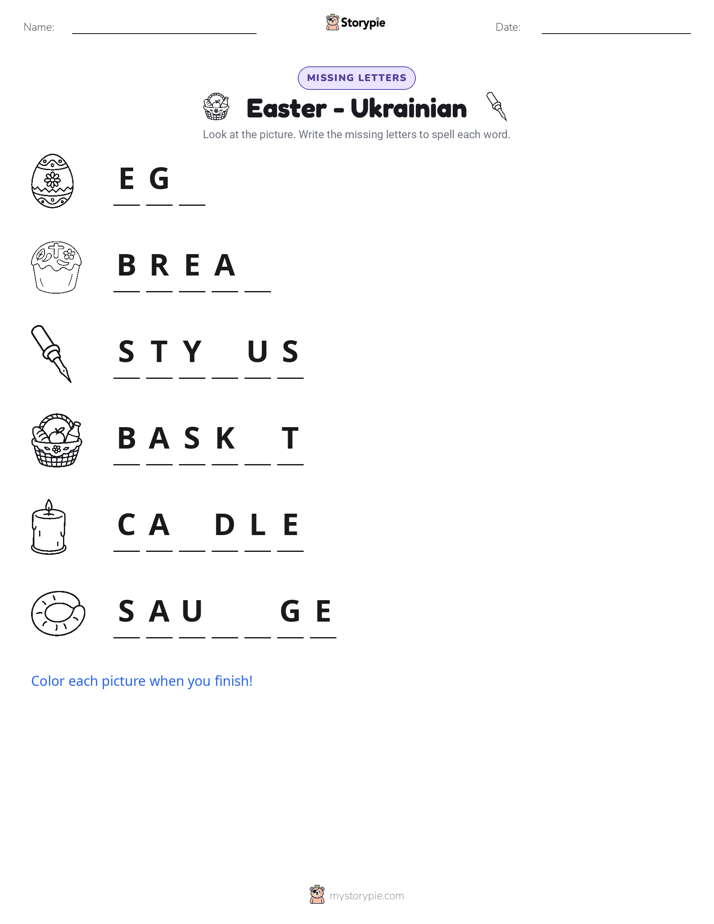
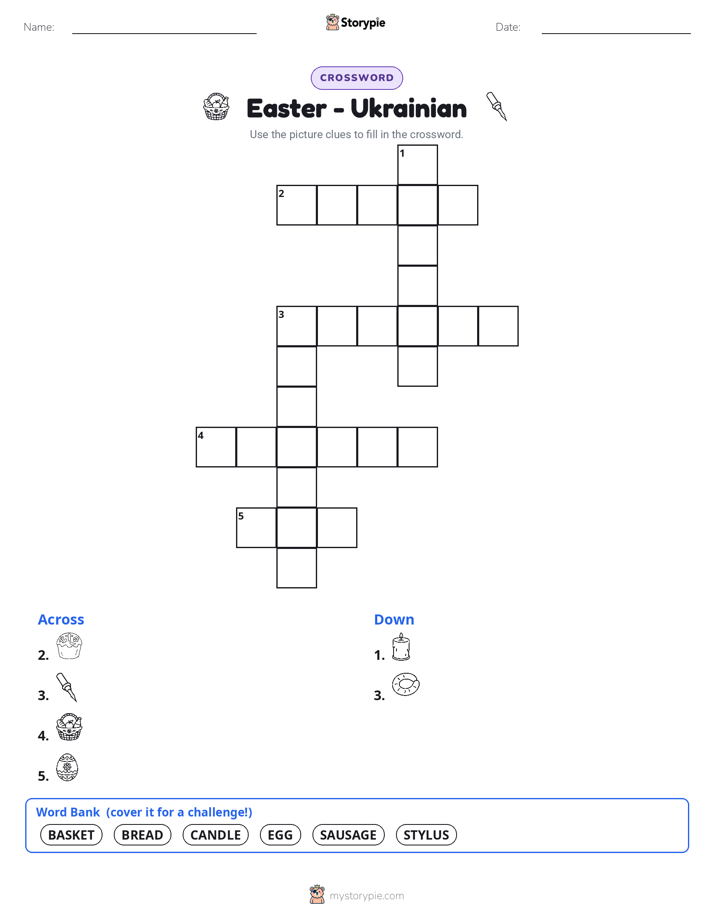
- Printable worksheets & coloring pages

Why Storypie for Schools
Students engaged. Prep in seconds. Evenings back to you.
- Worksheets & Quizzes
- Classroom Management
- Formative Assessment
- Custom Curriculum & Lesson Plans
- 27 Languages

Why Storypie for Homeschool
Curriculum done. They'll ask for more. Hours back in your day.
- Worksheet Generator
- First-Person Audio Stories
- Built-in Comprehension Quizzes
- Custom Curriculum & Lesson Plans
- Print & Go Activities