English

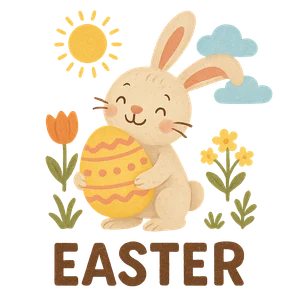
Easter
Easter is the most important and earliest of all annual Christian feasts…
Reads at Grades 6–8 Listens at Grades 4–8
Print & create
Answer keys·No prep·Free with an account
28 worksheets · answer keys · full story · quiz · Ages 10-12 · CEFR B2
Plus adds 273,000+ more stories in 27 languages, audio for every one, and printables for all of them.
Just want Easter?
I am the holiday of Easter, a festival that holds a central place in the Christian faith. For billions of Christians around the world, I am a time of great joy and significance. My observance commemorates the belief in the resurrection of Jesus Christ. According to Christian teachings, Jesus was raised from the dead on the third day after his crucifixion. This event is considered the cornerstone of Christianity, as it is understood to represent a divine victory over death and to hold the promise of salvation and eternal life for believers. My celebration is the culmination of a period of preparation and solemn remembrance, transforming into the most joyous day in the Christian calendar.
My earliest history is deeply intertwined with the Jewish festival of Passover. The Christian scriptures, specifically the Gospels, record that the key events of my origin story occurred during the annual observance of Passover in the city of Jerusalem. The Last Supper, which was a Passover meal Jesus shared with his disciples, along with his crucifixion and resurrection, are all described as taking place within this context. Because of this, the first Christians, many of whom were Jewish, commemorated these profound events around the same time as Passover. This connection is still reflected in my name in many languages. For instance, the name ‘Pascha’—used in Greek, Latin, and many other languages—is derived directly from ‘Pesach,’ the Hebrew word for Passover.
One of my most notable features is that my date is not fixed; I am known as a “movable feast.” People often wonder why I fall on a different Sunday each year. This practice dates back to a major gathering of early church leaders in the year 325 CE. At what is now known as the First Council of Nicaea, a decision was made to establish a consistent and unified method for calculating my date across all churches. They determined that I should be observed on the first Sunday that follows the first full moon occurring on or after the spring equinox. The spring equinox marks the moment when day and night are of nearly equal length, signaling the start of spring in the Northern Hemisphere. Because this calculation depends on the lunar cycle and its relationship to the solar year, my date shifts annually. It is also the reason that different Christian denominations, which sometimes use different calendars to calculate the date, may observe me on separate weeks.
I Am Easter
I am the holiday of Easter, a festival that holds a central place in the Christian faith. For billions of Christians around the world, I am a time of great joy and significance. My observance commemorates the belief in the resurrection of Jesus Christ. According to Christian teachings, Jesus was raised from the dead on the third day after his crucifixion. This event is considered the cornerstone of Christianity, as it is understood to represent a divine victory over death and to hold the promise of salvation and eternal life for believers. My celebration is the culmination of a period of preparation and solemn remembrance, transforming into the most joyous day in the Christian calendar.
My earliest history is deeply intertwined with the Jewish festival of Passover. The Christian scriptures, specifically the Gospels, record that the key events of my origin story occurred during the annual observance of Passover in the city of Jerusalem. The Last Supper, which was a Passover meal Jesus shared with his disciples, along with his crucifixion and resurrection, are all described as taking place within this context. Because of this, the first Christians, many of whom were Jewish, commemorated these profound events around the same time as Passover. This connection is still reflected in my name in many languages. For instance, the name ‘Pascha’—used in Greek, Latin, and many other languages—is derived directly from ‘Pesach,’ the Hebrew word for Passover.
One of my most notable features is that my date is not fixed; I am known as a “movable feast.” People often wonder why I fall on a different Sunday each year. This practice dates back to a major gathering of early church leaders in the year 325 CE. At what is now known as the First Council of Nicaea, a decision was made to establish a consistent and unified method for calculating my date across all churches. They determined that I should be observed on the first Sunday that follows the first full moon occurring on or after the spring equinox. The spring equinox marks the moment when day and night are of nearly equal length, signaling the start of spring in the Northern Hemisphere. Because this calculation depends on the lunar cycle and its relationship to the solar year, my date shifts annually. It is also the reason that different Christian denominations, which sometimes use different calendars to calculate the date, may observe me on separate weeks.
The week that leads up to my arrival is the most solemn and significant period in the entire Christian year. It is known as Holy Week, and it is a time of reflection and remembrance. This special week begins with Palm Sunday, a day that marks the story of Jesus’s triumphant entry into Jerusalem, when crowds are said to have greeted him by waving palm branches. The week continues with Maundy Thursday, which commemorates the Last Supper that Jesus shared with his disciples. The most somber day of the week is Good Friday, which is observed as the day of Jesus’s crucifixion and death. After these days of quiet contemplation and mourning, the atmosphere shifts dramatically. Holy Week culminates in my celebration on Sunday, a day of joyful church services, music, and feasting that celebrates the resurrection.
As centuries passed, my observance began to attract various non-religious customs, many of which were tied to ancient traditions celebrating the arrival of spring. The egg, for example, has been a symbol of new life, fertility, and rebirth in many cultures for thousands of years. It was naturally adopted as one of my most popular symbols. People began the practice of decorating eggs with bright colors to celebrate the renewal of life. In some European cultures, these traditions evolved into a legend about a special rabbit or hare that delivered colored eggs to well-behaved children. This story of the egg-laying hare, or ‘Osterhase,’ was developed in Germany. When German immigrants came to America in the 1700s, they brought this beloved folklore with them, where it eventually became the popular tradition of the Easter Bunny who delivers eggs and other treats.
Today, I am observed in a multitude of ways by people all over the world, reflecting a rich blend of religious reverence and secular celebration. For practicing Christians, my arrival is a deeply spiritual time marked by special church services filled with prayer, hymns, and music that celebrates the resurrection of Jesus. It is a time for worship and thanksgiving. Alongside these religious observances, many people celebrate with festive family meals, sharing food and time with loved ones. Secular traditions are also very common and widespread. Children eagerly participate in egg hunts, searching for hidden eggs in homes and parks. Exchanging chocolate eggs, candies, and other gifts is another popular custom. In some towns and cities, people gather for large community parades to mark the day. Although the specific ways people mark my arrival can vary greatly from one family or culture to another, the celebrations often share common themes of joy, hope, renewal, and the welcome arrival of the spring season.
Wow facts
About
Easter is the most important and earliest of all annual Christian feasts, celebrating the resurrection of Jesus Christ on the third day after his crucifixion.
Take a Quiz
Question 1 of 5
What is the main reason Easter is considered a 'movable feast'?
Want to do even more?
Go beyond exploring. Unlock tools that turn every story into real learning.

Storypie Plus for families
Full stories, quizzes, and printables. Nights and car rides, sorted.
- Unlimited audio stories
- Create Mode: your child stars in the story
- Offline downloads
- Printable worksheets & coloring pages

Why Storypie for Schools
Students engaged. Prep in seconds. Evenings back to you.
- Worksheets & Quizzes
- Classroom Management
- Formative Assessment
- Custom Curriculum & Lesson Plans
- 27 Languages

Why Storypie for Homeschool
Curriculum done. They'll ask for more. Hours back in your day.
- Worksheet Generator
- First-Person Audio Stories
- Built-in Comprehension Quizzes
- Custom Curriculum & Lesson Plans
- Print & Go Activities