English

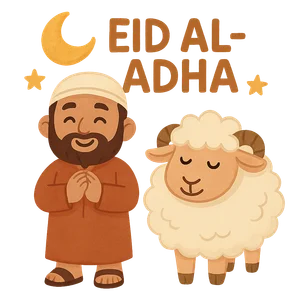
Eid al-Adha
Eid al-Adha, or the 'Festival of the Sacrifice,' is one of the most important holidays in Islam.
Reads at Grades 6–8 Listens at Grades 4–8
Print & create
Answer keys·No prep·Free with an account
28 worksheets · answer keys · full story · quiz · Ages 10-12 · CEFR B2
Plus adds 279,000+ more stories in 27 languages, audio for every one, and printables for all of them.
Just want Eid al-Adha?
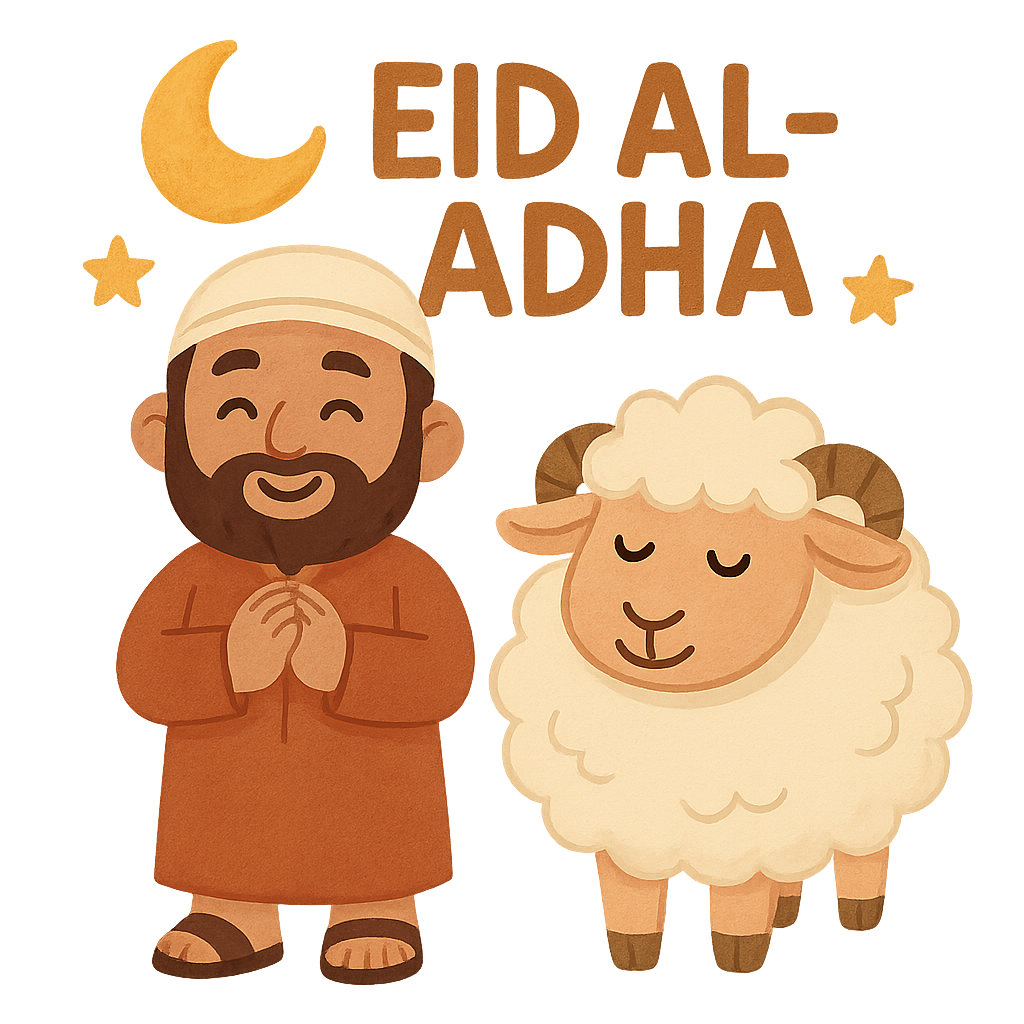
I am Eid al-Adha, a name that means 'Festival of the Sacrifice' in the Arabic language. For Muslims all over the world, I am one of the two most significant holidays of the year, a special time filled with meaning and tradition. I am not just a single day of celebration; I am a period of reflection, prayer, and togetherness that honors an ancient story of profound faith and trust in God. During my observance, people focus on the values of devotion, generosity, and community, sharing what they have and strengthening their connections with family, friends, and those in need.
My existence is tied to a powerful story found in the Quran, the holy book of Islam. This narrative tells of a deeply faithful man, the Prophet Ibrahim. According to the story, God tested Ibrahim's devotion by asking him in a dream to make the greatest sacrifice imaginable: that of his beloved son, Ismail. Ibrahim, trusting completely in God's will, prepared to follow the command. But just as he was about to act, God intervened. He revealed that it was a trial of faith and provided a ram for Ibrahim to sacrifice instead. Ismail's life was spared, and Ibrahim’s unwavering obedience was rewarded. When people observe me, they are honoring this incredible act of submission and God’s boundless mercy.
My timing is deeply connected to another central pillar of Islam: the Hajj. The Hajj is a sacred pilgrimage to the holy city of Mecca in Saudi Arabia, a journey that many Muslims hope to complete at least once in their lifetime. This pilgrimage involves a series of rituals performed over several days. One of the most important moments is when the pilgrims gather on Mount Arafat for a day of prayer and reflection. My observance begins on the very next day, after the pilgrims have descended from the mountain. This direct link to the final rites of the Hajj means that my arrival is celebrated not only by those on the pilgrimage but by the entire global Muslim community, creating a shared sense of spiritual connection across continents.
I Am Eid al-Adha
I am Eid al-Adha, a name that means 'Festival of the Sacrifice' in the Arabic language. For Muslims all over the world, I am one of the two most significant holidays of the year, a special time filled with meaning and tradition. I am not just a single day of celebration; I am a period of reflection, prayer, and togetherness that honors an ancient story of profound faith and trust in God. During my observance, people focus on the values of devotion, generosity, and community, sharing what they have and strengthening their connections with family, friends, and those in need.
My existence is tied to a powerful story found in the Quran, the holy book of Islam. This narrative tells of a deeply faithful man, the Prophet Ibrahim. According to the story, God tested Ibrahim's devotion by asking him in a dream to make the greatest sacrifice imaginable: that of his beloved son, Ismail. Ibrahim, trusting completely in God's will, prepared to follow the command. But just as he was about to act, God intervened. He revealed that it was a trial of faith and provided a ram for Ibrahim to sacrifice instead. Ismail's life was spared, and Ibrahim’s unwavering obedience was rewarded. When people observe me, they are honoring this incredible act of submission and God’s boundless mercy.
My timing is deeply connected to another central pillar of Islam: the Hajj. The Hajj is a sacred pilgrimage to the holy city of Mecca in Saudi Arabia, a journey that many Muslims hope to complete at least once in their lifetime. This pilgrimage involves a series of rituals performed over several days. One of the most important moments is when the pilgrims gather on Mount Arafat for a day of prayer and reflection. My observance begins on the very next day, after the pilgrims have descended from the mountain. This direct link to the final rites of the Hajj means that my arrival is celebrated not only by those on the pilgrimage but by the entire global Muslim community, creating a shared sense of spiritual connection across continents.
Because my timing is set by the Islamic calendar, my dates on the familiar Gregorian calendar, which is based on the sun, change from year to year. The Islamic calendar is a lunar calendar, meaning its months are based on the phases of the moon. A lunar year is about 11 days shorter than a solar year. As a result, my celebration moves backward through the seasons, occurring about 11 days earlier each year. People begin to celebrate me on the 10th day of Dhu al-Hijjah, which is the twelfth and final month of the Islamic calendar. The festivities are not short; my observance is a major event that typically lasts for three to four days, giving families and communities ample time for prayer, visits, and charitable acts.
A central and deeply symbolic tradition of my observance is the 'Qurbani,' which means 'sacrifice.' Those who are financially able to do so will sacrifice an animal, often a sheep, goat, or cow. This act is performed in direct remembrance of the ram that God provided to Ibrahim, a reminder of his test of faith and the mercy he was shown. The Qurbani is much more than just a ritual; it is an act of charity and community. Tradition dictates that the meat from the sacrificed animal be divided into three equal portions. One-third is for the family to eat, another third is shared with friends, neighbors, and relatives, and the final third is given as a donation to people who are poor or in need. This practice ensures that everyone, regardless of their circumstances, can partake in a festive meal and feel the joy of the holiday.
Today, Muslims around the world celebrate me with a blend of solemn prayer and joyful community gatherings. The first morning begins with special congregational prayers, often held in a large open area or at a mosque. It is a time for people to wear their finest clothes, presenting themselves in the best way to honor the occasion. Following the prayers, the days are filled with social activities. Families visit one another, friends exchange greetings and gifts, and homes are filled with the aromas of delicious, specially prepared meals. Throughout it all, the spirit of generosity remains paramount. Charity, or 'sadaqa,' is a key component of my observance, as people make a special effort to help the less fortunate, embodying the core themes of compassion and selflessness that I represent.
While the fundamental reasons for my observance are the same everywhere, the specific ways people celebrate can reflect their unique local cultures. The foods prepared, the style of dress, and some of the social customs may differ from one region to another. Yet, despite these variations, my core message of faith, sacrifice, and community unites millions of Muslims across the globe. From the bustling cities of Egypt and Nigeria to the vibrant communities in Indonesia and the United States, my arrival signals a time for deep spiritual reflection, gratitude, and a joyful strengthening of bonds with others. I am a reminder of a shared heritage and a set of values that connect people across vast distances.
Wow facts
About
Eid al-Adha, or the 'Festival of the Sacrifice,' is one of the most important holidays in Islam. It commemorates the Prophet Ibrahim's (Abraham's) willingness to sacrifice his son in obedience to God and coincides with the culmination of the Hajj pilgrimage to Mecca.
Take a Quiz
Question 1 of 5
In your own words, retell the story of the Prophet Ibrahim that Eid al-Adha commemorates.
Want to do even more?
Go beyond exploring. Unlock tools that turn every story into real learning.

Storypie Plus for families
Full stories, quizzes, and printables. Nights and car rides, sorted.
- Unlimited audio stories
- Create Mode: your child stars in the story
- Offline downloads
- Printable worksheets & coloring pages

Why Storypie for Schools
Students engaged. Prep in seconds. Evenings back to you.
- Worksheets & Quizzes
- Classroom Management
- Formative Assessment
- Custom Curriculum & Lesson Plans
- 27 Languages

Why Storypie for Homeschool
Curriculum done. They'll ask for more. Hours back in your day.
- Worksheet Generator
- First-Person Audio Stories
- Built-in Comprehension Quizzes
- Custom Curriculum & Lesson Plans
- Print & Go Activities