English

Malanka - Ukrainian
Malanka is a Ukrainian folk holiday celebrated on January 13th, the New Year's Eve of the Julian calendar…
Reads at Grades K-2 Listens at K–3
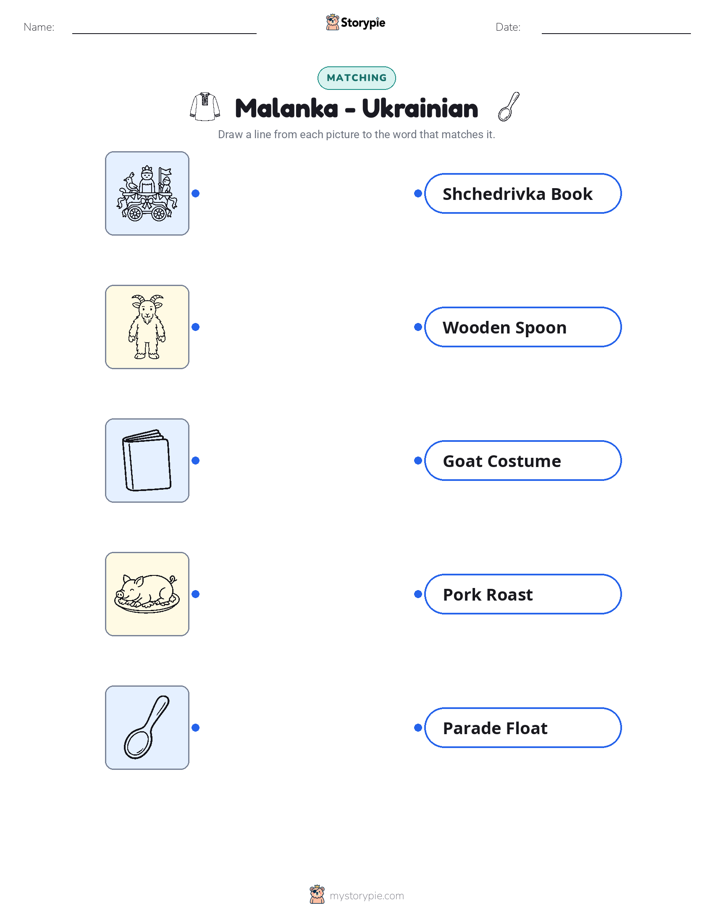
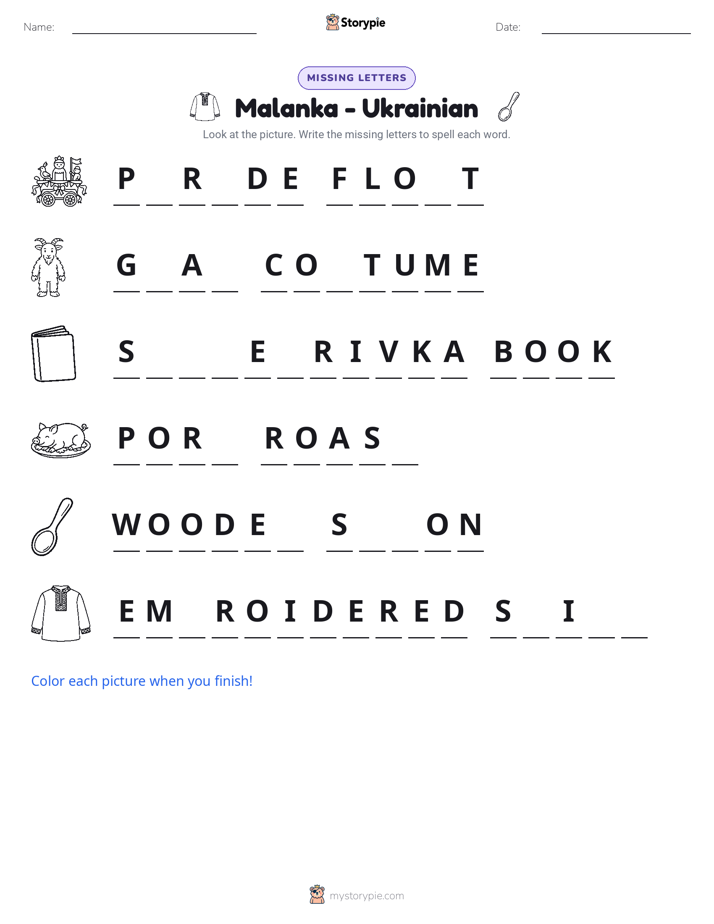
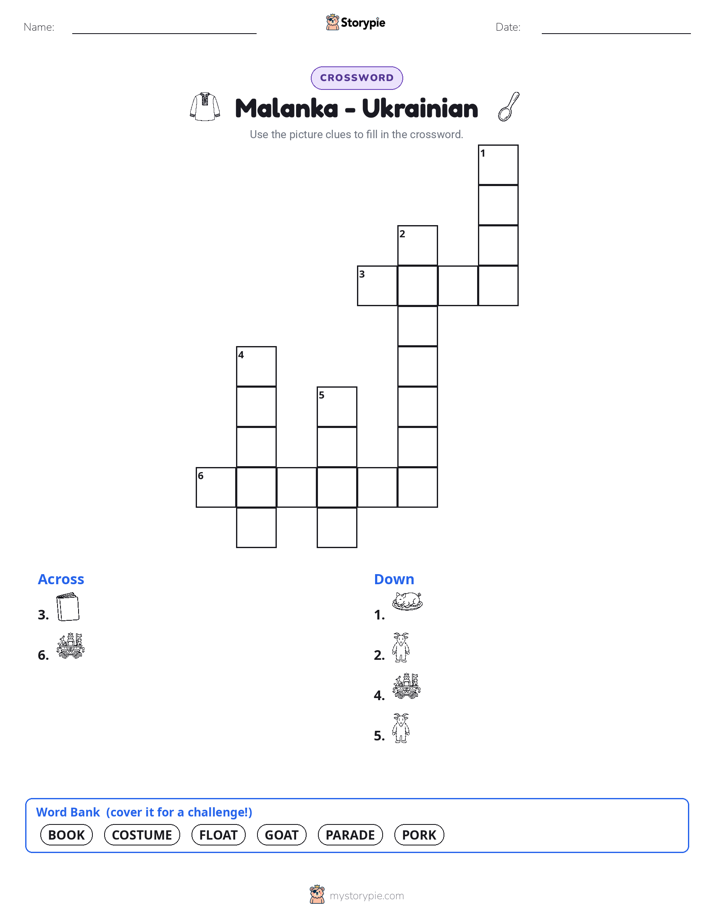
Print & create
Answer keys·No prep·Free with an account
28 worksheets · answer keys · full story · quiz · Ages 6-8 · CEFR A2
Plus adds 279,000+ more stories in 27 languages, audio for every one, and printables for all of them.
Just want Malanka - Ukrainian?
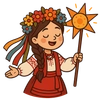
Hello! I am a Ukrainian folk holiday called Malanka. People celebrate me on the evening of January 13th, which is New Year’s Eve according to an older calendar called the Julian calendar. My name is linked to fun, songs, and amazing costumes. I am also known by another name, Shchedryi Vechir. In the Ukrainian language, this means “Bountiful Eve.” That name comes from the special, delicious meal that families share to mark my arrival and welcome the new year with hope and happiness.
During my celebrations, you can see all sorts of interesting characters. A big part of the fun is when people, especially young people, dress up in masks and costumes. They get to pretend to be someone else for the night! Two of my most important characters are Malanka and Vasyl. The character of Malanka is often a boy dressed up as a girl, and Vasyl represents the coming of the New Year. They are joined by other funny characters, too. You might see a goat, a bear, an old man, or an old woman. Together, they act out a playful show as they visit different houses in their village.
A big part of me is a noisy and joyful parade that moves through the streets. The groups of costumed characters walk from house to house, singing special carols. These songs are called 'shchedrivky,' and they are filled with wishes for a happy and healthy new year for everyone they meet. The characters also love to play pranks and tell jokes to make people laugh. The goat character has a special role. It might pretend to fall down as if it is sick, only to be playfully “revived” by the others. This little act is a symbol of something very important: the end of winter and the return of spring and new life.
The Story of Malanka
Hello! I am a Ukrainian folk holiday called Malanka. People celebrate me on the evening of January 13th, which is New Year’s Eve according to an older calendar called the Julian calendar. My name is linked to fun, songs, and amazing costumes. I am also known by another name, Shchedryi Vechir. In the Ukrainian language, this means “Bountiful Eve.” That name comes from the special, delicious meal that families share to mark my arrival and welcome the new year with hope and happiness.
During my celebrations, you can see all sorts of interesting characters. A big part of the fun is when people, especially young people, dress up in masks and costumes. They get to pretend to be someone else for the night! Two of my most important characters are Malanka and Vasyl. The character of Malanka is often a boy dressed up as a girl, and Vasyl represents the coming of the New Year. They are joined by other funny characters, too. You might see a goat, a bear, an old man, or an old woman. Together, they act out a playful show as they visit different houses in their village.
A big part of me is a noisy and joyful parade that moves through the streets. The groups of costumed characters walk from house to house, singing special carols. These songs are called 'shchedrivky,' and they are filled with wishes for a happy and healthy new year for everyone they meet. The characters also love to play pranks and tell jokes to make people laugh. The goat character has a special role. It might pretend to fall down as if it is sick, only to be playfully “revived” by the others. This little act is a symbol of something very important: the end of winter and the return of spring and new life.
After all the parading and singing in the cold air, families gather inside for a warm and wonderful feast. This big meal is the reason I am sometimes called 'Bountiful Eve.' The dinner table is filled with many different kinds of traditional dishes, showing the hope for a year with plenty of food. One special dish is a sweet grain pudding called kutia. Families also share tasty dumplings known as varenyky. Sharing this meal together is more than just eating; it is a way for people to express their hopes for a good, successful, and plentiful year ahead for their family and community.
My traditions are not just something from the past; they are still alive and celebrated today. In many villages across Ukraine, you can still see the parades and hear the 'shchedrivky' sung on the night of January 13th. My celebrations have also traveled around the world. Ukrainian communities in other countries, such as Canada and the United States, hold Malanka festivals to honor their heritage. These events help parents share their culture with their children and neighbors. In this way, my story continues for new generations to enjoy and learn from.
Wow facts
About
Malanka is a Ukrainian folk holiday celebrated on January 13th, the New Year's Eve of the Julian calendar, featuring costumed parades, folk plays, and caroling to wish for a prosperous new year.
Take a Quiz
Question 1 of 4
What is another name for the holiday Malanka?
Want to do even more?
Go beyond exploring. Unlock tools that turn every story into real learning.

Storypie Plus for families
Full stories, quizzes, and printables. Nights and car rides, sorted.
- Unlimited audio stories
- Create Mode: your child stars in the story
- Offline downloads
- Printable worksheets & coloring pages

Why Storypie for Schools
Students engaged. Prep in seconds. Evenings back to you.
- Worksheets & Quizzes
- Classroom Management
- Formative Assessment
- Custom Curriculum & Lesson Plans
- 27 Languages

Why Storypie for Homeschool
Curriculum done. They'll ask for more. Hours back in your day.
- Worksheet Generator
- First-Person Audio Stories
- Built-in Comprehension Quizzes
- Custom Curriculum & Lesson Plans
- Print & Go Activities