English

National Day - Belgian
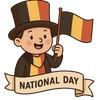
Belgian National Day is a public holiday in Belgium celebrated on July 21st.
Reads at Grades 6–8 Listens at Grades 4–8
Print & create
Answer keys·No prep·Free with an account
28 worksheets · answer keys · full story · quiz · Ages 10-12 · CEFR B2
Plus adds 279,000+ more stories in 27 languages, audio for every one, and printables for all of them.
Just want National Day - Belgian?
I am Belgian National Day, a day of celebration and remembrance observed across Belgium every year on July 21st. My date is not just a day on the calendar; it marks a pivotal moment in the nation’s journey. On this day in 1831, the country's first king, Leopold I, stood before the public and officially took his oath of allegiance to the new Belgian constitution. This solemn act was far more than a ceremony. It signified the birth of Belgium as a constitutional monarchy, a form of government where the monarch's power is defined and limited by a set of laws. This event formally established Belgium as a new, independent, and sovereign nation in the heart of Europe, ready to chart its own course.
However, my permanent date on the calendar was not established right away. For many years after the Belgian Revolution of 1830, the national holiday was celebrated in September. These celebrations focused on commemorating the days of the revolution itself—the intense period of fighting that led to independence from the Netherlands. While this was an important part of the country's story, some felt it focused too much on past conflict. In 1890, the Belgian government passed a law to officially and permanently set my date to July 21st. The reason for this change was significant. It shifted the focus from the revolutionary struggle to the stable and organized government that followed. The new date was chosen to honor the beginning of the monarchy and the establishment of the constitution, creating a more forward-looking celebration centered on national unity and the country's future.
A Day of Unity: The Story of Belgian National Day
I am Belgian National Day, a day of celebration and remembrance observed across Belgium every year on July 21st. My date is not just a day on the calendar; it marks a pivotal moment in the nation’s journey. On this day in 1831, the country's first king, Leopold I, stood before the public and officially took his oath of allegiance to the new Belgian constitution. This solemn act was far more than a ceremony. It signified the birth of Belgium as a constitutional monarchy, a form of government where the monarch's power is defined and limited by a set of laws. This event formally established Belgium as a new, independent, and sovereign nation in the heart of Europe, ready to chart its own course.
However, my permanent date on the calendar was not established right away. For many years after the Belgian Revolution of 1830, the national holiday was celebrated in September. These celebrations focused on commemorating the days of the revolution itself—the intense period of fighting that led to independence from the Netherlands. While this was an important part of the country's story, some felt it focused too much on past conflict. In 1890, the Belgian government passed a law to officially and permanently set my date to July 21st. The reason for this change was significant. It shifted the focus from the revolutionary struggle to the stable and organized government that followed. The new date was chosen to honor the beginning of the monarchy and the establishment of the constitution, creating a more forward-looking celebration centered on national unity and the country's future.
My official observances begin not on the 21st, but on the evening before. On July 20th, it is a tradition for the current King of the Belgians to address the nation in a televised speech. This speech often reflects on the past year's events and looks ahead to the challenges and opportunities facing the country. The next morning, on July 21st, the formal events begin with a special church service known as a Te Deum. The Te Deum, a traditional hymn of praise and thanksgiving, is sung at the Cathedral of St. Michael and St. Gudula in Brussels. This important ceremony is attended by the Royal Family, government officials, and other dignitaries, marking a solemn and respectful start to the day’s national celebrations.
The afternoon brings one of my most impressive and popular traditions: the grand parade in Brussels. This is not just a military parade; it is a showcase of the many people who serve and protect the nation. The parade route runs through the heart of the capital, with the main viewing area set up in front of the Royal Palace. Here, the King, the Royal Family, and thousands of spectators watch as different units of the Belgian Armed Forces march in formation. They are accompanied by military vehicles, from armored tanks to specialized equipment. Following them are representatives from the country's civil services, including the federal and local police, firefighters, and civil protection units. This procession is a powerful display of the country's security and emergency services, honoring their dedication and service to the public.
While the official ceremonies are full of tradition and formality, I am also a day for public fun and community gathering. In Brussels, the area around the Royal Palace, known as the Parc de Bruxelles, transforms into a huge, free festival. This event, often called the "Fête au Parc," is open to everyone. Throughout the day, people can enjoy live music from various stages, sample food from different vendors, and participate in a wide range of family-friendly activities and workshops. But the festivities are not limited to the capital. Across Belgium, from small towns to large cities, local communities organize their own celebrations. These can include local parades, concerts, public markets, and other events, ensuring that people all over the country have a chance to join in the festive atmosphere.
As the day's activities wind down, my celebrations conclude with a grand finale. In Brussels, a spectacular fireworks display is launched from a location near the Royal Palace, lighting up the night sky over the city. Thousands of people gather in the park and surrounding streets to watch the show. The colorful explosions and booming sounds provide a festive and memorable end to the national holiday. This shared experience, watching the sky fill with light, serves as a final moment of collective celebration, bringing a day of historical reflection and public enjoyment to a brilliant close.
Ultimately, I am a day that is meant to unite all the people of Belgium. This is especially important in a country with a rich cultural and linguistic diversity, having three official languages: Dutch, French, and German. My name is spoken in all three languages—Nationale feestdag van België, Fête nationale belge, and Belgischer Nationalfeiertag. The national motto, "L'union fait la force" or "Eendracht maakt macht," which translates to "Unity makes strength," is the central theme of the day. My celebrations, from the formal ceremonies to the public festivals, are a reminder of this shared identity and the common ground that connects all Belgians, regardless of the language they speak or the region they call home.
Wow facts
About
Belgian National Day is a public holiday in Belgium celebrated on July 21st. It commemorates the day in 1831 when Leopold of Saxe-Coburg swore allegiance to the new Belgian constitution, officially becoming the nation's first king.
Take a Quiz
Question 1 of 5
In your own words, describe the main events that take place in Brussels on Belgian National Day.
Want to do even more?
Go beyond exploring. Unlock tools that turn every story into real learning.

Storypie Plus for families
Full stories, quizzes, and printables. Nights and car rides, sorted.
- Unlimited audio stories
- Create Mode: your child stars in the story
- Offline downloads
- Printable worksheets & coloring pages

Why Storypie for Schools
Students engaged. Prep in seconds. Evenings back to you.
- Worksheets & Quizzes
- Classroom Management
- Formative Assessment
- Custom Curriculum & Lesson Plans
- 27 Languages

Why Storypie for Homeschool
Curriculum done. They'll ask for more. Hours back in your day.
- Worksheet Generator
- First-Person Audio Stories
- Built-in Comprehension Quizzes
- Custom Curriculum & Lesson Plans
- Print & Go Activities