English

Nochevieja - Spanish
Nochevieja is the Spanish celebration of New Year's Eve on December 31st…
Reads at Grades K-2 Listens at K–3
Print & create
Answer keys·No prep·Free with an account
28 worksheets · answer keys · full story · quiz · Ages 6-8 · CEFR A2
Plus adds 279,000+ more stories in 27 languages, audio for every one, and printables for all of them.
Just want Nochevieja - Spanish?
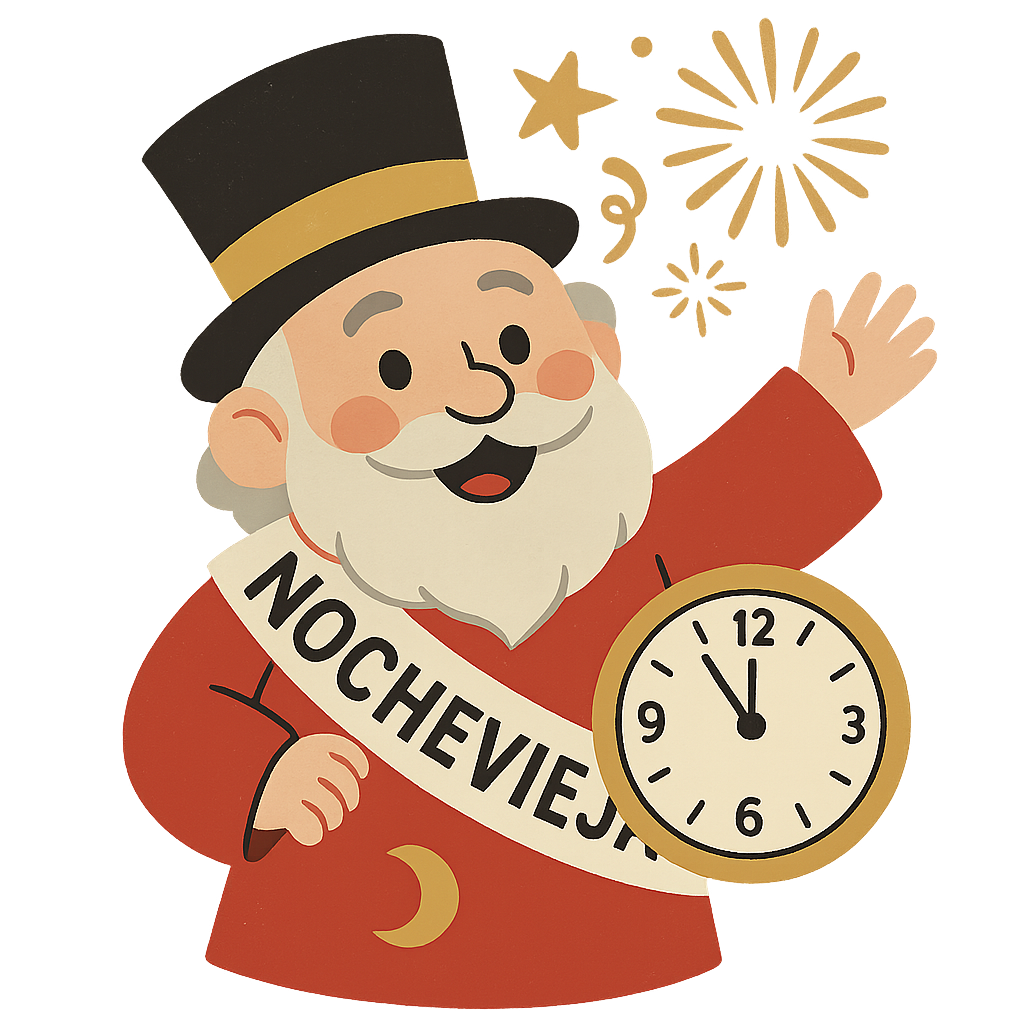
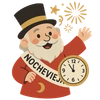
Hello! I am Nochevieja. In the Spanish language, my name means 'Old Night.' That’s a perfect name for me, because I am the very last night of the entire year. People observe me on December 31st. I mark the moment when one year is about to end and a brand new one is ready to begin. In Spain and many other Spanish-speaking places around the world, I am a time for gathering. Families and friends come together to share a special meal. They stay up late, feeling the excitement in the air as they wait for the clock to strike midnight. On my night, people say goodbye to everything that happened in the old year. At the same time, they look forward with hope to the new year that is just moments away.
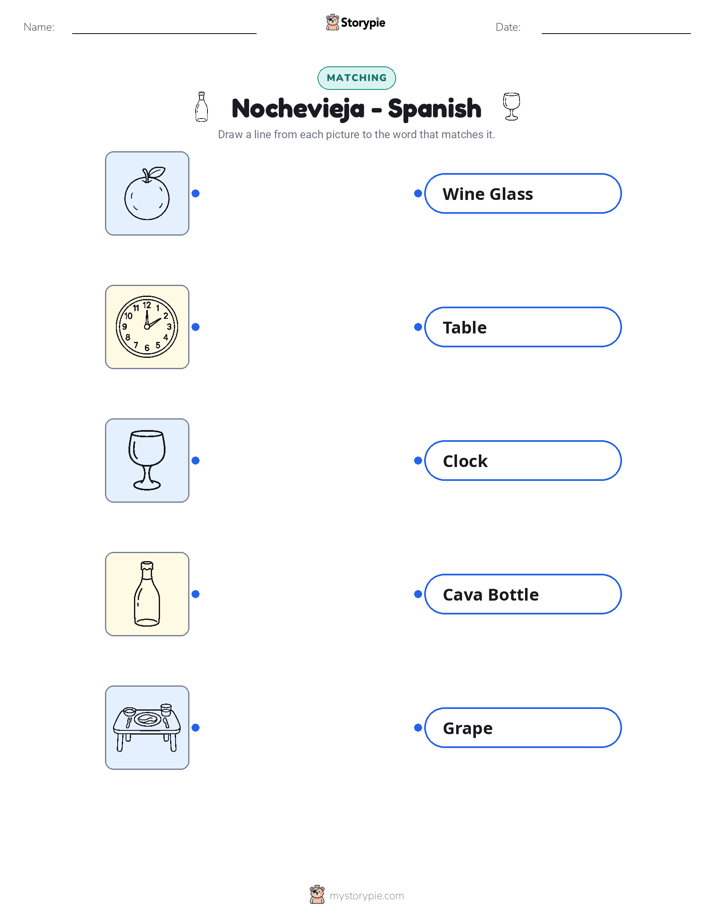
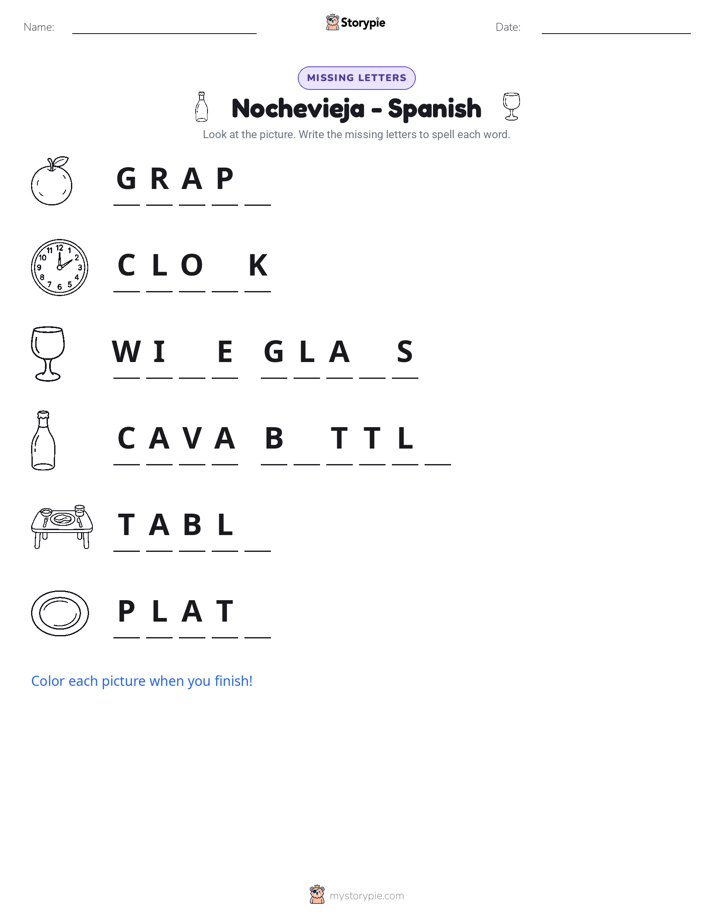
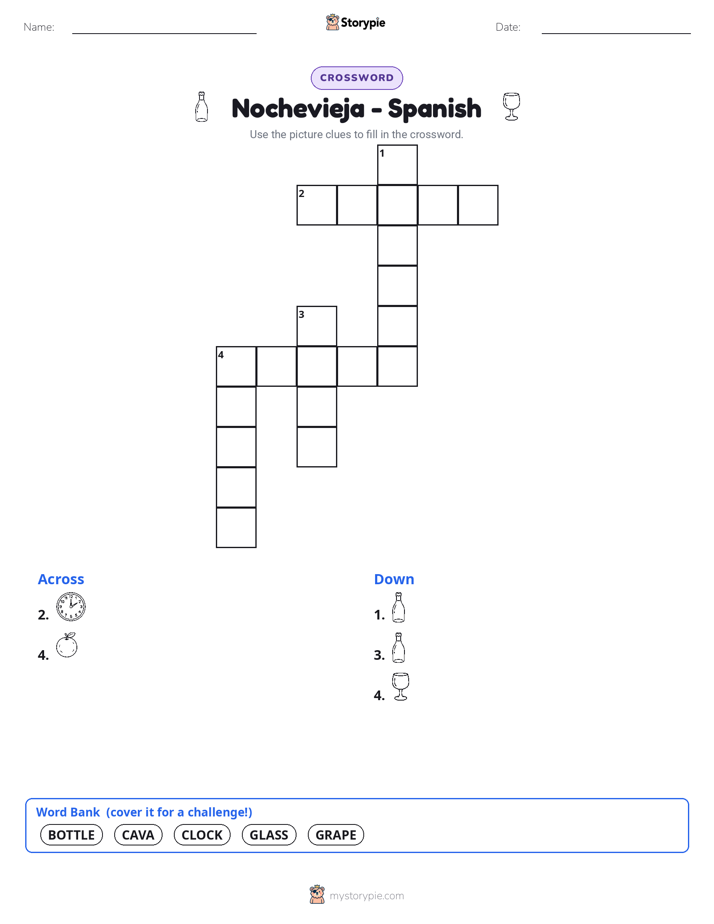
As the final minutes of the old year tick away, my most famous and special tradition begins. It is all about twelve lucky grapes, which are called 'las uvas de la suerte.' Many families watch a broadcast on television from a big square in Madrid, the capital city of Spain. There, a famous old clock tower gets ready to chime. When the clock strikes midnight, it rings twelve times, once for each month of the new year. With every single chime, everyone tries to eat one grape. It can be tricky to eat them so fast, and it often leads to a lot of laughter! The belief is that if you can eat all twelve grapes in time with the clock, you will have good luck for all twelve months of the year ahead.
My tradition of eating grapes at midnight is something that people in Spain have done for a very long time. It became a popular custom for everyone more than 100 years ago. There is a well-known story that explains how it may have started. The story says that around the year 1909, grape farmers in a part of Spain had a wonderful year. They grew so many grapes that they had more than they could sell. Instead of letting them go to waste, these clever farmers decided to share their extra grapes with people all over the country. They told everyone that eating the grapes on my night would bring good luck. People loved the idea, and the tradition has continued ever since.
I Am Nochevieja
Hello! I am Nochevieja. In the Spanish language, my name means 'Old Night.' That’s a perfect name for me, because I am the very last night of the entire year. People observe me on December 31st. I mark the moment when one year is about to end and a brand new one is ready to begin. In Spain and many other Spanish-speaking places around the world, I am a time for gathering. Families and friends come together to share a special meal. They stay up late, feeling the excitement in the air as they wait for the clock to strike midnight. On my night, people say goodbye to everything that happened in the old year. At the same time, they look forward with hope to the new year that is just moments away.
As the final minutes of the old year tick away, my most famous and special tradition begins. It is all about twelve lucky grapes, which are called 'las uvas de la suerte.' Many families watch a broadcast on television from a big square in Madrid, the capital city of Spain. There, a famous old clock tower gets ready to chime. When the clock strikes midnight, it rings twelve times, once for each month of the new year. With every single chime, everyone tries to eat one grape. It can be tricky to eat them so fast, and it often leads to a lot of laughter! The belief is that if you can eat all twelve grapes in time with the clock, you will have good luck for all twelve months of the year ahead.
My tradition of eating grapes at midnight is something that people in Spain have done for a very long time. It became a popular custom for everyone more than 100 years ago. There is a well-known story that explains how it may have started. The story says that around the year 1909, grape farmers in a part of Spain had a wonderful year. They grew so many grapes that they had more than they could sell. Instead of letting them go to waste, these clever farmers decided to share their extra grapes with people all over the country. They told everyone that eating the grapes on my night would bring good luck. People loved the idea, and the tradition has continued ever since.
The twelve grapes are not the only way people hope for a good year during my observance. I have other fun traditions that are meant to bring good fortune, love, and happiness. For example, many people believe that wearing something red will help them find love in the new year. It might be a red ribbon, red socks, or another piece of red clothing, sometimes worn hidden from sight. Another custom involves a special fizzy drink called cava, which is similar to champagne. When people raise their glasses to toast the new year, some will drop a gold object, like a ring, into their drink. They believe this will bring them good financial fortune. It is a sparkling wish for a prosperous year.
Today, people continue to welcome the new year with me through these cheerful customs. I am a night filled with hope, laughter, and togetherness. Whether people are gathered in a town square with a crowd or celebrating at home with their family, my traditions connect them. From the challenge of eating the twelve grapes at midnight to wearing red for love, these acts are all about starting the new year on a positive note. I am the final, festive farewell to the old and a bright, hopeful hello to the new.
Wow facts
About
Nochevieja is the Spanish celebration of New Year's Eve on December 31st, famously marked by the tradition of eating twelve grapes at the stroke of midnight to bring good luck for the year ahead.
Take a Quiz
Question 1 of 4
What does the Spanish word 'Nochevieja' mean?
Want to do even more?
Go beyond exploring. Unlock tools that turn every story into real learning.

Storypie Plus for families
Full stories, quizzes, and printables. Nights and car rides, sorted.
- Unlimited audio stories
- Create Mode: your child stars in the story
- Offline downloads
- Printable worksheets & coloring pages

Why Storypie for Schools
Students engaged. Prep in seconds. Evenings back to you.
- Worksheets & Quizzes
- Classroom Management
- Formative Assessment
- Custom Curriculum & Lesson Plans
- 27 Languages

Why Storypie for Homeschool
Curriculum done. They'll ask for more. Hours back in your day.
- Worksheet Generator
- First-Person Audio Stories
- Built-in Comprehension Quizzes
- Custom Curriculum & Lesson Plans
- Print & Go Activities