English

Nochevieja - Spanish
Nochevieja is the Spanish celebration of New Year's Eve on December 31st…
Reads at Grades 3–5 Listens at Grades 1–5
Print & create
Answer keys·No prep·Free with an account
28 worksheets · answer keys · full story · quiz · Ages 8-10 · CEFR B1
Plus adds 279,000+ more stories in 27 languages, audio for every one, and printables for all of them.
Just want Nochevieja - Spanish?
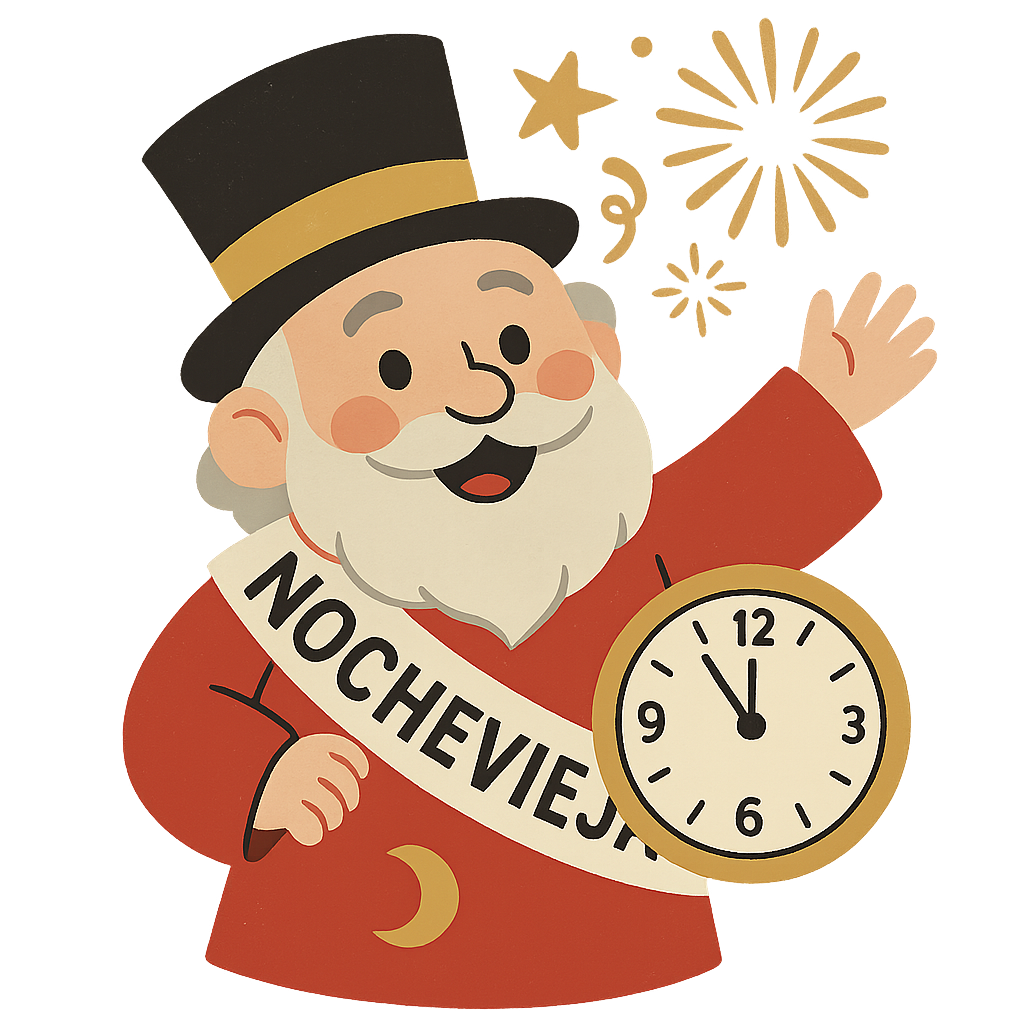
Hello! I am Nochevieja, which is the Spanish name for New Year's Eve. My name translates to 'Old Night,' because I am the very last night of the old year. I arrive on December 31st, filling the final hours before a new year begins. All across Spain, and in many other Spanish-speaking communities around the world, my arrival is a very special occasion. I mark a moment of transition, a time for people to gather with their families and friends. Together, they say a fond goodbye to the year that is ending and prepare to welcome the new one with hope and happiness. It is a night filled with excitement for the future and reflection on the past.
My most famous tradition is known far and wide. It is a fun and exciting challenge called 'las doce uvas de la suerte,' which means 'the twelve lucky grapes.' This custom takes place at the exact moment the year changes. As a clock tower bell begins to chime to announce the arrival of midnight, the tradition begins. For each one of the twelve chimes, people must eat one grape. It happens very fast, so they have to be ready! The goal is to eat all twelve grapes by the time the final bell has finished ringing. According to the belief associated with this custom, each grape represents one month of the year. Successfully eating all twelve is said to bring a person good luck and happiness for all twelve months of the brand new year.
People often ask how this unique grape-eating tradition began. The custom became widespread in Spain over one hundred years ago, and its history is quite interesting. A very popular story that many people share says that the tradition started in 1909. According to this tale, grape growers in the country had an enormous harvest that year and came up with this idea as a clever way to sell all their extra grapes. While that is a good story, historical records suggest the tradition is even older. Documents from the 1880s show that people in Madrid, the capital city of Spain, were already eating twelve grapes at midnight. The real origin might have been a bit mischievous. In those days, wealthy people often celebrated the new year by eating grapes and drinking sparkling wine. Some historians think that working-class people started eating grapes at midnight as a playful way to imitate, and perhaps make fun of, the customs of the rich. What may have started as a joke soon grew into a cherished tradition for everyone.
Nochevieja: The Night of the Twelve Grapes
Hello! I am Nochevieja, which is the Spanish name for New Year's Eve. My name translates to 'Old Night,' because I am the very last night of the old year. I arrive on December 31st, filling the final hours before a new year begins. All across Spain, and in many other Spanish-speaking communities around the world, my arrival is a very special occasion. I mark a moment of transition, a time for people to gather with their families and friends. Together, they say a fond goodbye to the year that is ending and prepare to welcome the new one with hope and happiness. It is a night filled with excitement for the future and reflection on the past.
My most famous tradition is known far and wide. It is a fun and exciting challenge called 'las doce uvas de la suerte,' which means 'the twelve lucky grapes.' This custom takes place at the exact moment the year changes. As a clock tower bell begins to chime to announce the arrival of midnight, the tradition begins. For each one of the twelve chimes, people must eat one grape. It happens very fast, so they have to be ready! The goal is to eat all twelve grapes by the time the final bell has finished ringing. According to the belief associated with this custom, each grape represents one month of the year. Successfully eating all twelve is said to bring a person good luck and happiness for all twelve months of the brand new year.
People often ask how this unique grape-eating tradition began. The custom became widespread in Spain over one hundred years ago, and its history is quite interesting. A very popular story that many people share says that the tradition started in 1909. According to this tale, grape growers in the country had an enormous harvest that year and came up with this idea as a clever way to sell all their extra grapes. While that is a good story, historical records suggest the tradition is even older. Documents from the 1880s show that people in Madrid, the capital city of Spain, were already eating twelve grapes at midnight. The real origin might have been a bit mischievous. In those days, wealthy people often celebrated the new year by eating grapes and drinking sparkling wine. Some historians think that working-class people started eating grapes at midnight as a playful way to imitate, and perhaps make fun of, the customs of the rich. What may have started as a joke soon grew into a cherished tradition for everyone.
My celebration has a special heart, a central place where the energy is most exciting. This place is the Puerta del Sol, a large and famous public square in the center of Madrid. Every year on my night, thousands and thousands of people crowd into this square, all waiting for midnight. They gather to watch the large clock on the top of the Royal House of the Post Office building. When the clock’s hands reach twelve, its bells begin to chime, and the great grape-eating countdown starts. To make sure no one misses this important moment, the chimes from the Puerta del Sol clock are broadcast live on television stations all across Spain. This allows people celebrating at home with their families to follow along at the exact same time as the crowd in Madrid, creating a wonderful feeling of unity across the country.
While the twelve grapes are my main event, people have other customs they follow to bring good fortune in the new year. One popular and private tradition is to wear new red underwear. This is believed to bring good luck in matters of love and happiness throughout the coming year. After the last grape has been eaten and the clock has finished its twelve chimes, the celebration truly begins. People hug and kiss each other, and then they make a toast. They raise glasses of a Spanish sparkling wine called cava, clinking them together. As they take a sip, they wish everyone around them a very happy new year by saying, '¡Feliz Año Nuevo!'
Today, I continue to be a major holiday, celebrated with great enthusiasm. People observe me in different ways; some prefer a quiet night at home with family, sharing a special dinner and watching the broadcast from Madrid. Others love the energy of public celebrations and join the large crowds in city squares like the Puerta del Sol. No matter where people are, the tradition of the twelve lucky grapes remains the most important part of the night. After that moment passes, the festivities continue long into the early hours of the new year. The night is filled with parties, vibrant music, and sometimes dazzling fireworks, all in celebration of a fresh start and the hopeful promise of the year to come.
Wow facts
About
Nochevieja is the Spanish celebration of New Year's Eve on December 31st, famously marked by the tradition of eating twelve grapes at the stroke of midnight to bring good luck for the year ahead.
Take a Quiz
Question 1 of 5
What problem might someone have while trying to follow the tradition of 'las doce uvas de la suerte'?
Want to do even more?
Go beyond exploring. Unlock tools that turn every story into real learning.

Storypie Plus for families
Full stories, quizzes, and printables. Nights and car rides, sorted.
- Unlimited audio stories
- Create Mode: your child stars in the story
- Offline downloads
- Printable worksheets & coloring pages

Why Storypie for Schools
Students engaged. Prep in seconds. Evenings back to you.
- Worksheets & Quizzes
- Classroom Management
- Formative Assessment
- Custom Curriculum & Lesson Plans
- 27 Languages

Why Storypie for Homeschool
Curriculum done. They'll ask for more. Hours back in your day.
- Worksheet Generator
- First-Person Audio Stories
- Built-in Comprehension Quizzes
- Custom Curriculum & Lesson Plans
- Print & Go Activities