English

Our Lady of Guadalupe - Mexican
A major Catholic feast day celebrated on December 12th…
Reads at Grades 6–8 Listens at Grades 4–8
Print & create
Answer keys·No prep·Free with an account
28 worksheets · answer keys · full story · quiz · Ages 10-12 · CEFR B2
Plus adds 273,000+ more stories in 27 languages, audio for every one, and printables for all of them.
Just want Our Lady of Guadalupe - Mexican?
I am the Feast of Our Lady of Guadalupe, a day of great religious and cultural significance. People observe me each year on December 12th, particularly in Mexico and within Mexican communities throughout the world. My observance honors a series of events that are a central part of the Catholic faith in the Americas, rooted in a story from nearly five hundred years ago.
My origins are connected to a traditional account from the winter of 1531. In early December of that year, an Indigenous man named Juan Diego Cuauhtlatoatzin was walking across a hill called Tepeyac, which was located near the area that would become Mexico City. According to the Catholic tradition that forms the basis of my observance, a woman appeared to him on the hill. She identified herself as the Virgin Mary, the mother of Jesus. In the story, she spoke to Juan Diego in his native language, Nahuatl, which was an important detail. She had a message for him: he was to go to the local bishop and tell him to build a church in her honor on that very spot.
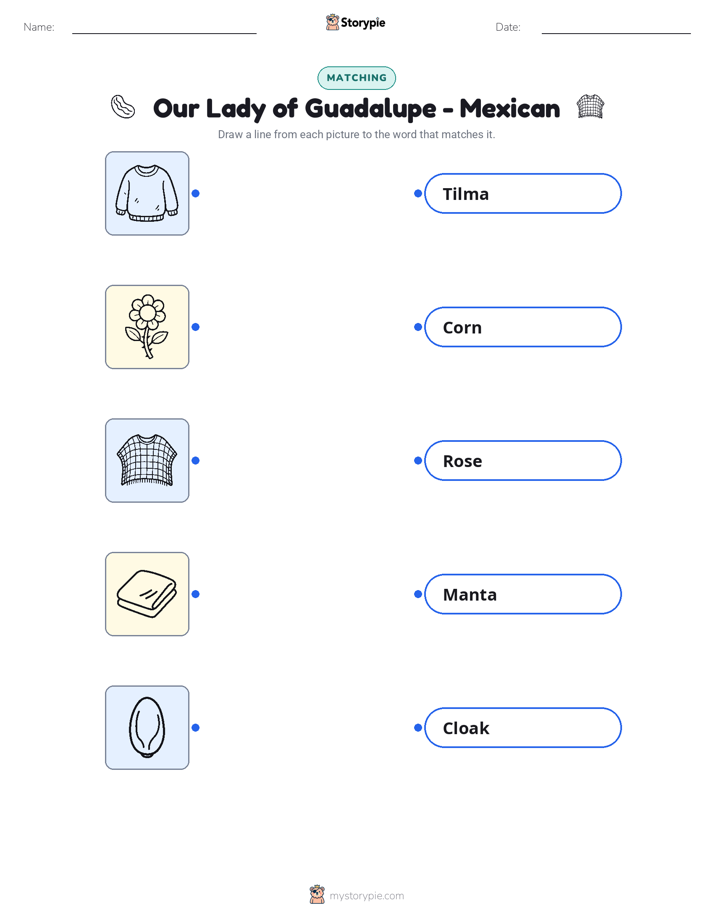
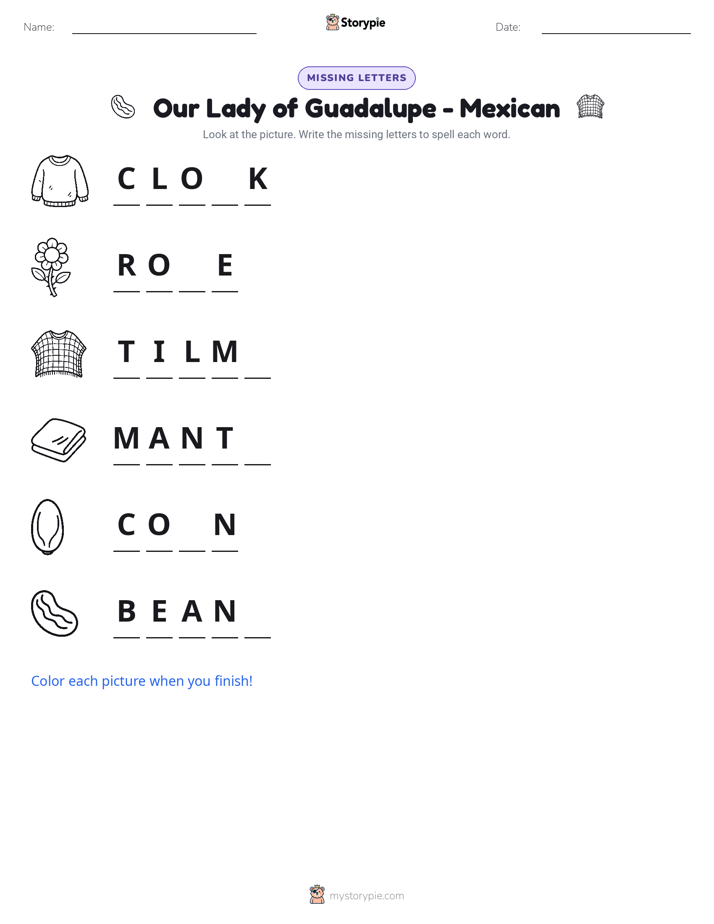
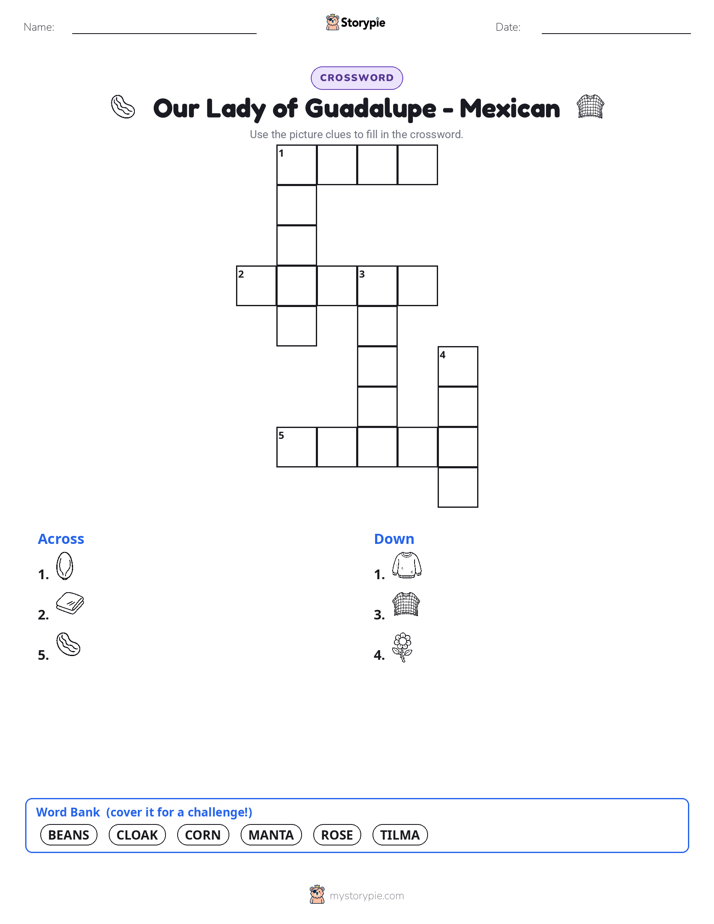
Juan Diego did as he was asked and went to see the bishop, a man named Juan de Zumárraga. However, the bishop was skeptical and did not immediately believe the story. To be sure that the message was truly from the Virgin Mary, he asked Juan Diego to return with a sign as proof. Juan Diego went back to Tepeyac Hill and, according to the tradition, met with the Virgin Mary again. She instructed him to climb to the top of the hill, which was known to be rocky and barren, especially in the cold of December. There, she told him, he would find his sign. He was amazed to discover beautiful roses growing, which he gathered into his cloak, a type of garment called a tilma. He then returned to the bishop. When Juan Diego opened his tilma to let the roses spill out, everyone present saw that a detailed, colorful image of the Virgin Mary was imprinted on the fabric.
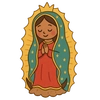
Our Lady of Guadalupe
I am the Feast of Our Lady of Guadalupe, a day of great religious and cultural significance. People observe me each year on December 12th, particularly in Mexico and within Mexican communities throughout the world. My observance honors a series of events that are a central part of the Catholic faith in the Americas, rooted in a story from nearly five hundred years ago.
My origins are connected to a traditional account from the winter of 1531. In early December of that year, an Indigenous man named Juan Diego Cuauhtlatoatzin was walking across a hill called Tepeyac, which was located near the area that would become Mexico City. According to the Catholic tradition that forms the basis of my observance, a woman appeared to him on the hill. She identified herself as the Virgin Mary, the mother of Jesus. In the story, she spoke to Juan Diego in his native language, Nahuatl, which was an important detail. She had a message for him: he was to go to the local bishop and tell him to build a church in her honor on that very spot.
Juan Diego did as he was asked and went to see the bishop, a man named Juan de Zumárraga. However, the bishop was skeptical and did not immediately believe the story. To be sure that the message was truly from the Virgin Mary, he asked Juan Diego to return with a sign as proof. Juan Diego went back to Tepeyac Hill and, according to the tradition, met with the Virgin Mary again. She instructed him to climb to the top of the hill, which was known to be rocky and barren, especially in the cold of December. There, she told him, he would find his sign. He was amazed to discover beautiful roses growing, which he gathered into his cloak, a type of garment called a tilma. He then returned to the bishop. When Juan Diego opened his tilma to let the roses spill out, everyone present saw that a detailed, colorful image of the Virgin Mary was imprinted on the fabric.
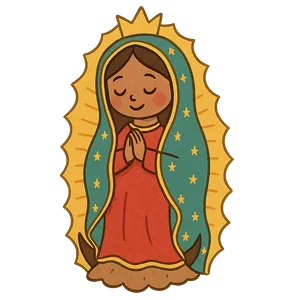
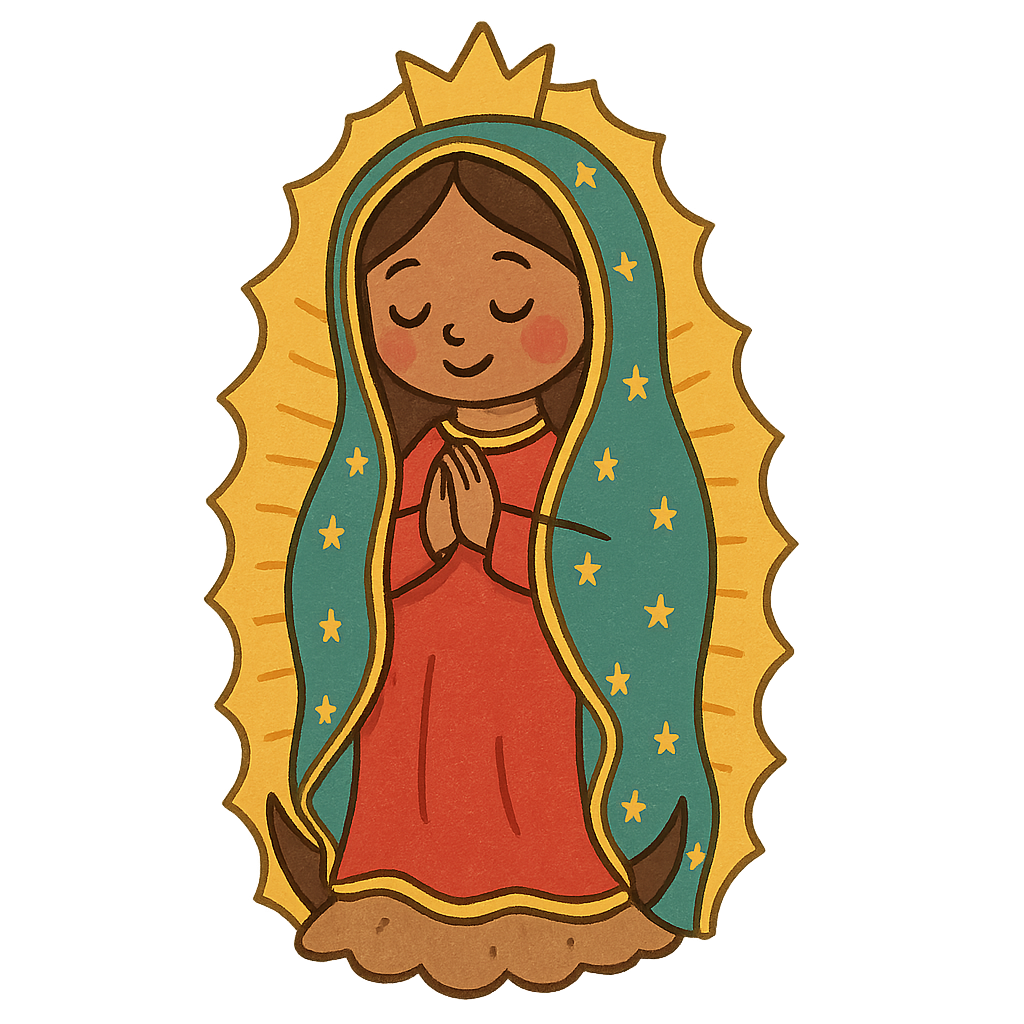
This image on the tilma became an incredibly powerful and meaningful symbol. It is seen as a unique blend of both European Catholic and Indigenous cultural elements. The woman in the image has dark skin and features that resemble the native people of the region. She is depicted standing on a crescent moon, which was a significant symbol in the Aztec culture that had dominated the area before the arrival of the Spanish. At the same time, she is surrounded by rays of sun and wears a cloak covered in stars, symbols that resonated with both European and Indigenous worldviews. For many Indigenous people living under Spanish colonial rule, this image, which seemed to honor their identity, made the Catholic faith more accessible and relatable. It is seen as a key reason why many converted to Catholicism during that period.
Following these reported events, a chapel was constructed on Tepeyac Hill as requested. It quickly became a site of pilgrimage, as people traveled to see the tilma with the miraculous image. My observance on December 12th, the date of the final apparition in the story, began to grow in importance. Over the next two centuries, devotion spread throughout the region then known as New Spain. My significance was formally recognized in 1754, when the Pope declared Our Lady of Guadalupe the patroness, or special protector, of New Spain. This declaration solidified my role as a central religious holiday in Mexico and beyond.
Today, the tradition of pilgrimage continues on a massive scale. One of the most important ways people observe me is by traveling to the Basilica of Our Lady of Guadalupe in Mexico City. This large church was built near the original site on Tepeyac Hill and now houses the original tilma, which is displayed for all to see. In the days leading up to December 12th, millions of people make this journey of faith. Some travel for days or even weeks, often on foot, as a sign of their devotion and to ask for blessings or give thanks. This annual gathering is considered one of the largest Catholic pilgrimages in the entire world.
My observance is filled with vibrant customs. Across Mexico and in communities abroad, people attend special church services, known as Mass. Many towns and cities hold festive public processions where people carry statues and images of Our Lady of Guadalupe through the streets. These parades are often accompanied by traditional mariachi bands playing music in her honor. Another common sight is groups of dancers in colorful, elaborate costumes performing traditional dances. In their homes, many families create special altars dedicated to Our Lady of Guadalupe, decorating them with her image, bright flowers, and glowing candles.
Over the centuries, I have grown to represent more than a single religious feast day. I have become a powerful and unifying symbol of Mexican identity, culture, and national pride. The image from the tilma is one of the most recognizable symbols in Mexico, appearing not just in churches but also in homes, on street art, in businesses, and on clothing. For millions of people, I am a source of comfort and a representation of faith, hope, and the unique history and resilient cultural heritage of the Mexican people. My story and traditions continue to be passed down, connecting generations through a shared sense of faith and identity.
Wow facts
About
A major Catholic feast day celebrated on December 12th, commemorating the belief that the Virgin Mary appeared to an indigenous man, Juan Diego, in Mexico in 1531.
Take a Quiz
Question 1 of 5
According to the story, why was the image on the tilma so significant to many Indigenous people in Mexico?
Want to do even more?
Go beyond exploring. Unlock tools that turn every story into real learning.

Storypie Plus for families
Full stories, quizzes, and printables. Nights and car rides, sorted.
- Unlimited audio stories
- Create Mode: your child stars in the story
- Offline downloads
- Printable worksheets & coloring pages

Why Storypie for Schools
Students engaged. Prep in seconds. Evenings back to you.
- Worksheets & Quizzes
- Classroom Management
- Formative Assessment
- Custom Curriculum & Lesson Plans
- 27 Languages

Why Storypie for Homeschool
Curriculum done. They'll ask for more. Hours back in your day.
- Worksheet Generator
- First-Person Audio Stories
- Built-in Comprehension Quizzes
- Custom Curriculum & Lesson Plans
- Print & Go Activities