English

Our Lady of Guadalupe - Mexican
A major Catholic feast day celebrated on December 12th…
Reads at Grades 3–5 Listens at Grades 1–5
Print & create
Answer keys·No prep·Free with an account
28 worksheets · answer keys · full story · quiz · Ages 8-10 · CEFR B1
Plus adds 273,000+ more stories in 27 languages, audio for every one, and printables for all of them.
Just want Our Lady of Guadalupe - Mexican?
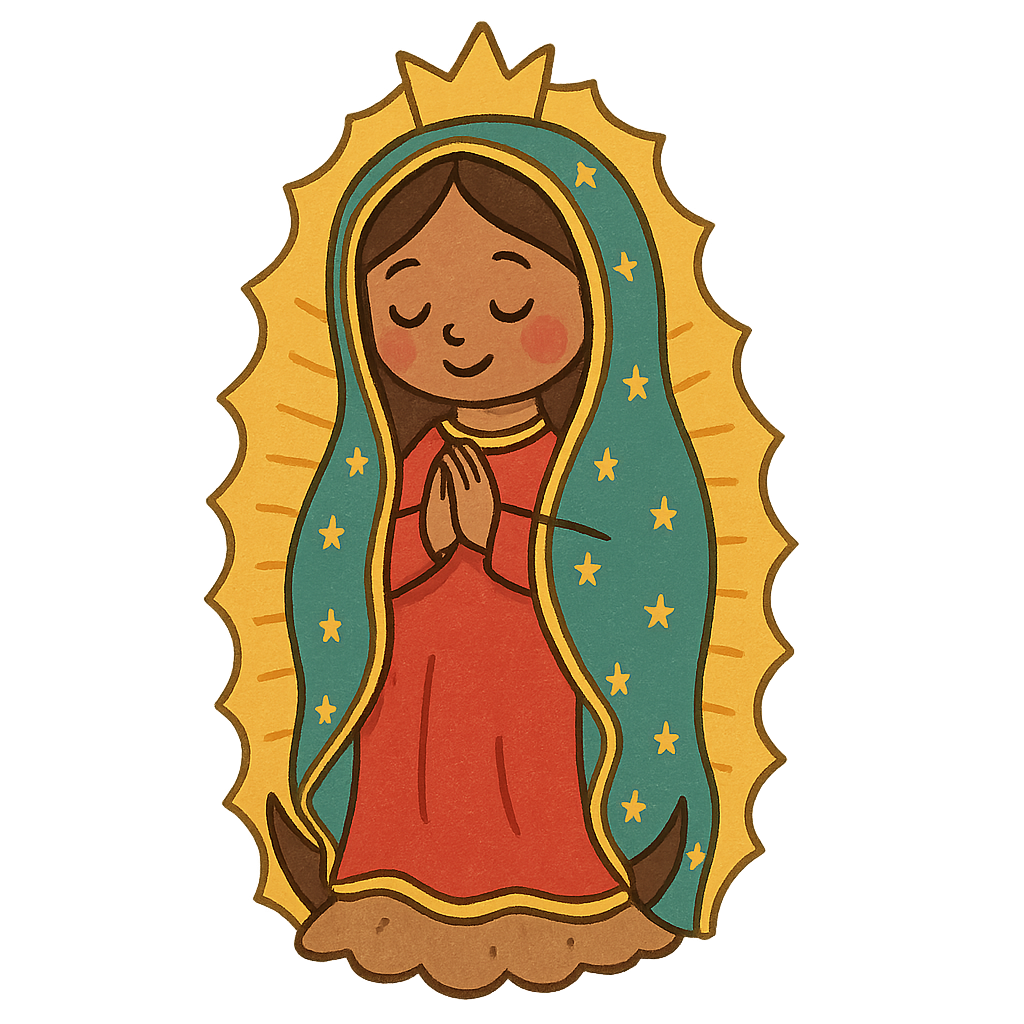
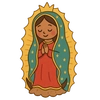
Hello! I am the Feast of Our Lady of Guadalupe. People observe me with great devotion and happiness every year on December 12th. My story is deeply connected to an event that Catholic tradition says took place long ago, in the year 1531. The story centers on an indigenous man named Juan Diego who lived near what is now Mexico City. One day, while he was walking, a woman appeared to him on a hill called Tepeyac. The tradition says that this woman identified herself as the Virgin Mary, a very important figure in the Catholic faith. This meeting on Tepeyac Hill is the reason I am celebrated, marking a moment that many people consider to be a special message of hope and faith.
After his experience on the hill, Juan Diego went to share his amazing news with the local bishop, a man named Juan de Zumárraga. At first, the bishop was skeptical. He listened to Juan Diego's story about meeting the Virgin Mary but found it hard to believe. He felt he needed proof before he could accept that such an incredible event had really happened. To be sure, Bishop Zumárraga asked Juan Diego to return with a sign—some form of evidence that would prove his story was true. Following this request, the Virgin Mary gave Juan Diego a special instruction. She told him to climb to the very top of Tepeyac Hill, which was known for being a cold and barren place, and gather flowers for the bishop.
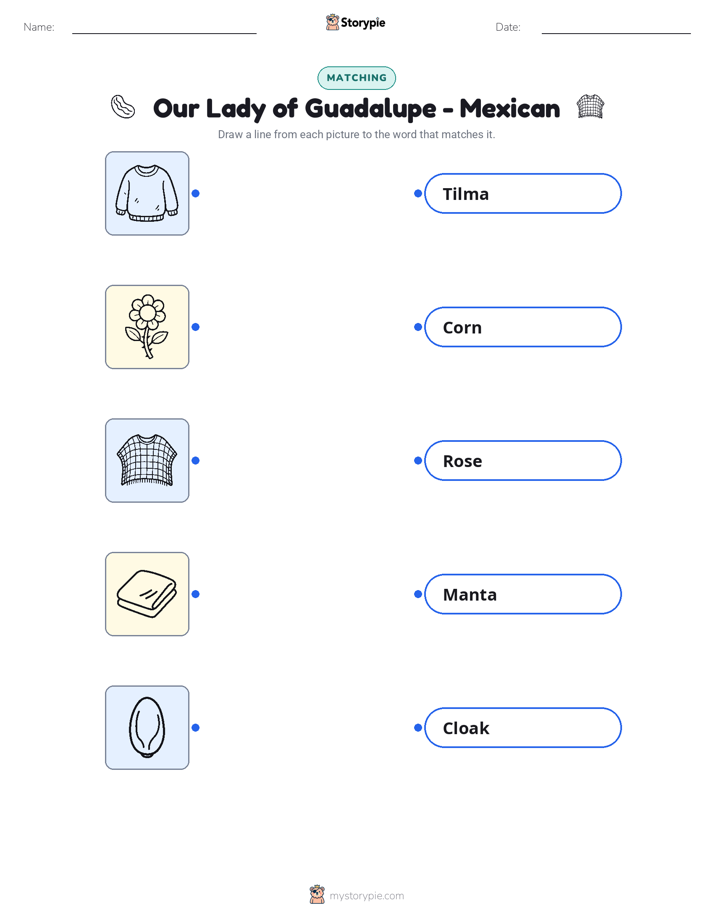
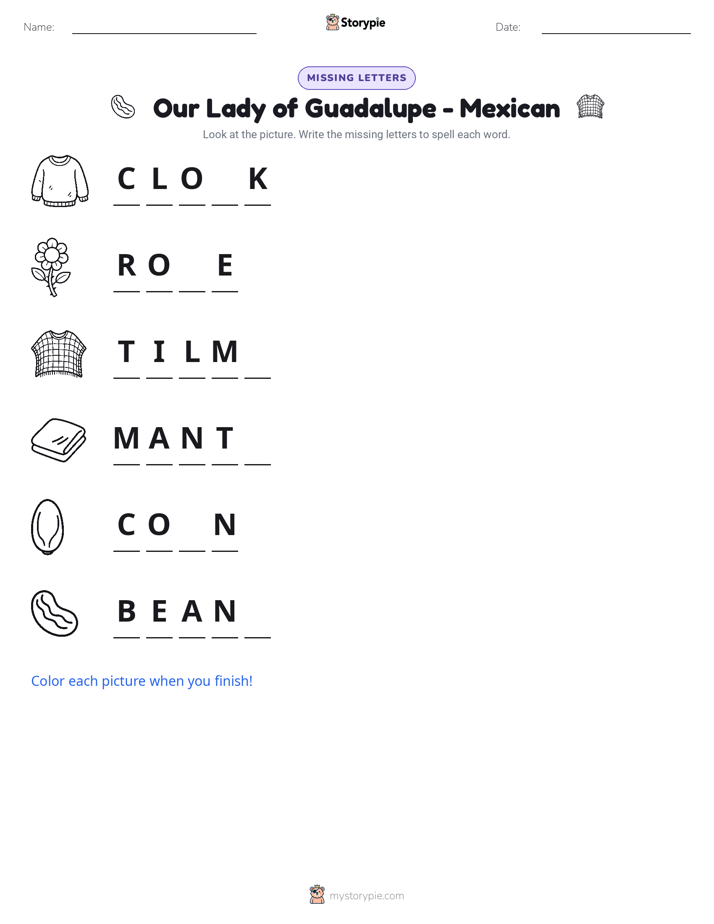
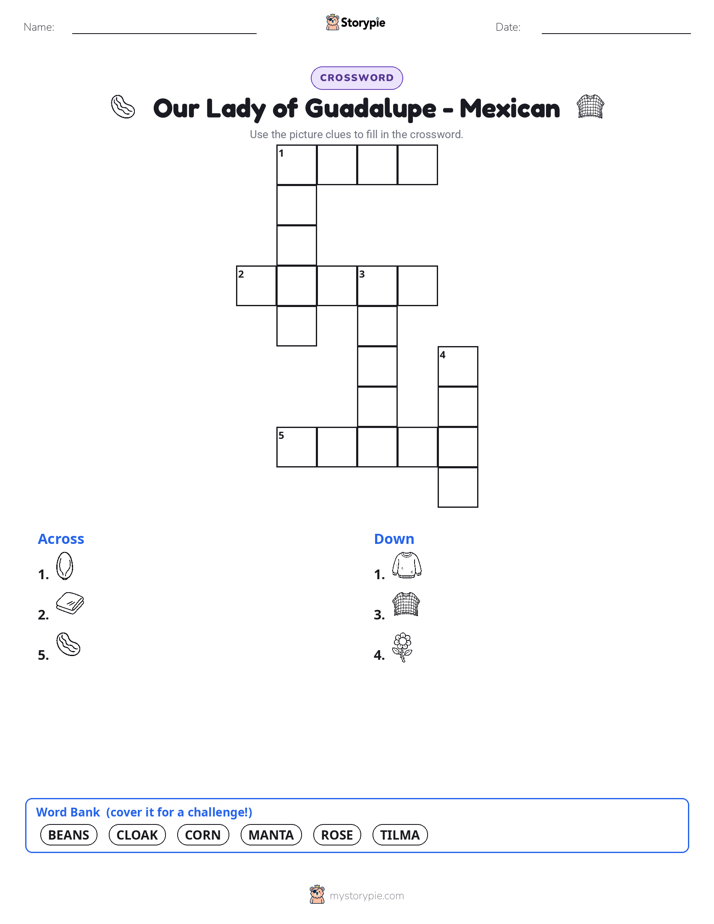
When Juan Diego reached the top of the hill, he was met with a beautiful sight that seemed impossible. Growing there were lovely Castilian roses. This was a true surprise, not only because the ground was usually dry and empty, but also because these specific roses were not native to Mexico. Furthermore, they should not have been blooming in the cold weather of December. It was the sign the bishop had asked for. Following the woman's instructions, Juan Diego carefully collected the fresh, fragrant roses in his cloak, which was a simple garment called a tilma. He wrapped them securely and made his way back to see the bishop, carrying the proof he had been asked to find.
Our Lady of Guadalupe
Hello! I am the Feast of Our Lady of Guadalupe. People observe me with great devotion and happiness every year on December 12th. My story is deeply connected to an event that Catholic tradition says took place long ago, in the year 1531. The story centers on an indigenous man named Juan Diego who lived near what is now Mexico City. One day, while he was walking, a woman appeared to him on a hill called Tepeyac. The tradition says that this woman identified herself as the Virgin Mary, a very important figure in the Catholic faith. This meeting on Tepeyac Hill is the reason I am celebrated, marking a moment that many people consider to be a special message of hope and faith.
After his experience on the hill, Juan Diego went to share his amazing news with the local bishop, a man named Juan de Zumárraga. At first, the bishop was skeptical. He listened to Juan Diego's story about meeting the Virgin Mary but found it hard to believe. He felt he needed proof before he could accept that such an incredible event had really happened. To be sure, Bishop Zumárraga asked Juan Diego to return with a sign—some form of evidence that would prove his story was true. Following this request, the Virgin Mary gave Juan Diego a special instruction. She told him to climb to the very top of Tepeyac Hill, which was known for being a cold and barren place, and gather flowers for the bishop.
When Juan Diego reached the top of the hill, he was met with a beautiful sight that seemed impossible. Growing there were lovely Castilian roses. This was a true surprise, not only because the ground was usually dry and empty, but also because these specific roses were not native to Mexico. Furthermore, they should not have been blooming in the cold weather of December. It was the sign the bishop had asked for. Following the woman's instructions, Juan Diego carefully collected the fresh, fragrant roses in his cloak, which was a simple garment called a tilma. He wrapped them securely and made his way back to see the bishop, carrying the proof he had been asked to find.
When Juan Diego stood before Bishop Zumárraga again, he opened his tilma. As he did, the beautiful Castilian roses tumbled out and fell to the floor. But something even more astonishing was left behind. According to the traditional story, a colorful and detailed image of the woman Juan Diego had seen on the hill was miraculously imprinted on the fabric of his cloak. This was a powerful and convincing moment. Seeing the beautiful image on the tilma, the bishop no longer had any doubts. He believed Juan Diego's story and, as a result, ordered a church to be built on Tepeyac Hill, exactly where the appearances were said to have occurred.
The image on the tilma became incredibly significant. Many people believe it is special because it seems to blend symbols from both Spanish and indigenous cultures of that time. For example, the woman in the image has features that connected with both groups. This blending of cultures in a single image helped it become a powerful symbol of unity during a time of great change in Mexico. For millions of people, Our Lady of Guadalupe represents motherhood, comfort, and hope. Her importance grew over the centuries, and today, she is known in the Catholic faith as the Patroness of the Americas, a protector and spiritual guide for a vast region.
Today, people celebrate me with enormous joy and energy, particularly in Mexico. My date, December 12th, is a major national occasion. Millions of people make special journeys, called pilgrimages, to visit the Basilica of Our Lady of Guadalupe in Mexico City, where the original tilma is displayed. The celebrations are vibrant and full of life. They often begin before the sun rises with a special song sung to honor Our Lady of Guadalupe. Throughout the day, there are church services, lively parades with people in colorful costumes, and performances of traditional music and dancing that fill the streets with sound and movement. Of course, festive foods are also a big part of the day, bringing families and friends together.
While my main celebration takes place in Mexico, my observance has spread far and wide. People of Mexican heritage and Catholics all over the world also honor me on December 12th. In cities and towns across the United States and in other countries, communities hold their own celebrations. A common tradition is to have processions, where people walk through the streets carrying statues or beautifully decorated banners featuring the famous image from the tilma. For many who participate, it is a day not just to express their deep religious faith, but also to celebrate their rich cultural identity and heritage, connecting them to a story that has been passed down for generations.
Wow facts
About
A major Catholic feast day celebrated on December 12th, commemorating the belief that the Virgin Mary appeared to an indigenous man, Juan Diego, in Mexico in 1531.
Take a Quiz
Question 1 of 5
According to the story, what did Bishop Juan de Zumárraga ask Juan Diego to bring him as a sign?
Want to do even more?
Go beyond exploring. Unlock tools that turn every story into real learning.

Storypie Plus for families
Full stories, quizzes, and printables. Nights and car rides, sorted.
- Unlimited audio stories
- Create Mode: your child stars in the story
- Offline downloads
- Printable worksheets & coloring pages

Why Storypie for Schools
Students engaged. Prep in seconds. Evenings back to you.
- Worksheets & Quizzes
- Classroom Management
- Formative Assessment
- Custom Curriculum & Lesson Plans
- 27 Languages

Why Storypie for Homeschool
Curriculum done. They'll ask for more. Hours back in your day.
- Worksheet Generator
- First-Person Audio Stories
- Built-in Comprehension Quizzes
- Custom Curriculum & Lesson Plans
- Print & Go Activities